DbcultAccessing Vault...
6.5/10
Senior Film Conservator
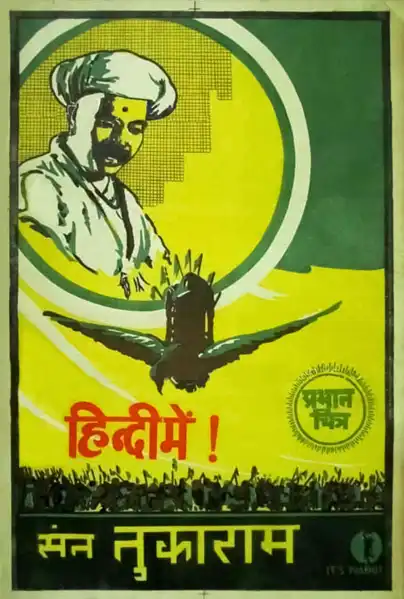
A definitive 6.5/10 rating for a film that redefined the boundaries of cult cinema. Sant Tukaram remains a cornerstone of transgressive art.
Okay, let’s be real. A movie from 1936, especially one about a 17th-century saint poet from Maharashtra, is not going to be for everyone. If you're looking for fast cuts, explosions, or even just crisp sound design, you’ll probably find Sant Tukaram a bit of a slog.
But for those who appreciate cinema as a historical artifact, or are just curious about the roots of social change, this one is absolutely worth carving out some time for. It’s a film that asks you to settle in, to listen, and to think.
You’ll probably hate it if you can’t get past old film techniques. But if you're into cultural history, or just how profound a simple shift in language can be, this might just stick with you. ✨
The core story here is about Tukaram, played by Vishnupant Pagnis. He was a real person, a poet from the 1600s, who decided to write his devotional songs not in the high-brow Sanskrit, but in Marathi, the language of the everyday folk.
This sounds like a small thing, right? But it was huge. A genuine shake-up, bringing spiritual ideas to *everyone*, not just the educated elite.
Pagnis as Tukaram has this almost serene presence. You see him in these very simple settings, often just sitting or walking, and he conveys this deep sense of inner peace. It feels authentic, not forced.
There’s a scene where he’s just sitting by a river, and the camera just *stays* on him for a good while. You feel the weight of his thoughts, the quiet devotion. It’s a very different kind of acting than we see today, more about stillness.
The film doesn't rush. Like, at all. It takes its sweet time showing Tukaram’s life, these small, episodic moments. You get a sense of his community, the simple village life. It’s not about grand drama every five minutes.
Then there’s Salomalo, the Brahmin, played by Sri Bhagwat. He’s the antagonist, sort of. He sees Tukaram’s popular appeal, his vernacular poetry, as a threat to the established order.
This guy just can’t believe that something so simple, so *common*, could be so profound. He even tries to pass off Tukaram’s songs as his own, which, come on, 🤦♀️. That whole subplot feels almost petty in its villainy, but it highlights the stakes. It's not a fight with swords, but with ideas, with words.
One moment that really got me was when Tukaram’s writings are literally thrown into a river. The sheer *anger* from the orthodox side, the desperation to erase his words. It feels like such a strong visual metaphor for censorship, even back then.
And then, the story goes, the texts float back up. It's a miracle, sure, but it's also a powerful symbol: you can try to silence these voices, but some truths just won't stay buried.
The movie is black and white, naturally, and the cinematography is pretty straightforward. You won't find any fancy camera tricks here. But there are these beautiful, almost painterly shots of the countryside. Wide shots of fields, or the river. They give a real sense of place, of the natural world Tukaram lived in and drew inspiration from.
What’s *really* interesting is how this film, made in the 1930s, deals with a story from the 1600s that was all about challenging rigid social structures. It's a quiet film, but it's telling a story of rebellion. A spiritual rebellion, yes, but a rebellion against an oppressive system nonetheless.
It makes you think about how these themes echo through different eras. Some of the acting, especially from the supporting cast, can feel a little… broad. Like they're performing for a stage, not a camera. But Pagnis really grounds it. His expressions are subtle. He just *looks* at things sometimes, and you feel the meaning.
The pacing, oh boy. It’s slow. Very, very slow sometimes. There are long stretches where not a whole lot of *action* happens, just people talking, or singing. It definitely tests your patience if you're used to modern films.
But if you lean into it, it becomes almost meditative. You're forced to absorb the atmosphere. I also found myself thinking about the music. Since it's about a poet, the songs are central. Even with the old sound quality, you can tell these were powerful, heartfelt compositions. They're not just background noise; they're the *message*.
This isn’t a film that’s going to grab you by the collar and shake you. It’s more like a gentle whisper, a persistent, important one. It reminds you that sometimes the biggest revolutions start with the simplest, most accessible words. A lot of movies try to be profound, but Sant Tukaram just *is*.
It might feel a bit clunky, a bit dated in its execution. But the heart of it, the message about the power of language and challenging the status quo, still feels vibrant. It’s a piece of history, both the story it tells and the film itself. Don't expect a thrilling ride, but expect to leave with something to ponder. Maybe even a little hope for the quiet disruptors out there.
IMDb 7
1928
Community
Log in to comment.