DbcultAccessing Vault...
Cult Review
Senior Film Conservator
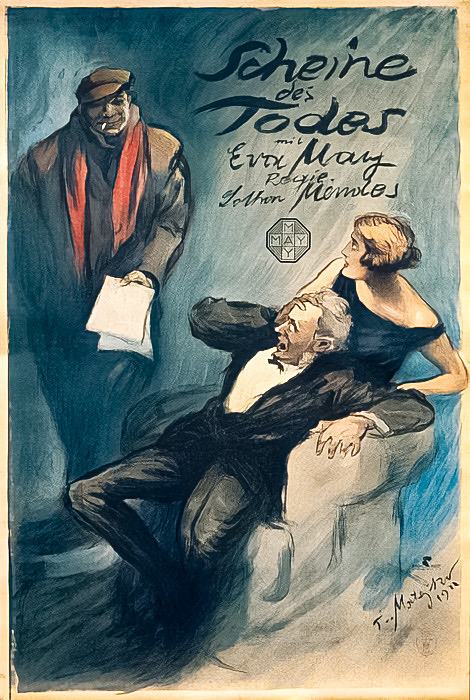
There's an undeniable allure to the cinema of the Weimar Republic, a period steeped in artistic innovation and societal upheaval. Among its myriad offerings, "Scheine des Todes" (Notes of Death), a 1923 production penned by the talented duo Lothar Mendes and Paul Merzbach, stands as a testament to the era's capacity for crafting intricate, psychologically charged narratives. This film, a shadowy dance of intrigue and avarice, draws the audience into a world where the glint of wealth often masks the gleam of a sinister blade, metaphorical or otherwise.
From its very opening frames, the film establishes an atmosphere pregnant with foreboding. The sudden, enigmatic death of the industrial titan, Herr Viktor Richter, portrayed with a quiet, imposing gravitas by Alfred Abel, immediately sets the stage for a compelling mystery. Abel, an actor renowned for his nuanced portrayals in films like The Miracle Man where he embodies profound internal conflict, here delivers a performance that, even in absence, looms large over the entire narrative. His character's unseen influence, his lingering presence through the 'notes' he leaves behind, is a masterful stroke of storytelling.
The ensuing struggle for Richter's immense fortune forms the central conflict, pitting the seemingly virtuous, if somewhat naive, niece, Elsa (the captivating Inge Helgard), against the formidable and enigmatic widow, Sophia (the incandescent Olga Tschechowa). Tschechowa, a veritable siren of the silent screen, imbues Sophia with a chilling blend of calculated charm and ruthless ambition. Her portrayal is a study in controlled menace, a woman whose beauty is merely a veil for a predatory intellect. The tension between Helgard's earnest vulnerability and Tschechowa's icy composure is palpable, a dramatic fulcrum upon which much of the film's emotional weight rests.
The plot, a meticulously constructed edifice of deceit, hinges on the appearance of a second, seemingly legitimate will, a document that threatens to disinherit Elsa entirely. This legal quagmire is orchestrated by Dr. Werner, a seemingly respectable lawyer whose veneer of professionalism is expertly peeled back by Bruno Decarli. Decarli's performance as Werner is a subtle masterclass in duplicity, his polite smiles barely concealing the avaricious machinations beneath. He is the quiet architect of chaos, a character whose moral compass has long been corrupted by the promise of illicit gain.
Enter Inspector Kruger, a figure of stoic resolve and weary wisdom, brought to life by the incomparable Albert Steinrück. Steinrück, with his world-worn gaze and deliberate movements, grounds the film's more melodramatic elements in a stark reality. His methodical investigation, his quiet observations, provide the narrative's backbone, guiding the audience through the labyrinthine clues. Kruger’s character feels like a spiritual predecessor to the hard-boiled detectives of later noir, a man who understands the darkness of humanity but still strives for justice.
Elsa, initially overwhelmed by the machinations surrounding her, soon discovers a series of cryptic 'Scheine'—notes—hidden amongst her uncle's effects. These are not merely random jottings but fragments of a clandestine investigation Richter himself was undertaking. A tattered diary, coded messages, and, most damningly, a counterfeit banknote, all point to a world of illicit dealings far beyond a simple will dispute. These 'notes of death' become the breadcrumbs leading Elsa and Inspector Kruger down a perilous path, revealing Richter's own battle against a sophisticated forgery ring.
The introduction of Kurt Gerron as Franz Gruber, the notorious forger, adds another layer of grim authenticity to the film. Gerron, known for his later work in sound films, here embodies the seedy underbelly of the criminal world with a chilling effectiveness. His presence, even in fleeting scenes, radiates a sense of danger and moral decay, a stark contrast to the polished facades of the upper echelons of society. The film masterfully illustrates how the lines between legitimate enterprise and criminal endeavor can blur, especially when vast sums of money are at stake.
The writers, Lothar Mendes and Paul Merzbach, deserve immense credit for constructing such a tightly woven narrative. Their screenplay is a masterclass in suspense, with each revelation building upon the last, never allowing the audience a moment of complacency. They expertly utilize the silent film medium, employing visual storytelling to convey complex motivations and intricate plot points without relying on excessive intertitles. The pacing is deliberate yet propulsive, a slow burn that ignites into a fervent search for truth. Their ability to craft distinct, memorable characters, even within the confines of a silent picture, speaks volumes about their talent. They create a world where every glance, every gesture, carries significant weight, propelling the story forward with an almost balletic precision.
The supporting cast further enriches this intricate tapestry. Hugo Döblin, as the nervous bank clerk, delivers a performance that is both pathetic and pivotal. His trembling hands and furtive glances speak volumes about the pressure he's under, a small cog in a much larger, more sinister machine. His character serves as a stark reminder of how easily ordinary individuals can be drawn into extraordinary webs of crime. Similarly, Eva May, in her tragically brief but impactful role as a former employee who holds a vital clue, conveys a profound sense of fear and desperation. Her silence, enforced by terror, becomes a powerful plot device, highlighting the pervasive reach of the antagonists.
The film also features Iván Petrovich as a charming but ultimately suspicious suitor to Elsa, a classic red herring that keeps the audience guessing. His dashing appearance belies a potential for moral ambiguity, a common trope in silent thrillers that Mendes and Merzbach deploy with skill. Arnold Korff, as the stern but fair judge presiding over the inheritance dispute, provides a necessary anchor of legal authority, his presence a constant reminder of the stakes involved. And Alphons Fryland, as a loyal but initially overlooked groundskeeper, eventually plays a crucial role, demonstrating how seemingly insignificant details can unravel the most elaborate conspiracies. Even Leonhard Haskel and Willy Kaiser-Heyl, in their roles as assisting police officers, contribute to the film's authentic portrayal of a meticulous investigation, lending credibility to Inspector Kruger's efforts.
Visually, "Scheine des Todes" is a masterwork of expressionistic lighting and set design, typical of the era's German cinema. The use of deep shadows and stark contrasts enhances the film's pervasive sense of mystery and moral ambiguity. The opulent interiors of Richter's mansion juxtaposed with the grimy underworld where Gruber operates create a vivid social commentary, highlighting the vast chasm between the haves and have-nots, and the ways in which their worlds tragically intersect. The cinematography is not merely functional; it is an active participant in the storytelling, guiding the viewer's eye, emphasizing character emotions, and building suspense with every meticulously framed shot.
The narrative's exploration of forgery, particularly in the context of legal documents and currency, touches upon a deep-seated societal fear: the erosion of trust in institutions and the very fabric of reality. When even a will, a sacred testament, can be fabricated, what then can be believed? This thematic depth elevates "Scheine des Todes" beyond a mere whodunit, transforming it into a commentary on the fragility of truth and justice in a rapidly changing world.
When considering its contemporaries, one might draw parallels between the intricate plotting of "Scheine des Todes" and the relentless pursuit of justice found in films like A Fight for Freedom; or, Exiled to Siberia, though the latter leans more towards overt political drama. However, the psychological tension and the unmasking of a calculated villain might find resonance with the moral dilemmas posed in Should a Woman Tell?, albeit with different narrative focuses. The film's portrayal of a woman navigating a treacherous world, as Elsa does, also echoes the struggles of characters in The Infamous Miss Revell, where societal expectations and personal integrity clash. The undercurrent of a hidden truth impacting an inheritance is a classic trope, seen in various forms, but rarely executed with such deliberate, chilling precision as in this German masterpiece.
The resolution, when it finally arrives, is both satisfying and somber, a testament to the meticulous groundwork laid throughout the film. The uncovering of the true will, and the exposure of Sophia's elaborate conspiracy with Gruber, brings a sense of closure, yet the lingering shadows of deceit remind the audience of the inherent vulnerabilities within human nature and societal structures. The film doesn't offer a saccharine ending; instead, it provides a hard-won victory for justice, leaving an indelible impression.
"Scheine des Todes" is more than just a forgotten relic of silent cinema; it is a vibrant, pulsating piece of art that speaks to timeless themes of greed, deception, and the unwavering pursuit of truth. Its masterful direction, compelling performances, and intricate screenplay solidify its place as a significant contribution to German silent film. For enthusiasts of historical cinema, and indeed, anyone who appreciates a well-crafted mystery, this film offers a journey into the heart of darkness, illuminated only by the faint, flickering 'notes of death' that ultimately reveal all.
The profound impact of the film's thematic core — the way material possessions can corrupt and the lengths to which individuals will go to acquire them — resonates with a universal truth that transcends the specific historical context of the Weimar Republic. It’s a cautionary tale, meticulously crafted, that observes the destructive power of ambition unchecked by morality. The subtle interplay between the characters, the unspoken tensions, and the dramatic irony inherent in the unfolding plot all contribute to a cinematic experience that is both intellectually stimulating and emotionally gripping. It's a film that demands close attention, rewarding the viewer with a rich tapestry of human drama and suspense, proving that the silent era was anything but quiet in its narrative power. The legacy of Mendes and Merzbach, through films like this, continues to remind us of the enduring power of a story well told, regardless of the technological limitations of its time. "Scheine des Todes" is a stark, beautiful, and utterly compelling argument for the artistic prowess of its creators and a true highlight of early German cinematic output.
IMDb 6.3
1935
Community
Log in to comment.