DbcultAccessing Vault...
6.1/10
Senior Film Conservator
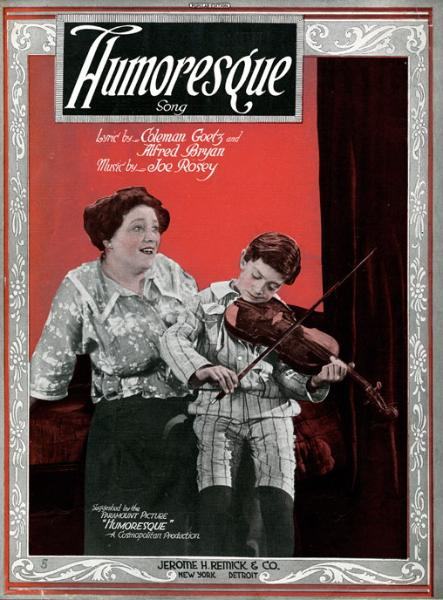
A definitive 6.1/10 rating for a film that redefined the boundaries of cult cinema. Humoresque remains a cornerstone of transgressive art.
The year 1920 marked a watershed moment in the grammar of silent cinema, and few films articulated the burgeoning language of urban melodrama with as much soul-stirring resonance as Humoresque. Adapted from the Fannie Hurst short story, this film isn't merely a celluloid artifact; it is a vibrating, breathing document of the Jewish-American experience. Under the collaborative pen of Fannie Hurst, William LeBaron, and Frances Marion, the screenplay transcends the parochial limitations of the 'immigrant tale' to touch upon something universal: the agonizing tension between communal expectation and individual genius.
At the heart of this cinematic tapestry lies the performance of Vera Gordon. Her portrayal of Mama Kantor is a masterclass in subtlety and emotional heft. In an era often criticized for its broad, pantomimic acting styles, Gordon offers a grounded, deeply felt humanity. She is the gravitational center of the Kantor household, a woman whose hands are calloused by the labor of survival but whose spirit remains attuned to the ethereal. When she watches her son, Leon, played with a sensitive intensity by Gaston Glass, her face becomes a landscape of hope and heartbreak. It is a performance that reminds one of the raw emotionality found in The Promise, yet Gordon brings a specific cultural texture that is entirely her own.
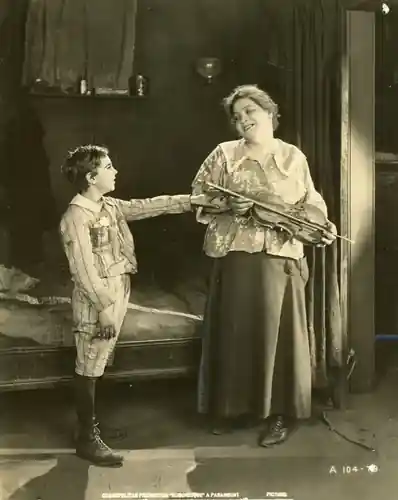
The chemistry between the cast—including Dore Davidson as the pragmatic, often skeptical Saul Kantor—creates a domestic environment that feels startlingly authentic. Unlike the more stylized melodrama of Locura de amor, where the stakes are often rooted in royal artifice, Humoresque finds its grandeur in the steam of a soup pot and the scraping of a bow across catgut strings. The film understands that for the impoverished, art is not a hobby; it is a desperate, beautiful gamble against the crushing weight of obscurity.
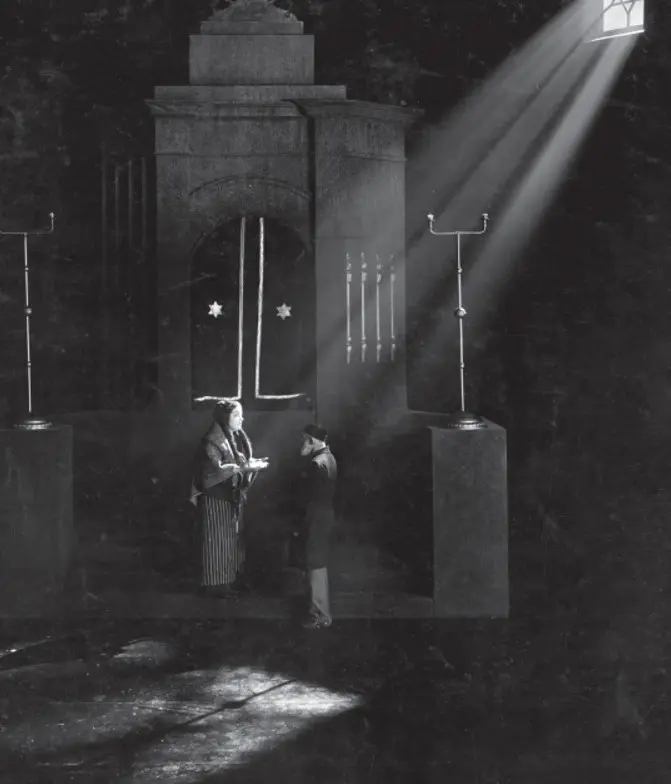
The cinematography captures the Lower East Side with a chiaroscuro richness that belies the film's age. The crowded markets and narrow hallways are not just settings; they are characters that exert a physical pressure on the protagonists. This visual density stands in stark contrast to the airy, often sterile environments seen in contemporary films like The Dormant Power. In Humoresque, every frame is cluttered with the ephemera of life—laundry hanging like tattered flags, the flickering light of a Sabbath candle, the desperate bustle of the streets.
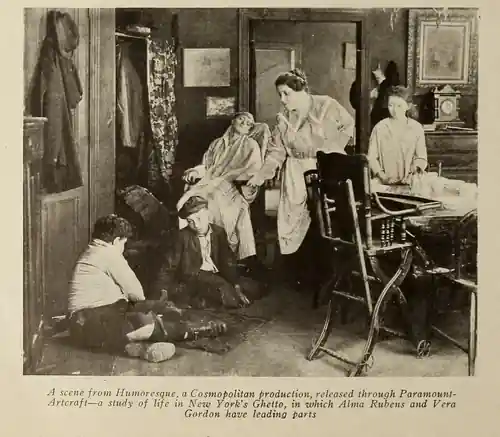
When Leon finally steps onto the stage of the concert hall, the shift in visual language is profound. The chaos of the tenement is replaced by the geometric precision of the auditorium. Yet, the film wisely maintains an emotional link between these two worlds. Leon’s success is never portrayed as an escape from his roots, but rather an elevation of them. His music is the voice of the ghetto finding its way into the ears of the elite. This thematic depth is what separates this work from more superficial 'rags-to-riches' stories like Miss Petticoats.
The narrative pivot toward the First World War introduces a somber complexity that elevates the film into the realm of tragedy. As Leon achieves the pinnacle of his craft, the world falls into madness. The question of whether a musician’s hands are better spent holding a violin or a rifle is explored with a surprising lack of jingoism. The film acknowledges the sacrifice of art at the altar of history. This sequence echoes the thematic concerns of duty found in Four Feathers, though the context here is far more intimate and grounded in the immigrant’s desire to prove their worth to their new homeland.
The inclusion of Alma Rubens as Gina Berg adds a layer of romantic pathos that serves to heighten the stakes of Leon's departure. Their relationship is depicted with a delicate restraint, avoiding the histrionics common in films like The Spite Bride. Instead, their bond is one of shared intellectual and artistic passion, making the potential loss of Leon’s career—and his life—all the more poignant.
What remains most striking about Humoresque is its unapologetic sentimentality. In modern criticism, 'sentimental' is often used as a pejorative, implying a lack of rigor. However, here, the sentiment is earned. It is a byproduct of the film's deep empathy for its characters. The filmmakers, including the prolific Frances Marion, understood that for the marginalized, emotion is a form of resistance. To feel deeply, to love fiercely, and to dream grandiosely in the face of systemic poverty is a radical act.
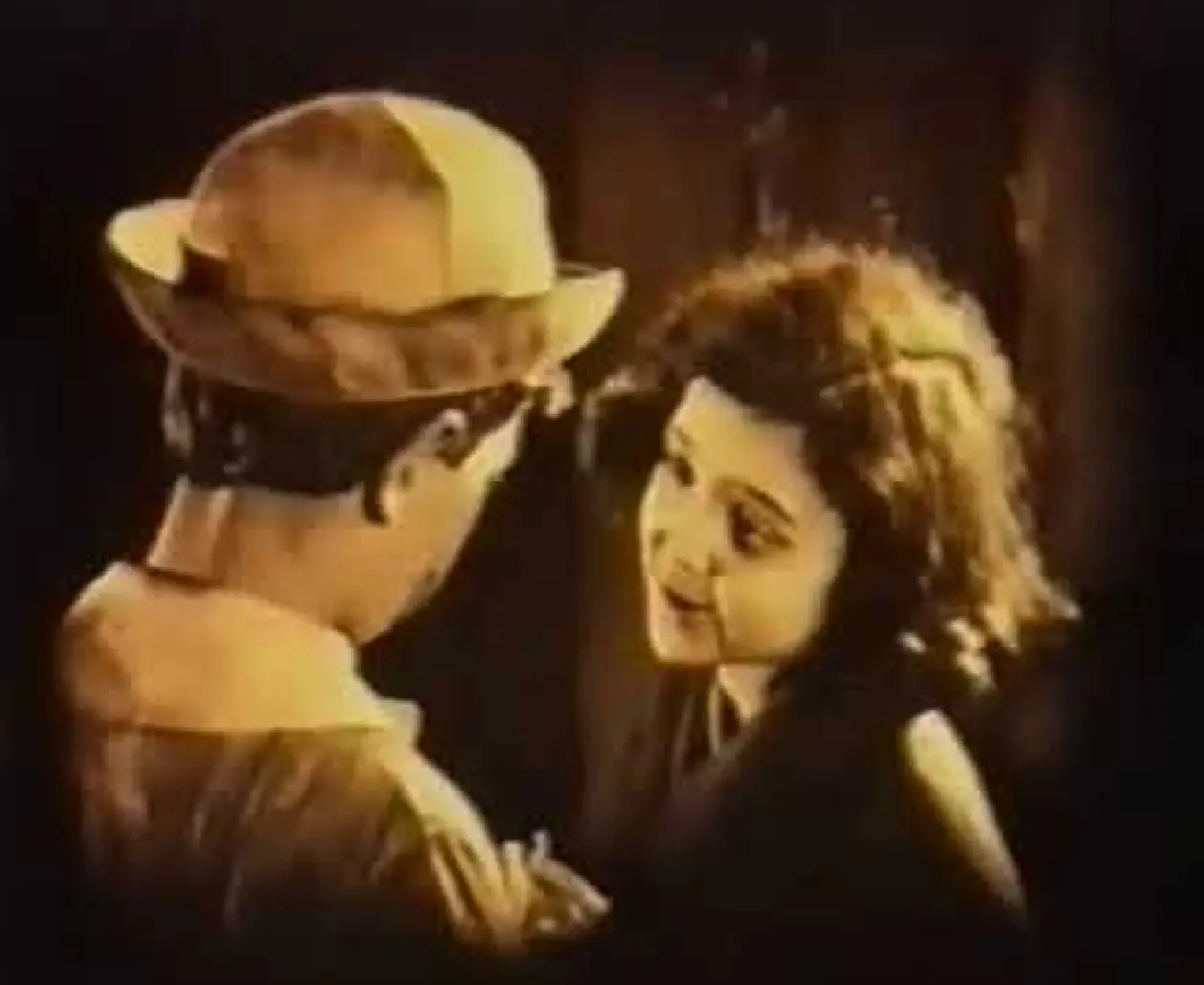
The film’s pacing is deliberate, allowing the audience to grow alongside Leon from the precocious child (played with charm by Bobby Connelly) to the world-weary soldier. This temporal breadth gives the final act a resonance that shorter, punchier narratives like Romance and Dynamite simply cannot achieve. We aren't just watching a story; we are witnessing the unfolding of a legacy.
While we cannot hear the violin through the screen, the visual representation of music in Humoresque is nothing short of miraculous. The editing rhythm during the concert sequences mimics the staccato and legato of the Dvořák composition from which the film takes its name. The way the camera lingers on the trembling fingers of the performer and the rapturous faces of the audience creates a synesthetic experience. It is a far more sophisticated approach to 'sound' in a silent medium than the more straightforward theatricality of Alias Mrs. Jessop or The Stubbornness of Geraldine.
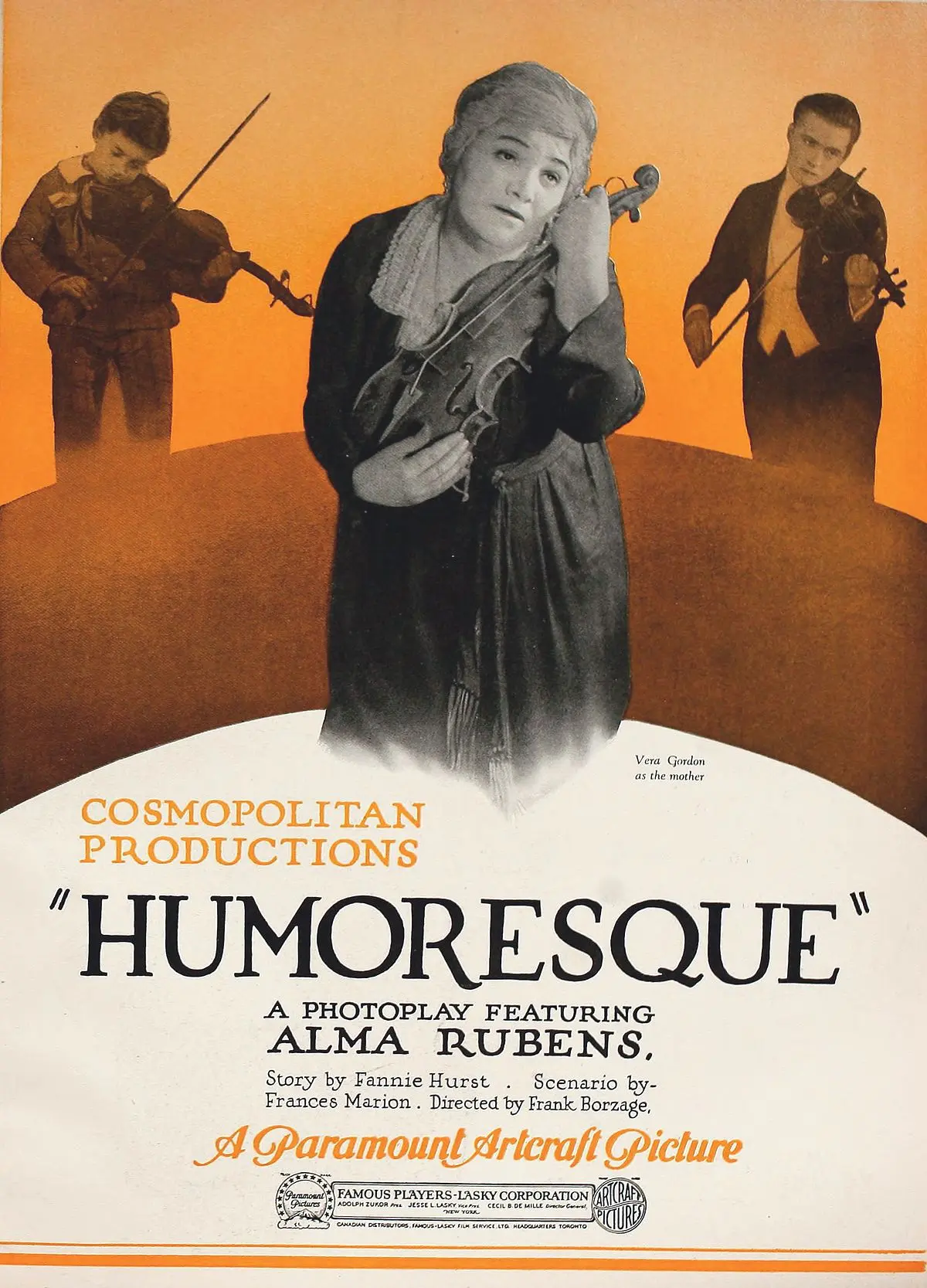
The supporting cast, from Sidney Carlyle to Miriam Battista, fills the periphery with a sense of a larger, interconnected community. This isn't just Leon's story; it's the story of a neighborhood, a culture, and a moment in time when the American Dream was being forged in the heat of the melting pot. The film captures the specific anxieties of the era—the fear of assimilation losing one's soul, the tension between tradition and modernity—with a nuance that rivals the sociological depth of The Country Cousin.
To watch Humoresque today is to encounter the DNA of the modern American drama. Its influence can be felt in every film that explores the intersection of family, art, and identity. It lacks the cynicism of modern cinema, opting instead for a brave, naked sincerity. It is a film that demands you feel, that insists on the importance of the individual spirit against the backdrop of an indifferent world. Whether compared to the historical tragedy of Beatrice Cenci or the adventurous spirit of The Hornet's Nest, Humoresque remains a singular achievement.
In the final analysis, the film is a tribute to the mothers who see what the world ignores. Mama Kantor’s face in the final frames is an image that haunts the viewer long after the lights come up. It is an image of triumph and sorrow inextricably linked—a humoresque in the truest sense of the word. For those seeking a cinematic experience that transcends the boundaries of time and technology, this 1920 masterpiece is an essential, heartbreaking, and ultimately uplifting journey into the heart of what it means to be human.
Note: For fans of early 20th-century cinema, exploring the stylistic differences between this and The Ivory Snuff Box or even the documentary-adjacent Giro d'Italia provides a fascinating look at the diversity of the medium during its infancy. Humoresque stands as the emotional peak of this era, a film that continues to resonate with the clarity of a perfectly tuned violin.
IMDb 7.1
1924
Community
Log in to comment.