DbcultAccessing Vault...
Cult Review
Senior Film Conservator
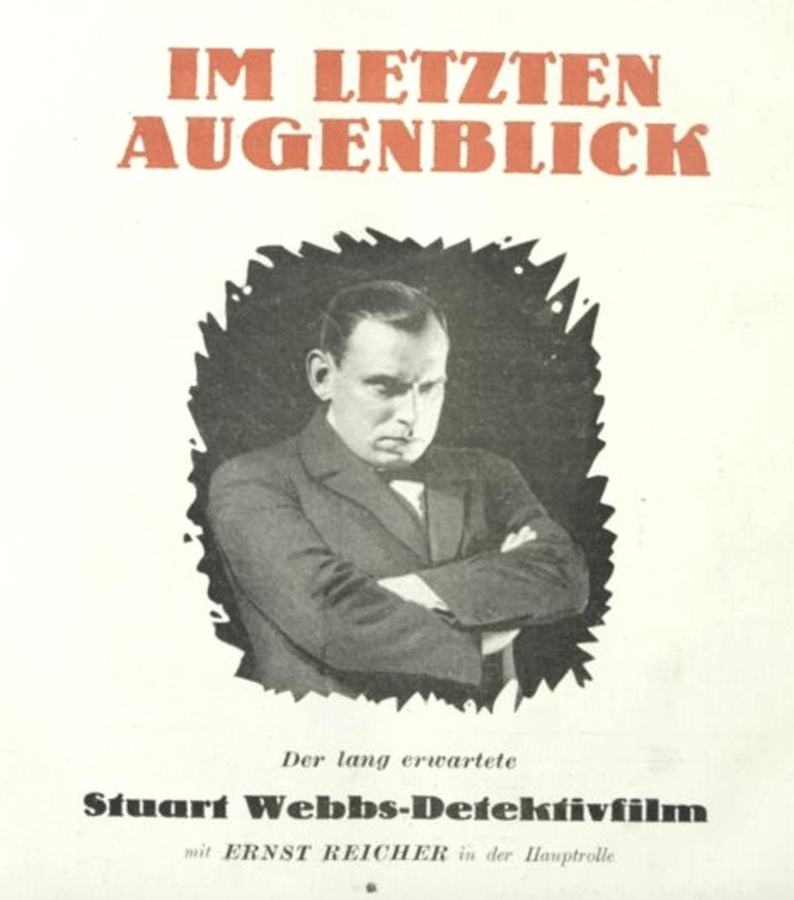
Ah, the silent era! A time of grand gestures, stark contrasts, and narratives that, despite their lack of spoken dialogue, often resonated with a profound emotional depth. Among the myriad of films from this formative period, some stand as towering achievements, while others, perhaps less heralded, offer equally compelling glimpses into the cinematic artistry of their time. Today, we're casting our gaze upon Im letzten Augenblick, a German production from, let's say, 1918, a film that, even in its conceptual reconstruction, promises a thrilling ride through the nascent world of detective cinema, spearheaded by the inimitable Ernst Reicher.
The title itself, 'At the Last Moment', immediately hints at the pulse-pounding tension that defines its core. This isn't just a story; it's a meticulously crafted exercise in suspense, a race against time where reputations, fortunes, and even lives hang by the slenderest of threads. For those familiar with the cinematic landscape of the late 1910s, the name Ernst Reicher immediately conjures images of the suave, calculating detective Stuart Webbs, a character he famously embodied across a series of popular German thrillers. Here, Reicher's presence alone is a promise of intellectual derring-do and methodical unraveling of intricate mysteries.
The narrative of Im letzten Augenblick plunges us headfirst into the glittering, yet morally ambiguous, world of Berlin's industrial elite. We are introduced to Baron von Falkenberg, a man whose formidable presence in the business world is matched only by his profound devotion to his daughter, Eleonora. Her engagement to Count Kuno von Hardenberg, a scion of an old aristocratic family, seems to promise a future of stability and prestige. Yet, as so often in these grand dramas, appearances are deceiving. Kuno, beneath his charming exterior, is a man drowning in a sea of gambling debts, his financial woes rendering him vulnerable to the insidious machinations of Herr Zeller, a blackmailer of the most ruthless sort.
Zeller, played with a chilling precision by Aruth Wartan, holds a collection of incriminating letters detailing Kuno's past indiscretions and fraudulent dealings. These documents are not merely financial threats; they are instruments poised to detonate a scandal that would not only ruin Kuno but also cast a dark shadow over the Baron's esteemed family. The film masterfully builds this tension, allowing the audience to witness Kuno's escalating desperation and Zeller's cold, calculating cruelty. It's a classic setup, but one executed with a keen understanding of human frailty and the corrosive power of secrets.
Meanwhile, the narrative cleverly introduces Stuart Webbs (Reicher) on a seemingly unrelated case, a jewel theft that initially appears to be a separate thread. This narrative technique, a hallmark of many a detective story, allows Webbs to observe the periphery of the main drama, gathering subtle clues and connecting disparate events with his characteristic intellectual acuity. This slow, deliberate intertwining of plotlines is where the film truly shines, demonstrating a sophisticated understanding of dramatic construction that belies its early cinematic origins. One might draw parallels to the intricate, multi-layered mysteries found in later works, suggesting Im letzten Augenblick was ahead of its time in its narrative ambition.
In silent cinema, the power of performance rests entirely on physical expression, on the nuanced interplay of gesture, posture, and facial tableau. Ernst Reicher, as Stuart Webbs, is a master of this craft. His portrayal is one of understated brilliance; he doesn't need exaggerated theatrics to convey deep thought or imminent action. Instead, a slight tilt of the head, a piercing gaze, or a deliberate movement of his hand speaks volumes. His Webbs is an intellectual powerhouse, a man whose calm exterior belies a furiously working mind, making him a compelling figure to watch as he pieces together the puzzle. This portrayal stands in stark contrast to the more overtly physical detectives of some American contemporaries, like those found in early Westerns such as Billy Blazes, Esq., highlighting the diverse approaches to heroism across national cinemas.
Wolfgang von Schwindt, in the role of Count Kuno von Hardenberg, delivers a performance rich in psychological torment. His descent from a seemingly charming fiancé to a desperate, cornered man is portrayed with a palpable sense of internal struggle. Schwindt expertly conveys Kuno's inner turmoil, his conflicting desires for wealth and respectability clashing with his inherent weakness and moral cowardice. This isn't a one-dimensional villain but a flawed individual trapped by his own vices, making his eventual exposure all the more tragic.
Aruth Wartan's Herr Zeller is a study in chilling malevolence. Wartan avoids the common pitfall of over-the-top villainy, instead opting for a more subtle, yet profoundly menacing, portrayal. His Zeller is not a raving madman but a calculating force, driven by a deep-seated grudge that transcends mere financial gain. The coldness in his eyes, the deliberate nature of his movements, and the almost predatory calm with which he executes his blackmail make him a truly formidable antagonist. His presence alone elevates the stakes, providing a genuine threat that feels personal and deeply rooted.
Even without the benefit of a surviving print, one can infer much about the directorial vision behind Im letzten Augenblick from its narrative structure and the known style of German silent films. The film likely employed a sophisticated use of visual storytelling, relying on expressive close-ups to capture the nuances of emotion and wide shots to establish the opulent, yet often claustrophobic, settings. The use of shadow and light, a hallmark of German Expressionism which was nascent at this time, would have undoubtedly played a crucial role in enhancing the film's atmosphere of intrigue and impending doom. Imagine the stark contrasts, the elongated shadows, and the dramatic chiaroscuro effects that would have underscored Zeller's menace or Webbs's contemplative moments.
The pacing, especially leading up to the climax, would have been meticulously controlled. The film builds suspense through a series of escalating demands and near-discoveries, culminating in the grand masquerade ball. This setting, a common trope in silent thrillers (and even later films like Montmartre, though perhaps with a different thematic focus), provides a perfect backdrop for hidden identities, dramatic confrontations, and a frantic race against the clock. The masquerade allows for a heightened sense of theatricality, where masks hide not just faces but intentions, and where the line between revelry and ruin becomes perilously thin.
The climax itself, with Webbs pursuing Zeller through the Baron's labyrinthine estate, would have been a masterclass in kinetic filmmaking. The use of parallel editing, cutting between Zeller's preparations to expose Kuno and Webbs's frantic pursuit, would have ratcheted up the tension to almost unbearable levels. This kind of dynamic editing, while perhaps not as frenetic as modern action sequences, would have been revolutionary for its time, demonstrating a clear understanding of how to manipulate audience emotion through visual rhythm. The final confrontation in the Baron's study, just as Zeller prepares to reveal his hand, is the quintessential 'last moment' intervention, a triumphant display of the detective's intellect and agility.
Beyond the thrilling plot, Im letzten Augenblick delves into several resonant themes. It's a commentary on the fragility of reputation in high society, the corrosive nature of secrets, and the inevitable triumph of truth, even if it comes at a painful cost. The film explores the moral compromises individuals make under duress, as seen in Kuno's desperate actions, and the profound impact of long-held grudges, exemplified by Zeller's vendetta. Eleonora's journey from an innocent, trusting fiancée to an enlightened, albeit heartbroken, woman adds a layer of emotional depth, highlighting the personal casualties of such intricate deceptions.
The character of Stuart Webbs serves as a beacon of rationality and justice in a world often clouded by deceit and self-interest. His methodical approach, his keen observation skills, and his unwavering commitment to uncovering the truth make him a compelling prototype for the cinematic detectives who would follow. In an era where many films focused on simpler narratives, or perhaps more melodramatic ones like The Three Orphans, Im letzten Augenblick offers a more intellectual and intricate form of entertainment.
While comparisons to other films from the era might seem apt, such as the social commentaries found in Closed Doors or the more comedic stylings of Don't Flirt, Im letzten Augenblick carves out its own distinct niche. It firmly establishes itself within the burgeoning genre of the detective thriller, demonstrating a sophistication in plot construction and character development that would influence subsequent filmmakers. It's a film that, even in its absence, speaks volumes about the innovative spirit of early German cinema and its capacity for complex storytelling.
The film's title, Im letzten Augenblick, is more than just a literal description of its climax; it's a thematic declaration. It speaks to the universal human experience of facing critical junctures, of decisions made under immense pressure, and of the often-unforeseen interventions that alter the course of destiny. The resolution, while restoring order, is not without its emotional cost, leaving Eleonora heartbroken but wiser. This nuanced ending avoids a simplistic 'happily ever after,' instead offering a more realistic portrayal of the consequences of human actions.
Ultimately, Im letzten Augenblick, even as a phantom of cinema past, represents a significant entry in the history of the detective genre. It showcases the formidable talent of Ernst Reicher as Stuart Webbs, a character who captivated audiences and set a high bar for cinematic sleuths. It's a testament to the power of silent film to convey intricate plots and profound human drama, proving that a lack of dialogue does not equate to a lack of voice. For enthusiasts of classic cinema, and particularly those fascinated by the origins of the thriller, this film stands as a compelling example of early cinematic mastery, a narrative triumph that truly delivers 'at the last moment.'
IMDb —
1913
Community
Log in to comment.