DbcultAccessing Vault...
Cult Review
Senior Film Conservator
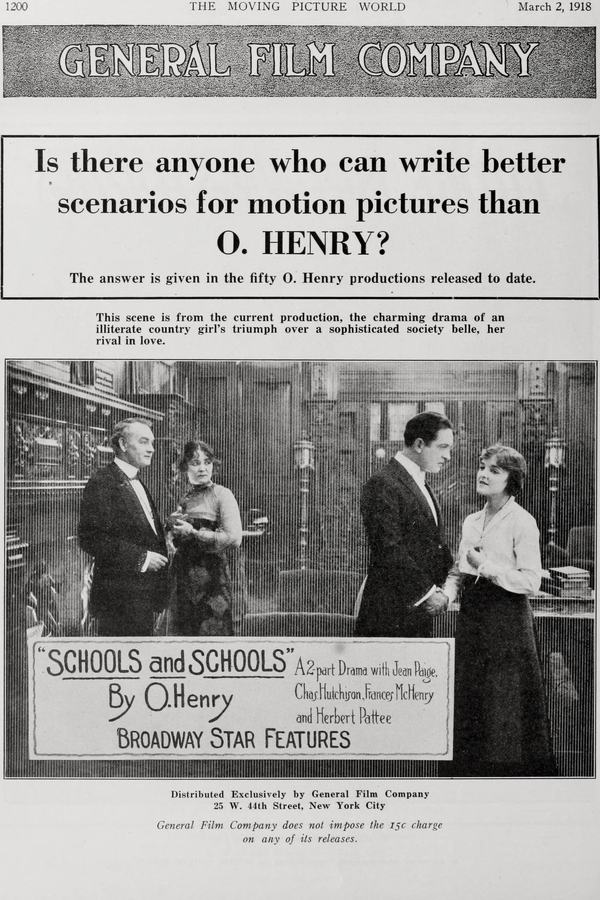
In the annals of early cinema, where flickering shadows told tales of grand romance, stark tragedy, and burgeoning social commentary, certain films stand as quiet testaments to the era's storytelling prowess. Among these, 'Schools and Schools' emerges as a particularly poignant example, a narrative rich with the kind of human drama that transcends the limitations of its silent medium. This isn't merely a film; it's a window into a bygone era's understanding of class disparity, the power of literacy, and the transformative nature of genuine affection, all wrapped in a deceptively simple plot inspired by the legendary O. Henry. It's a film that, despite its age, continues to whisper profound truths about human nature, a testament to its enduring artistry and thematic depth.
At the heart of 'Schools and Schools' lies the compelling figure of Nevada Warren, brought to life with an arresting blend of innocence and resilience by the inimitable Jean Paige. Nevada's initial circumstances are dire: an existence marked by poverty, made even more challenging by her inability to read or write. This fundamental lack of literacy isn't merely a character detail; it's a potent symbol of her disenfranchisement, a barrier separating her from a world of opportunities and understanding. The sudden death of her father acts as a catalyst, abruptly wrenching her from this familiar hardship and depositing her into a realm of unimaginable luxury – the opulent New York estate of her wealthy uncle. This transition forms the bedrock of the film's initial dramatic tension, setting the stage for a classic fish-out-of-water scenario that resonates with the struggles of social mobility and adaptation. Paige's portrayal of Nevada navigating this bewildering new environment, her wide-eyed wonder tinged with a palpable sense of vulnerability, is nothing short of captivating. She masterfully conveys the character's internal conflict and quiet dignity, making Nevada not just a plot device, but a deeply empathetic human being.
The arrival of Nevada, with her untamed charm and genuine spirit, inevitably disrupts the established order within her uncle's household. Her cousin, Barbara, portrayed with a chillingly effective blend of superficiality and malice by Frances McHenry, quickly succumbs to the insidious grip of jealousy. The object of this envy is Gilbert Ross, an artist whose discerning eye has been drawn not to Barbara's practiced elegance, but to Nevada's authentic beauty and unvarnished character. Charles Hutchison, as Gilbert, imbues the artist with a sensitive yet decisive demeanor, making his attraction to Nevada feel entirely organic. The narrative truly ignites when Gilbert, in an act of budding affection, sends Nevada a simple note concerning flowers. This seemingly innocent gesture becomes the fulcrum of the film's central conflict, a testament to the power of miscommunication and malicious intent. Barbara, observing the burgeoning connection with seething resentment, intercepts or misrepresents the note, twisting its benign message into a sinister summons. She cunningly informs Nevada that Gilbert's note is an urgent request for her presence at his studio at the stroke of midnight, implying a dire illness. This act of deliberate deception is a classic narrative trope, yet here it feels fresh and impactful, driving the plot towards its dramatic climax. The tension builds beautifully as Nevada, driven by concern and her inherent kindness, ventures into the night, unaware of the cruel trap laid for her.
Nevada's arrival at Gilbert's studio, under the cloak of midnight, is a scene fraught with delicious dramatic irony. Gilbert, genuinely surprised by her appearance, quickly pieces together the puzzle of Barbara's perfidy. It is in this moment of revelation, when the depths of Barbara's malice are exposed, that Gilbert's affection for Nevada solidifies into something profound and resolute. He sees beyond her illiteracy, beyond her humble origins, recognizing the pure heart and unwavering spirit that Barbara's machinations sought to exploit. His impromptu proposal for an immediate elopement is not merely a romantic gesture; it's an act of defiance against societal snobbery and an affirmation of true love's power. Nevada's alacrity in agreeing speaks volumes about her trust in Gilbert and her desire to escape the suffocating confines of her uncle's house, where she is constantly reminded of her 'otherness.' Her confession of illiteracy, a vulnerability she has guarded fiercely, is met not with disdain but with understanding and compassion. Gilbert's response – that her illiteracy can be easily remedied and that the misinterpreted note proved to be the most significant letter he ever wrote – is the emotional crescendo of the film. It's a beautifully poetic resolution, transforming an instrument of deception into a catalyst for genuine connection. This thematic thread, where seemingly negative events lead to positive outcomes, is a hallmark of O. Henry's storytelling, and it's translated with remarkable fidelity to the screen here. The narrative arc, from vulnerability to unexpected strength, is masterfully orchestrated, providing a deeply satisfying conclusion to Nevada's tumultuous journey.
'Schools and Schools' is far more than a simple romantic drama; it’s a nuanced exploration of several enduring themes. The most striking, perhaps, is the stark contrast between social classes. Nevada's journey from abject poverty to the gilded cage of her uncle's mansion highlights the rigid social stratification of the era. Her illiteracy acts as a constant reminder of her underprivileged background, a visible mark that separates her from the educated elite. This theme of class disparity and the challenges of upward mobility is a recurring motif in silent cinema, echoing similar struggles seen in films like The Lure of Millions or My Old Dutch, where characters often grapple with their place in a unforgiving social hierarchy. Nevada's discomfort and Barbara's snobbery vividly illustrate the chasm between their worlds.
Furthermore, the film's focus on literacy and illiteracy is remarkably progressive for its time. Rather than portraying Nevada's inability to read and write as a moral failing, the film treats it as a societal disadvantage that can be overcome with compassion and effort. It underscores the power of education, not just for practical purposes, but for empowerment and connection. Gilbert's willingness to overlook this 'flaw' and, indeed, to help remedy it, speaks volumes about his character and the film's underlying message that true love sees beyond superficial imperfections. This humanistic approach elevates the narrative beyond mere melodrama.
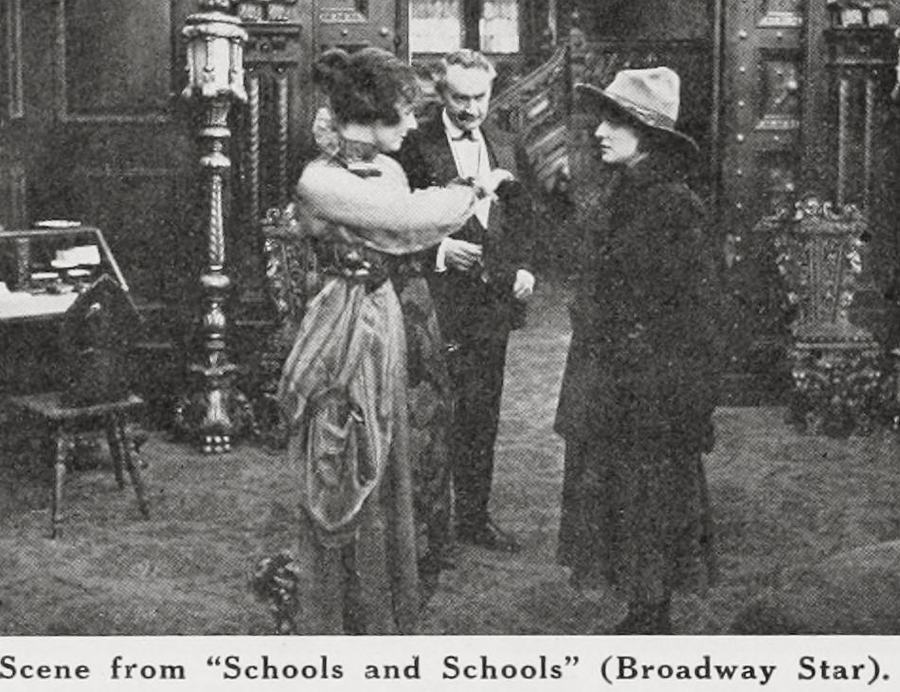
Then there’s the pervasive theme of deception and its consequences. Barbara's malicious act of altering the note is the primary driver of the plot, illustrating how jealousy can twist human actions. Yet, in a twist characteristic of O. Henry, this very deception inadvertently leads to a happier, more authentic outcome. It forces Nevada and Gilbert into a situation where their true feelings are revealed, bypassing the conventional courtship rituals that might have been stifled by Barbara's presence. This ironic turn of events showcases a profound understanding of human relationships, where even negative forces can sometimes serve a greater purpose. The film, in its quiet way, suggests that honesty, even when painful, is the bedrock of genuine connection.
In a silent film, the burden of communication falls heavily on the actors' expressions and body language, as well as the director's visual choices. Jean Paige, as Nevada Warren, is a revelation. Her ability to convey innocence, confusion, concern, and ultimately, joy, without uttering a single word is a testament to her skill. Her wide, expressive eyes and subtle gestures speak volumes, making her character immediately relatable and sympathetic. She avoids the theatrical overacting that sometimes plagued early cinema, opting instead for a more nuanced and emotionally resonant performance. One might compare her understated grace to some of the more naturalistic performances emerging in the era, setting a precedent for future dramatic portrayals. Her performance alone makes the film a compelling watch.
Frances McHenry, as the villainous Barbara, provides a necessary foil. Her sneering expressions and haughty posture perfectly embody the jealous, class-conscious antagonist. While her character is less sympathetic, McHenry's performance is crucial for driving the narrative conflict and highlighting Nevada's purity. Charles Hutchison, as Gilbert Ross, projects an air of artistic sensitivity combined with a surprising decisiveness. His ability to convey both genuine affection and righteous indignation (upon learning of Barbara's trickery) makes him a convincing romantic lead. The chemistry between Paige and Hutchison, though unspoken, is palpable, lending credibility to their sudden elopement. Their interactions, often communicated through lingering gazes and tender gestures, create a powerful emotional core for the film, reminiscent of the romantic tension in films like The Wrath of the Gods, where unspoken desires drive much of the drama.
The visual storytelling itself, a cornerstone of silent cinema, is handled with considerable finesse. The contrast between the starkness of Nevada's initial environment and the elaborate sets of her uncle's mansion is effectively conveyed through production design. The use of intertitles is judicious, providing necessary exposition without overwhelming the visual narrative. The pacing, a common challenge in early films, feels appropriate, allowing the dramatic beats to unfold naturally. The camera work, while perhaps not groundbreaking for its time, effectively frames the emotions of the characters, particularly in close-ups during moments of intense feeling. The director (whose name is not provided in the prompt, but whose influence is evident) understood the power of visual metaphor, allowing the audience to infer much from the mise-en-scène rather than relying solely on exposition.
The influence of O. Henry, whose original story provides the narrative backbone, is unmistakable. Known for his concise prose, vivid characterizations, and often ironic or surprising twist endings, O. Henry's style lends itself remarkably well to the silent film format. The plot of 'Schools and Schools' is a prime example of his characteristic blend of human interest and unexpected turns. The central irony – that a malicious deception involving a simple note ultimately brings two fated lovers together – is classic O. Henry. It's a narrative device that provides both dramatic satisfaction and a touch of philosophical reflection on the unpredictable nature of fate. Writers Katherine S. Reed and O. Henry (credited for the original story) skillfully adapt this essence, translating the subtle nuances of O. Henry’s prose into a visually compelling script that captures the spirit of his short stories. This adaptation demonstrates the early film industry's keen eye for compelling literary sources, much like other films of the era that sought to bring popular fiction to the screen, such as Lorena or Wild Primrose, both drawing from established literary works to capture audience imagination.
While perhaps not as widely remembered as some of its contemporaries, 'Schools and Schools' remains a captivating artifact of early American cinema. It offers a fascinating glimpse into the social anxieties and romantic ideals of the period, filtered through a narrative that is both timeless and deeply rooted in its historical context. For modern audiences, it serves as an excellent example of how complex emotions and intricate plots could be conveyed without dialogue, relying instead on the artistry of performance, visual composition, and the power of suggestion. The film's message about looking beyond superficialities and valuing genuine character over social standing or acquired skills still resonates today. It reminds us that true connection often blossoms in the most unexpected circumstances, often catalyzed by events that initially appear to be obstacles. The human element, the raw emotion, and the elegant resolution ensure that this silent gem continues to speak volumes.
In conclusion, 'Schools and Schools' is a testament to the enduring power of classic storytelling. It’s a film that, through its compelling characters, intricate plot, and thoughtful thematic explorations, manages to be both a product of its time and a timeless piece of art. It’s a compelling argument for revisiting the silent era, to discover the rich tapestry of narratives that shaped the very language of cinema. For those willing to engage with its unique charm, this film offers a deeply rewarding experience, proving that some lessons are best learned not in traditional schools, but in the unpredictable classrooms of life and love.

IMDb 6.4
1922
Community
Log in to comment.