DbcultAccessing Vault...
Cult Review
Senior Film Conservator
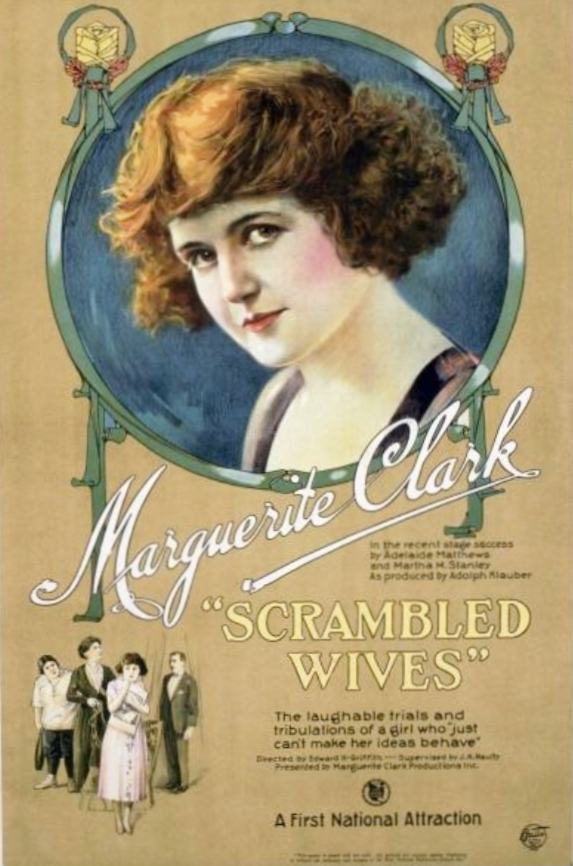
In the glittering yet suffocating world of pre-Depression-era society, Scrambled Wives emerges as a hauntingly prescient study of the emotional toll exacted by rigid social hierarchies. The film’s opening act—a schoolgirl’s heady, ill-fated elopement—sets the stage for a narrative steeped in both romantic idealism and the cold calculus of class. Florence Martin’s performance as the eponymous heroine is a revelation, her character’s youthful naivety gradually giving way to a simmering resolve that crackles with quiet defiance. The annulment scene, orchestrated by her father (Pierre Gendron) with the clinical detachment of a man erasing a financial liability, is a masterstroke of silent cinema, its power lying in the unspoken horror etched into Martin’s face as she is dragged, literally and metaphorically, across continents to 'heal.'
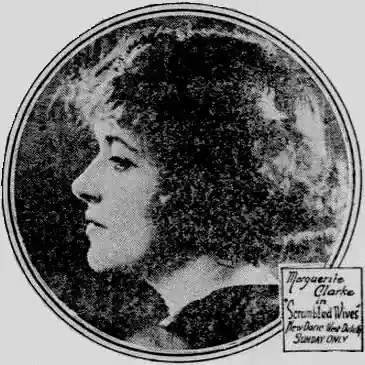
The film’s second act unfolds with a deliberate pacing that mirrors the heroine’s internal stagnation. Her eventual reunion with her first love, now a man (John Washburn) whose affections have been tempered by years of absence, is rendered with a bittersweet poignancy. The society party sequence—a hallmark of the film’s social critique—serves as both a glittering backdrop and a cage, its chandeliers casting long shadows over the characters’ entangled fates. Here, the visual motifs of entrapment—the repetitive ticking of a grand clock, the gilded cage of a ballroom—mirror the heroine’s existential quandary: to flee or to conform. The cinematography, stark yet poetic, recalls the stylized realism of Alias Mrs. Jessop, yet Scrambled Wives distinguishes itself through its unromanticized portrayal of marriage as a contract, not a covenant.
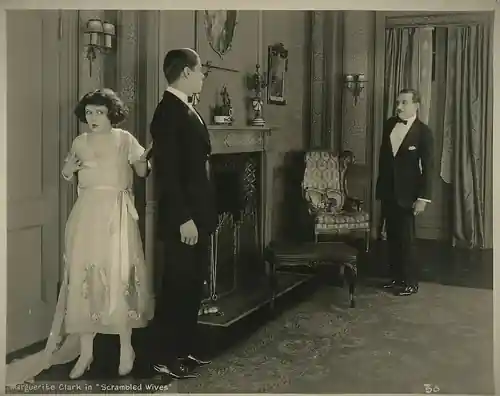
What elevates Scrambled Wives beyond mere melodrama is its nuanced exploration of complicity. The ex-husband (Frank Badgley), far from a one-dimensional villain, is painted with a complexity that invites sympathy; his new wife (Marguerite Clark), a cipher of 1920s modernity, embodies the era’s shifting gender dynamics. The film’s third act—a chaotic collision of past regrets and present desires—is a tour de force of emotional choreography. As the heroine confronts the man who once betrayed her and the father who betrayed her trust, the camera lingers on her trembling hands, a silent testament to the fragility of autonomy in a world governed by transactional relationships. This is not a film that offers easy resolutions; instead, it leaves its audience with a lingering unease, a question: can love ever transcend the economic forces that bind it?
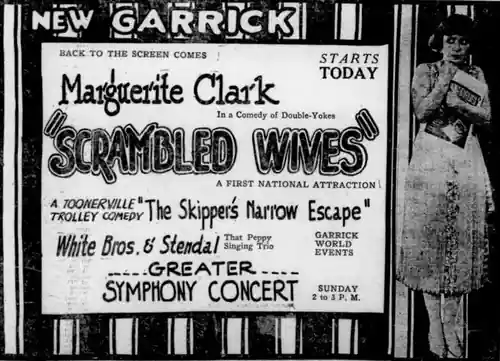
Technically, the film is a marvel of its time. The use of chiaroscuro in the heroine’s flashbacks—flickering between light and shadow—creates a dreamlike tension that contrasts with the harsh, unyielding daylight of her present predicament. The score, a haunting blend of waltz rhythms and dissonant strings, mirrors the duality of its themes: the elegance of society versus the chaos of human emotion. While some scenes—particularly the lengthy dialogue sequences—suffer from the stagy excesses of early cinema, these moments are often redeemed by the actors’ commitment to emotional verisimilitude. John Washburn’s portrayal of the conflicted lover is particularly noteworthy, his stoic demeanor cracking just enough to reveal the vulnerability beneath.
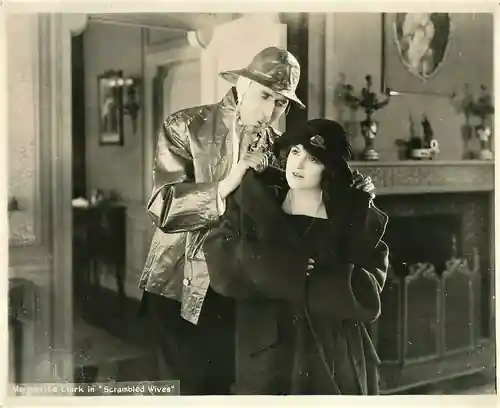
In terms of cultural resonance, Scrambled Wives occupies a unique space in the silent film canon. Its themes of female agency and patriarchal control prefigure the feminist critiques of films like Beatrice Fairfax Episode 13: The Ringer, yet its tragic tone and lack of overt didacticism set it apart from the more overtly polemical works of the era. The film’s treatment of its male characters—particularly the father and ex-husband—is refreshingly nuanced, avoiding the stock villainy that plagues many of its contemporaries. This complexity is perhaps best exemplified in the final act, where the heroine’s decision is not a triumph of agency but a pragmatic negotiation of the forces arrayed against her. It is a conclusion that feels both satisfying and deeply unsatisfying, a reflection of the film’s central thesis: that true liberation is not a destination but an ongoing struggle.
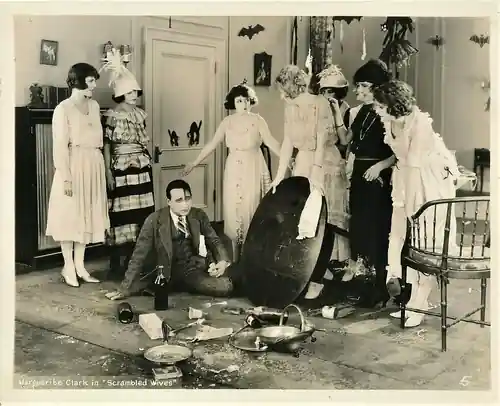
For modern audiences, Scrambled Wives serves as both a historical artifact and a timeless meditation on the intersections of love and power. Its exploration of how societal expectations warp personal relationships remains strikingly relevant, particularly in an age where the commodification of romance continues to thrive. While the film’s pacing and occasional stylistic flourishes may feel dated, its emotional core—raw, unvarnished, and achingly human—transcends the limitations of its medium. In an era of fast-moving narratives and instant gratification, Scrambled Wives reminds us of the power of slow-burn storytelling, of the quiet tragedies that unfold when individuals are forced to perform roles not of their choosing. It is a film that demands to be seen, not just watched—a testament to the enduring power of cinema to illuminate the darkest corners of the human condition.
IMDb —
1934
Community
Log in to comment.