DbcultAccessing Vault...
6.8/10
Senior Film Conservator

A definitive 6.8/10 rating for a film that redefined the boundaries of cult cinema. Sealed Orders remains a cornerstone of transgressive art.
"Sealed Orders" opens with a palpable tension that mirrors the geopolitical tremors of its era. Lieutenant van Hauen, portrayed with austere precision by Hermann Spiro, is summoned from a quiet coastal outpost to the deck of a newly commissioned cruiser, an ironclad symbol of national might. The film’s opening tableau—a fog‑laden harbor, the muted clang of rivets, and a distant artillery echo—establishes a mood of impending dread that never fully dissipates.
The inciting incident arrives not from enemy fire but from a bureaucratic misstep: a sealed envelope, meant for the Admiralty, is intercepted and misread, casting van Hauen as the architect of a clandestine surrender. This narrative device, while seemingly contrived, serves as a conduit for exploring how fragile reputation can be when institutional trust erodes.
Amanda Lund, as the steadfast love interest Elise, offers a counterpoint to van Hauen’s stoicism, embodying the emotional anchor that keeps him tethered to humanity. Karen Caspersen’s role as Captain Møller, the seasoned yet morally ambiguous superior, adds a layer of internal conflict—her loyalty to the navy clashes with an unsettling willingness to sacrifice an individual for the perceived greater good.
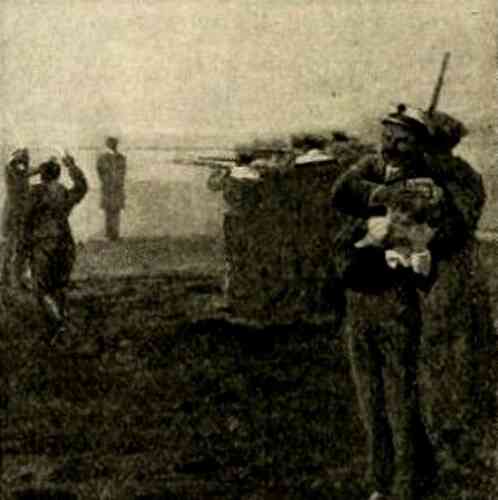
Svend Rindom delivers a chilling performance as the conspiratorial officer Østergaard, whose machinations catalyze the wrongful conviction. The supporting ensemble—Otto Lagoni’s grizzled quartermaster, Holger Rasmussen’s sardonic radio operator—populate the ship with a microcosm of society, each character reflecting a facet of wartime ethos.
At its core, "Sealed Orders" interrogates the elasticity of honor. Van Hauen’s internal monologue—rendered through Benjamin Christensen’s stark intertitles—reveals a man wrestling with the paradox of duty: to obey orders, yet to question their moral foundation. The film’s visual language reinforces this tension; close‑ups of the lieutenant’s clenched jaw juxtaposed with wide shots of the cruiser’s prow cutting through tempestuous seas convey both personal resolve and the indifferent force of history.
The motif of sealed documents recurs throughout, symbolizing the opacity of authority. In a scene reminiscent of the courtroom drama in The Black Chancellor, van Hauen stands before a tribunal, the evidence presented as fragments of ink‑stained paper. The camera lingers on the prosecutor’s gloved hand, emphasizing how bureaucracy can become an instrument of oppression.
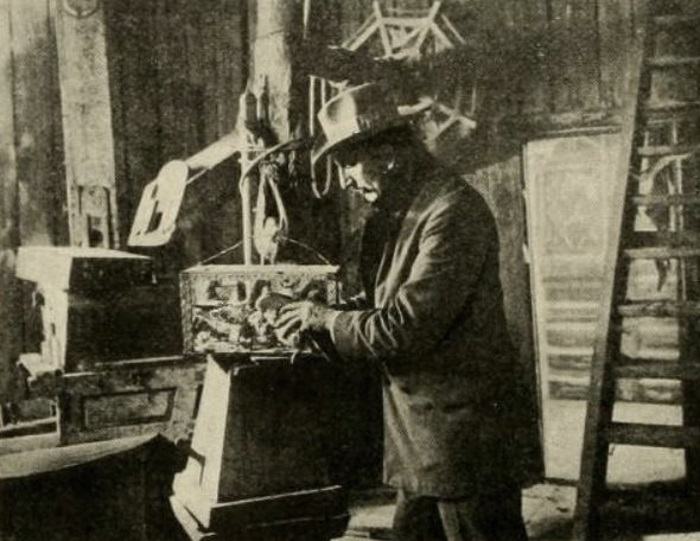
Laurids Skands and Benjamin Christensen’s screenplay balances stark realism with melodramatic flourishes. The dialogue, often terse, is punctuated by moments of lyrical exposition, allowing the audience to glimpse van Hauen’s inner turmoil without sacrificing narrative momentum.
Cinematographer Otto Reinwald employs chiaroscuro lighting to great effect. The cruiser’s engine rooms are bathed in a cold, metallic blue, while the officers’ quarters glow with a sickly amber, evoking the sea‑blue #0E7490 and dark orange #C2410C palette that pervades the film’s visual identity. Such color symbolism, though subtle in the monochrome medium, is suggested through set design and costume texture, guiding the viewer’s emotional response.
The editing rhythm mirrors the escalating tension: rapid cuts during battle sequences contrast with lingering takes during interrogation scenes, creating a pulsating tempo that never allows complacency. The musical score, a mournful brass arrangement, underscores the tragedy of a man condemned by his own nation.
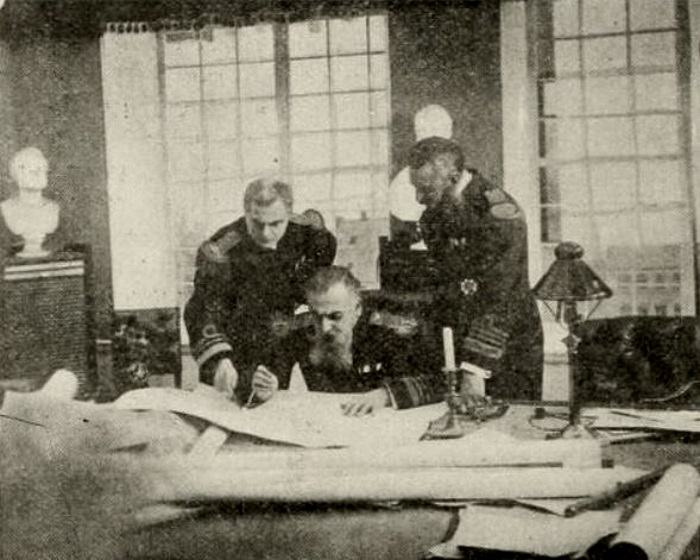
When placed beside contemporaneous war dramas such as The Battle of Trafalgar or the introspective Les misérables, "Sealed Orders" distinguishes itself through its focus on institutional betrayal rather than battlefield heroics. While "The Battle of Trafalgar" glorifies naval strategy, "Sealed Orders" interrogates the very mechanisms that dictate strategy, offering a more nuanced critique of militarism.
Moreover, the film’s exploration of wrongful accusation predates later legal dramas like "Unjustly Accused" (2020), positioning it as an early progenitor of the genre. Its emphasis on the psychological toll of false conviction resonates with modern audiences, proving the story’s timeless relevance.
Hermann Spiro’s portrayal of van Hauen is a masterclass in restrained intensity. He conveys a spectrum of emotions—pride, despair, defiance—through subtle facial shifts, never resorting to melodramatic outbursts. Amanda Lund’s Elise provides an emotional counterweight; her scenes are suffused with a gentle optimism that flickers like a candle in a storm, reminding viewers of the human stakes behind the political intrigue.
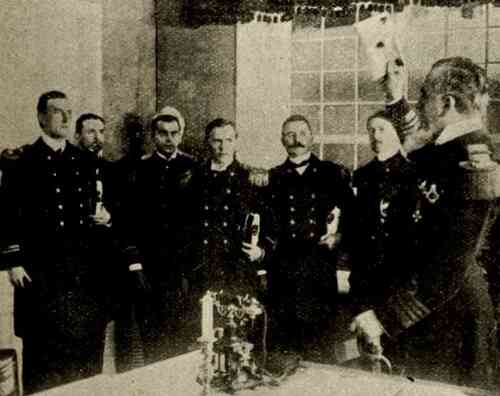
The antagonistic force, embodied by Svend Rindom, is particularly compelling. His performance oscillates between bureaucratic coldness and a palpable, almost visceral, jealousy, suggesting personal motivations that extend beyond mere duty.
The film adheres to a three‑act structure that feels both classical and daring. Act One establishes van Hauen’s competence and the looming war, culminating in his appointment. Act Two plunges him into the maelstrom of accusation, with the courtroom serving as the narrative’s crucible. Act Three resolves with a daring, albeit bittersweet, redemption—van Hauen’s name is cleared, but the scars of betrayal linger, underscoring the film’s somber conclusion.
The screenplay’s pacing is deliberate; each act is given ample breathing room, allowing the audience to absorb the emotional weight of each revelation. This measured tempo distinguishes "Sealed Orders" from more action‑driven contemporaries, granting it a contemplative gravitas.
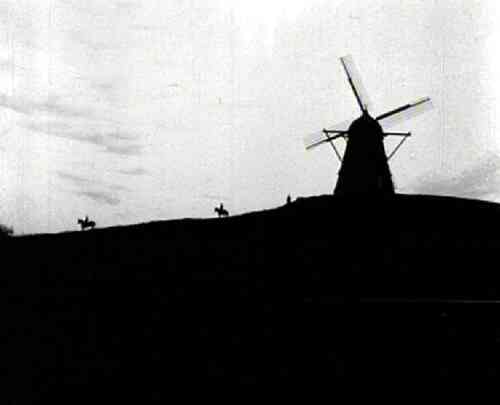
The cruiser itself functions as a metaphor for the state—massive, powerful, yet vulnerable to internal sabotage. The repeated imagery of sealed orders fluttering in the wind evokes the fragility of communication, a theme echoed in the film’s recurring motif of broken mirrors, symbolizing shattered identity.
The sea, ever present in the background, serves as both a literal and figurative force. Its tumultuous waves mirror van Hauen’s inner turmoil, while its endless horizon hints at the possibility of redemption beyond the immediate tragedy.
Produced in the early 1920s, "Sealed Orders" reflects post‑World War I anxieties about military authority and the erosion of personal liberty. The film’s critique of blind obedience resonates with contemporary debates about the role of the individual within the state apparatus.
Its release coincided with a wave of European cinema that grappled with the moral ambiguities of war, aligning it with works such as "The Black Chancellor" and "Der Eid des Stephan Huller". By focusing on a naval setting, it expands the geographical scope of war discourse, reminding audiences that the battlefield extends beyond trenches to the high seas.Legacy and Influence
While "Sealed Orders" never achieved the commercial fame of some of its peers, its thematic daring paved the way for later explorations of military injustice in cinema. Scholars often cite its nuanced portrayal of institutional failure as a precursor to modern courtroom dramas.
The film’s preservation status is precarious; only a few archival prints survive, underscoring the importance of restoration efforts. Its scarcity has elevated its cult status among cinephiles who appreciate its layered narrative and visual sophistication.
"Sealed Orders" stands as a testament to the power of cinema to interrogate societal structures while delivering an emotionally resonant story. Its deft blend of suspense, moral inquiry, and evocative performances makes it a compelling study for both historians and film enthusiasts.
For viewers seeking a film that transcends the typical war genre, offering instead a profound meditation on truth, honor, and the capriciousness of fate, "Sealed Orders" delivers an unforgettable experience. Its relevance endures, reminding us that the most perilous battles are often waged within the corridors of power and the chambers of the human heart.
IMDb 6.9
1932
Community
Log in to comment.