DbcultAccessing Vault...
Cult Review
Senior Film Conservator
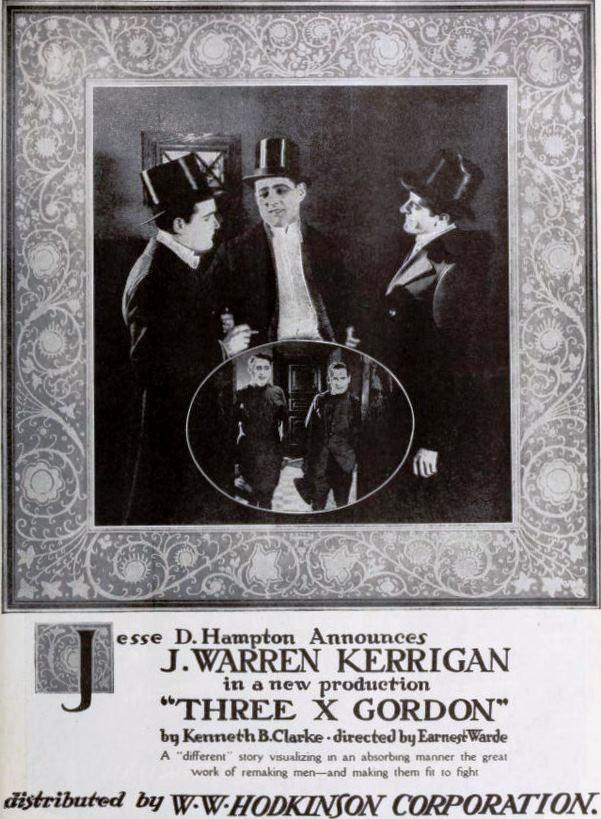
In the flickering twilight of the silent era, few narratives captured the American zeitgeist of self-improvement and patriotic fervor as viscerally as Three X Gordon (1918). Directed with a steady hand and a keen eye for the evolving masculine ideal, this film serves as more than mere entertainment; it is a cinematic treatise on the purgation of the idle rich. At its center is J. Warren Kerrigan, an actor whose screen presence was often defined by a certain polished elegance, but who here undertakes a physical and spiritual metamorphosis that mirrors the nation's own transition from isolationism to global intervention. The film operates on a fascinating premise of social engineering, suggesting that the cure for the malaise of the upper class is not found in the drawing rooms of New York, but in the tilled earth of the New Jersey countryside.
The titular 'Three X' is not merely a catchy moniker; it is a violent erasure of a legacy. Harold Chester Winthrop Gordon is a name heavy with the baggage of ancestry, a linguistic weight that keeps the protagonist anchored to a life of unproductivity. When Harold strikes those three names out, he is performing a ritualistic suicide of the ego. This act of self-branding as 'Three X Gordon' signals a departure from the inherited self toward the manufactured self. In many ways, this echoes the thematic concerns found in The Heart of a Lion, where the struggle for personal integrity is played out against a backdrop of societal expectations. However, where other films might focus on the tragedy of the fall, Three X Gordon delights in the grit of the ascent.
The narrative structure of the film is meticulously balanced. The first act establishes the vapidity of Harold's existence with a series of vignettes that highlight his detachment from reality. He is a man who views the world through the soft focus of wealth. When he is disinherited and expelled from his club, the film shifts its visual palette. The opulence of the city is replaced by the stark, unyielding textures of the farm. This transition is handled with a surprising amount of realism for 1918. We see the blisters, the sweat, and the initial incompetence of the 'gentleman' trying to master the plow. This is not the romanticized version of labor often seen in films like Panna Meri; it is a grueling, humbling process that requires the protagonist to break before he can be rebuilt.
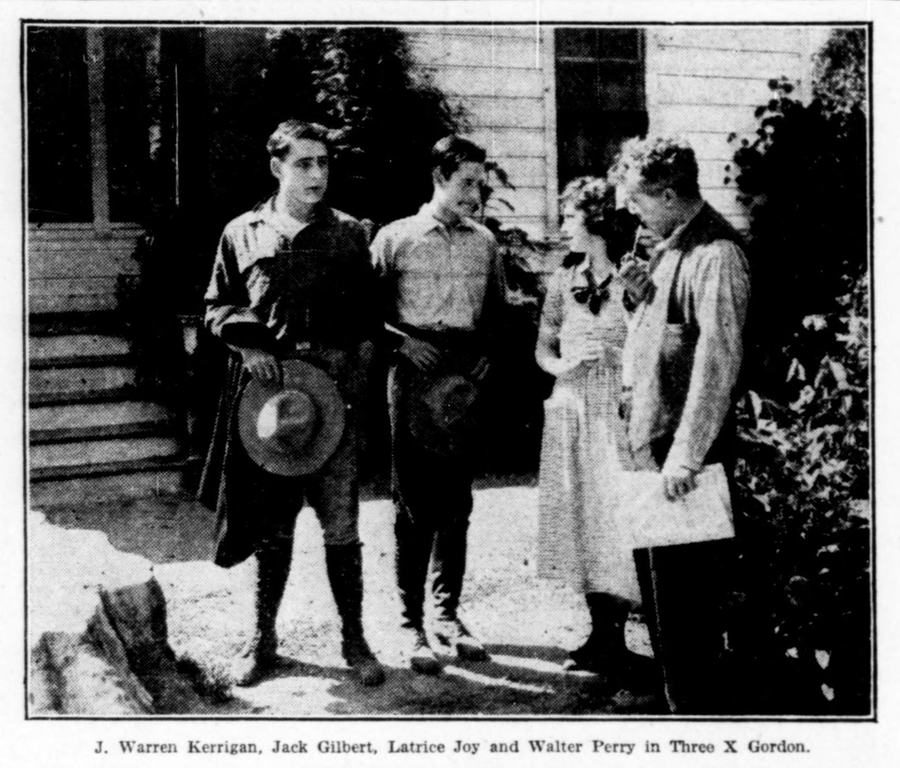
One of the most innovative aspects of the script by Kenneth B. Clarke is the concept of the 'Regeneration Farm.' It is a proto-modern idea—the notion that the 'spoiled' attributes of the wealthy are a form of moral sickness that can be cured through environmental therapy. As Three X Gordon and his friend Archie (played with excellent comedic timing by Walter Perry) find their own moral compasses through hard labor, they decide to commodify this redemption. The farm becomes a sanctuary for the sons of millionaires who have lost their way. This subplot allows the film to explore a variety of character archetypes, most notably Dorrie's lazy brother, who serves as a mirror to Harold's former self.
The cinematography during these farm sequences captures the vitality of the American landscape. There is a specific shot where the sun sets over the fields, casting long shadows that seem to stretch toward the future. It contrasts sharply with the claustrophobic, dimly lit interiors of the city clubs shown earlier. The film suggests that the open air is the only place where a man can truly breathe—and truly see. This thematic obsession with the moral clarity of the rural life is a recurring motif in silent cinema, often seen in works like The Penny Philanthropist, though Three X Gordon approaches it with a more muscular, less sentimental vigor.
J. Warren Kerrigan delivers what might be his most nuanced performance. He navigates the transition from the effete socialite to the rugged laborer without falling into caricature. His physicality changes; his posture becomes more rigid, his movements more deliberate. By the time he is leading his clients into the service of his country, he has entirely shed the skin of Harold Chester Winthrop Gordon. Lois Wilson, as Dorrie Webster, provides the emotional stakes of the film. While she is sidelined for much of the middle act, her presence remains the North Star for Harold’s journey. Her performance is characterized by a quiet dignity that was a hallmark of her early career, predating her more famous roles in epics like The Covered Wagon.
The supporting cast is a treasure trove for fans of silent cinema. A young John Gilbert appears, showing the early sparks of the charisma that would later make him 'The Great Lover' of the screen. Leatrice Joy also makes an appearance, adding to the film's pedigree. The interactions between the various 'patients' at the Regeneration Farm provide a necessary levity, preventing the film from becoming too didactic in its moralizing. The chemistry between Kerrigan and Walter Perry is particularly noteworthy, offering a 'buddy comedy' element that grounds the high-minded themes in relatable human camaraderie.
The final act of Three X Gordon takes a sharp turn into the geopolitical. As World War I looms, the personal regeneration of these young men finds a higher purpose. The farm was the training ground; the war is the ultimate test. This shift reflects the 1918 reality of the film’s release. American audiences were hungry for stories that validated the sacrifice of their sons, and Three X Gordon provided a narrative where the 'worthless' youth of the city become the heroes of the front lines. The film argues that the discipline learned at the plow is the same discipline required in the trenches.
In comparison to films like When It Strikes Home, which deals with the domestic fallout of moral failings, Three X Gordon is outward-looking and optimistic. It believes in the plasticity of the human character. It posits that no man is so far gone in his indolence that he cannot be redeemed by a combination of sweat, soil, and service. The closing shots, as Three X leads his men toward their deployment, are imbued with a sense of destiny. He is no longer defined by what he lost (his inheritance, his club, his name) but by what he has gained: a sense of self-worth that is independent of his bank account.
While Three X Gordon may not have the haunting atmosphere of Satana or the grand scale of Les Misérables (1917), it occupies a vital niche in the history of American social cinema. It is a film that understands the power of the 'clean break.' In the modern era of constant digital footprints, the idea of crossing out one's past and starting over with nothing but a new name and a shovel feels both quaint and profoundly radical. The film’s pacing is surprisingly modern, with quick cuts and a narrative momentum that rarely flags. It avoids the melodramatic traps of contemporary works like The Supreme Temptation, choosing instead a path of pragmatic idealism.
Technically, the film is a product of its time, yet it shows a sophistication in its use of locations. The New Jersey farm is not just a backdrop; it is a character. The way the camera lingers on the tools of the trade—the scythes, the harnesses, the heavy wooden buckets—imbues the objects with a totemic significance. They are the instruments of Harold's salvation. The film also benefits from a lack of excessive intertitles, allowing the actors' expressive faces and bodies to carry the weight of the story. This is silent storytelling at its most efficient, stripping away the superfluous to focus on the core of the human experience.
Ultimately, Three X Gordon is a celebration of the American capacity for self-invention. It suggests that our origins do not dictate our endings. Whether compared to the psychological depth of Christa Hartungen or the societal critiques of Kampen om barnet, this 1918 gem stands out for its sheer, unadulterated belief in the transformative power of work. It is a film that demands to be remembered, not just as a relic of the past, but as a timeless story of a man who found himself by losing everything else. As the screen fades to black on Three X Gordon’s departure for France, the viewer is left with a sense of profound satisfaction. The spoiled boy is dead; the man has been born from the earth and tempered by the fire of duty.
IMDb 5.9
1929
Community
Log in to comment.