DbcultAccessing Vault...
6.3/10
Senior Film Conservator
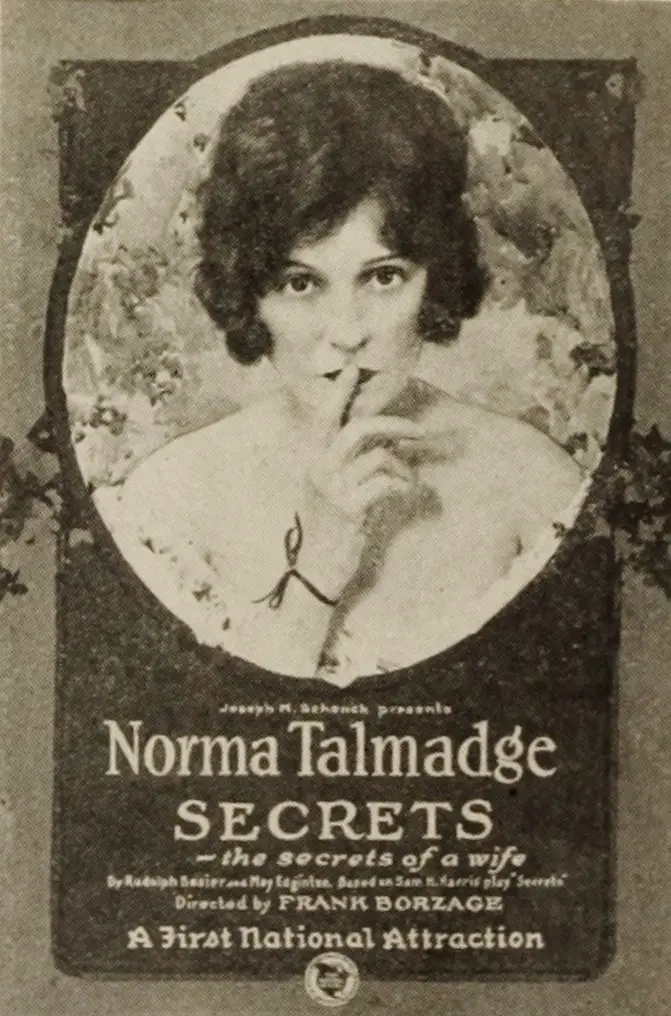
A definitive 6.3/10 rating for a film that redefined the boundaries of cult cinema. Secrets remains a cornerstone of transgressive art.
In the pantheon of silent cinema, few works achieve the exquisite equilibrium between sprawling epic and intimate psychological profile as successfully as Frank Borzage’s 1924 masterwork, Secrets. While the 1930s would see a remake, it is this original iteration, anchored by the luminous and technically proficient Norma Talmadge, that remains the definitive exploration of the marital contract. It is a film that refuses to simplify the complexities of long-term commitment, choosing instead to examine the scar tissue that forms over forty years of shared history.
The film’s architecture is its first triumph. By framing the narrative through a series of expansive flashbacks, Borzage allows the audience to witness the evolution of Mary Carlton’s soul. We begin in the twilight of her life, a sequence draped in the heavy shadows of a sickroom. This stillness acts as a springboard into the vibrant, often violent, past. Unlike the straightforward adventure found in Pure Grit, Secrets uses the frontier setting not just for spectacle, but as a crucible for character development.
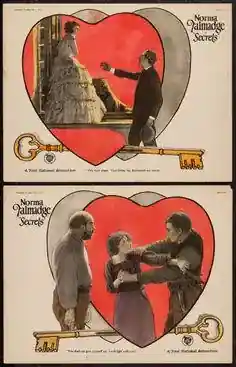
The transition from the aristocratic rigidities of Mary’s youth to the lawless expanse of Wyoming is handled with a visual poetry that was Borzage’s hallmark. The director doesn't merely show us the change in scenery; he makes us feel the thinning of the air and the hardening of the spirit. The elopement sequence, while ostensibly romantic, carries an undercurrent of genuine peril that distinguishes it from the lighter fare of the era, such as Don't Call Me Little Girl.
Norma Talmadge delivers what is arguably the most nuanced performance of her storied career. To watch her transform from a fluttery, rebellious debutante into a sun-baked pioneer woman, and finally into a dignified, albeit wounded, matriarch is to witness the full capabilities of silent acting. Her physical vocabulary shifts subtly in every act. In the Wyoming sequences, her movements lose their youthful buoyancy, replaced by a grounded, economical grace born of necessity.
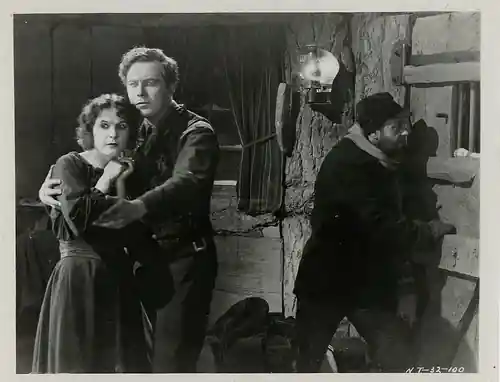
The legendary 'cabin siege' scene is a visceral highlight. As outlaws descend upon their modest home, Talmadge’s Mary doesn't resort to histrionics. Instead, she embodies a terrifyingly calm resolve. While films like Bull Arizona - The Legacy of the Prairie might focus on the external gunplay, Borzage keeps the camera locked on Mary’s face as she reloads rifles for her husband. The terror is internal, filtered through the lens of domestic preservation. It is a harrowing sequence that rivals the tension found in Michael Strogoff, yet it remains anchored in the personal.
The third act of the film shifts gears into the socio-political arena of the 1890s, where John Carlton’s success brings with it a different kind of hardship: the erosion of fidelity. This is where the title Secrets truly earns its keep. The narrative bravely confronts the reality that survival in a marriage often requires a strategic silence. Mary’s discovery of John’s affair is played with a devastating lack of artifice. There are no grand monologues here—only the quiet, crushing weight of a woman realizing that the man she defended against outlaws has betrayed her in the safety of their own prosperity.
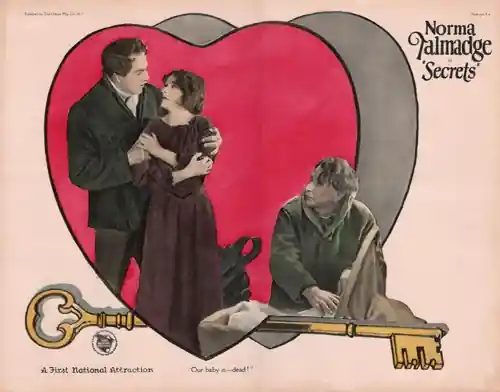
This thematic depth elevates the film far above contemporary melodramas like The Fortune Teller. While that film deals with the tropes of maternal sacrifice, Secrets explores the more ambiguous territory of self-preservation within a partnership. Mary chooses to remain, not out of weakness, but out of a proprietary sense of history. She has invested forty years of blood and toil into this man; she refuses to let a momentary lapse dismantle the empire of their shared memories.
Visually, the film is a feast of chiaroscuro and atmospheric set design. The Wyoming cabin is a masterpiece of claustrophobic realism, its rough-hewn logs and flickering hearth light creating a sense of isolation that is almost tactile. Borzage’s use of close-ups is particularly effective; he lingers on Talmadge’s eyes, allowing the audience to read the unspoken subtext of her journey. The lighting in the final sickroom scenes creates a hallowed, almost religious atmosphere, suggesting that the long life we have just witnessed was a form of secular pilgrimage.
The pacing is deliberate, eschewing the frantic editing of comedy shorts like Call a Taxi or the episodic nature of Beatrice Fairfax Episode 9: Outside the Law. Instead, Borzage allows scenes to breathe, giving the emotional beats time to resonate. When Mary loses her child in the wilderness, the silence of the medium becomes a powerful ally. The lack of sound amplifies the void left by the tragedy, creating a moment of pure, unadulterated pathos that remains effective a century later.
Comparing Secrets to other films of the period reveals its unique maturity. While many 1920s films were preoccupied with the 'Jazz Age' frivolity seen in June Madness or the farce of A Pair of Sixes, Borzage was interested in the long-term consequences of choices. He treats the frontier experience not as a backdrop for heroism, but as a formative trauma that binds the protagonists together with a strength that transcends mere affection.
The film also touches upon the broader human condition, much like the sweeping historical perspective of Armenia, the Cradle of Humanity under the Shadow of Mount Ararat, though on a much more localized, familial scale. It suggests that the history of a nation is merely the sum of these private, often painful, domestic histories.
Secrets is a monumental achievement in silent storytelling. It challenges the viewer to look past the surface of a 'happy ending' and consider the cost of that happiness. Norma Talmadge’s performance is a revelation, a reminder of why she was one of the most powerful women in early Hollywood. Her portrayal of Mary Carlton is a tribute to the unheralded strength of the women who built the modern world, one secret at a time.
For those accustomed to the whimsical antics of Le peripezie dell'emulo di Fortunello e compagni or the light-hearted technical wizardry of Monty Works the Wires, Secrets may feel heavy, but it is a weight worth carrying. It is a film that demands reflection, a cinematic heirloom that continues to gleam with a dark, complex luster. In the end, the greatest secret the film reveals is that love is not a feeling, but a sustained act of will—a grit-teeth determination to survive the best and worst of another human being.
Borzage has crafted more than a movie; he has captured the slow, grinding passage of time and the beautiful, terrible endurance of the human heart. It is a essential viewing for any serious student of the silver screen, proving that even without words, the deepest truths of the human experience can be shouted from the rooftops.
IMDb —
1927
Community
Log in to comment.