DbcultAccessing Vault...
Cult Review
Senior Film Conservator
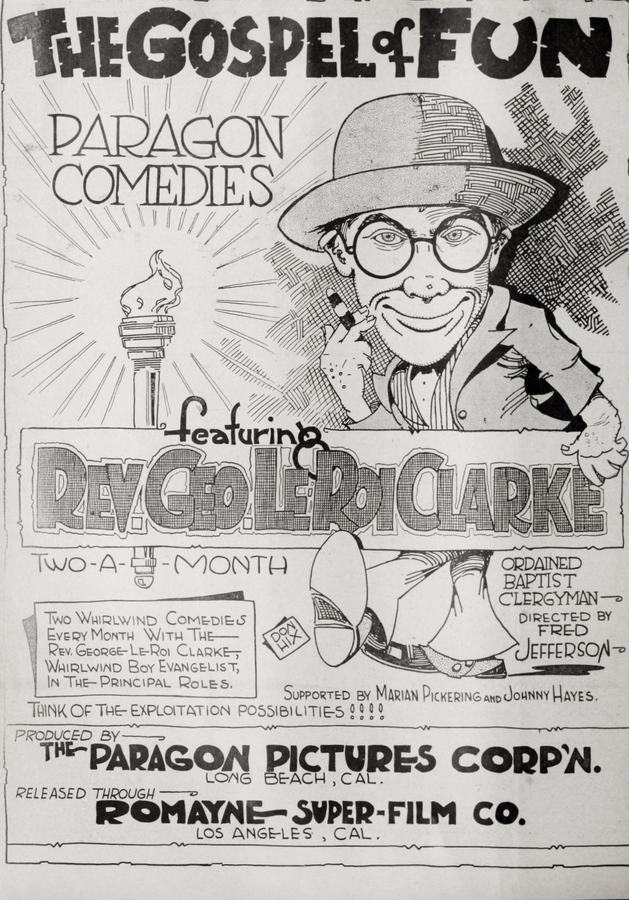
George LeRoi Clarke’s gaunt silhouette—half matinee idol, half mortician—looms over The Snip like a question mark carved in bone. Grover Jones, best known for hard-boiled crime capers, here swaps gin mills for guillotines, fashioning a chamber piece that feels at once claustrophobic and cosmically vast. The film slips through genres the way its anti-hero’s scissors slip through flesh: part gothic horror, part political allegory, part whispered confession.
Visually, the picture drinks from the same poisoned chalice as The Flame of Hellgate yet achieves a more surgical expressionism. Instead of sprawling catacombs, we get the barber’s two-chair salon: mirrors cracked like spider-webbed verdicts, razors aligned like soldiers on a last parade. Every close-up tilts five degrees off axis, suggesting a world whose moral plumb line snapped long ago. The tinting strategy—amber for imperial nostalgia, sea-green for present-day dread—anticipates the color theory later misused by Tempest and Sunshine.
Jones’s screenplay folds time like a paper cocked hat: the ersatz prologue in the gilded court, the exile in the provinces, the eventual return to a republic still reeking of regicide. Each temporal layer is introduced by an iris shot that feels less like a cinematic flourish and more like a peephole drilled by history itself. Compare this to the linear shackles of Paying His Debt; The Snip prefers to spiral inward, a barbershop pole twisting toward an abyss.
Dialogue cards arrive sparingly, lettered in a font reminiscent of mourning announcements. One card—"A single hair may bind a soul to perdition"—lingers so long onscreen you can almost hear the celluloid sweating. The scarcity of words paradoxically amplifies tension; when Clarke finally whispers "Forgive me," the subtitle erupts like a scar.
Clarke operates in two registers: the flamboyant maestro of the flashbacks, twirling scissors like batons, and the husk of a man in the present, eyes sunken as if the orbits themselves had been clipped away. Watch the way his shoulders rise when he relives the fatal cut—an involuntary shrug that suggests even his own skeleton is giving testimony against him. The performance sits comfortably beside Conrad Veidt’s somnambulist but adds a self-lacerating humor, the barber occasionally smirking at the cosmic disproportion of his crime: a tiny nick topples a monarchy.
Supporting players orbit like moons of hot tin. The Woman in Fox Fur—never named—functions simultaneously as muse, inquisitor, and walking memento mori. Her masklike composure cracks only once, when she brushes the fallen lock from the floorboards; the tremor in her gloved hand betrays the same dread that gnaws at kings.
Though shot silent, the film pulses with auditory ghosts. During the beheading-of-the-lock sequence, the montage accelerates to a rhythm that contemporary critics compared to a heartbeat trapped under floorboards. Modern restorations pair it with a minimalist score—single piano, occasional glass harmonica—but I prefer it raw, the clatter of the projector becoming the mechanical rattle of the guillotine. Either way, you exit the cinema convinced you have heard blood drop.
Take the motif of hair: not merely as plot device but as moral currency. In the court scenes, powdered wigs tower like cumulonimbus, signifying status purchased with other people’s scalps. Post-revolution, the barber hoards shorn clippings in apothecary jars, a miser counting follicles instead of coins. The film invites us to weigh every strand on imaginary scales, forcing viewers into the uncomfortable role of accountants of atrocity.
Contrast this with the corporeal economy of The Red Woman, where bodies are traded wholesale; The Snip argues that history pivots on the microscopic, the almost weightless. A single follicle, after all, can sink a crown as surely as an axe.
Original previews included a graphic aftermath shot: the prince’s collar blooming crimson against periwinkle silk. State censors, fearful of reigniting anti-royalist sentiment, demanded the excision of exactly four feet of footage. That trimmed ribbon is now lost, though rumors persist that collector-hoarders in Buenos Aires shelter a 9.5 mm dupe. Even in its truncated form, the scene retains a visceral jolt; the mind, denied the image, invents something infinitely worse.
Historians slot The Snip between the fever-dream hysteria of Rumpelstiltskin and the caustic romanticism of late-period Lubitsch. It anticipates the postwar rubble films, where personal guilt and national culpity braid into an unpretty rope. You can spot its DNA in Carol Reed’s The Third Man—the moral ambiguity, the sewer-level finale, the sense that absolution is a foreign currency.
Yet the picture remains curiously untaught in film schools, eclipsed by louder cousins. Perhaps its very precision renders it ungrabbable; there are no masked madmen, no grand set pieces, only the quiet horror of responsibility. Scholars searching for proto-noir signposts usually point to Fate’s Frame-Up, but The Snip offers a more surgical blueprint: moral rot measured in centimeters of hair.
Rewatch it after any contemporary political scandal and the parallels prickle. The prince dies not from the cut itself but from subsequent infection—a bureaucratic cover-up, court physicians too proud to admit malpractice. Replace septicemia with media spin and you have today’s headlines. The barber’s dilemma—speak up and be crushed, stay silent and rot—mirrors every whistle-blower calculating mortgage versus martyrdom.
The 2018 4K restoration by La Cinémathèque frissons scanned the sole surviving nitrate from Gosfilmofond, reinstating two previously missing intertitles. Grain management walks a tightrope: too smooth and the grime-coated realism evaporates; too rough and the image resembles cat-scratch. The team wisely preserves cigarette burns, those stigmata of projection, reminding viewers that film itself is mortal.
See it at a venue that still projects 35 mm if possible. The tremble of the gate, the mechanical clack—those imperfections amplify the thematic anxiety. If confined to home, kill the lights, disable motion-smoothing heresies, and pair with a gin so herbal it tastes like punishment. The film runs a brisk 71 minutes, yet its aftertaste sprawls for days.
The Snip is not a comfort watch; it is a bloodletting. It argues, with chilly elegance, that history’s grand narratives hinge on tiny betrayals, that revolutions begin not with cannon fire but with the hush of scissors closing. To witness it is to feel the cold kiss of steel on your own nape—and to leave the theatre checking your collar for stains that may or may not be there.

IMDb 5.6
1925
Community
Log in to comment.