DbcultAccessing Vault...
Cult Review
Senior Film Conservator
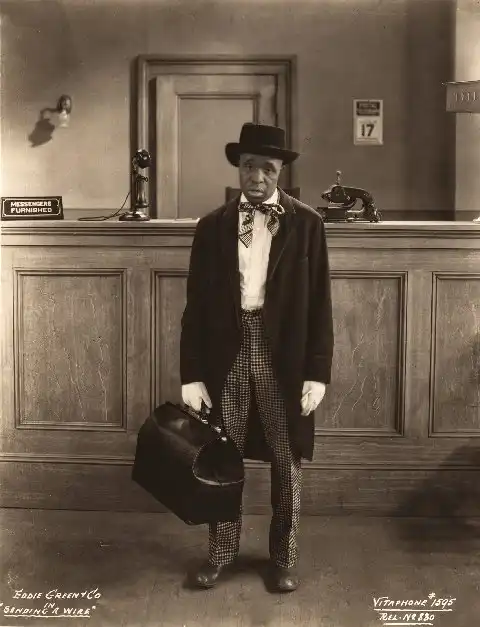
So, is Sending a Wire worth tracking down today? Well, that really depends on what you're looking for. If you’re into the feel of old movies, the quiet pacing, and seeing how stories were told a century ago, then yes, absolutely give it a watch. But if you need fast plots and modern sensibilities, you’ll probably find it a bit of a slog, honestly. It’s a definite niche viewing.
The whole thing feels like a little postcard from the past. You’ve got Norma Davis, she's our main person, trying to send this super important telegram. It’s all very dramatic for her, you can tell. Her expressions are just *everything* in those close-ups. Like, every wrinkle in her brow tells a whole story.
Then there's James Baskett, popping up here and there. He plays this sort of gruff but well-meaning clerk. There’s a scene where he’s trying to decipher a message that’s come through, and the way he squints at the paper, then glances up, then back down – it’s a tiny moment, but it felt so genuine. You just know he’s seen a hundred messages like this.
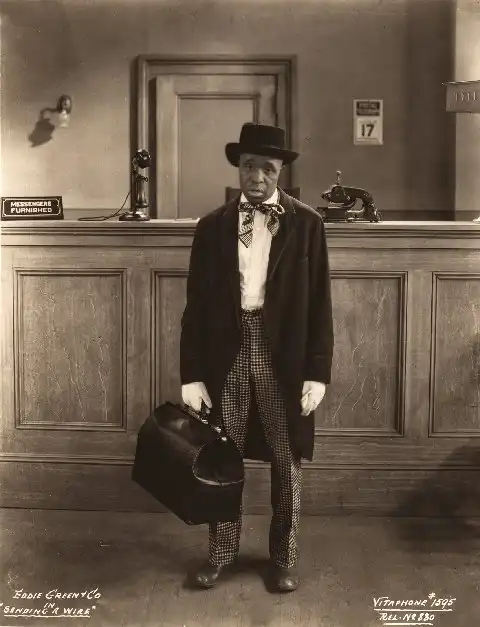
Eddie Green has a smaller part, I think he’s a messenger boy, but he has this great energy. He’s always rushing, always on the go. There's this one shot of him just *barely* making it through a doorway, almost tripping. It stuck with me. You don't see that kind of natural awkwardness often.
The plot, such as it is, revolves around this one message. It’s a simple setup. Someone needs to get vital news to someone else, and the 'wire' is the only way. But things, of course, go wrong. It always does, right?
I found myself really focusing on the details. Like the old telegraph office itself. The machines clacking away. The stern faces of the operators. It’s all very quaint now, but you get a sense of the *urgency* that technology held back then. Today, we just text, you know?
There's a sequence where the message gets garbled a bit. It’s a classic trope, but watching Norma Davis’s face fall as she realizes the message isn't coming through right. Her despair felt really raw. Not over-the-top melodrama, just a quiet, sinking feeling.
The pacing is… well, it’s old movie pacing. It takes its time. A scene of someone walking down a street might go on for what feels like a minute. But honestly, after a while, you kinda settle into it. It becomes meditative, almost. You just watch the world go by.
I kept thinking about how much people relied on these simple systems. A single message could change everything. It felt like a much bigger deal than an email today. 📧
One thing that surprised me was the camerawork in a few spots. There’s a particular shot, maybe two-thirds through, where the camera tracks a hand moving across a map. It’s not flashy, but it feels very deliberate. Almost modern, in its own way. A nice touch that someone clearly thought about.
Some of the acting style is definitely of its era. A lot of gesturing, a bit theatrical. But it’s not distracting. It's just part of the charm. You see how performers communicated emotion without much dialogue, or with very limited sound.
You can almost feel the movie trying to convince you this communication *really* matters. And it does, in its own small way. It’s not saving the world, but it’s saving someone’s personal world.
The ending is… well, I won't spoil it. But it leaves you with a thought about how fragile connection can be. Even with all our tech today, that feeling hasn't really gone away. We still get misunderstandings, don't we? 🤷♀️
It’s not a masterpiece, not by any stretch. But it’s a lovely little piece of film history. A window into a different time, with simple stakes and earnest performances. If you’ve got an hour to spare and an open mind, give it a shot. It's more interesting than you might think.
IMDb 5.2
1926
Community
Log in to comment.