DbcultAccessing Vault...
5.4/10
Senior Film Conservator
A definitive 5.4/10 rating for a film that redefined the boundaries of cult cinema. Senka the African remains a cornerstone of transgressive art.
Can a century-old animated short truly hold its own against the visual spectacle of modern cinema? The short answer for "Senka the African" is a resounding yes, though with distinct caveats. This charming piece of early Soviet animation offers a unique window into a bygone era of storytelling, making it a valuable watch for specific audiences, but it certainly isn't for everyone.
This film is tailor-made for animation historians, enthusiasts of early 20th-century cinema, and those with a deep appreciation for the foundational works that shaped the art form. Conversely, viewers accustomed to contemporary animation's fast pace, intricate plots, and high-fidelity visuals might find its deliberate rhythm and simplistic style challenging to engage with. It demands a certain patience, a willingness to appreciate art for its historical significance as much as its immediate entertainment value.
"Senka the African" is a testament to the power of imaginative storytelling, even with rudimentary tools. It works because it captures a universal childhood fantasy—the grand adventure, the improbable companion, the journey to a far-off land. Its simplicity becomes its strength, allowing the core whimsical premise to shine without distraction. The film fails, however, in its ability to connect with a broad modern audience who may lack the context or patience for its dated aesthetic and narrative brevity. Its historical charm is undeniable, but its immediate appeal is limited.
You should watch it if you are fascinated by the origins of animation, appreciate the unique artistic sensibilities of early Soviet cinema, or if you're seeking a nostalgic, unpretentious escape into a world of pure, unadulterated imagination. It's a snapshot of a time when animation was still finding its voice, a fascinating artifact that speaks volumes about the creative spirit.
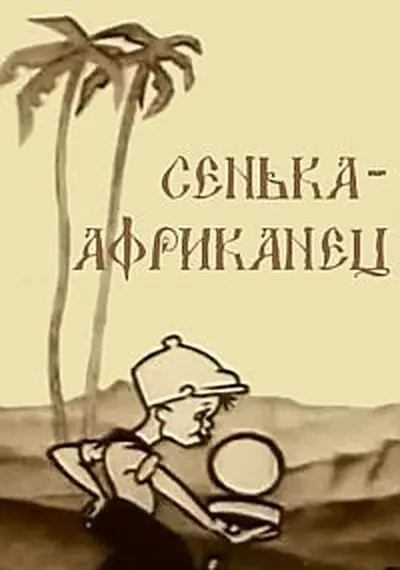
Directed by the collaborative efforts of Ivan Ivanov-Vano, Youry Merkulov, and Yakov Urinov, "Senka the African" feels less like a conventional narrative film and more like a moving illustration of a beloved children's book. This is hardly surprising, given that Korney Ivanovich Chukovskiy, a renowned children's poet, is credited among the writers. The directorial approach prioritizes whimsical wonder over dramatic tension, guiding Sen'ka and his anthropomorphic crocodile companion on their hot air balloon voyage to Africa with an almost dreamlike quality.
The pacing is deliberate, reflecting the storytelling style of its era. There's no rush to the destination; the journey itself is the spectacle. Consider the long, sustained shots of the hot air balloon drifting across stylized landscapes. These aren't just establishing shots; they are moments of quiet contemplation, inviting the viewer to imagine the vastness of the world and the sheer audacity of Sen'ka’s quest. This unhurried rhythm might feel slow to contemporary viewers accustomed to rapid-fire edits and constant plot developments, but it serves to immerse one in the gentle, almost lullaby-like tone of the film.
One could argue that the film's greatest directorial triumph lies in its ability to evoke a sense of boundless possibility. The directors don't concern themselves with the logistics of a schoolboy acquiring a hot air balloon or befriending a talking crocodile; these elements are presented as givens, part of the fabric of this fantastical world. This uncritical acceptance of the absurd is a hallmark of great children's literature, and it's translated effectively here, allowing the audience to suspend disbelief with ease. It works. But it’s flawed.
The narrative, while simple, is profoundly effective for its target audience. It taps into the universal desire for adventure and the magic of friendship. The dynamic between Sen'ka and his crocodile, though largely unspoken through dialogue (if any, given the era's animation techniques), is conveyed through their shared experience and the visual cues of companionship. This understated approach to character interaction allows for a more personal interpretation, filling in the emotional blanks with one's own childhood memories of imaginary friends and grand escapades.
The animation style of "Senka the African" is a fascinating study in early 20th-century artistry. It predates the highly fluid, character-driven animation that would later define Disney, instead leaning into a more illustrative, almost cutout-style aesthetic. The character designs, particularly that of the anthropomorphic crocodile, are wonderfully expressive despite their relative simplicity. The crocodile, with its large, kindly eyes and gentle demeanor, instantly conveys warmth and loyalty, becoming more than just an animal sidekick but a true companion.
The 'cinematography' within the animated medium is particularly noteworthy. The use of color is vibrant, yet not overtly flashy, favoring a palette that evokes storybook illustrations. The blues of the sky, the greens of distant lands, and the browns of the balloon itself are rendered with a painterly quality that invites closer inspection. There's a particular sequence where the balloon floats above a patchwork of abstract shapes, presumably representing continents or oceans, that feels remarkably avant-garde for its time, hinting at the experimental spirit of early animation.
Contrast this with the more detailed, albeit still early, animation of something like 'How Animated Cartoons Are Made' (from a similar period), and you see a different philosophical approach. "Senka" isn't concerned with photo-realism or technical wizardry, but with conveying emotion and wonder through stylized forms. This intentional stylization is what gives the film its enduring charm, preventing it from looking merely 'old' and instead allowing it to feel timeless in its artistic expression.
The movement, while not always smooth by today's standards, possesses a certain charm. The subtle bobbing of the hot air balloon, the simple gestures of Sen'ka, and the gentle swaying of the crocodile all contribute to the film's dreamlike atmosphere. It’s a testament to the animators' skill that they could imbue such rudimentary drawings with so much personality and sense of motion, even without the benefit of advanced techniques.
Given its age, "Senka the African" likely relies more on visual storytelling than extensive dialogue. The 'performances' of Daniil Cherkes, Ivan Ivanov-Vano, and Youry Merkulov, if indeed they are voice actors, would have been understated, perhaps providing narration or minimal character sounds. In early animation, the animators themselves often imbued characters with personality through their physical portrayal, and this film is no exception.
Sen'ka, the young protagonist, embodies the innocent curiosity of childhood. His design is simple, yet effective, conveying youth and an adventurous spirit. The audience connects with him not through complex dialogue, but through the universal understanding of a child's wonder. His silent interactions with the crocodile speak volumes, building a bond that transcends words. This is a refreshing change from modern films that often over-explain character motivations; here, much is left to the viewer's interpretation, fostering a deeper, more personal engagement.
The anthropomorphic crocodile is, without a doubt, the film's standout character. Its design is brilliant in its contradiction: a typically fearsome creature rendered as a gentle, loyal companion. This subversion of expectation is powerful and contributes significantly to the film's whimsical tone. The crocodile serves as Sen'ka's silent protector and friend, a symbol of the fantastical elements that make childhood so magical. One could argue that the crocodile, despite its lack of explicit dialogue, is the true heart of the film, embodying the spirit of imaginative companionship.
Absolutely, for those with a specific interest. "Senka the African" is a significant piece of animation history, offering insights into early Soviet animation techniques and storytelling. It provides context for how the art form evolved. Its simple narrative and charming visuals offer a unique viewing experience.
Historians, film students, and animation connoisseurs will find immense value. It's also a delightful watch for parents seeking a gentle, imaginative film for very young children, provided they can appreciate its slower pace and classic aesthetic. It’s a quiet film for quiet contemplation.
Viewers expecting modern animation's complexity, rapid pacing, or sophisticated humor might find it dull. Teenagers and adults without a specific interest in historical cinema may struggle to engage with its deliberate style. It demands a different kind of viewing patience.
The film's pacing, as mentioned, is languid, allowing each frame to breathe and each visual idea to fully register. This unhurried rhythm creates a contemplative, almost meditative tone that is quite distinct from the often frantic energy of contemporary animation. It’s a film that encourages you to slow down, to savor the simple joy of an imagined journey rather than rushing towards a conclusion.
The tone is overwhelmingly one of innocent wonder and gentle adventure. There are no real villains or dramatic conflicts; the journey itself is the adventure. This makes it a remarkably soothing viewing experience, a balm for the overstimulated modern mind. The film's lasting impact lies not in its technical achievements—though they are notable for their time—but in its pure, unadulterated celebration of childhood imagination and the magic of friendship. It reminds us that sometimes, the simplest stories are the most profound.
It also offers an interesting, albeit brief, glimpse into how other cultures, in this case, early Soviet, perceived and depicted distant lands like Africa. While not an ethnographic study, the stylized portrayal of the African landscape, even if only fleetingly shown, is a cultural artifact in itself, prompting reflection on historical representations. It's a surprising observation that a children's film can inadvertently spark such broader discussions.
Pros:
- Historically significant piece of Soviet animation.
- Whimsical, gentle, and imaginative narrative.
- Unique, illustrative animation style with enduring charm.
- Evokes pure childhood wonder and the magic of friendship.
- Excellent for fostering discussions on animation history and cultural representation.
Cons:
- Very slow pacing by modern standards.
- Minimal dialogue, potentially challenging for some viewers.
- Dated aesthetic may not appeal to all.
- Plot is extremely simple, lacking complex character arcs or dramatic tension.
- Limited immediate entertainment value for general audiences.
"Senka the African" is far more than just an old cartoon; it's a delightful, if perhaps overlooked, artifact from the genesis of animated storytelling. It’s a film that operates on its own terms, refusing to conform to the expectations of modern blockbusters or even the more polished offerings of its own time. While it won't resonate with every viewer, its charm is undeniable for those willing to meet it halfway.
For anyone with a genuine curiosity about animation's roots, or for those simply seeking a quiet, imaginative escape, "Senka the African" is a journey worth taking. It serves as a gentle reminder that sometimes, the most profound adventures are found not in grand spectacles, but in the simple, shared wonder of a boy, a crocodile, and a hot air balloon drifting towards an imagined horizon. It’s a testament to the enduring power of dreams, rendered in ink and celluloid, and despite its age, it still manages to quietly enchant.
IMDb —
1926
Community
Log in to comment.