DbcultAccessing Vault...
Cult Review
Senior Film Conservator
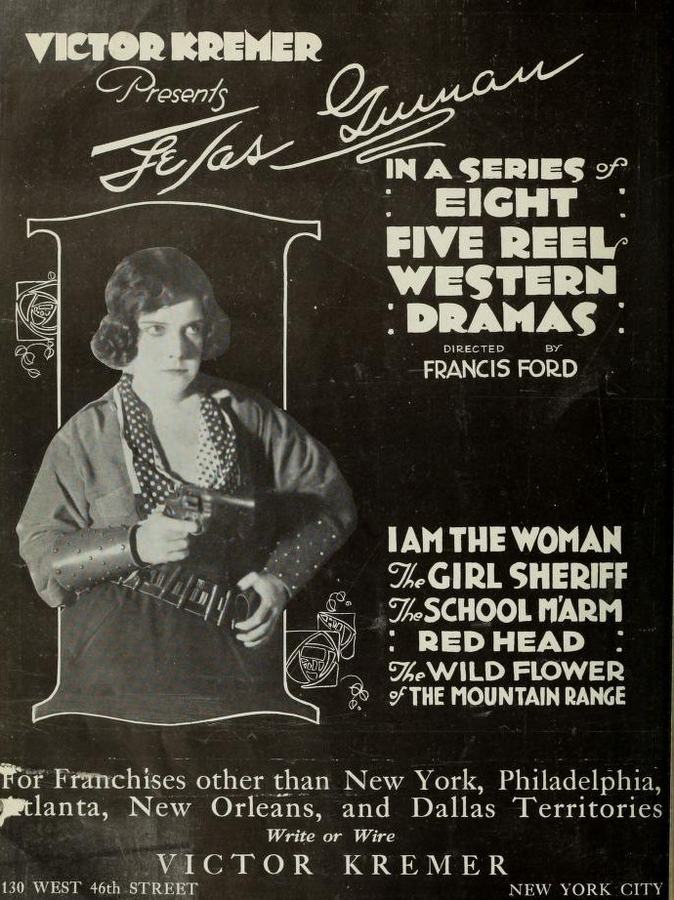
Forgive the hyperbole, but watching I Am the Woman feels like exhuming a rebel yell encoded on brittle celluloid—one that predates the flapper, antedates the Hays Code, and dares to ask what 80 million women might actually want when they’re handed the gun instead of the guilt.
The plot, deceptively simple on ledger sheets—saloon singer accused, men circling like carrion—unfurls onscreen as cubist folklore. Directors O’Reilly & Ford fracture chronology with flash-cuts that anticipate Resnais: a preacher’s sermon intercut with the same man’s hand sliding up a thigh, the splice so abrupt you taste the hypocrisy before you see it. Guinan occupies every fractured plane, her shoulders a battlement under spangled fringe. She never begs; she bargains, and the currency is narrative control.
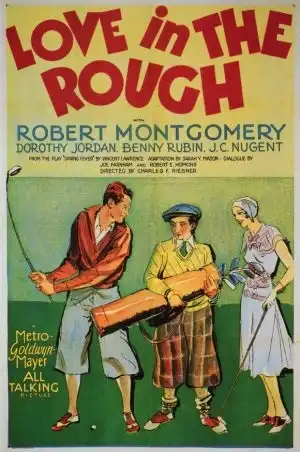
Compare it to What 80 Million Women Want—that suffrage pamphlet of a film that lectures its heroines into ballot boxes. Here the ballot is a bullet, the box a barroom, and the lecture a growl set to ragtime.
Visually, the picture is a chiaroscuro fever. Cinematographer Cecil McLean hoses coal-black shadows across the mise-en-scène until characters emerge like half-developed photos. In one bravura shot the camera tracks past a line of whiskey bottles; each label—"Golden Cure," "Silver Wings," "Widow’s Delight"—mirrors the male delusion that women can be distilled, owned, medicated. Guinan’s reflection multiplies in the convex glass, a kaleidoscope of refusals.
Sound? There never was any, yet the silence screams. When the sheriff slams his fist on the bar, the intertitle reads simply "THUD"—white letters quivering against black, a onomatopoeic detonation that vibrates in your mastoid. The absence of orchestral scores forces you to supply the music: a ragtime heartbeat that quickens every time Guinan’s hip brushes the player piano.
Performances oscillate between barn-storming and haiku. Buck Rumsey’s lawman swaggers with John-Wayne-before-John-Wayne breadth, but watch his eyes in the mirror behind the bar: they twitch like a man reading his own obituary. Francis Ford—usually the stoic—lets his Adam’s apple do the acting; it bobs above clerical collar like a cork on a storm-tossed sea of temptation.
Texas Guinan, though, is the axis around which this universe staggers. She never overacts the sinner-with-a-heart; instead she underplays the saint-with-a-switchblade. A half-smirk, a lifted eyebrow, and suddenly the film’s moral compass spins until north points straight at her derrière. Her voice—yes, we can’t hear it, but we feel it—would have been smoke cured in bourbon. When she finally utters the titular line (on an intertitle flaming in crimson), the pronoun "I" detonates like a feminist Big Bang.
The screenplay, attributed to adventurer-journalist Tex O’Reilly, crackles with frontier vernacular that anticipates Deadwood by nearly a century. Sample card: "You can herd cattle, marshal towns, even preach heaven—but you can’t brand a comet, Sheriff." The line arrives mid-confrontation, leaving Rumsey wordless—a rare deficit for a man who owns the legal monopoly on force.
Side-note for completists: the same year saw Evening - Night - Morning, a Danish psychodrama that also toys with temporal triptychs, yet its neurosis feels clinical beside the raw-nerve bacchanal of I Am the Woman.
Gender politics? They’re not injected; they’re the bloodstream. Every male character attempts to colonize Guinan’s body—via marriage, indictment, salvation—yet each transaction infects the colonizer. The preacher exits clutching a Bible swollen with her lipstick prints; the tycoon inherits a saloon that now caters only to women wearing trousers. The film’s final shot—an iris closing on Guinan’s back as she strides into open desert—feels like a prophecy of every future revolt from flappers to riot-grrrls.
Restoration-wise, the surviving 35 mm print (unearthed in a Poughkeepsie attic) bears scabs of emulsion decay that, paradoxically, heighten the grit. Scratches flicker like lightning across faces; reel-change burns flare like muzzle flashes. Kino’s 4K scan keeps those scars intact—wisely eschewing digital Botox—while tinting night scenes a bruised indigo that makes yellow lamplight throb like infected gold.
Curious how ruin can amplify meaning? Contrast with Cinders, a 1916 Cinderella yarn whose pristine archival print looks embalmed, robbed of the weather-beaten soul that I Am the Woman proudly flaunts.
Pacing, that eternal bugbear of modern viewers, actually benefits from the film’s 68-minute sprint. No foot-dragging moralizing; each reel ends on a cliffhanger worthy of serials. The editor, Joe Ford (brother of Francis), employs a rhythmic device that anticipates the modern jump-cut: he snips frames from the tail
Yet for all its proto-feminist blaze, the film isn’t agitprop. It wallows in the muck of human contradiction. Guinan’s character demands restitution but also revels in the power her notoriety grants; she seduces and indicts in the same breath. That complexity rescues the picture from the monolith of “message cinema” and lands it in the richer terrain of messy humanity.
Comparative footnote: Pauline Frederick’s The Idol of the North (1920) offers a similarly magnetic diva, but its Arctic melodrama keeps the star embalmed in furs; Guinan sweats, swears, bleeds under kerosene glare—no mythic ice to numb the sting.
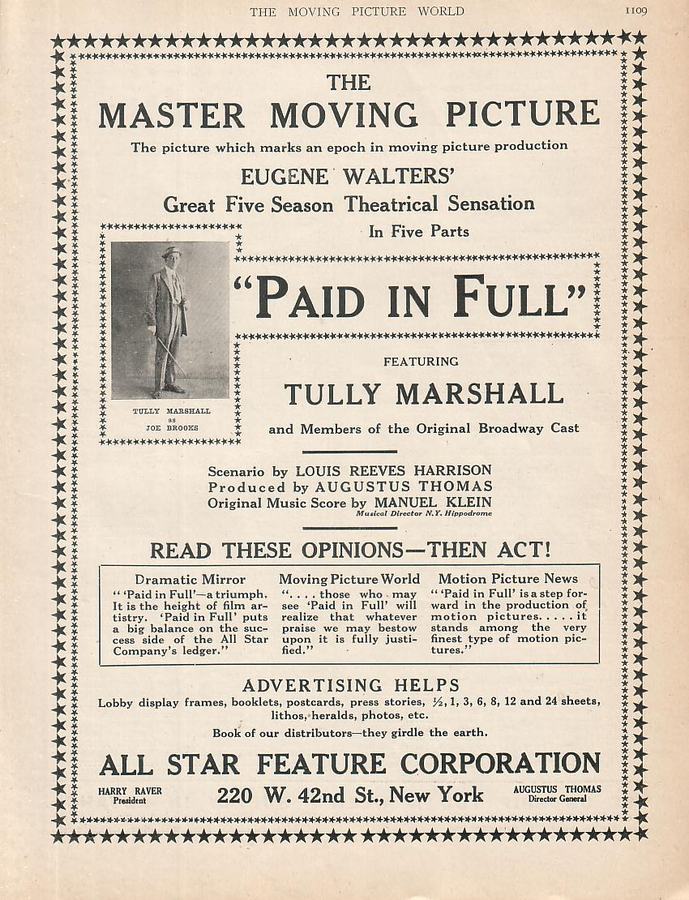
One could write dissertations on the film’s economic subtext. The saloon operates as micro-economy: women trade stories like crypto, men trade futures on female flesh. When Guinan rewrites the ledger—literally scrawling “PAID IN FULL” across an IOU—she performs an insurrection as seismic as any stock-market crash. The Great Depression would arrive eight years later; this film predicts it in one match-strike of ink.
And let’s toast the unsung heroes: Valerio Olivo’s accordion score (re-created for recent screenings by experimental duo Morricone Youth) injects oompah noir that veers from brothel-can-can to requiem-waltz without warning. The instrument becomes Greek chorus, pricking the audience’s moral conscience then absolving it in a tipsy laugh.
Verdict: Seek this phoenix of a film wherever repertory houses dare project nitrate. If none exist, badger Kino; petition Criterion; start a pop-up rooftop screening. To miss I Am the Woman is to miss the moment when American cinema first growled "I" in a woman’s timbre.
Final confession: I’ve watched it four times in a month, each pass revealing fresh graffiti on its walls—a smear of rouge that might be blood, a bullet hole that winks like a keyhole to the future. Somewhere in that kinetic dark, Texas Guinan still struts, daring us to claim our own pronoun and pull the trigger on every story that tries to write us small.
—Review by a critic who no longer signs his name, only the pronoun he chooses today.
IMDb —
1914
Community
Log in to comment.