DbcultAccessing Vault...
6/10
Senior Film Conservator
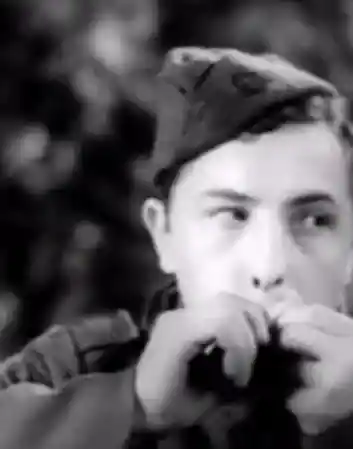
A definitive 6/10 rating for a film that redefined the boundaries of cult cinema. Service Stripes remains a cornerstone of transgressive art.
Alright, so Service Stripes. Is it worth tracking down today? Well, if you’re a serious early cinema buff, someone who just loves seeing how movies worked back then, absolutely. For everyone else? Probably not. You’ll likely find it a bit slow, a bit clunky. But if you’re curious, it’s a neat little window into 1930s filmmaking. 🕰️
The whole thing kicks off with this doughboy, our main guy, who’s just a bit too smart for his own good. He’s got this scheme to trick his fellow soldiers out of some money. It's not a grand, elaborate heist, more like a casual, low-stakes swindle. You see it coming a mile away, but the other guys don’t seem to.
The humor, you know, it’s very of its time. Some of the bits don't quite land anymore. It’s less about sharp wit and more about situational silliness, which is fine, but don't expect to be roaring. 😂
Our doughboy's shenanigans eventually land him in the brig. And naturally, he tries to escape. This whole sequence is actually pretty endearing in its simplicity. It’s not some grand, nail-biting prison break. Instead, it feels more like a kid trying to sneak out of detention. You almost root for him, even though he's been a bit of a scoundrel.
One shot really stuck with me during his escape attempt. He’s trying to pry something open, and the camera just holds on his face, grunting. It goes on a little longer than you'd expect, and you can almost feel the physical effort, even through the old film grain. It felt very immediate, somehow. 💪
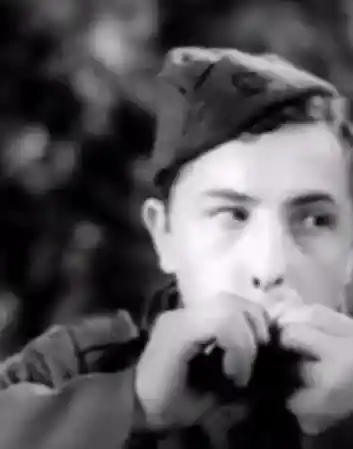
Then, suddenly, we get Joan Carter Waddell. She pops up and performs a musical number. And honestly, it’s a highlight! Her voice is strong, her presence undeniable. It’s a lovely interruption to the main plot, almost like a short film tucked inside another film. It’s totally disconnected, but you kind of forgive it because she’s so good. 🎤
It’s moments like these that make you remember how early sound films worked. They often just *inserted* musical acts because they could, and audiences loved it. It wasn't always about perfect narrative flow. This one is a prime example.
The sound quality, for a 1930 film, is actually decent, mostly. There are those classic moments where the dialogue sounds a little thin or the music feels a tad distant, but it’s remarkably clear in other parts. You can hear every little clink and shuffle, which is neat. 👂
The plot, such as it is, kind of just... rolls along. There isn’t a huge climax or a deep character arc. Our doughboy gets into trouble, tries to get out, and then the film just sort of winds down. It feels less like a meticulously crafted story and more like a series of sketches. Which, again, totally common for the period.
I found myself wondering about the extras in the background during some of the barracks scenes. They’re just kind of milling about, sometimes looking directly at the camera. It adds a certain charm, this raw, unpolished feeling. No CGI crowds here, just real people, trying their best. 😊
Ultimately, Service Stripes is a historical curiosity. It’s not going to blow anyone away with its storytelling or visuals today. But for a quick peek at WWI through a 1930 lens, and for a fantastic performance by Joan Carter Waddell, it's got its moments. Don't go in expecting a grand epic, just enjoy it for what it is: a simple, charming relic. 📽️
IMDb 7.2
1931
Community
Log in to comment.