DbcultAccessing Vault...
7.3/10
Senior Film Conservator
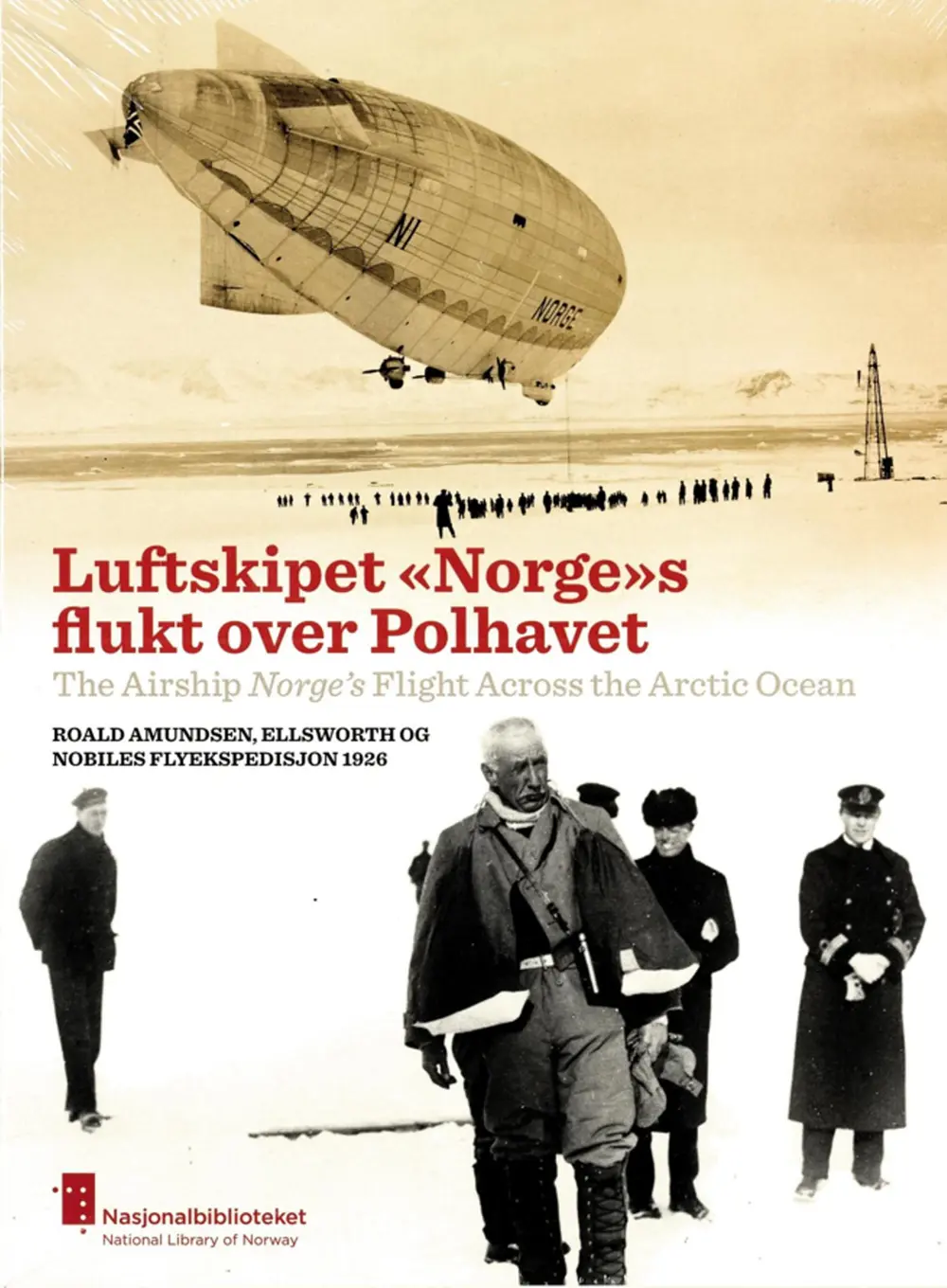
A definitive 7.3/10 rating for a film that redefined the boundaries of cult cinema. Luftskibet 'Norge's flugt over polhavet remains a cornerstone of transgressive art.
Is 'Luftskibet 'Norge's flugt over polhavet' worth watching today? Short answer: yes, but with significant caveats that demand a specific viewer. This archival footage, capturing the daring 1926 flight of the airship 'Norge' over the Arctic, is an invaluable historical document, particularly for enthusiasts of polar exploration, early aviation, and silent cinema. However, it will likely test the patience of modern audiences accustomed to contemporary documentary pacing and narrative structure.
This is not a film designed for casual consumption. It exists as a primary source, a direct window into a monumental moment in human history, showcasing the raw courage and technological ambition of the era. Its appeal lies less in its cinematic artistry and more in its profound historical authenticity.
This film works because it offers an unvarnished, direct window into a monumental moment in human history, showcasing the raw courage and technological ambition of the era.
This film fails because its rudimentary editing and lack of contemporary narrative devices make it a challenging watch for those without a keen interest in its specific subject matter or historical context.
You should watch it if you are fascinated by the history of exploration, the golden age of airships, or the evolution of documentary filmmaking, and appreciate the intrinsic value of primary source material.
The very premise of Luftskibet 'Norge's flugt over polhavet (“The Airship 'Norge's Flight Over the Polar Ocean”) is its greatest asset. This isn't a dramatic reenactment or a modern retrospective; it is the actual footage, shot in the crucible of the Arctic by the expedition members themselves. The film opens with scenes of the massive airship 'Norge' being prepared, a colossal silver leviathan against the desolate landscape. One can almost feel the biting cold and the hum of anticipation.
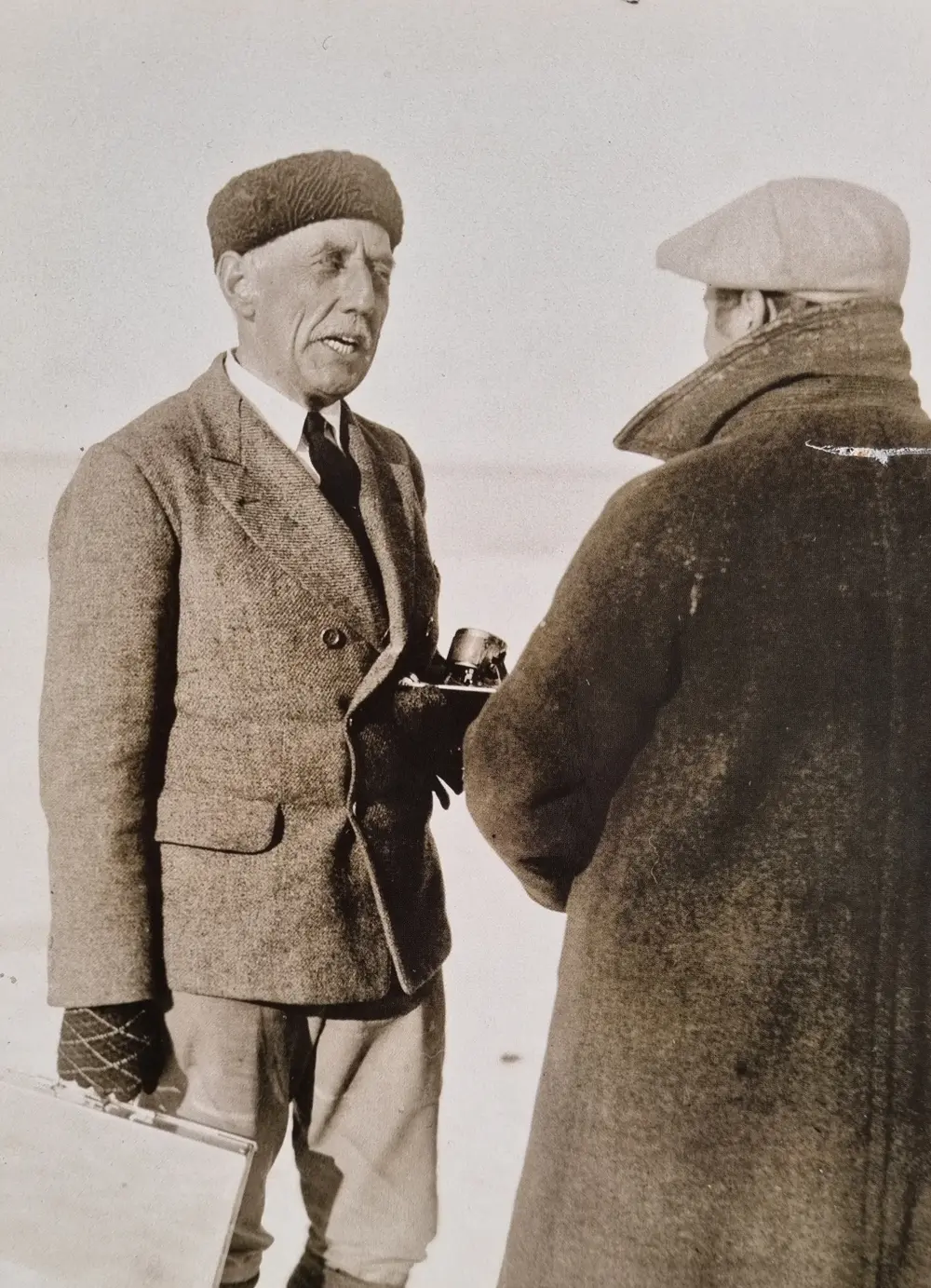
These early sequences, depicting the crew's meticulous work and the sheer scale of the undertaking, are fascinating. We see the faces of legendary explorers like Roald Amundsen, Lincoln Ellsworth, and Umberto Nobile, not as distant historical figures, but as men engaged in the arduous, unglamorous work of preparation. Their stoic expressions, captured in black and white, speak volumes about the gravity of their mission.
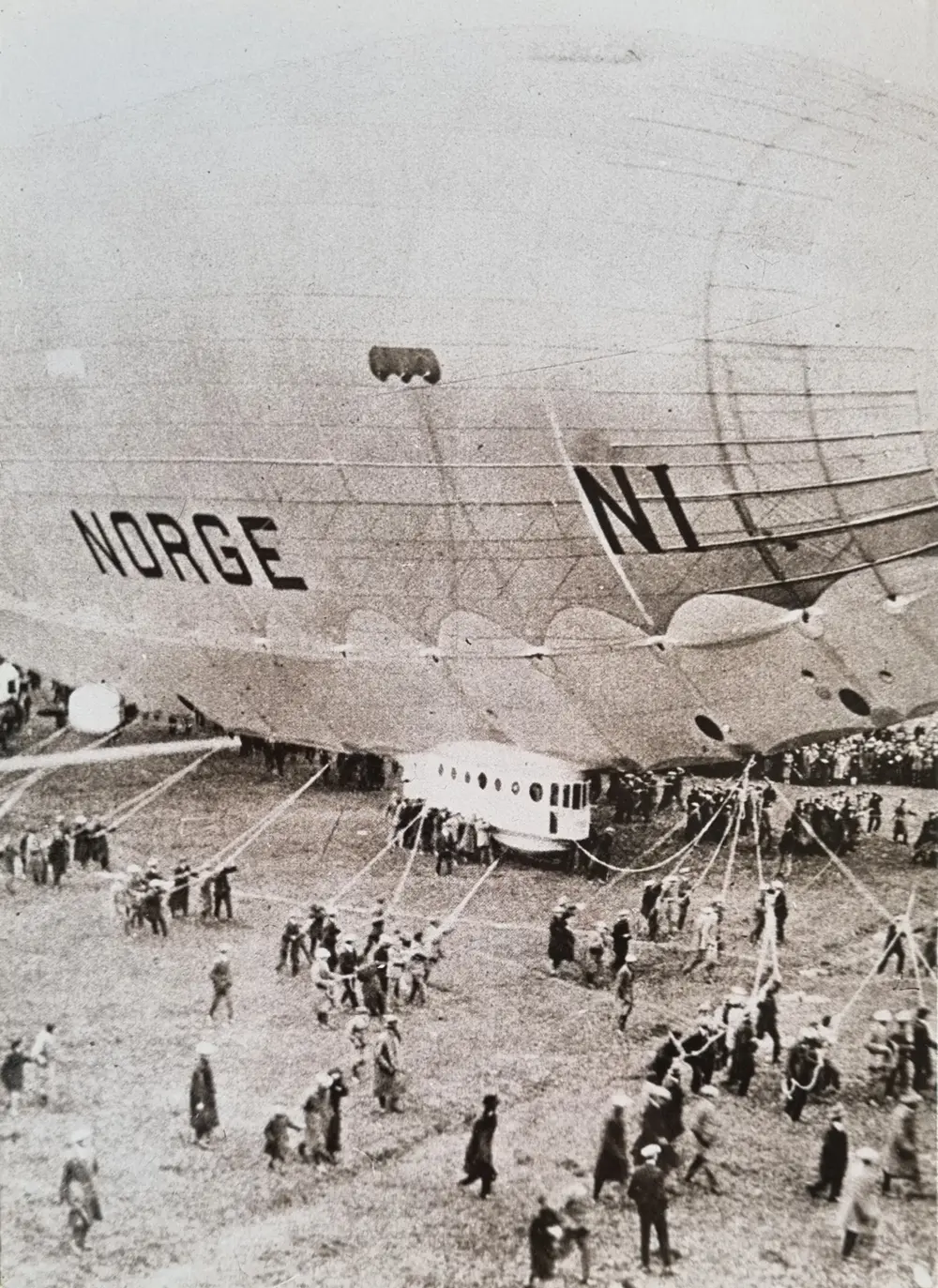
The significance of the 1926 expedition cannot be overstated. It represented a confluence of daring human spirit and cutting-edge technology. Airships were the marvels of their age, and the idea of traversing the uncharted Arctic by air was nothing short of revolutionary. This film, therefore, is not just a record of a journey, but a tangible artifact of a specific technological and exploratory zeitgeist.
It also offers a unique perspective on the challenges of early 20th-century filmmaking. The cameras used were undoubtedly bulky, heavy, and susceptible to the extreme cold. The very act of capturing these images under such conditions is an act of heroism in itself, adding another layer of appreciation for what the filmmakers achieved.
Given the circumstances of its creation, the cinematography of Luftskibet 'Norge's flugt over polhavet is surprisingly effective, albeit rudimentary by modern standards. The camerawork is largely observational, often handheld, lending an immediate, almost vérité feel to the proceedings. There are moments of genuine awe, particularly the sweeping shots of the vast, unbroken ice fields seen from the airship.
These aerial perspectives are perhaps the film's most striking visual elements. They convey the immense scale of the Arctic wilderness and the isolation of the expedition in a way that ground-level footage never could. The airship itself, a symbol of human ingenuity, appears as a tiny speck against the boundless white, emphasizing the vulnerability of the explorers.
However, one must temper expectations. This is not a film with carefully composed shots or sophisticated camera movements. The camera often feels like an extra passenger, buffeted by the elements, capturing what it can. Close-ups are functional, focusing on equipment, maps, or the faces of the crew, rather than artistic. The intent was clearly documentation, not aesthetic perfection.
The lack of color, of course, is a given for the era, but it somehow enhances the stark beauty and harshness of the polar environment. The monochromatic palette of white, grey, and black emphasizes the raw, unforgiving nature of the landscape, stripping away any sense of warmth or comfort. It's a visual language that, while born of necessity, effectively communicates the film's core themes.
As a silent film from 1926, Luftskibet 'Norge's flugt over polhavet adheres to the conventions of its time, which means a slower, more deliberate pace than contemporary documentaries. Intertitles, presumably, guide the viewer through the journey, though their presence and frequency in available versions can vary. Without spoken narration, the film relies heavily on its visual information and the viewer's existing knowledge or willingness to engage with the historical context.
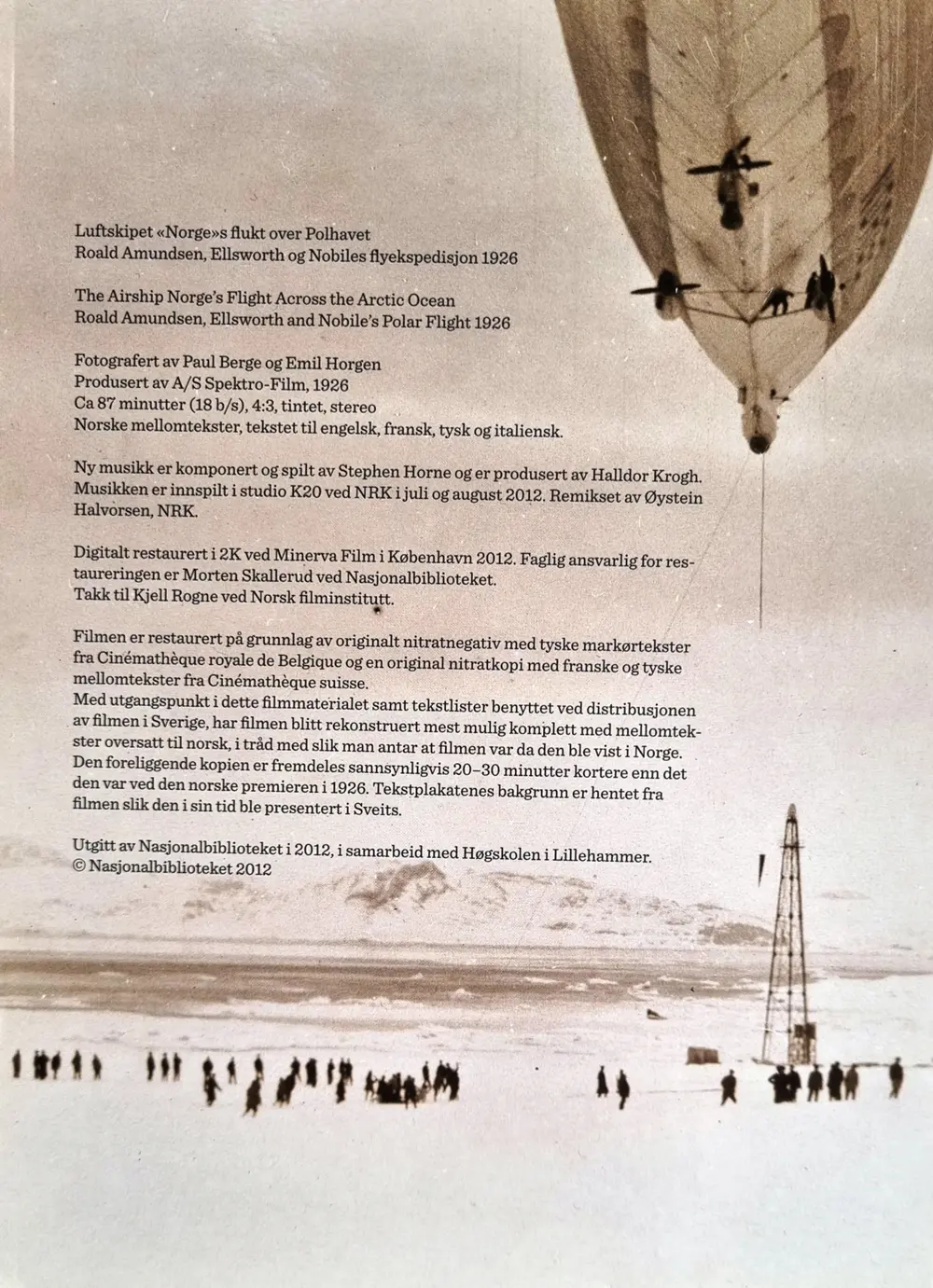
The tone is one of earnest documentation. There's little in the way of manufactured drama or emotional manipulation. The tension, when present, arises organically from the sheer scale and danger of the expedition itself. Watching the airship navigate through what appears to be dense fog or over an endless sea of ice, one can't help but feel a quiet sense of apprehension.
What's striking is the inadvertent humanization of the explorers. We see them performing mundane tasks, interacting with equipment, and simply existing in this extraordinary environment. This lack of overt heroism, replaced by a focus on the practicalities of the journey, gives the film a profound sense of realism. It’s less about the myth of the explorer and more about the reality of the expedition.
However, this authenticity comes at a cost for the modern viewer. The film can feel ponderous. Moments that would be condensed or dramatically scored in a modern documentary are allowed to play out in real-time, demanding patience. This isn't a fault of the film itself, but a reflection of the evolving language of cinema. It exists. It informs. But it demands.
For whom is Luftskibet 'Norge's flugt over polhavet intended in the 21st century? This is a critical question. It is unequivocally not for the casual viewer seeking entertainment or a fast-paced narrative. If you're looking for a gripping adventure with a clear character arc and modern production values, you will be disappointed. This film is a historical document, first and foremost.
However, for specific audiences, its value is immense. Historians, particularly those specializing in polar exploration or the history of aviation, will find it an indispensable primary source. Film scholars interested in the evolution of documentary filmmaking and silent cinema will appreciate its raw, unpolished form.
Furthermore, anyone with a deep fascination for the sheer audacity of early 20th-century exploration will find themselves captivated. It offers a tangible connection to a bygone era of true wilderness and technological pioneering. It's a testament to human curiosity and the drive to push boundaries, captured in its purest form.
The film's brutal simplicity, its unadorned presentation of facts, stands in stark contrast to the often-overproduced nature of contemporary media. It forces the viewer to engage with the material on its own terms, to fill in the blanks, and to appreciate the intrinsic wonder of what is being shown, rather than being told how to feel.
The legacy of Luftskibet 'Norge's flugt over polhavet lies in its status as a unique historical record. It predates many of the conventions we now associate with documentary filmmaking, offering a rare glimpse into a nascent art form. Its influence, while perhaps not direct on narrative cinema, is profound in its contribution to the visual history of exploration.
Its limitations are, ironically, often its strengths. The lack of a polished narrative, the absence of a dramatic score, the sometimes shaky footage — these elements contribute to its authenticity. A modern director might attempt to 'clean up' or 'enhance' such footage, but to do so would strip away its very essence. The film's rawness is part of its charm, a window into a time when media was less mediated.
One surprising observation is how the film inadvertently conveys the sheer monotony of long-duration expeditions. While moments of grandeur are present, there are also long stretches of what appears to be routine, the endless expanse of ice, the slow progress of the airship. This unvarnished portrayal of the explorer's life, both thrilling and tedious, is a refreshing counterpoint to more romanticized depictions.
This documentary stands as a crucial piece of the puzzle in understanding both the history of Arctic exploration and the early development of cinema. It reminds us that sometimes, the most valuable films are not the most entertaining, but the most authentic.
Pros:
- Invaluable historical document.
- Offers rare, authentic footage of a pioneering Arctic flight.
- Provides a unique perspective on early 20th-century technology and exploration.
- Captures the raw, unglamorous reality of expedition life.
- A fascinating artifact for understanding early documentary filmmaking.
Cons:
- Extremely slow pacing can be difficult for modern viewers.
- Lack of narrative structure or emotional arc.
- Rudimentary cinematography and editing.
- Requires significant viewer engagement and historical context.
- Limited appeal beyond niche historical or film studies audiences.
Luftskibet 'Norge's flugt over polhavet is not a film in the conventional sense; it is a meticulously preserved fragment of history, a visual diary of an extraordinary human endeavor. Its value is not measured in entertainment, but in its profound informational and historical significance. It's a challenging watch, undoubtedly, demanding patience and a genuine appreciation for its subject matter. But for those willing to meet it on its own terms, it offers an unparalleled, unfiltered look at a pivotal moment in the annals of exploration.
This is a film that stands as a stark reminder of human ingenuity against the backdrop of an indifferent, majestic natural world. It works. But it’s flawed. Its flaws, however, are integral to its identity, making it a truly unique cinematic experience, more akin to visiting a museum than a multiplex. For the right audience, it’s an essential viewing, a tangible connection to the spirit of adventure that once propelled humanity to the farthest reaches of the globe.
IMDb 5.1
1922
Community
Log in to comment.