DbcultAccessing Vault...
Cult Review
Senior Film Conservator
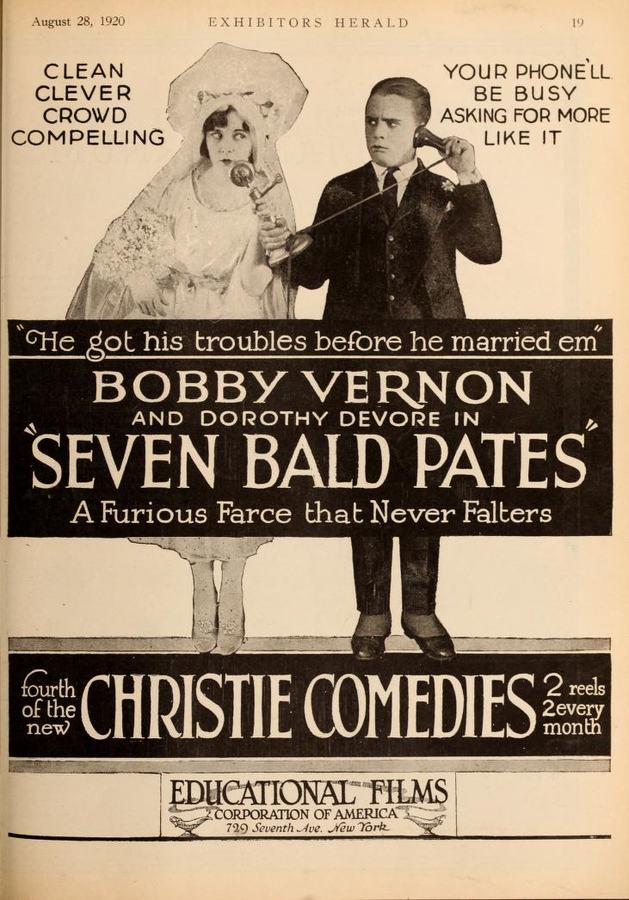
Try picturing a wedding cake hurled like a discus through a stained-glass chapel: that is the kinetic aftertaste of Seven Bald Pates, a 1922 two-reeler that distills Prohibition-era anxiety into pure follicular farce.
Scott Darling and Frank Roland Conklin’s screenplay—if one can call such a Rube Goldberg contraption a script—takes the universal dread of paperwork and weaponizes it through a single bald noggin. The film trusts the audience to loathe subpoenas as much as hangovers, and from frame one it treats bureaucracy like a whoopee cushion under institutional propriety.
Donald Keith’s Bobby enters wearing the anticipatory sweat of a man who expects the world to serve him a cream pie in the face—only this time the pie is parchment.
Director William Watson lets every gag detonate in triplicate: each bald head is a Chekhovian gun, every bowtie a fuse. The camera rarely cuts early; instead it lingers, letting the embarrassment pool until viewers become co-conspirators in the lunacy. Silent cinema at its best invites us to project dialogue onto faces, and Keith’s wide eyes are blank checks we scribble full of imagined expletives.
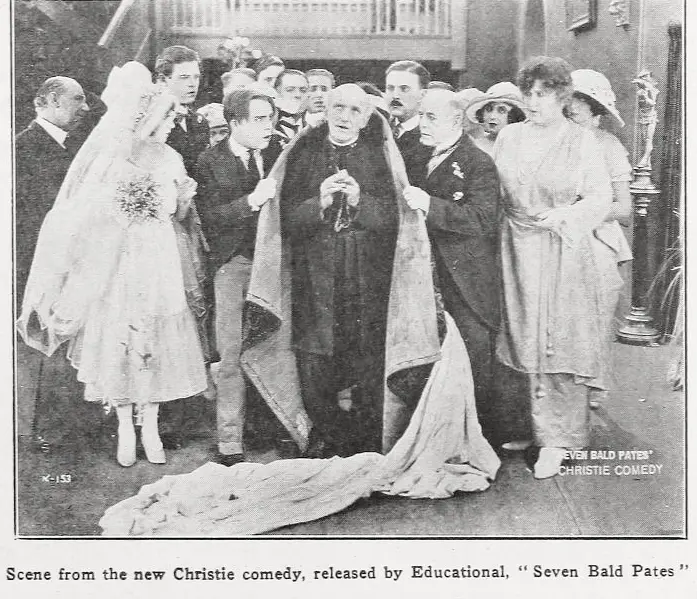
Place this short alongside $5,000 Reward, where the mayhem hinges on a monetary carrot, and you notice how Watson trades fiscal for legal tension; the prize here is existential liberty, not cash. Conversely, The Star Boarder domesticates chaos inside a boarding house—Pates unleashes it into ritualistic territory, mocking the very altar on which social contracts are signed.
Where Blindfolded trusts plot twists to steer the ship, Seven Bald Pates banks on the physics of panic—gravity, velocity, mistaken identity—to write its story in mid-air.
Bobby Vernon, playing the best-man sidekick, delivers a masterclass in rubber-limbed desperation; his pratfalls arc like malfunctioning metronomes. Dorothy Devore’s bride glides between ingenue glow and hell-hath-no-fury, sometimes within the same iris-in. Note the micro-moment when she spots yet another bound guest: her smile fractures, revealing the existential exhaustion of a woman whose wedding has become a crime scene.
Victor Rodman, as the misidentified bald guest, never mugs for sympathy; he plays the confusion with Chaplinesque humility, turning his scalp into an unintentional mirror of Bobby’s paranoia. It’s a silent-era reminder that dignity is often a by-product of misunderstanding.
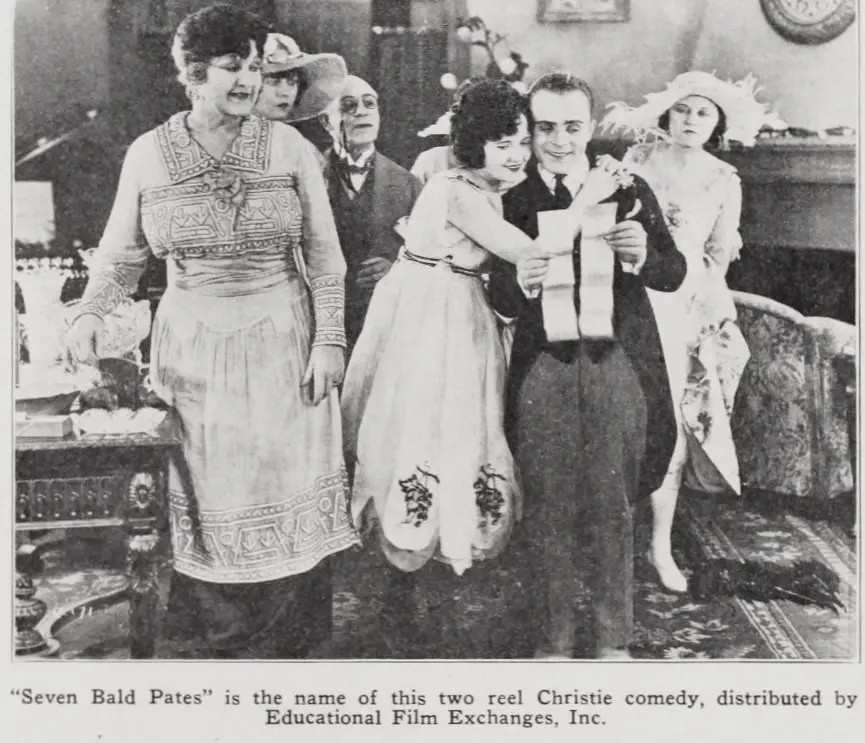
Cinematographer Ross Fisher favors low angles that balloon ceilings into cathedral vaults, so each hanging crystal looks poised to guillotine the bourgeois below. The tinting—sepia for parlors, cyan for exteriors, rose for romance—acts like emotional cue cards. When Bobby hides among wedding gifts, the frame contracts into flickering chiaroscuro; we feel the wrapping paper perspire.
The editing rhythm is syncopated: a two-second shot of a cuffed ankle, a twelve-second wide, a smash-cut to sobbing violins—this jazz-age cadence anticipates Eisensteinian montage while never abandoning its vaudeville roots.
Though originally accompanied by house organists, modern restorations often commission new scores. The Cineteca di Bologna 2019 release layers pizzicato strings over tympani heartbeats, turning every bald-spot reveal into a mini-overture. The effect is cognitive dissonance: we chortle while subconsciously fearing the next percussive sting.
Devore’s character wields femininity like a switchblade. In one tableau she lifts her cathedral-length veil to entangle a groomsman, pinning him against a Corinthian column—an act simultaneously seductive and martial. The film, intentionally or not, lampoons the transactional virginity of 1920s marriage markets while letting its heroine choreograph the melee.
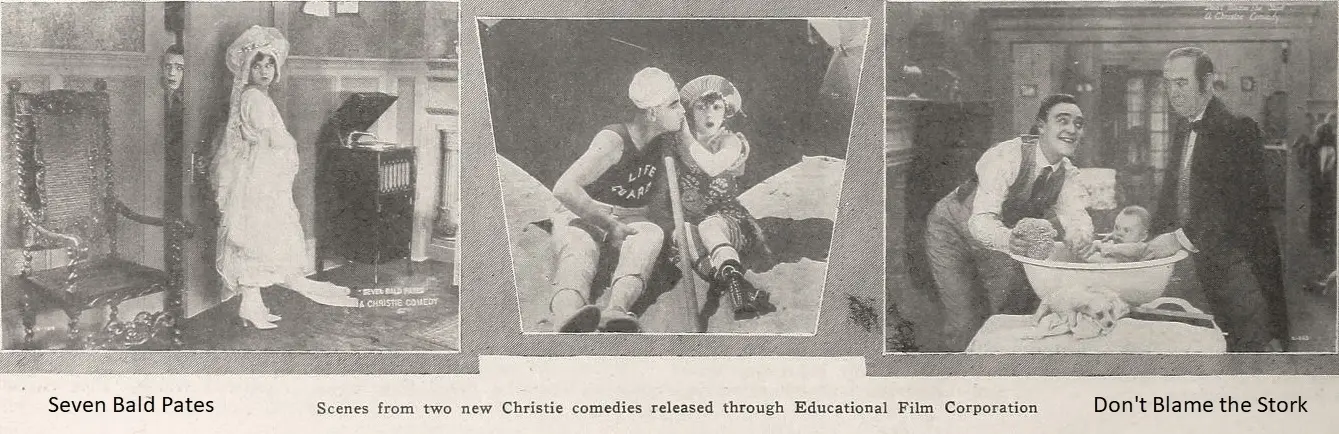
Subpoenas historically targeted the affluent; debtors’ prison loomed larger for tuxedoed elites than for street urchins. By inflating a legal summons into apocalypse, the screenplay pokes the bourgeoisie in its soft underbelly of embezzlement, backroom bargains and municipal corruption. The joke lands harder when we realize Bobby’s panic is less about justice than about exposure.
Surviving prints rest in the Library of Congress and in a private Parisian archive; 4K scans circulated among cine-clubs but have yet to hit mainstream streaming. Bootleg YouTube copies carry Russian intertitles, adding a layer of Cold-War cognitive whiplash to a Jazz-age romp.
At a crisp 23 minutes, Seven Bald Pates is a shot of nitro-glycerin disguised as champagne. It mocks our dread of institutional paper cuts, proving that fear—like hair—can be sheared, regrown, and sheared again. The film’s true subpoena is served to the viewer: a summons to laugh at the absurdity of social veneers, signed, sealed, and delivered by ten trembling, terrified, ultimately triumphant bald scalps.
★★★★☆—a minor miracle of follicular frenzy, still gleaming a century later.
IMDb 5.2
1923
Community
Log in to comment.