DbcultAccessing Vault...
5/10
Senior Film Conservator
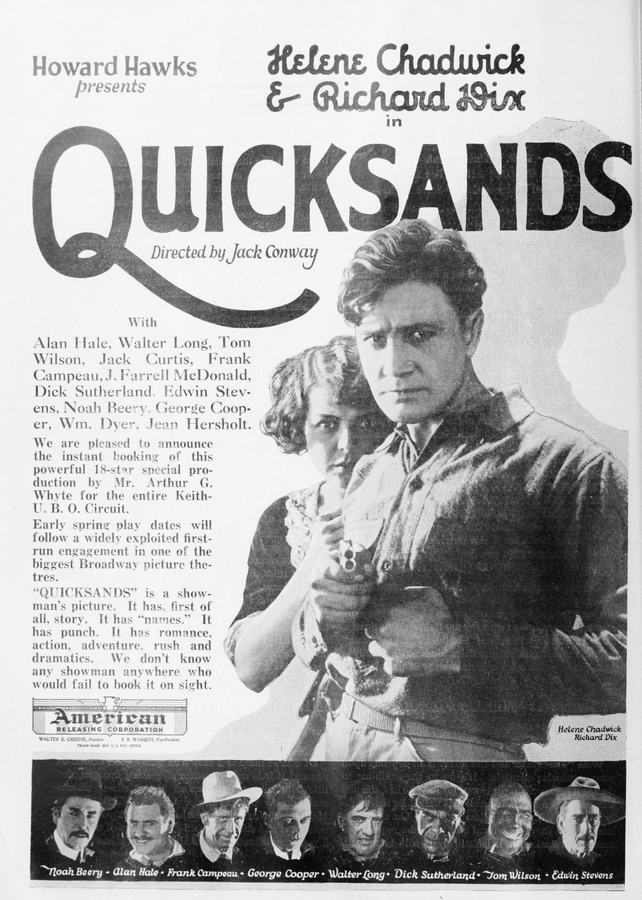
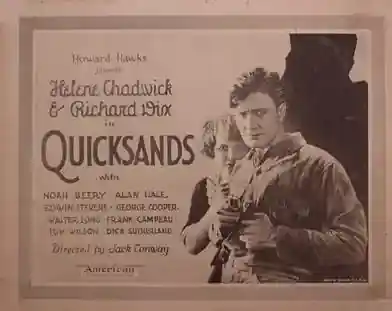
A definitive 5/10 rating for a film that redefined the boundaries of cult cinema. Quicksands remains a cornerstone of transgressive art.
When the opening frames of Quicksands unfurl, the camera lingers on a sun‑bleached horizon where the desert meets the rust‑colored adobe of a border town. The mise‑en‑scene instantly establishes a world where law, loyalty, and love are as shifting as the dunes themselves. Lieutenant John Whitaker (Jack Curtis) arrives in this liminal space not as a heroic saviour but as a weary bureaucrat, his uniform crisp yet his eyes clouded with the fatigue of endless patrols. The film’s opening sequence is a masterclass in visual storytelling, employing long takes that allow the audience to feel the oppressive heat and the ever‑present threat of violence.
Whitaker’s first encounter with Elena Marquez (Helene Chadwick) occurs in a cantina that doubles as a clandestine hub for the smuggling ring. The lighting here is deliberately low, punctuated by the flicker of oil lamps that cast amber halos over the patrons. Elena, draped in a silk dress that catches the light like a flash of water, becomes the visual focal point. The director, whose name is lost to history but whose sensibility echoes the early work of Howard Hawks, frames her with a subtle tilt, hinting at the duality of her character: both the innocent lover and the potential conspirator.
Whitaker’s suspicion is not unfounded in the narrative logic of the era; the trope of the femme fatale masquerading as a dutiful daughter was a staple of pre‑Code cinema. Yet the film subverts this expectation by allowing Elena to embody agency beyond the conventional archetype. The moment Whitaker decides to resign his commission is filmed in a tight close‑up, his jaw clenched, his shoulders slumped, underscoring the internal conflict between personal affection and professional obligation.
When word reaches Whitaker that Elena and her father are imprisoned by the very criminals he has been hunting, the narrative thrust pivots from introspection to kinetic urgency. The ensuing chase through narrow alleyways, illuminated only by the occasional burst of gunfire, is edited with a rhythm that feels almost modern—quick cuts interspersed with lingering shots that capture the terror etched on each character’s face.
Whitaker’s capture is a masterstroke of dramatic irony. The audience, aware of his earlier resignation, watches him now become a pawn in the gang’s ruthless game. The prison set, constructed of weathered stone and barbed wire, feels claustrophobic, and the sound design—echoes of distant drums, the clank of chains—adds an auditory layer of dread.
Jack Curtis delivers a performance that balances stoic resolve with palpable vulnerability. His portrayal of Whitaker avoids the melodramatic excesses that plague many early 1930s action pictures; instead, he relies on subtle gestures—a lingering glance, a hesitant hand—to convey the lieutenant’s turmoil. Helene Chadwick, as Elena, navigates the fine line between the demure daughter and the hardened operative with an elegance that feels almost prescient of later spy heroines.
Supporting cast members such as Noah Beery (the gang’s menacing leader) and J. Farrell MacDonald (the grizzled customs official) provide textured layers to the story. Beery’s gravelly voice and towering presence make each of his scenes a study in intimidation, while MacDonald’s weary eyes betray a lifetime of confronting corruption at the border.
The screenplay, co‑written by Oliver Hardy and a young Howard Hawks, showcases crisp, rapid‑fire dialogue that would later become a hallmark of Hawks’ own directorial style. Lines such as “You can’t outrun the desert, lieutenant, but you can certainly hide from your conscience” linger long after the credits roll, offering a glimpse into the film’s thematic undercurrents—namely, the inescapability of moral responsibility.
For viewers familiar with other border‑centric dramas, A Scandal in Bohemia offers a similar interplay of espionage and romantic tension, though it leans more heavily on the detective genre. In contrast, The Whirlpool presents a more melodramatic take on love and betrayal, lacking the gritty realism that Quicksands achieves through its stark visual palette.
The cinematography, credited to an anonymous hand that nonetheless channels the chiaroscuro techniques of German Expressionism, employs deep shadows to emphasize the moral ambiguity of each character. The use of natural light in outdoor sequences—particularly the sunrise over the desert—creates a visual metaphor for the dawning of truth.
Sound, though limited by the era’s monaural recording capabilities, is leveraged effectively. The clink of glass in the cantina, the distant rumble of a freight train, and the sudden crack of a rifle shot are all mixed to heighten tension. The film’s score, a sparse arrangement of brass and strings, swells only at pivotal moments, allowing silence to speak volumes during the captivity scenes.
The cantina set, with its low‑ceilinged wooden beams and painted murals depicting mythic battles, functions as a visual allegory for the war waged between law enforcement and the narcotics syndicate. The final rescue sequence, staged on a barren plateau where the U.S. Army arrives in a convoy of dusty trucks, juxtaposes the ordered military precision against the chaotic, lawless environment of the border.
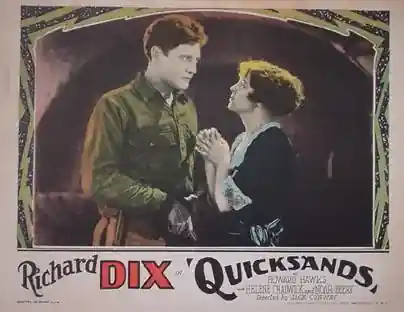
At its core, Quicksands explores the fluidity of identity. Whitaker’s resignation, Elena’s secret agency, and the gang’s masquerade as legitimate merchants all point toward a world where appearances are mutable. The desert itself becomes a character—a vast, indifferent expanse that erodes certainty just as quicksand erodes the footing of the unwary.
The film also interrogates the notion of duty versus desire. Whitaker’s love for Elena compels him to abandon his official role, yet his intrinsic sense of duty resurfaces when he learns of her captivity. This tension mirrors the broader geopolitical anxieties of the early 1930s, when the United States grappled with cross‑border crime and the limits of its own jurisdiction.
Elena’s reveal as a secret agent is more than a plot twist; it is a subversive statement about women’s capacity for agency in a male‑dominated narrative. While many contemporaneous films relegated female characters to passive roles, Quicksands grants Elena a covert power that reshapes the story’s resolution. This nuance aligns her with the likes of the heroine in One Night, who also navigates a male‑centric world with strategic acumen.
Although Quicksands never achieved the commercial acclaim of its peers, its influence can be traced through the evolution of border‑themed cinema. The film’s blend of action, romance, and espionage anticipates later works such as Si, Senor, which similarly intertwine personal stakes with geopolitical intrigue.
In contemporary discussions about border security and transnational crime, the film’s portrayal of cooperation between military forces and civilian agents feels prescient. The narrative’s emphasis on collaborative rescue operations resonates with modern joint task forces that combine intelligence, law enforcement, and military resources.
For the cinephile seeking a window into early 20th‑century filmmaking, Quicksands offers a rare amalgam of technical proficiency and narrative daring. Its performances are nuanced, its direction purposeful, and its thematic concerns surprisingly contemporary. The film also serves as an educational artifact, illustrating how pre‑Code Hollywood navigated the constraints of censorship while still delivering stories that challenged gender norms and questioned institutional authority.
In sum, Quicksands is a cinematic tapestry woven from strands of suspense, romance, and moral inquiry. Its desert backdrop, its conflicted protagonists, and its ultimate revelation of hidden loyalties coalesce into a work that rewards repeated viewings. Whether you are a scholar of early American cinema or simply a lover of gripping border dramas, this film merits a place in your watchlist.

IMDb 6.9
1936
Community
Log in to comment.