DbcultAccessing Vault...
6/10
Senior Film Conservator
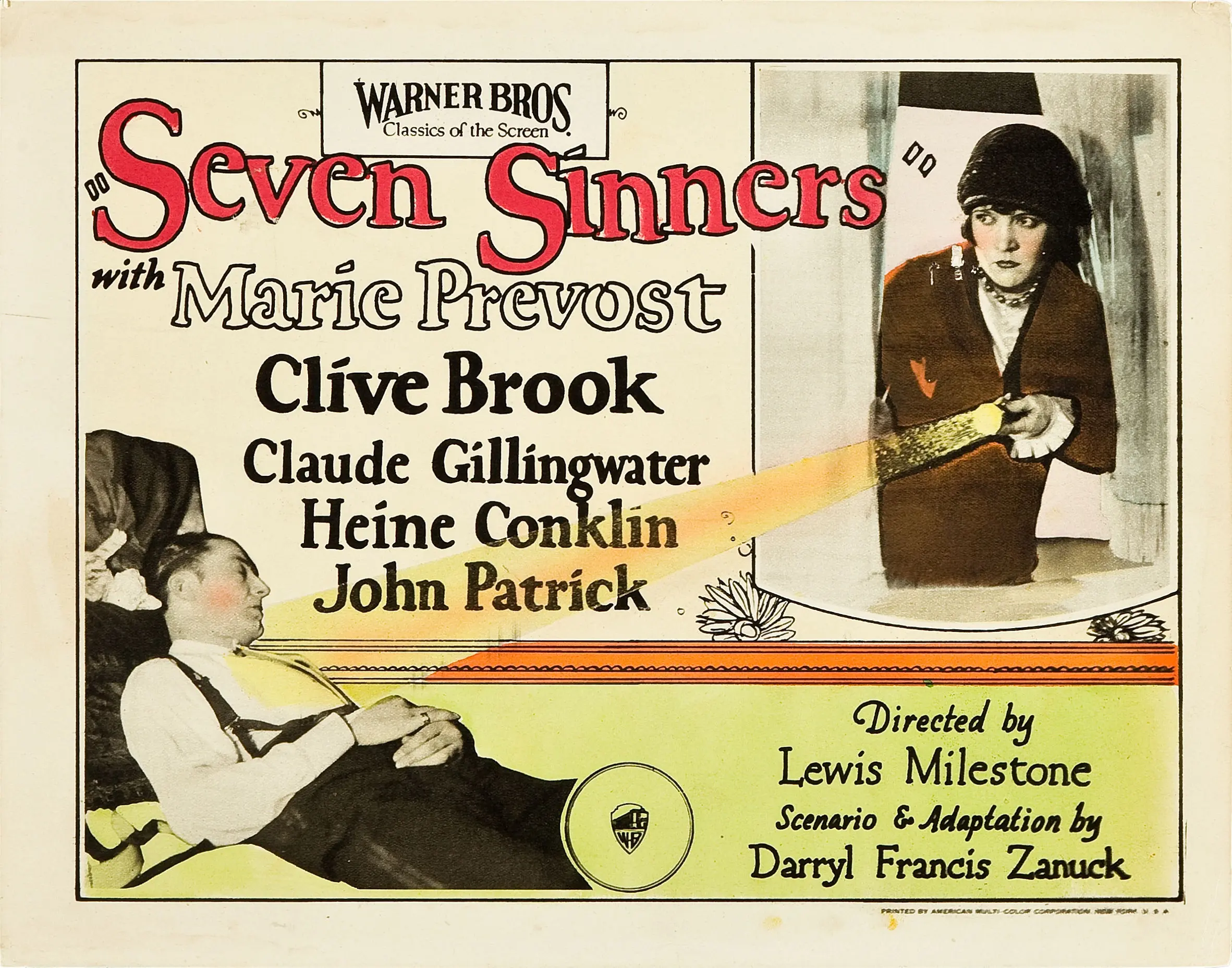
A definitive 6/10 rating for a film that redefined the boundaries of cult cinema. Seven Sinners remains a cornerstone of transgressive art.
To witness Seven Sinners (1925) is to observe the embryonic brilliance of a cinematic language still finding its pulse. Before Lewis Milestone redefined the war epic and before Darryl F. Zanuck became the titan of 20th Century Fox, they collaborated on this intricate, vaudevillian crime caper that defies the simplistic morality plays of its era.
The brilliance of the premise lies in its audacity. The script, penned by a young Zanuck, discards the typical linear progression of a heist film in favor of a geometric collision. We are introduced to a disparate collection of rogues, each representing a distinct archetype of the 1920s underworld. The mansion, a sprawling character in its own right, serves as the stage for a comedy of proximity. Unlike the singular focus found in The Lottery Man, which relies on a more traditional comedic structure, Seven Sinners utilizes the physical space to create a mounting sense of claustrophobia amidst the grandeur.
Milestone’s direction is surprisingly kinetic for 1925. While many contemporary films were still tethered to the proscenium arch, Milestone begins to experiment with the camera’s ability to navigate through the architecture of the set. The shadows aren't just decorative; they are functional, hiding one 'sinner' from another in a way that mirrors the social masking of the Jazz Age. The film captures a specific American anxiety about the vulnerability of wealth, a theme also subtly explored in The Self-Made Wife, though Milestone pivots toward the absurdist rather than the domestic melodrama.
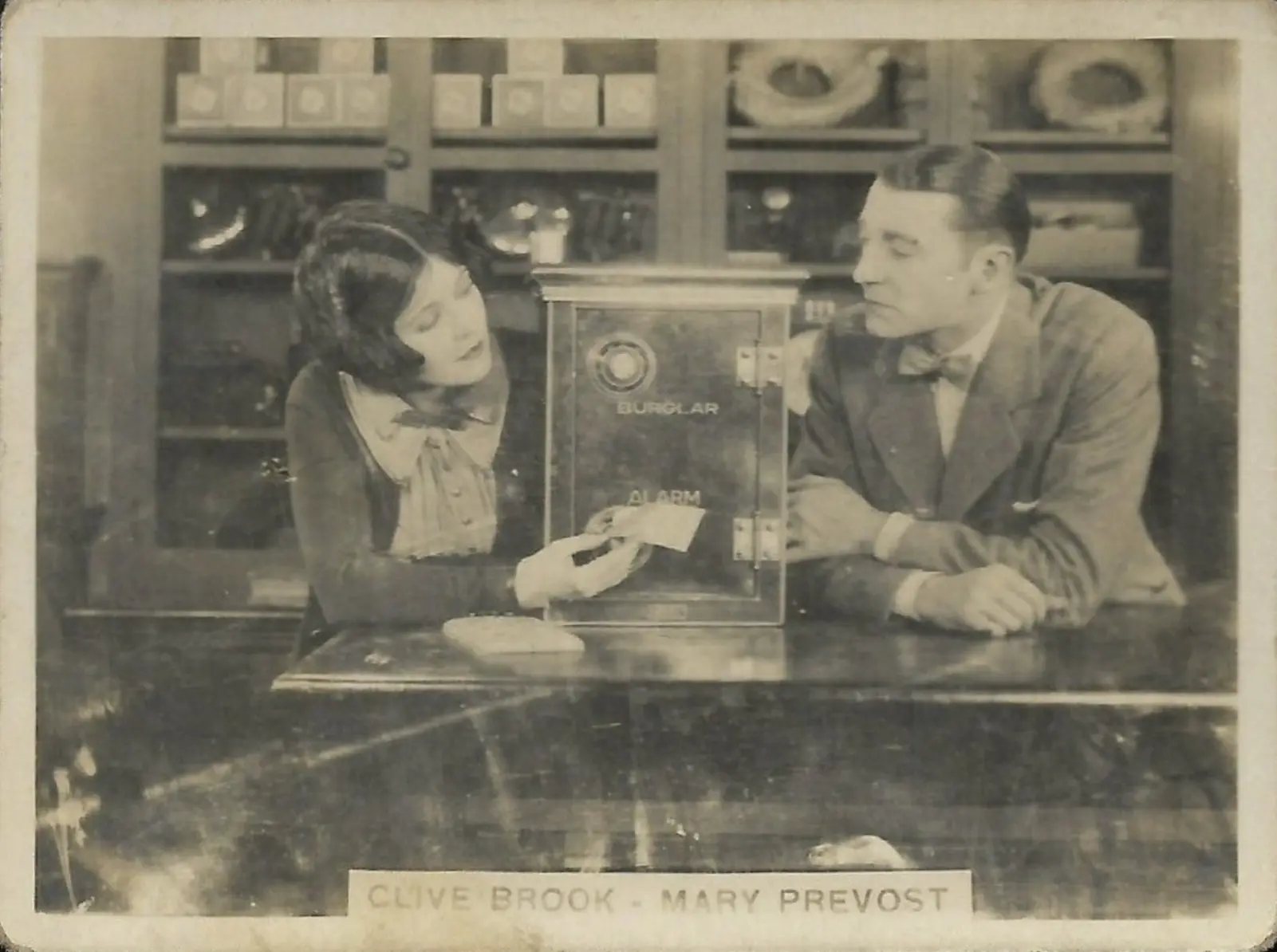
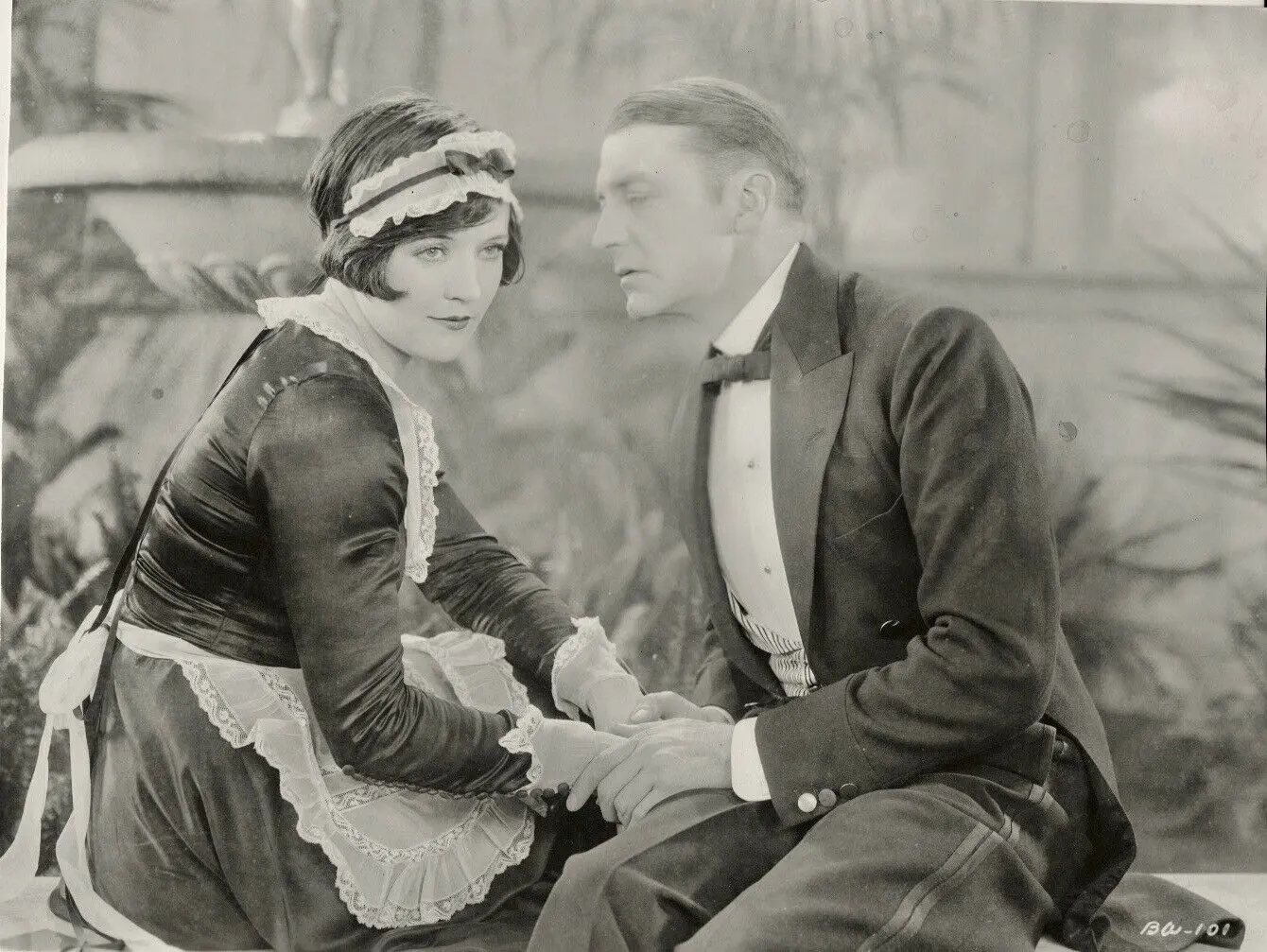
Marie Prevost is the undisputed heartbeat of this production. Transitioning from her status as a 'Bathing Beauty' into a formidable comedic actress, she brings a nuanced vitality to the role of Molly. Her expressions are a masterclass in silent communication—a flicker of the eyes conveys more than a dozen title cards. In contrast, Clive Brook provides the necessary gravitational pull. His Jerry is a figure of refined mystery, a stark departure from the more swashbuckling heroics seen in The Eagle from the same year. Together, they navigate the shifting alliances of the house with a chemistry that feels remarkably modern.
The supporting cast, including the curmudgeonly Claude Gillingwater and the bumbling Fred Kelsey, populates the mansion with a cacophony of conflicting motivations. Each burglar is a cog in a machine that is perpetually on the verge of breakdown. This ensemble approach predates the modern 'ensemble heist' genre by decades, showing a sophistication in character distribution that was rare for the mid-twenties. While a film like The Fourflusher might lean into the singular protagonist's journey, Seven Sinners thrives on the friction between its seven titular characters.
One cannot discuss this film without acknowledging the technical prowess of Lewis Milestone. There is a rhythmic quality to the editing that suggests the director was already thinking about the 'internal pulse' of a scene. The way the characters enter and exit frames, the timing of the 'near-misses' in the hallways, and the use of depth of field to show a burglary in the background while a conversation occurs in the foreground is revolutionary. It shares a certain stylistic DNA with the atmospheric tension of The Face at the Window, yet it swaps out the horror for a biting wit.
The film also serves as a fascinating precursor to the 'screwball' comedies of the 1930s. The dialogue—translated through the title cards—is sharp and unsentimental. Zanuck’s writing avoids the saccharine pitfalls of the era, opting instead for a cynical pragmatism that would later define the Warner Bros. house style. The narrative doesn't moralize the theft; it celebrates the ingenuity and the eventual comeuppance with an equal measure of glee. It lacks the heavy-handedness of A Fight for Millions, choosing instead to dance on the edge of farce.
By 1925, the silent film had reached a level of visual eloquence that sound would initially struggle to replicate. Seven Sinners is a prime example of this peak. The storytelling is purely visual; the plot is complex enough that a modern audience might expect a heavy reliance on exposition, yet Milestone manages to keep the viewer oriented through clever blocking and recurring visual motifs. It possesses a kinetic energy that makes films like Held Up for the Makin's feel static by comparison.
The setting itself—the mansion—is treated with a reverence that borders on the fetishistic. The textures of the curtains, the gleam of the silver, and the shadows cast by the ornate chandeliers create a palpable sense of place. This isn't just a backdrop; it's the obstacle course that the characters must overcome. The film understands that for a crime to be compelling, the environment must be an active participant. This level of environmental storytelling is something we see in the higher-budget productions like Das Grand Hotel Babylon, but Milestone applies it here to a much tighter, more focused narrative.
Why does the idea of seven burglars resonate? In the post-war boom of the 1920s, the concept of 'getting ahead' by any means necessary was a common cultural trope. Seven Sinners satirizes the burgeoning consumerist dream by showing the literal scramble for the 'stuff' of the upper class. The burglars aren't just criminals; they are entrepreneurs of the night. This subtextual layer adds a depth to the film that elevates it above simple slapstick. It shares this satirical edge with Leap Year, though the target here is the sanctity of the home rather than the rituals of courtship.
Furthermore, the film avoids the typical 'falling in love' tropes of the silent era. While there is an undeniable spark between Molly and Jerry, it is born of mutual respect for their respective crafts. They are professionals first, romantic interests second. This pragmatism is refreshing and aligns the film more with the hard-boiled sensibilities that would emerge a decade later. It is far removed from the melodramatic honor codes seen in Hans Faders Ære or the stark morality of Blood Test.
Watching Seven Sinners today requires a recalibration of our expectations regarding pacing. However, once the viewer settles into Milestone's rhythm, the film's 'modernity' becomes startling. The use of close-ups to punctuate a joke or a moment of realization is handled with a precision that many modern directors could learn from. The film doesn't waste a single frame. Every shot serves the dual purpose of advancing the plot and deepening the characterization of the 'sinners.' It has the narrative density of a stage play but the fluid movement of a dream.
In the broader context of Milestone's filmography, this is the work of a man learning how to manage complex groups of people in a confined space—a skill he would later use to devastating effect in his war films. Here, the 'battlefield' is a drawing-room, and the 'weapons' are lockpicks and wit. It’s a fascinating pivot point in film history, bridging the gap between the simple gags of the early silents and the sophisticated narrative structures of the late 20s. Even when compared to the grandiosity of Othello, Seven Sinners holds its own through sheer inventive energy and a refusal to be predictable.
Seven Sinners remains a delightful anomaly. It is a crime film that refuses to be dark, a comedy that refuses to be broad, and a romance that refuses to be sentimental. It exists in that sweet spot of 1920s cinema where the rules were still being written, and artists like Milestone and Zanuck were bold enough to scribble in the margins. It is a testament to the power of a simple, high-concept premise executed with unflinching technical skill. For those looking to understand the evolution of the American caper, or for those who simply want to see seven people try to rob the same house simultaneously, this film is an essential, sparkling artifact of a bygone era. It lacks the ruggedness of The Fighting Stranger or the overt social climbing of The Millionaire, but it possesses a singular, mischievous charm that is entirely its own.
Cast & Crew Spotlight:
IMDb 6
1929
Community
Log in to comment.