DbcultAccessing Vault...
Cult Review
Senior Film Conservator
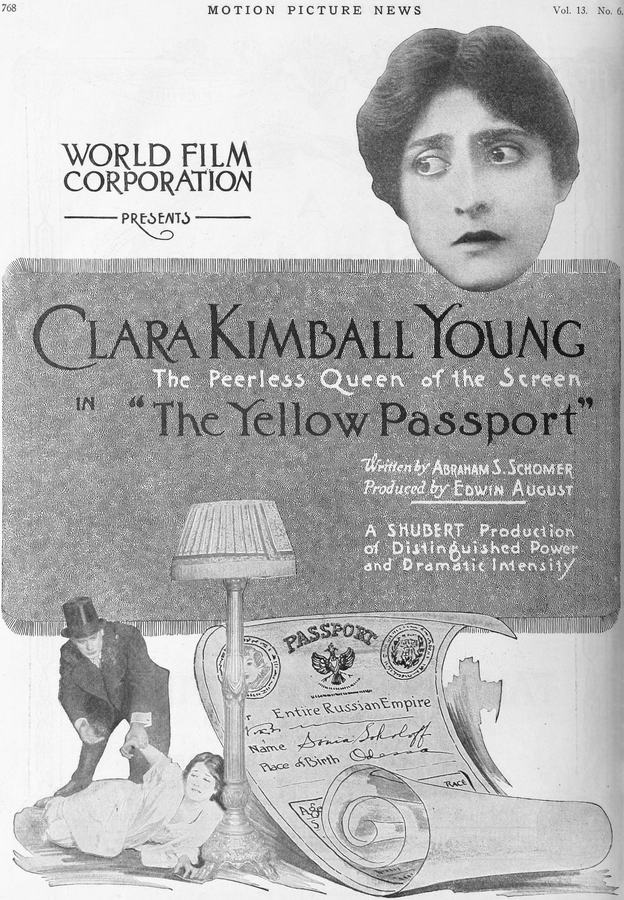
Stepping back into the annals of early cinema is often an exercise in historical excavation, but some films, like The Yellow Passport (1916), refuse to remain buried. They resonate not merely as artifacts of a bygone era, but as potent commentaries on enduring human struggles. This isn't just a film; it's a visceral cry from the heart of Czarist Russia, a stark, unflinching look at the social injustices that plagued a nation on the precipice of revolution. Directed by Edwin August, who also shares a writing credit with Frances Marion, Abraham S. Schomer, and Michael Morton, this silent masterpiece is a testament to the power of cinema to expose and indict.
At its core, The Yellow Passport is a tragedy, a poignant exploration of an individual crushed by the merciless gears of a corrupt system. The narrative centers on Sonia, a young Russian girl, brought to life with heartbreaking authenticity by Clara Kimball Young. Young, a luminary of the silent screen, imbues Sonia with a fragile innocence that makes her inevitable descent all the more gut-wrenching. The film wastes no time in establishing the brutal realities of Czarist Russia, a society where poverty and desperation often drove young women into the darkest corners of existence. Sonia's forced entry into a life of prostitution, symbolized by the dreaded 'yellow passport' (a real historical document required for prostitutes in Imperial Russia), is depicted not with sensationalism, but with a quiet, devastating inevitability that speaks volumes about the systemic oppression at play.
The film truly ignites when Sonia's path converges with that of a British journalist, portrayed by Edwin August. His character serves as the audience's moral compass, an outsider aghast at the atrocities he uncovers. As Sonia, with immense personal risk, begins to reveal to him the intricate web of social crimes rampant in her country – the exploitation, the corruption, the sheer disregard for human dignity – the narrative shifts from a personal tragedy to a thrilling, dangerous exposé. The stakes are raised exponentially, transforming a tale of individual suffering into a perilous crusade against an entrenched, unforgiving establishment. This dynamic interplay between personal anguish and socio-political commentary elevates The Yellow Passport beyond mere melodrama, cementing its status as a potent piece of social realism.
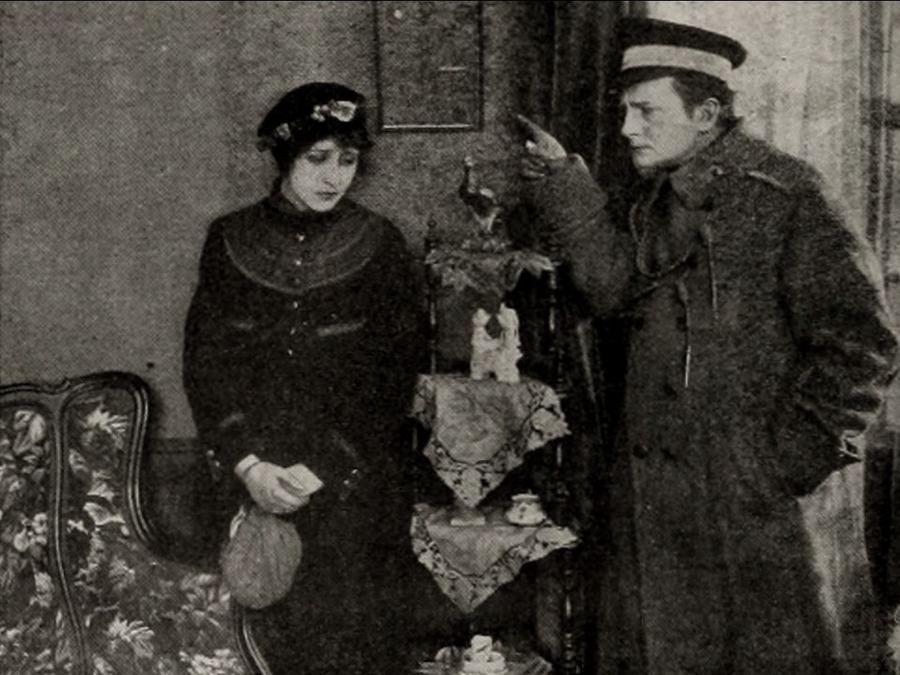
Clara Kimball Young's portrayal of Sonia is nothing short of masterful. In an era where exaggerated gestures were often the norm, Young delivers a performance of remarkable subtlety and depth. Her eyes, often filled with a haunting despair, convey more emotion than any intertitle could. She embodies Sonia's transformation from an innocent girl to a hardened survivor, yet never loses sight of the inherent goodness and courage that resides within her. It's a performance that anchors the entire film, drawing the audience into Sonia's plight with an almost unbearable empathy. One cannot help but be reminded of the profound emotional weight carried by actresses in other silent dramas, such as those in Hearts in Exile, which similarly delved into the struggles of individuals caught in the machinery of Russian socio-political turmoil.
Edwin August, as the British journalist, provides a crucial counterpoint to Young's vulnerability. His earnestness and moral conviction are palpable, making his character a relatable conduit for the audience's outrage. The chemistry between Young and August, though understated, is effective, building a sense of shared purpose and growing affection amidst the pervasive danger. John W. Boyle, Florence Hackett, Alec B. Francis, and the rest of the supporting cast, including Mrs. E.M. Kimball, Mrs. David Landau, Robert Cummings, Silas Feinberg, John St. Polis, Thomas Charles, Nicholas Dunaew, Adolph Lestina, and Edward Kimball, all contribute to the film's rich tapestry, each playing their part in painting a vivid, if grim, portrait of Czarist society. Their collective efforts create a believable, oppressive world against which Sonia's struggle shines even brighter.
Edwin August's direction is both sensitive and impactful. He masterfully utilizes the visual language of silent cinema to convey complex emotions and societal critiques. The film employs stark contrasts – the opulent interiors of the corrupt elite against the squalor of Sonia's existence – to underscore its thematic concerns. The pacing is deliberate, allowing moments of quiet despair to breathe before escalating into thrilling sequences of espionage and pursuit. The use of close-ups, particularly on Young's expressive face, is highly effective in drawing the viewer into Sonia's internal world. The cinematography, while constrained by the technology of the era, is remarkably evocative, capturing the bleakness of the setting and the intensity of the human drama. There's a raw authenticity to the visuals that prevents the film from feeling dated, even a century later.
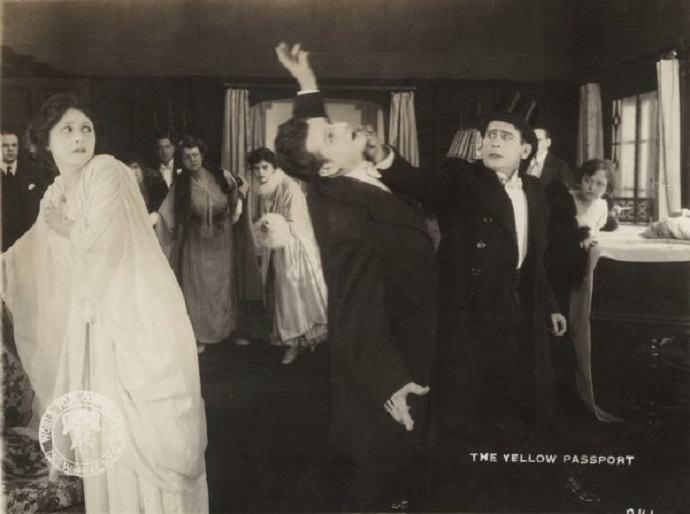
The collaboration of writers Edwin August, Frances Marion, Abraham S. Schomer, and Michael Morton is evident in the film's tightly constructed plot and compelling character arcs. Frances Marion, in particular, was a prolific and influential screenwriter of the era, known for her strong female characters and socially conscious narratives. Her contribution here is palpable, ensuring that Sonia is not merely a victim, but an active participant in her own destiny, however tragic. The screenplay deftly navigates the complexities of censorship prevalent at the time, using allegory and powerful visual metaphors to convey its message without overtly provoking the authorities. This delicate balance of critique and circumspection is a hallmark of intelligent storytelling in restrictive environments.
The Yellow Passport is a film rich with thematic depth. Its primary focus on social injustice and the exploitation of the vulnerable remains chillingly relevant. The film bravely tackles the issue of forced prostitution, not as a moral judgment, but as a symptom of a diseased society. It critiques the hypocrisy of a system that simultaneously condemns and profits from the degradation of its citizens. This unflinching gaze at societal ills places it in a lineage of films that dared to challenge the status quo, much like the challenging social commentary found in Who Pays?, which similarly scrutinized the cost of societal neglect.
Beyond the immediate social critique, the film explores themes of courage in the face of overwhelming odds, the search for truth, and the enduring power of human connection. Sonia's decision to confide in the journalist, despite the immense danger, speaks to an inherent human need for justice and recognition. The film also touches upon the role of the press in holding power accountable, a theme that resonates perhaps even more strongly in our contemporary media landscape. The idea that information, once revealed, can spark change, even at great personal cost, is a powerful undercurrent throughout the narrative. It’s a stark reminder that the battle for transparency and ethical governance is an ongoing one, a fight that often demands extraordinary bravery from ordinary individuals.
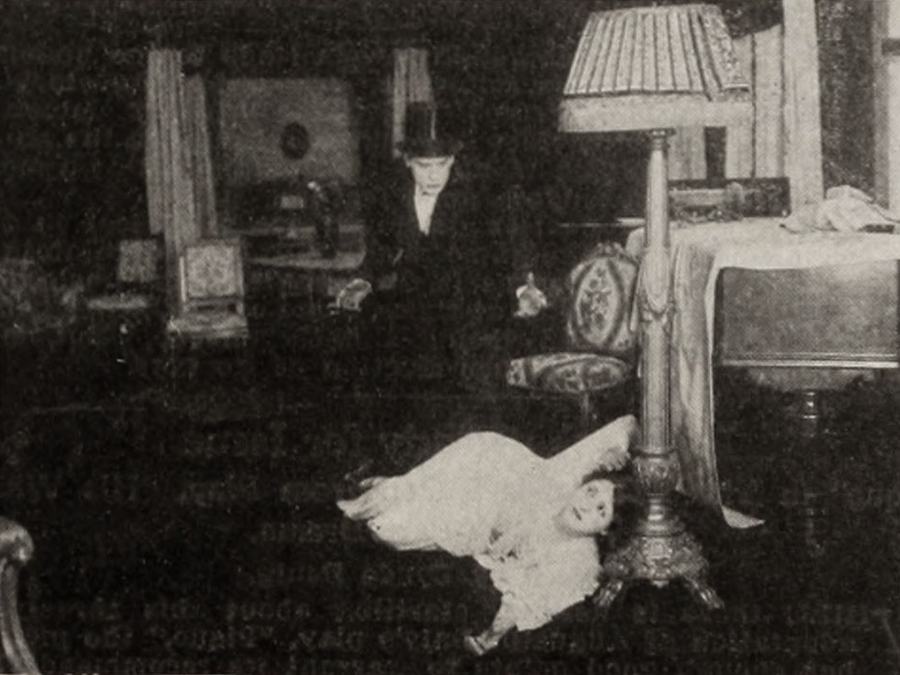
The historical context is equally vital. Released just a year before the Russian Revolution, The Yellow Passport inadvertently serves as a cinematic precursor, capturing the simmering discontent and the systemic failures that would soon erupt into cataclysmic change. It offers a window into the daily oppressions that fueled such widespread anger, making it an invaluable historical document as much as a compelling drama. The film's portrayal of a society on the brink, where the disparity between the powerful and the powerless is vast and violent, creates an atmosphere of tension and impending doom that is palpable from the opening scenes.
The Yellow Passport is more than just a relic of the silent era; it is a film that demands to be seen and discussed. Its unflinching portrayal of social injustice, its powerful performances, and its compelling narrative ensure its enduring relevance. For silent film enthusiasts, it offers a masterclass in the artistry of early cinema. For those interested in history, it provides a vivid, human-scale perspective on a pivotal moment in Russian history. And for anyone who believes in the power of storytelling to shed light on darkness, it stands as a testament to the courage of filmmakers who dared to speak truth to power.
The film's exploration of personal sacrifice for a greater cause, the insidious nature of systemic corruption, and the resilience of the human spirit are universal themes that transcend its specific historical setting. It serves as a reminder that even in the most oppressive environments, the spark of human dignity and the quest for justice can never be entirely extinguished. The danger faced by Sonia and the journalist, as they risk everything to expose the truth, is a timeless narrative of heroism against tyranny. This enduring quality is what elevates The Yellow Passport from a period piece to a timeless classic, a film that continues to provoke thought and stir emotion over a century after its initial release.
In an age saturated with digital spectacles, there's a unique power in revisiting films like The Yellow Passport. Their reliance on visual storytelling, emotional nuance, and universal human themes offers a profound connection to the origins of cinematic art. It’s a challenging watch, certainly, given its grim subject matter, but it’s also an incredibly rewarding one, offering insights into history, society, and the enduring strength of the human spirit. It solidifies its place not just in the pantheon of silent films, but in the broader history of cinema as a medium for social change and poignant human drama.
IMDb 6
1923
Community
Log in to comment.