DbcultAccessing Vault...
7/10
Senior Film Conservator
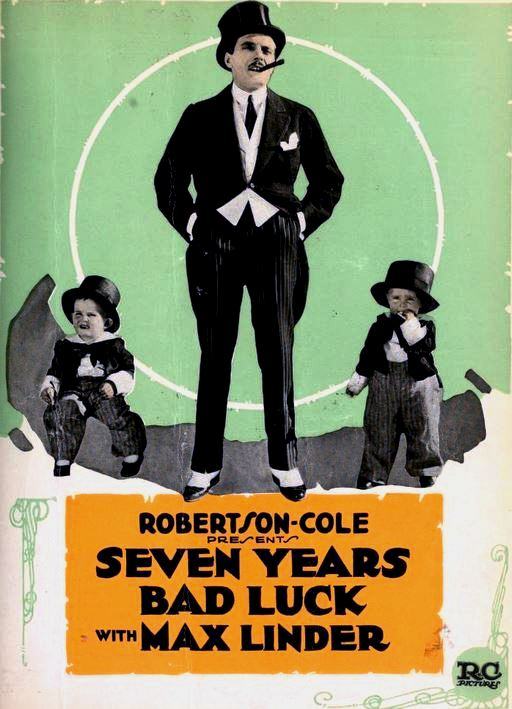
A definitive 7/10 rating for a film that redefined the boundaries of cult cinema. Seven Years Bad Luck remains a cornerstone of transgressive art.
Mirror, mirror on the wall, who’s the most meta of them all?
One hundred and three years after its release, Seven Years Bad Luck remains the silent era’s most gleeful treatise on self-fulfilling prophecy, a film that anticipates chaos theory by staging it in silk spats. Max Linder—writer, star, puppeteer of audience synapses—turns superstition into a Rube Goldberg contraption: the initial smash of silvered glass sets off dominoes of disaster so ornate they feel choreographed by a prankish deity with a grudge against vanity.
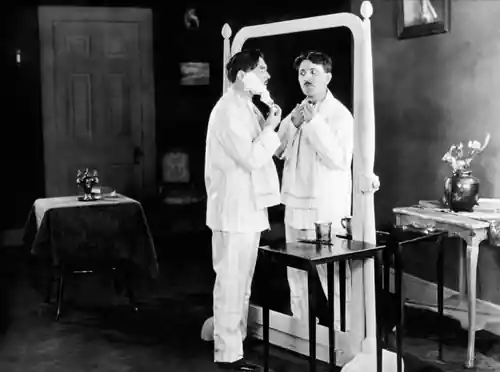
The first third unspools almost entirely inside Max’s Art-Nouveau den, a boudoir-cum-cage of tiger-skin rugs and toile-de-Jouy wallpaper where every object seems pre-loaded with comic势能. When the mirror fractures, the camera lingers on the spider-web cracks as though they were a cartography of future humiliations; off-screen, the maid’s boyfriend impersonates Max’s reflection in an extended pantomime that would later inspire both The Silent Woman and a famous Lucille Ball gag. The doubling motif is already sly: the impersonator apes Max while Max himself is trapped imitating normalcy, a matryoshka of identities shedding layers of luck.
Once Max flees his ruptured sanctum, Paris becomes an obstacle course rigged by Fate’s art-director. A stroll down Rue de la Pavers turns into a hopscotch of doom: he sidesteps a ladder only to knock over a boulevardier’s cane, which spears a cyclist’s front wheel, which catapults a baguette into the face of a gendarme—yet the rhythm stays airy, a waltz of catastrophe. Linder’s timing is so immaculate that even the iris-in transitions feel like winks; every new calamity lands like a cymbal crash in a Mozart scherzo.
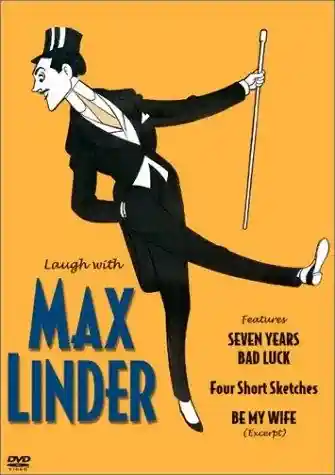
The film’s grammar is built on reflective surfaces. Hand-held mirrors fracture space into cubist slapstick; shop-windows create depth planes where foreground and background pratfalls overlap; a fun-house maze near the climax turns the screen into a kaleidoscope of cascading Maxes, each clone compounding the curse. Cinematographer Harry Jackson treats light like a mischievous accomplice, letting it flare off shards so that bad luck itself seems photons on the rampage.
Side-note: Compare this hall-of-mirrors sequence to the occult doublings in Alien Souls or the romantic refractions of New Love for Old—Linder beats them all to the punchline by making the audience complicit in the gag; we laugh, therefore we endorse the hex.
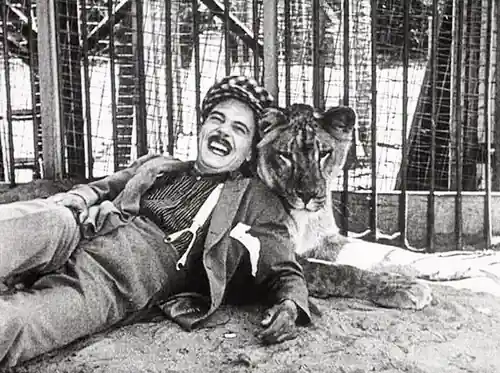
Linder’s persona predates Chaplin’s tramp and Keaton’s stone-face, yet feels modern in its self-deprecation. He possesses the languid elegance of a man who has never sweated in his life, yet panic pools in his pupils like absinthe catching sunlight. Watch the micro-moment when Max spots a black cat: his right eyebrow ascends a millimetre, the left corner of his mouth descends, the cane tilts one degree off-axis—an entire treatise on dread encoded in 12 frames. Pudgy the Dog, credited yet criminally underused, serves as furry counterpoint: while Max calculates disaster, the bulldog waddles straight into it, proving instinct sometimes outwits intellect.
The fiancée, Betty K. Peterson’s demure yet resourceful ingenue, functions less as love-interest than as mirror-holder to Max’s ego. Their engagement scene—set in a manicured garden straight from a Fragonard painting—dissolves into pandemonium when Max’s attempt to shield her from a passing funeral cortege ends with him face-planting into a wedding cake. The visual joke marries sex farce with memento mori: every betrothal carries the seed of its own funeral. It’s a theme Linder would revisit, but never with such frothy fatalism.
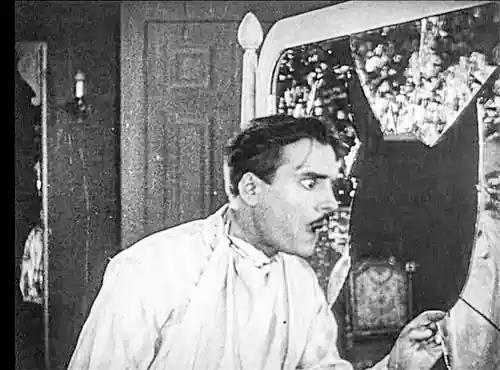
Act two detonates aboard a night train to Versailles. Max, convinced the mirror curse stalks him, insists on switching compartments, dragging a mountain of luggage that multiplies like a hydra. Cue missing tickets, wrong berths, a colonial officer’s pet monkey, and a conductor whose moustache bristles with authoritarian glee. The gag crescendos when Max, clinging to the exterior of the moving carriage, performs a wind-whipped ballet that predates Safety Last! by two years. Harold Lloyd admitted in private correspondence he “studied Max the way jewelers study carbon,” and you can feel the DNA here.
The bedroom farce returns with geometric ingenuity: Max barricades himself inside a hotel room, convinced the corridor is a gauntlet of jinxes. He orders every meal in reverse, walks backwards, sleeps under the bed; nevertheless a thunderstorm, a fire drill, and a jealous husband converge in a climax that collapses floor into ceiling. Linder orchestrates the chaos like Ravel tightening bolts in Boléro—each comic beat louder, faster, inevitable.
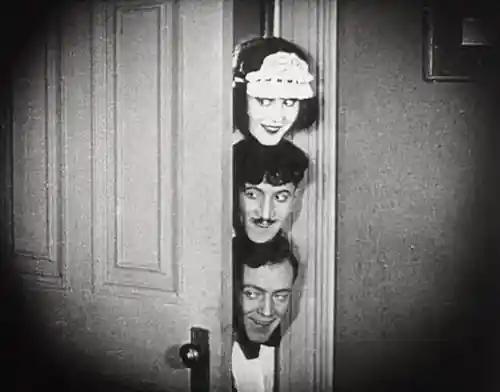
Editors F.B. Crayne and Ralph McCullough employ match-cuts that splice cause and effect across temporal gaps: the shatter of the initial mirror rhymes with the clang of a train coupling; a fragment spinning on parquet pre-cuts to a roulette ball dropping into zero. Such associative montage prefigures Eisenstein’s intellectual cuts, yet here the thesis is nothing weightier than “laugh or go mad.”
Contemporary screenings often slap on jaunty piano rags, but the film’s true score is the phantom clink of glass you hear inside your skull. Silence amplifies superstition; every off-screen crash lands harder because the mind furnishes the reverb. In the restored 4K print premiered at Bologna’s Il Cinema Ritrovato, the digital scrub reveals texture: the velvet nap of Max’s smoking jacket, the calico roughness of the maid’s apron—details that make the impending rips and stains feel like personal assaults on fabric, on class, on fate itself.
Buñuel kept a lobby card of the mirror gag pinned above his desk; he called it “the first psychoanalytic joke.” Woody Allen lifted the train-compartment sequence for Scoop, and Curb Your Enthusiasm owes its entire ethos to Max’s self-engineered misfortunes. Yet Linder’s influence is less in gag-plagiarism than in tone: the urbane neurotic beset by cosmic pettiness, the belief that the universe is a concierge who hates you.
Compare the superstitious spiral to the moral comeuppance in Beating Back or the fated romanticism of Flower of the Dusk—Linder refuses moralism; his punishment is purer slapstick, therefore more existential.
Modern readings might fault the film’s gender politics—Betty sidelined as porcelain ideal—but the comedy undercuts Max’s machismo at every turn. He is the one objectified, fragmented, ogled by the camera’s lust for pratfalls. In a proto-feminist reversal, the final shot reveals Betty calmly reassembling the broken mirror while Max cowers, suggesting women piece reality together after men’s tantrums against it.
Today’s TikTok superstitions—don’t pause at 0:06, don’t scroll on a full moon—echo Max’s compulsions, but Linder’s genius was to physicalize dread into ballet. In an era where bad luck is monetized as content, Seven Years Bad Luck feels like a prophecy that laughed at itself before the fact. Stream it on mute, on loop, at 3 a.m.; the shards still glitter, the curse still tickles, the mirror still waits for your face to smash it anew.
★★★★★ out of 5. A diamond-cut classic that reflects its audience—handle with joy, but expect cuts.
IMDb 5.7
1931
Community
Log in to comment.