DbcultAccessing Vault...
Cult Review
Senior Film Conservator
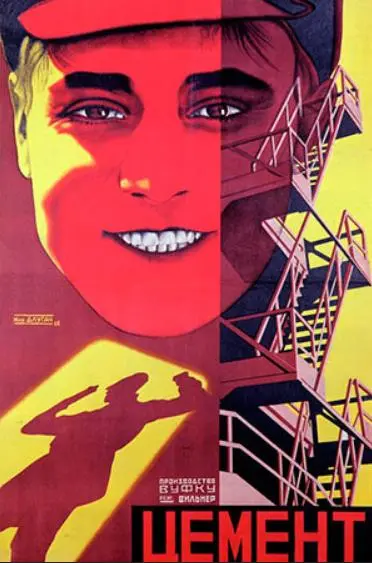
Should you invest your time in a silent film about rebuilding a cement factory? Short answer: yes, but only if you are prepared to look past the heavy-handed ideology to find a surprisingly modern critique of bureaucracy. This film is for the patient cinephile and the historian who wants to see the raw, tactile reality of 1920s labor; it is absolutely not for anyone looking for a fast-paced narrative or traditional character arcs.
Tsement (1927) is a film that breathes dust and exhales fire. It is a relic of a time when cinema was being used as a hammer to shape the world, yet beneath its propagandistic exterior lies a deeply human frustration with the way systems fail the people they are meant to serve. It is a tough watch, but an essential one for understanding the roots of industrial storytelling.
1) This film works because it captures the visceral, physical struggle of manual labor with a gritty realism that modern CGI can never replicate.
2) This film fails because it often prioritizes political messaging over nuanced character development, leaving some roles feeling like cardboard cutouts.
3) You should watch it if you have an interest in early Soviet montage or the aesthetic of the industrial revolution.
The opening sequences of Tsement are haunting. Director Vladimir Vilner treats the ruined factory not just as a location, but as a fallen god. The cinematography captures the silence of the machinery in a way that feels heavy. There is a specific shot of Gleb Chumalov standing before a massive, rusted gear that perfectly encapsulates the theme: man vs. the frozen heart of industry. Unlike the more polished Vengeance, Tsement feels unwashed and unrefined.
The visual language here is all about scale. The factory floors are vast and cavernous, making the individual workers look like ants. Yet, as the film progresses and the reconstruction begins, the camera moves closer. We see the sweat, the strain of muscles, and the literal hardening of the cement. It is a tactile experience. You can almost smell the lime and the coal smoke. This focus on the physical world is where the film finds its true power, moving beyond mere politics into the realm of human endurance.
Mili Taut-Korso and Heiri Emirzade deliver performances that are typical of the era—highly expressive and physically grounded. Gleb Chumalov, played with a stoic intensity, is the archetypal Soviet hero, but there is a weariness in his eyes that feels authentic. He isn't just a worker; he is a man who has seen too much war and just wants things to work again. His frustration with the 'technical specialists'—the remnants of the old bourgeois class—is played with a sharp, biting edge.
The conflict between Gleb and the bureaucrats is perhaps the most interesting part of the film. While the 'enemies' are often depicted as mustache-twirling saboteurs, the real tension comes from the internal Soviet apparatus. The scenes in the cramped, paper-filled offices contrast sharply with the open, airy factory floor. It’s a battle between those who do and those who document. This theme of the 'new official' is something we see explored in other contemporary works like Tseka komissar Mirostsenko, where the revolution's ideals meet the reality of administration.
Vladimir Vilner’s direction is less about the flashy montage of Eisenstein and more about the steady accumulation of detail. He builds tension through the slow realization of how much work needs to be done. There is a sequence involving the procurement of materials that, in any other film, would be boring. Here, it is treated with the gravity of a military operation. The lighting is harsh, utilizing high contrast to emphasize the divide between the light of the new world and the shadows of the old.
One surprising observation is how the film handles the female characters. N. Bogdanova’s role isn't just as a supporting wife; she represents the changing social fabric of the time. The domestic sphere is shown to be just as much a site of reconstruction as the factory itself. This dual-track narrative adds a layer of complexity that keeps the film from being a one-note industrial manual. It works. But it’s flawed in its pacing.
Yes, Tsement is worth watching if you are a student of cinema history or interested in the sociological impact of the early 20th century. It provides a raw look at the 'Proletkult' movement and the aesthetic of the machine age. However, casual viewers will likely find the lack of a traditional emotional hook and the slow-moving plot to be a significant barrier. It is a film that requires active engagement rather than passive consumption.
Let’s be honest: the middle act of Tsement drags. The endless meetings and the repetitive nature of the 'sabotage' plots can feel exhausting. But this pacing serves a purpose. It mirrors the actual, grueling process of reconstruction. Rebuilding a nation isn't a montage; it's a series of small, frustrating steps. The film refuses to give the viewer an easy out, forcing them to sit with the characters in their struggle.
Compared to the swashbuckling energy of The Mutiny of the Bounty, Tsement is a heavy, grounded affair. It doesn't offer escapism; it offers a mirror. The 'vicious machinations' of the enemies are perhaps the weakest part of the script, feeling like a necessary inclusion to satisfy the censors of the time rather than a natural progression of the story. The real villain is the rust, both on the machines and in the hearts of the demoralized workers.
Pros:
- Visually arresting industrial landscapes.
- A fascinating historical document of the NEP era.
- Strong, grounded performances that avoid excessive melodrama.
- A surprisingly honest look at bureaucratic corruption.
Cons:
- The pacing can be glacial at times.
- The ideological messaging is often unsubtle.
- Certain secondary characters are underdeveloped.
Tsement is a monolith of a film. It is heavy, gray, and immovable, much like the material it is named after. While it lacks the poetic fluidity of some of its contemporaries, it makes up for it with a sheer, stubborn sense of purpose. It is a film about the dignity of work and the difficulty of change. It doesn't care if you like it; it only cares that you witness the effort. For that reason alone, it remains a vital, if difficult, piece of cinematic history. It is a brutal, honest, and ultimately hopeful look at a world being built from scratch.
IMDb 6.6
1920
Community
Log in to comment.