DbcultAccessing Vault...
Cult Review
Senior Film Conservator
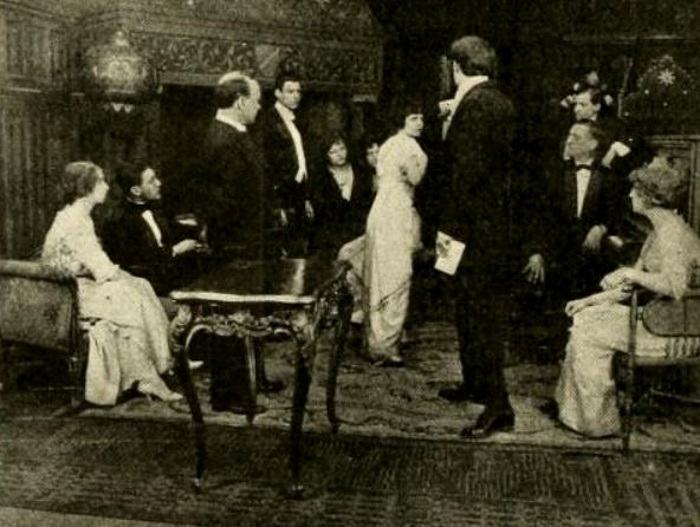
The Monster and the Girl is less a story than a salt-crusted fever dream etched onto brittle nitrate—equal parts parable of capitalistic appetite and lullaby of tidal constancy. Director Vinnie Burns wields intertitles like driftwood planks, letting narrative debris crash over the viewer in foamy surges that obliterate tidy three-act scaffolding.
From its incipit conflagration—a toy boat set alight in a tank that nevertheless evokes Turner's marines—the film announces itself as mythmaking rather than reportage. The camera, often hand-cranked to uneven rhythms, seems to breathe: inhaling smoke, exhaling brine. Such tactile instability would feel at home beside Over Niagara Falls or the urban chiaroscuro of Sperduti nel buio, yet here the elemental antagonist is not water or shadow but liquidity itself—money that sloshes like tide between purses and ledgers.
The unnamed boy, essayed by a juvenile actor whose wide iris pools suggest both trauma and truculence, ages across a dissolve that condenses ten years into three flickers—an eternity in 1916 syntax. His physical vocabulary evolves from stiff forearm-crossing to languid shoulder-rolls that imply comfort within nets and oar-handles. Opposite him, the girl-child becomes a sylph in oilskin, her close-ups punctuated by magnesium flares that halo flyaway curls. When the banker—played with waxed-mustache voluptuousness—enters their orbit, the triangle gains centrifugal torque: every smile he dispenses feels pre-emptively licked by wolves.
Cinematographer Wilfred C. Hutchins (uncredited yet identifiable by his predilection for bilateral backlighting) juxtaposes lantern-lit clapboard interiors with cavernous city interiors that devour light whole. Note the sequence where the banker absconds with embezzled cash: a low-angle shot peers up through a glass floor as boots scurry overhead, coins raining like metallic sleet. The effect predates the expressionist shafts in Fantomas: The Man in Black by a half-decade yet feels eerily modern, a harbinger of noir tableaux where cupidity is lit from below like a gargoyle's campfire.
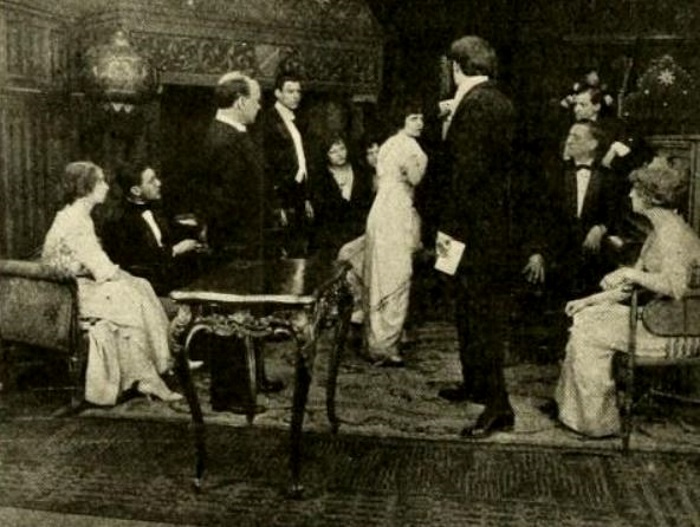
Burns' staging of the cliffside grapple deserves cine-anthology immortality. Rather than rear-projection trickery, the actors perform on an outcrop above an actual thirty-foot chasm; the lens captures horizon-line vertigo while surf detonates against rocks, producing white geysers that double as moral pyrotechnics. When bodies collide, the frame jitters—whether from cameraman nerves or intentional shake becomes deliciously ambiguous. The result is kinesthetic terror more kinetic than the contemporary spectacles of Bushranger's Ransom, or A Ride for Life.
Scholars often append the word melodrama as pejorative, yet the film's emotional surges feel earned because they are undergirded by systemic critique. The banker is not a mustache-twirling aberration but the logical culmination of fiduciary abstraction—an early cinematic embodiment of what Guy Debord would later term the spectacle. Each transaction erodes the social fabric: first the trust fund, then marital fidelity, finally corporeal identity itself. The moment he strips apparel from a waterlogged corpse, we witness capitalism's apex fantasy—commodifying death, pricing identity by the yard of damp fabric.
In this reading, the titular Monster is not a hulking beast but the invisible hand that converts affection into asset class, then back into affection's counterfeit. The Girl survives as moral ballast, her return to paternal threshold signaling narrative's yearning for pre-monetary community—a thematic echo found in pastoral reveries like His Majesty, the Scarecrow of Oz yet shaded here by proto-noir cynicism.
Original 1916 screenings reportedly featured a house organist interpolating 'Fisher's Hornpipe' for maritime exteriors and Wagnerian diminished sevenths for cliffside peril. Modern revivals benefit from curated counterpoint: try pairing with Max Richter's 'On the Nature of Daylight' and witness how the banker's plummet acquires elegiac grace rather than moralistic glee. The discrepancy illuminates the degree to which musical overlay rewrites ethical valence—a lesson worth remembering when curating any silent artifact.
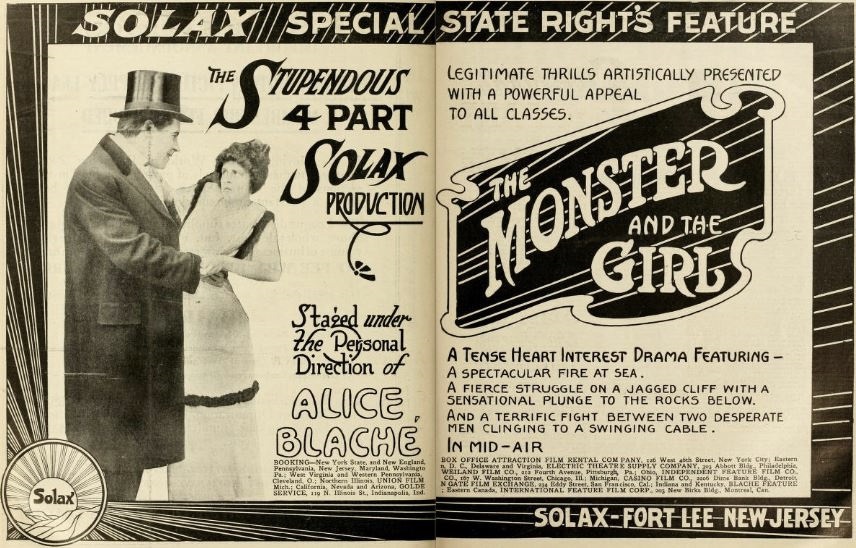
Only two 35mm prints are known to survive: one held by the Library of Congress (incomplete, decomposing reel four), the other in a private Dutch archive (Nitrate #A-17, remarkably intact but vinegar-scented). A 4K wet-gate scan circulated among festivals in 2019; rumors persist of a UK Blu-ray pairing with A Study in Scarlet, yet licensing limbo continues. Streamers should beware low-resolution rips on algorithmic tubes—these derive from 1990s VHS and amputate nearly eight minutes of courtroom deliberation, eviscerating narrative cohesion.
Viewers who equate early cinema with static tableaux will be startled by Burns' fluidity: dolly shots skimming dock planks, match-cut transitions from crashing wave to swinging gavel, iris-out transitions shaped like coiled rope. More than antiquarian curiosity, the film serves as prophetic text—presaging Wall Street malfeasance, trust-fund colonialism, even the commodification of childhood that fuels contemporary influencer culture.
Yes, certain intertitles creak with moralistic couplets ('Gold is but dross where hearts do break / Yet still we dive for sorrow's sake'), and racial homogeneity of the coastal hamlet feels hermetic. Still, these fissures invite historiographic debate rather than complacent dismissal. In an era when algorithmic trading severs cause from effect as cleanly as a guillotine, The Monster and the Girl offers a century-old mirror whose silvering has flaked yet still reflects our present appetites with unnerving clarity.
Seek it out, should the reels resurface at a rep house or archival Vimeo window. Bring a friend, a notebook, and a skepticism toward any system—cinematic or economic—that promises to safeguard your future while palming your present. Watch the banker descend, hear the surf applaud, and walk home tasting brine and copper on your tongue, newly aware that the line between monster and guardian is drawn not in sand but in ledger ink.

IMDb 6
1931
Community
Log in to comment.