DbcultAccessing Vault...
6.3/10
Senior Film Conservator
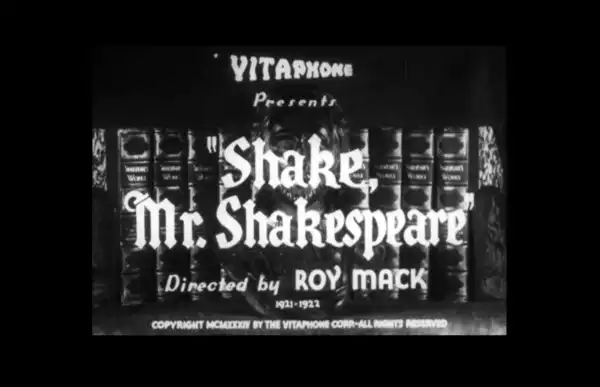
A definitive 6.3/10 rating for a film that redefined the boundaries of cult cinema. Shake, Mr. Shakespeare remains a cornerstone of transgressive art.
“Shake, Mr. Shakespeare” is one of those old, really old films, and honestly, it’s probably best watched if you’re already into classic cinema’s weirder corners. If you’re looking for something polished or a straightforward comedy, you’ll likely find yourself scratching your head. But for anyone who appreciates a peculiar premise and the charm of early filmmaking trying something a little different, there are some genuinely chuckle-worthy moments.
The whole thing kicks off with a director (Harry Shannon) just… falling asleep. It’s a very quick scene, almost like the film itself is in a hurry to get to the good stuff. Boom, he’s out, and suddenly, his office is full of Shakespearean folks.
And what a crowd it is! You’ve got Hamlet, Ophelia, even Macbeth, all wandering around, looking a bit confused but also really quite determined. The costumes are this fun mix of stage-y historical garb and whatever passed for casual wear in a 1930s movie studio. It’s a definite Top Hat vibe, but if Fred Astaire suddenly had to explain TikTok to Romeo.
The idea is they want to be movie stars. Can you imagine? Hamlet, played by Frank Jaquet, trying to do a screen test. He’s got this wonderfully dramatic flair that just doesn’t quite translate to the camera. It’s less about his acting skills and more about the sheer *idea* of him trying to fit into a talkie.
One moment that really sticks out is when one of the characters, I think it was King Lear, tries to understand what a “contract” is. His expressions are just priceless, a mix of ancient wisdom and utter bewilderment. The actor, William Hall, really leans into the 'fish out of water' bit.
The pacing is… well, it’s an old film. Sometimes scenes feel like they go on a few beats too long, especially during some of the conversations where the Shakespearean language bumps up against the more modern (for the time) studio slang. It’s not awkward, exactly, but it does make you notice the silences.
You can tell this was made with a real sense of fun, even if the budget wasn't huge. The sets are simple, but they get the job done. The whole sequence with the Remington Singers is a nice, unexpected break, adding a bit of musical variety to the madness. It’s almost like they just wanted to throw everything they could think of into this dream.
There’s a bit where Hamlet is trying to emote, and the camera just *lingers* on his face. It’s not a deep moment, but it’s just long enough that you start to feel a little uncomfortable for him. Like, buddy, we get it, you’re suffering. 😂
The dialogue, written by Cyrus Wood, is where a lot of the charm lives. It’s not always perfectly sharp, but the way these ancient figures try to grasp things like “close-ups” or “residuals” is genuinely amusing. It never tries too hard to be clever, which is a good thing.
You can almost feel the film trying to convince you that this entire scenario makes perfect sense, even though it absolutely doesn't. And that's okay! It's a dream, after all.
This isn't a film you'd put on for its gripping plot or stunning visuals. The picture quality is what you’d expect from something this vintage, a little fuzzy around the edges. But that’s part of its charm. It feels like uncovering a forgotten little gem from a different era.
“Shake, Mr. Shakespeare” feels very much like someone had a really wild idea and just went for it. It's not a masterpiece, but it's a wonderfully specific curiosity. It sticks with you, not for any grand statements, but for the sheer audacity of its premise and the earnestness with which it delivers it. A real odd duck, and sometimes, that’s exactly what you want.
IMDb 5.5
1935
Community
Log in to comment.