DbcultAccessing Vault...
6/10
Senior Film Conservator
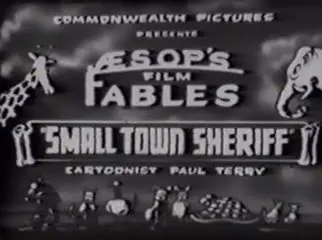
A definitive 6/10 rating for a film that redefined the boundaries of cult cinema. Small Town Sheriff remains a cornerstone of transgressive art.
Does the 1927 short 'Small Town Sheriff' hold up for a modern audience? Short answer: yes, but only if you view it as a piece of experimental surrealism rather than a standard cartoon. This film is for animation purists and fans of the 'weird' silent era; it is not for those who require high-definition polish or linear logic.
1) This film works because it embraces the total lack of physical constraints inherent in early hand-drawn animation, turning a simple premise into a fever dream. 2) This film fails because the middle act loses its narrative momentum, relying on repetitive gags that feel dated even by 1920s standards. 3) You should watch it if you want to see the exact moment animation transitioned from simple character movement to reality-bending visual storytelling.
At its core, 'Small Town Sheriff' is a product of its time, specifically the Prohibition era. The opening scene in the speakeasy isn't just a plot device; it’s a cultural touchstone. When Al Falfa takes that 'strong drink,' the film isn't just showing intoxication; it’s showing a total escape from the rigid social structures of the 1920s. The way the liquid is depicted—almost as a sentient, glowing entity—sets the stage for the madness to follow. It reminds me of the dark, almost occult vibes found in The Mysteries of Myra, where the supernatural is always just a sip away.
The character of Farmer Al Falfa himself is an interesting choice for this role. Usually a figure of stubborn stability, seeing him literally lose his footing and float away is a powerful visual metaphor. The directors, Harry Bailey and John Foster, use a rubber-hose style that makes Al Falfa feel less like a man and more like a balloon being inflated by the spirits he’s consumed. It works. But it’s flawed. The transition from the bar to the sky is abrupt, lacking the smooth cross-fades we see in more sophisticated shorts of the era like A Close Shave.
Once Al Falfa reaches the 'heavens,' the film truly descends into madness. The planets he visits aren't based on any scientific understanding of the time; they are manifestations of a drunkard’s imagination. One planet features architecture that pulses like a heartbeat, while another has a horizon line that refuses to stay flat. These sequences are where the animation shines. The lack of a fixed camera allows the animators to play with perspective in a way that live-action films like Beasts of Paradise simply couldn't achieve in 1923.
There is a specific moment where Al Falfa attempts to walk on a ringed planet, only to have the rings turn into a treadmill. This gag is a masterclass in early pacing. It’s fast, punchy, and visually clear. However, the film suffers when it tries to introduce secondary characters on these planets. These entities lack the charm of Al Falfa and feel like recycled assets from previous Van Beuren productions. It’s a common pitfall in early serial animation, where quantity often trumped quality.
The tone of 'Small Town Sheriff' is difficult to pin down. It oscillates between a lighthearted romp and something deeply unsettling. The silence of the film—standard for 1927—actually enhances the 'otherworldly' feel. Without a synchronized score to tell the audience how to feel, the viewer is left alone with the bizarre imagery. This creates a sense of isolation that mirrors Al Falfa’s own journey through the void. It’s a much more visceral experience than the grounded drama of Thirty a Week.
The pacing is where the film shows its age. The first three minutes are electric, but the middle section drags as Al Falfa wanders through a series of loosely connected cosmic environments. Each planet starts to look like the last, and the novelty of the 'floating' animation begins to wear thin. A tighter edit would have made this a classic, but as it stands, it feels like an overextended gag reel. Still, the sheer audacity of the visuals keeps it afloat.
Is 'Small Town Sheriff' worth your time today? Yes, if you are looking for a historical curiosity that predates the polished Disney era. It offers a glimpse into a time when animation was lawless and experimental. If you are a casual viewer looking for a laugh, you might find it more confusing than funny. However, for those interested in the evolution of visual effects, it is an essential watch. It represents the bridge between the simple line drawings of the 1910s and the complex narratives of the 1930s.
Pros:
- Inventive use of the animation medium to depict intoxication.
- Genuinely weird character designs that feel unique to the Van Beuren style.
- Historical value as a document of Prohibition-era humor.
Cons:
- Repetitive gags that overstay their welcome.
- Poorly defined secondary characters.
- Lack of a strong ending or resolution.
'Small Town Sheriff' is a fascinating relic. It isn't a masterpiece of storytelling, but it is a masterpiece of imagination. By taking a rural trope like Farmer Al Falfa and throwing him into the cosmos, Bailey and Foster created something that feels remarkably modern in its absurdity. It’s a trip worth taking, even if the destination is a bit muddled. The film proves that even in 1927, the human mind was already looking toward the stars—usually with a glass of moonshine in hand.
"A bizarre, booze-soaked odyssey that proves early animation was far more experimental than we give it credit for."
Final Grade: B-
IMDb 6.8
1935
Community
Log in to comment.