DbcultAccessing Vault...
4.4/10
Senior Film Conservator
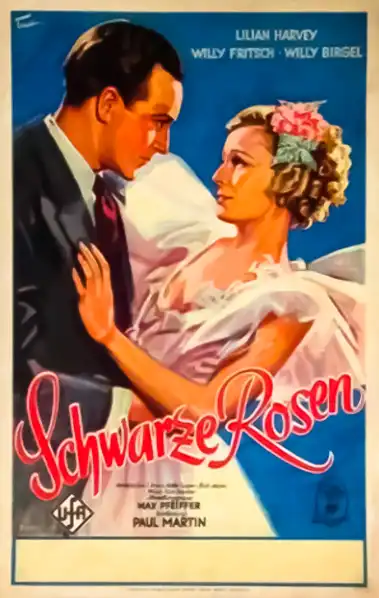
A definitive 4.4/10 rating for a film that redefined the boundaries of cult cinema. Schwarze Rosen remains a cornerstone of transgressive art.
Schwarze Rosen (Black Roses), from way back in 1935, is certainly a film for a very specific crowd. If you're into old-school melodrama, especially German cinema from just before the war, you might find something here worth chewing on. Anyone expecting fast pacing or modern subtlety? You'll probably be bored stiff. This one's really for film historians or folks who appreciate the dramatic flair of a bygone era, I think. 🌹
The story, it’s all about a Russian ballerina and a Finnish sculptor, with Finland trying to shake off the Czar’s rule. It sets up a really grand, tragic romance. Lilian Harvey plays the ballerina, Tanya, and Willy Fritsch is the sculptor, Juhani. They were a *huge* screen couple back then, and you can see why. There’s a definite spark there, even with all the formality of the period.
The film opens with Tanya dancing, and Harvey just has this effortless grace. You can almost feel her gliding across the stage, even in the slightly grainy black and white. Then she meets Juhani, and their connection feels immediate, a bit like fate. He's so focused on his art and his country's freedom, it’s a strong contrast to her elegant world.
Juhani's passion for Finland’s liberation really drives the back half of the movie. You get these glimpses of the struggle, though it's more about the *idea* of freedom than gritty battles. The Czar's soldiers, they just kind of loom in the background, making everyone's life complicated. It’s a very romanticized view of conflict, which isn't a surprise for the time.
There's a particular scene where Tanya has to make a choice, and it's just *so* dramatically staged. The close-ups on Lilian Harvey's face really carry the weight of her decision. Her eyes, they tell a whole story without a single word. It’s almost painful to watch her grapple with it, knowing what’s coming.
Willy Fritsch as Juhani, he’s solid. He's got that quiet intensity that makes you believe in his conviction. You really buy into his character's struggle, even if he doesn't have as many big, tearful moments as Harvey. His character feels a bit like a sturdy anchor in all the emotional storm around him.
The pacing, well, it’s *very* 1930s. Scenes linger, sometimes for what feels like a little too long. It's not a quick watch, you really have to settle into its rhythm. There’s a lot of silent contemplation, especially from Tanya. Sometimes you just wish she'd just *say* something, you know?
One small thing I noticed: the costumes are beautiful. Tanya’s ballet outfits and her elegant dresses are just exquisite. They really pop against the starker, more practical clothes of the Finnish villagers. It’s a nice visual touch, highlighting the two worlds colliding.
The ultimate sacrifice, that's what this film is really building towards. It’s presented with all the grand, operatic emotion you'd expect from a film of this era. It’s less about a realistic, painful loss and more about a symbolic, beautiful gesture. You can almost feel the movie trying to convince you this moment *matters*, big time. It’s very much a product of its time in that sense. It might feel a bit over-the-top for modern eyes, but there’s a sincerity to it.
So, is it worth seeking out today? If you're a fan of classic melodrama, or just curious about what German cinema was like right before World War II, absolutely. It's a window into a different kind of storytelling. But don't go in expecting a thriller. It’s more of a slow, emotional burn, like a long, sad waltz. 💔
IMDb 4.5
1929
Community
Log in to comment.