DbcultAccessing Vault...
Cult Review
Senior Film Conservator
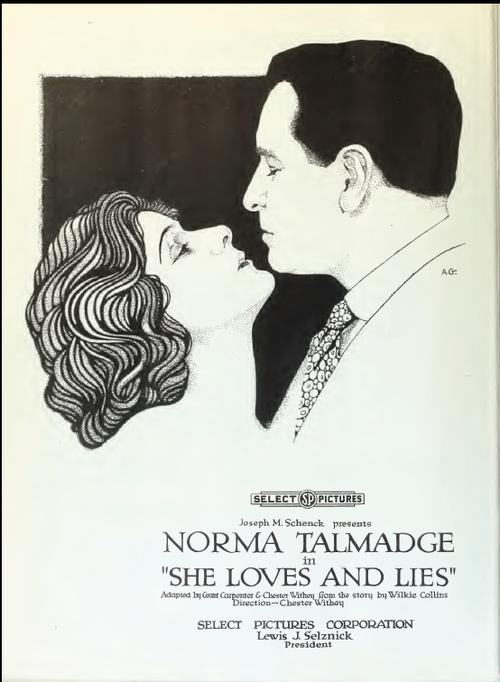
There’s a certain magic to silent cinema that often gets overlooked in our cacophonous modern world. The absence of spoken dialogue forces a reliance on visual storytelling, on the nuanced performances of actors, and on the power of suggestion. And few films exemplify this artistry quite like Chester Withey’s 1918 romantic drama, She Loves and Lies. It’s a narrative tapestry woven with threads of love, financial desperation, and a truly audacious series of disguises, all anchored by the luminous presence of Norma Talmadge. This isn't just a film; it's a intricate dance of identity, desire, and the lengths to which one woman will go to secure her chosen destiny.
At its core, She Loves and Lies is a masterclass in the cinematic trope of mistaken identity, elevated by a clever script attributed to Wilkie Collins, Grant Cooper, and Chester Withey himself. The plot, deceptively simple on the surface, unravels into a complex web of emotional manipulation and calculated charm. Marie Callender, our protagonist, finds herself in a rather enviable, yet complicated, position: a substantial inheritance awaits her, but with a rather peculiar caveat – she must marry the man she loves. A romantic ideal, perhaps, but one made thorny by the fact that her beloved, Ernest Lismore, played with an earnest naiveté by Conway Tearle, is on the brink of financial ruin. The social strictures of the era, coupled with Marie's inherent shyness, prevent her from simply proposing marriage. Herein lies the genesis of her grand scheme.
Marie’s solution is not merely a single disguise, but a layered, almost theatrical, performance. She first transforms herself into an elderly woman of considerable means, a benevolent financier willing to rescue Ernest from his impending bankruptcy. This marriage of convenience, however, comes with a carefully crafted escape clause: a divorce would be granted should Ernest ever find himself falling in love with another woman. It’s a shrewd, almost Machiavellian, move, setting the stage for the true objective of her elaborate charade. The irony, of course, is that the 'other woman' is yet another manifestation of Marie herself. This dual role demands incredible versatility from Talmadge, and she delivers with breathtaking precision.
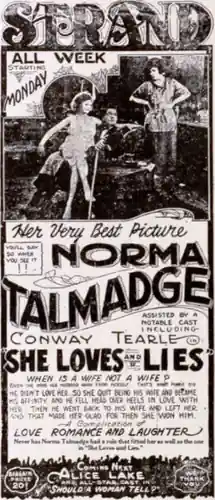
The second, and arguably more pivotal, disguise sees Marie reborn as the enchanting June Dayne. This persona is meticulously crafted to be irresistible to Ernest, a deliberate effort to cultivate the very affection that the divorce clause anticipates. It's a psychological gambit of the highest order, a calculated risk that hinges on Marie’s ability to make her husband fall in love with a fabricated version of herself. And, as the narrative unfolds, she succeeds spectacularly. Ernest, oblivious to the elaborate deception, finds himself utterly captivated by June, confessing his profound love for this mysterious new woman. The climax, when Marie sheds her final disguise and reveals that June Dayne is, in fact, his own wife, Marie Callender, is a moment of pure cinematic satisfaction, a triumphant payoff to the audience's investment in the convoluted romantic journey.
Norma Talmadge’s performance is nothing short of extraordinary. To portray three distinct personalities – the demure Marie, the sagacious and wealthy elderly woman, and the vivacious June Dayne – within a single film, and to do so without the aid of spoken dialogue, is a testament to her profound talent. Her ability to convey character through subtle shifts in posture, gesture, and facial expression is truly remarkable. As the elderly benefactress, she embodies a gravitas and a certain world-weariness that is utterly convincing. Then, as June Dayne, she radiates a youthful exuberance and charm that makes Ernest’s infatuation entirely believable. It's a performance that transcends mere acting; it's an exercise in embodying different souls.
Talmadge, a titan of the silent era, understood the power of the close-up and the importance of conveying complex emotions through the eyes. Her Marie is shy but resolute, her elderly persona cunning yet benevolent, and her June Dayne is irresistibly alluring. This kind of multi-faceted role would challenge even contemporary actors, and Talmadge navigates it with an elegance and conviction that solidifies her status as one of cinema’s earliest stars. One might draw a parallel to the intricate character work seen in films like The Purple Lady, where disguise plays a pivotal role in the narrative, but Talmadge's portrayal here adds layers of emotional depth that set She Loves and Lies apart.
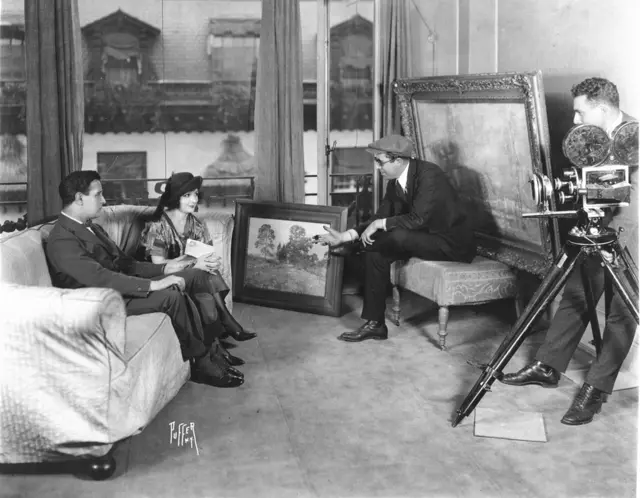
Beyond the captivating performance, the film delves into intriguing themes. The interplay between love and money is a perennial cinematic subject, but She Loves and Lies tackles it with a distinctly early 20th-century sensibility. Marie’s inheritance, conditional upon love, forces her into a situation where she must actively engineer the emotional landscape to secure both her fortune and her chosen partner. It raises questions about the nature of love itself: can it be manipulated? Can a relationship born of deception still blossom into genuine affection?
The film also subtly explores female agency within the societal confines of its time. Marie, despite her initial shyness, is not a passive damsel in distress. She is an architect of her own destiny, a woman who takes extraordinary measures to achieve her desires. This proactive, almost subversive, approach to romance and financial security offers a fascinating glimpse into the evolving roles of women in popular culture. In an era where many female characters were relegated to more conventional roles, Marie Callender stands out as a woman of ingenuity and determination. Her actions, while morally ambiguous in their deception, are driven by a powerful desire for both love and independence.
The writers, Wilkie Collins (whose influence on intricate plot structures is evident), Grant Cooper, and Chester Withey, craft a narrative that, while relying on the audience's suspension of disbelief, remains internally consistent and emotionally resonant. The pacing is deliberate, allowing the audience to fully grasp each layer of Marie’s deception before the grand reveal. The silent film format, with its reliance on intertitles, actually enhances the sense of unfolding mystery, guiding the viewer through Marie's machinations with clarity. This meticulous plotting is a hallmark of strong screenwriting, ensuring that even the most improbable scenarios feel plausible within the film's world.
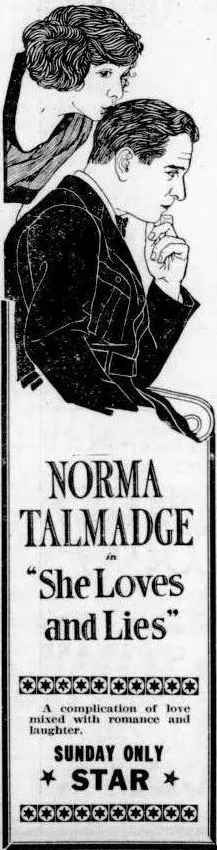
Chester Withey’s direction is understated yet effective. He understands the strengths of his star and allows Talmadge ample space to inhabit her multiple roles. The camera work, while not overtly flashy, is purposeful, focusing on the expressions and gestures that are so crucial to silent film acting. Withey orchestrates the various elements – the set design, the costumes (which are pivotal to Marie's transformations), and the performances – to create a cohesive and engaging cinematic experience. His ability to maintain tension and build towards the climactic revelation speaks volumes about his command of the medium.
The supporting cast, though given less screen time, contributes effectively to the narrative. Conway Tearle as Ernest Lismore perfectly embodies the honorable but somewhat gullible gentleman caught in Marie’s intricate web. His portrayal of genuine affection for both the elderly benefactress (out of gratitude) and June Dayne (out of burgeoning love) makes the final revelation all the more impactful. Ida Darling, Octavia Broske, Eva Gordon, John T. Dillon, and Phil Tead, though their roles are smaller, add texture and authenticity to the film's world, helping to ground Marie's fantastical scheme in a believable social context.
To fully appreciate She Loves and Lies, it’s important to consider the cinematic landscape of 1918. This was a period of immense innovation in filmmaking, where the language of cinema was still being actively defined. Films like this one, with their sophisticated plots and emphasis on character development through visual means, were pushing the boundaries of what was possible in storytelling. The transition from purely theatrical staging to more cinematic techniques was well underway, and Withey’s film demonstrates a growing confidence in the medium's unique capabilities.
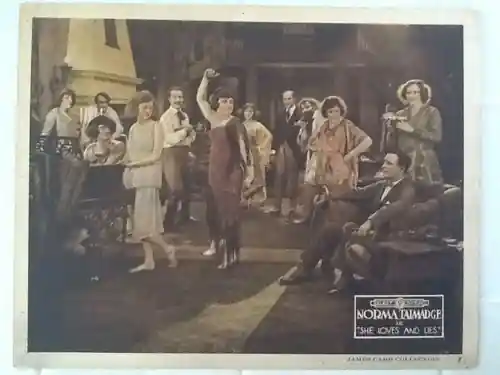
The melodrama inherent in silent films, often exaggerated for modern sensibilities, was a deliberate choice to convey emotion without dialogue. Talmadge, like many stars of her era, mastered this art, making every gesture and glance meaningful. This film stands as a testament to the power of that particular style, inviting audiences to engage with the story on a deeply visual and emotional level. Compared to other films of the period, such as The False Faces, which also explored themes of deception and hidden identities, She Loves and Lies distinguishes itself by focusing squarely on the romantic and psychological dimensions of its central conceit, rather than espionage or adventure.
The film also reflects certain societal anxieties and aspirations of the time. The pursuit of wealth, the importance of marriage, and the shifting dynamics of gender roles were all prevalent themes in popular culture. Marie’s elaborate plan, while extreme, speaks to a desire for control over one's romantic and financial fate in a world that often afforded women limited agency. It’s a fascinating snapshot of a society grappling with tradition and modernity, all wrapped up in a compelling romantic package.
What makes She Loves and Lies endure? It's not just the historical curiosity of a silent film; it’s the timeless appeal of its story. The trope of disguise for love, of testing a partner’s true affections, is one that has resonated across centuries of storytelling, from Shakespearean comedies to modern romantic fare. This film executes that trope with a particular flair and ingenuity, making it a standout example of its kind.
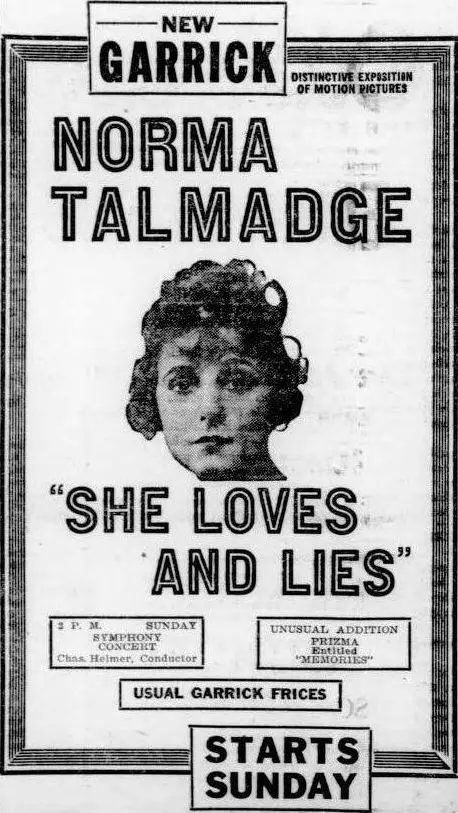
The film’s cleverness lies in its ability to generate genuine suspense and emotional investment despite the audience being privy to Marie’s scheme from the outset. We root for her, even as her methods are questionable, because her ultimate goal is love. The final reveal is not just a plot twist; it’s a moment of profound emotional validation, both for Marie and for the audience who has journeyed with her through her elaborate deceptions. It’s a testament to the power of a well-crafted narrative and a brilliant central performance.
In an age dominated by CGI and explosions, returning to a film like She Loves and Lies is a refreshing reminder of cinema’s foundational strengths. It shows that compelling storytelling, nuanced acting, and a keen understanding of human psychology are truly timeless. It invites us to slow down, to observe, and to appreciate the artistry in every gesture, every expression. For cinephiles and casual viewers alike, it offers a rewarding glimpse into the elegance and ingenuity of early 20th-century filmmaking, proving that a story of love and lies, when told with such skill, can enchant and captivate across generations.
The film serves as an important artifact in understanding the evolution of romantic comedies and dramas, showcasing how complex emotional narratives could be conveyed without a single spoken word. It’s a beautiful example of how silent cinema, far from being a primitive form, was a sophisticated art form in its own right, capable of exploring the depths of human emotion and the intricacies of social maneuvering with grace and impact. Norma Talmadge’s legacy is beautifully preserved in films like this, reminding us of her formidable talent and her crucial contribution to the golden age of Hollywood.
Ultimately, She Loves and Lies is more than just a silent film; it’s a vibrant, engaging piece of cinematic history that continues to entertain and provoke thought. It reminds us that sometimes, the most elaborate deceptions are born from the purest of intentions, and that love, in its myriad forms, often finds the most circuitous paths to its ultimate triumph. Its intricate plot, combined with Talmadge's stellar performance, makes it a must-see for anyone interested in the rich tapestry of early cinema.
IMDb —
1920
Community
Log in to comment.