DbcultAccessing Vault...
Cult Review
Senior Film Conservator
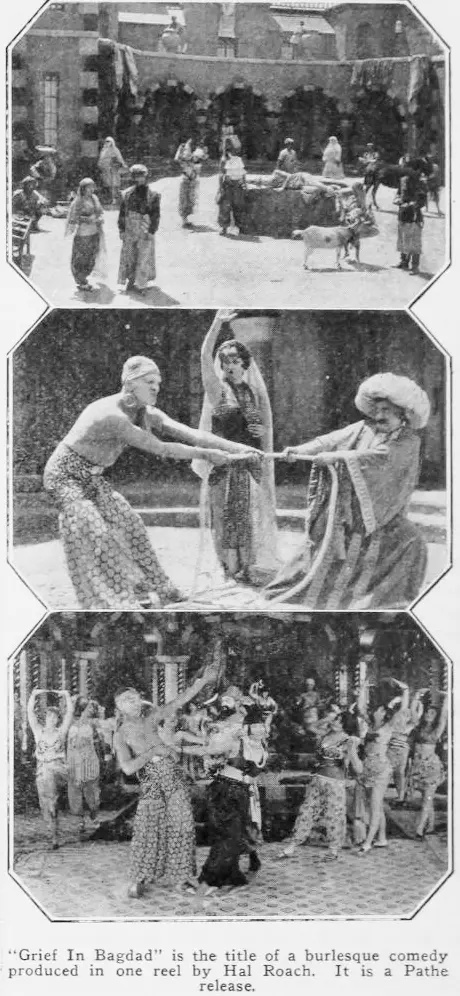
To understand the cultural resonance of Sheiks in Bagdad, one must first inhabit the cinematic landscape of 1925. The industry was undergoing a metamorphosis, caught between the burgeoning artistry of the feature film and the reliable, bread-and-butter hilarity of the short subject. Hal Roach, ever the shrewd architect of laughter, recognized that the massive success of Douglas Fairbanks’ 1924 masterpiece had created a vacuum—a space where the audience’s reverence for 'The Thief of Bagdad' could be weaponized for comedic effect. This film is not merely a parody; it is a calculated deconstruction of the 'Eastern' spectacle that had gripped Hollywood's imagination. While films like Strike were exploring the visceral, revolutionary potential of the medium in the Soviet Union, Roach was refining the grammar of the gag in a way that felt uniquely American and delightfully cynical.
The casting of Katherine Grant provides the production with a necessary anchor. In an environment where the male performers—William Gillespie, Billy Engle, and Leo Willis—are often engaged in high-velocity histrionics, Grant possesses an understated charisma that bridges the gap between the audience and the absurd. Her presence recalls the delicate balance found in other contemporary works like Hoodoo Ann, where the female lead must navigate a world of eccentric characters with a blend of charm and resilience. The chemistry within the Roach 'All-Stars' is palpable; these were performers who understood the rhythm of the frame, the timing of the fall, and the precise moment a facial expression should transition from bewilderment to panic. William Gillespie, often the straight man in other contexts, leans into the mock-heroic demands of the script with a theatricality that perfectly mirrors the Fairbanksian bravado he is intended to skew.
Visually, Sheiks in Bagdad is a masterclass in the 'cheap-on-purpose' aesthetic. The set design, while clearly utilizing leftover props and backlot structures, manages to evoke the sprawling vistas of Bagdad through a lens of domestic clumsiness. There is a specific joy in seeing the high-contrast lighting—so often used to create an atmosphere of mystery and danger—repurposed to highlight the absurdity of a character tripping over a rug or failing to mount a horse. This visual language stands in stark contrast to the more somber tones of Os Lobos or the gritty realism of early industrial dramas. Instead, Roach opts for a bright, high-key approach that ensures every tumble is visible and every micro-expression is caught. The cinematography doesn't just record the action; it participates in the joke, often using the edges of the frame to hide and then reveal the next obstacle in our protagonist's path.
When we look at Sheiks in Bagdad alongside West Meets East, we see a recurring theme in mid-20s comedy: the collision of traditional Western sensibilities with a romanticized, often misunderstood 'Other.' However, Roach’s film is less about cultural commentary and more about the mechanics of the burlesque. It shares a DNA with The Duck Hunter in its reliance on situational irony and the protagonist's utter lack of self-awareness. While a film like Young Ideas might focus on the domestic follies of youth, Sheiks takes those same impulses and projects them onto a stage of epic proportions. The humor is derived from the friction between the setting’s implied majesty and the characters' inherent smallness. It is the cinematic equivalent of a grand opera being performed by a troupe of vaudevillians who have lost their scripts.
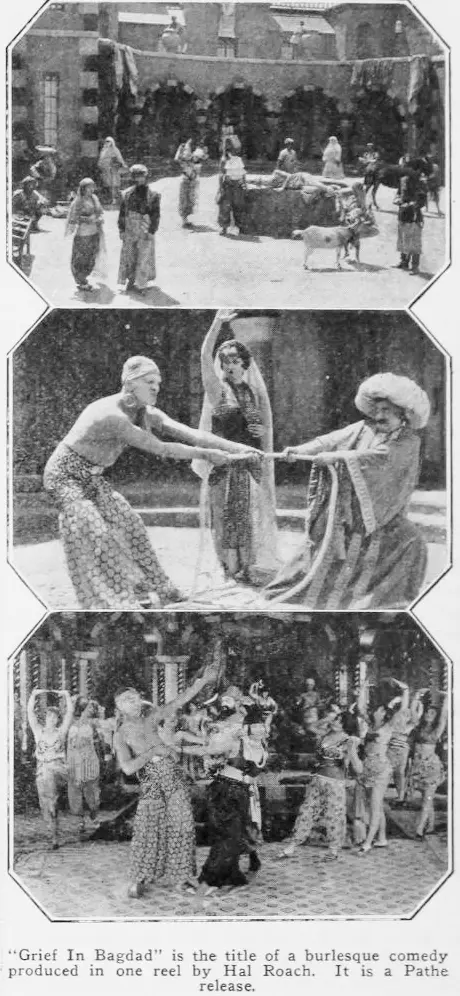
Hal Roach’s writing, often overshadowed by his prolificacy as a producer, displays a keen understanding of narrative economy here. There is no wasted motion. Each intertitle serves either to propel the plot or to deliver a punchline that subverts the audience's expectations. Unlike the more methodical pacing of The Gift Supreme or the slow-burn tension of The Devil's Riddle, Sheiks in Bagdad moves with a frantic energy. It is a film that demands the viewer's attention not through emotional depth, but through the sheer density of its gags. The influence of the 'comedy factory' system is evident; one can almost feel the presence of a writers' room refining each sequence until it reaches a crescendo of chaos. This is particularly evident in the scenes involving Billy Engle and Earl Mohan, whose physical synergy provides some of the film's most enduring laughs.
Technically, the film benefits from the high standards of the Roach studio. The editing is sharp, avoiding the languid transitions sometimes found in European imports like Suzanne, professeur de flirt. Instead, we get a rhythmic cutting style that emphasizes the impact of every slap and the timing of every pratfall. This precision is what separates a great silent comedy from a merely functional one. The use of practical effects—collapsing tents, malfunctioning 'magic' artifacts, and choreographed animal encounters—adds a layer of tangibility that modern CGI-driven parodies often lack. There is a visceral reality to the comedy; when a character falls, you feel the dust of the backlot rising. This tactile quality is something it shares with Cleaning Up!!?, where the humor is rooted in the physical struggle against an uncooperative environment.
In the broader context of film history, Sheiks in Bagdad serves as a reminder of the industry's long-standing tradition of self-reflection. It stands alongside films like Fantomas: The Mysterious Finger Print as a work that understands the tropes of its genre so well that it can effortlessly dismantle them. While it may not possess the historical weight of Jamestown or the moral complexity of The Two Edged Sword, its value lies in its sheer exuberant playfulness. It is a testament to an era when cinema was still discovering its boundaries and was more than happy to mock itself in the process. The film’s ability to remain engaging nearly a century later is a credit to the universal nature of its humor—the timeless appeal of seeing the pompous brought low and the exotic made familiar.
As the final intertitles roll, one is left with the impression of a studio at the height of its creative powers. Hal Roach didn't just produce a film; he produced a critique of the cinematic zeitgeist. By taking the shimmering mirage of the Orient and grounding it in the dusty reality of slapstick, Sheiks in Bagdad achieved something remarkable. It allowed the audience to laugh at the very things they had been told to admire, proving that no matter how grand the spectacle, there is always room for a well-timed trip and a pie in the face. For those exploring the depths of silent comedy, this film is an essential stop, offering a window into a time when the world was wide, the movies were silent, and the laughs were louder than ever. It may not have the exotic allure of Deck Sports in the Celebes Sea, but it has a heart of pure, unadulterated comedy that continues to beat through the decades. Even when compared to the whimsical chaos of Snooky's Twin Troubles, the sophistication of the satire here stands in a league of its own.
A definitive artifact of the Roach era, Sheiks in Bagdad remains a vibrant, essential viewing for any serious student of the silent burlesque.
IMDb 3.5
1928
Community
Log in to comment.