DbcultAccessing Vault...
Cult Review
Senior Film Conservator
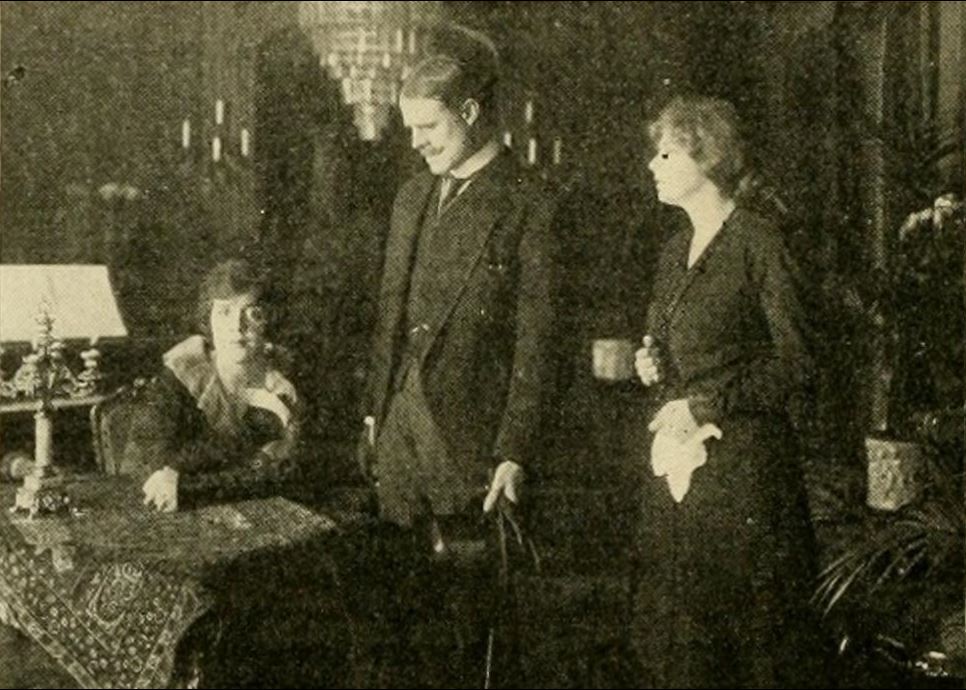
In the nascent years of feature-length cinema, specifically the transformative landscape of 1915, Garden of Lies emerged as a poignant exploration of the elasticity of the human heart. Directed with a keen eye for the burgeoning visual language of the era, the film transcends the simplistic moralities of its contemporaries, offering instead a sophisticated meditation on the performative nature of love and the harrowing consequences of political expediency. It is a work that occupies a singular space between the drawing-room dramas of the Victorian age and the psychological realism that would later define the medium.
The narrative engine is fueled by a profound irony: a woman is saved from madness by a lie, only to find that the lie has become her only truth. This cinematic endeavor, adapted from the novel by Justus Miles Forman, leverages the trope of the 'morganatic marriage'—a union between unequals in social rank—to explore the friction between individual desire and the cold machinery of statecraft. Much like the intense emotional landscapes found in East Lynne, Garden of Lies utilizes domestic tragedy to critique broader societal structures.
The film’s inciting incident—the automobile accident—is staged with a visceral intensity that was rare for 1915. It serves as a literal and metaphorical crash between the modern world and the ancient, rigid traditions of the Noyodna royalty. When Eleanor Mannering, portrayed with a delicate yet haunting vulnerability by Jane Cowl, loses her memory, the film shifts from a romance into a psychological thriller. The 'garden' of the title becomes a controlled environment, a curated reality where truth is sacrificed on the altar of medical necessity.
The introduction of Mallory, the Irish adventurer played by William Russell, injects a rugged, kinetic energy into the proceedings. Unlike the polished, somewhat detached Prince Carl, Mallory is a man of action and raw emotion. His selection as the 'bogus Prince' creates a fascinating meta-commentary on acting itself. Russell must play a man who is playing another man, all while navigating the genuine affection that begins to sprout from this artifice. This layer of deception echoes the high-stakes identity swaps seen in The Game of Three, yet here it is imbued with a much darker, more melancholic tone.
Visually, Garden of Lies is a triumph of early mise-en-scène. The transition from the sun-drenched gardens of the opening act to the claustrophobic, shadow-drenched corridors of the final castle sequence illustrates a descent into a psychological underworld. The use of lighting to denote Eleanor’s fractured mental state—often utilizing soft focus and ethereal compositions during her bouts of delirium—demonstrates a sophisticated understanding of the camera's ability to mirror internal states. This stylistic flair is reminiscent of the atmospheric depth found in European imports like Vampyrdanserinden.
The climax at the deserted castle is where the film sheds its melodramatic skin and embraces the aesthetics of the gothic thriller. Baron Von Steinberck, the quintessential political puppet master, becomes a figure of pure villainy, representing the ruthless preservation of the status quo. The pistol battle is not merely an action set-piece; it is the violent dissolution of the 'garden.' As the real King falls and the pretender is wounded, the film posits that the truth is often fatal to the fantasies we construct to survive. The raw physicality of this sequence stands in stark contrast to the more theatrical violence of The Spoilers, leaning instead into a sense of tragic inevitability.
Jane Cowl’s performance is a revelation. In an era often criticized for its histrionic acting styles, Cowl brings a nuanced, interiority-focused approach to Eleanor. Her portrayal of amnesia is not a caricature of confusion but a palpable sense of erasure. When she eventually learns of the deception, her resentment is not just directed at Mallory, but at the violation of her own perception. This emotional complexity elevates the film above standard fare like Jealousy, providing a more grounded exploration of betrayal.
William Russell provides the perfect foil. His Mallory is a man who begins the journey seeking adventure but finds himself burdened by the weight of a woman's soul. The chemistry between Cowl and Russell is the film's beating heart, making the improbable premise feel deeply, painfully human. Their final scene—a mirror image of the earlier delirium—completes a narrative circle that is both satisfying and intellectually stimulating. It suggests that while the names and titles may be lies, the connection forged in the crucible of care is the only objective reality.
Beyond the romantic entanglements, Garden of Lies functions as a sharp critique of the European class system. The 'Garden' is not just a place of recovery, but a metaphor for the isolated, artificial world of the aristocracy. The Prince’s duty to his dying father and the subsequent crown is portrayed as a cold, life-extinguishing force. In contrast, the 'commoner' Mallory and the American Eleanor represent a new world order—one based on merit, bravery, and authentic emotional resonance. This thematic preoccupation with the clash between duty and desire is a hallmark of Justus Miles Forman’s writing, also seen in the narrative textures of The Pines of Lorey.
The character of Von Steinberck represents the old guard’s desperation. His abduction of Eleanor is a move of political hygiene—an attempt to 'scrub' the royal line of a morganatic blemish. By portraying the 'legitimate' King’s death as a byproduct of this political maneuvering, the film suggests that the old systems are cannibalizing themselves. It is a sentiment that would have resonated deeply with 1915 audiences as the world watched the old empires of Europe fracture during the Great War.
The editing of Garden of Lies deserves special mention. The cross-cutting between the Prince’s royal obligations in Noyodna and Eleanor’s fragile recovery in the villa creates a rhythmic tension that propels the story forward. This parallel storytelling allows the audience to feel the impending collision of these two disparate worlds. The pacing avoids the sluggishness often found in early five-reelers, maintaining a momentum that mirrors Mallory’s own restless spirit. This technical proficiency puts it on par with the ambitious staging of Satana.
Furthermore, the film’s treatment of 'the delirium' as a narrative device is exceptionally clever. It allows for a non-linear exploration of Eleanor’s memories, providing glimpses of her past that feel like shattered glass. This technique adds a layer of modernism to the film, pushing the boundaries of how stories were told in the silent era. It isn't just a plot point; it's a stylistic choice that forces the viewer to experience the world through Eleanor’s disoriented perspective.
In the final analysis, Garden of Lies is much more than a period melodrama. It is a bold interrogation of what constitutes a 'true' relationship. Is a marriage defined by a legal document and a title, or by the presence of a partner during one's darkest hours? By choosing the 'bogus' husband over the memory of the 'real' one, Eleanor—and the film itself—makes a radical statement about the sovereignty of the heart.
While many films of this era have faded into obscurity, Garden of Lies remains a fascinating artifact for its psychological depth and its refusal to provide a conventional 'happy' ending that restores the status quo. Instead, it offers a hard-won peace, born of trauma and sustained by a choice. It is a cornerstone of early dramatic cinema, standing alongside works like Red and White Roses in its depiction of complex feminine agency. For the modern viewer, it serves as a reminder that the most fertile gardens are often those planted in the soil of our most necessary deceptions.
A cinematic journey through the corridors of memory and the high courts of Noyodna. 1915's "Garden of Lies" is a silent triumph of the human spirit.
IMDb —
1929
Community
Log in to comment.