DbcultAccessing Vault...
Cult Review
Senior Film Conservator
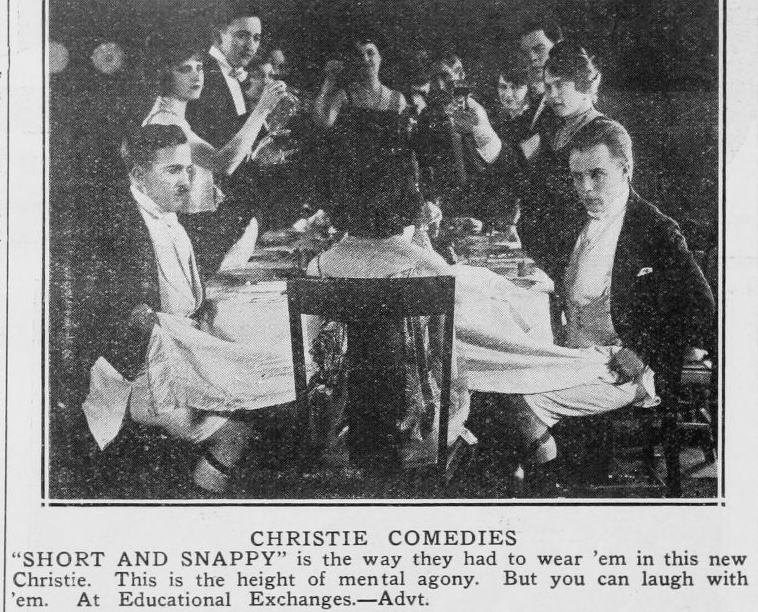
Imagine, if you dare, the immaculate cruelty of a single party invitation that promises social ascent yet delivers sartorial hell. Short and Snappy—all seventeen giddy minutes of it—takes that invitation, folds it into a paper airplane, and flings it straight into the chandelier. The resulting shards of crystal and etiquette are still twinkling a century later.
Billy Bletcher, squashed in stature but gargantuan in appetite, eyes the rented tux like Gatsby ogling the green light. Across the vestibule, Bobby Vernon’s lanky frame folds itself into a posture of desperation; the same suit beckons him like a passport out of mediocrity. Between them hangs the unspoken law of 1923 America: arrive underdressed, exit invisible.
The film’s genius lies not in the premise—two men, one garment—but in how Jack Jevne’s script atomizes that premise into a chain reaction of micro-humiliations. The trousers split at the seam precisely when a gossip columnist glances over. A bow tie, mistaken for a hors d’oeuvre, dangles from a butler’s tray. Every gag is a guillotine slice of respectability.
Watch the suit die in three movements:
Director Gus Alexander never lets the chaos feel accidental. Each rupture lands on the off-beat, a syncopation that would make a jazz drummer jealous. The result is slapstick that feels surgical.
Need context? Slide A Scrambled Romance beside this print and you’ll see custard pies flung with languid elegance; swap in Human Clay and you get melodrama kneaded like damp clay until it cracks. Short and Snappy operates at a faster metabolic rate—its humor is anaerobic, burning prestige for fuel.
Where Roarin’ Dan flexes brawny adventure and The Haunted Manor favors gothic shadows, this film distills comedy to its pheromonal essence: the sharp tang of anxiety, the musk of trousers on the brink.
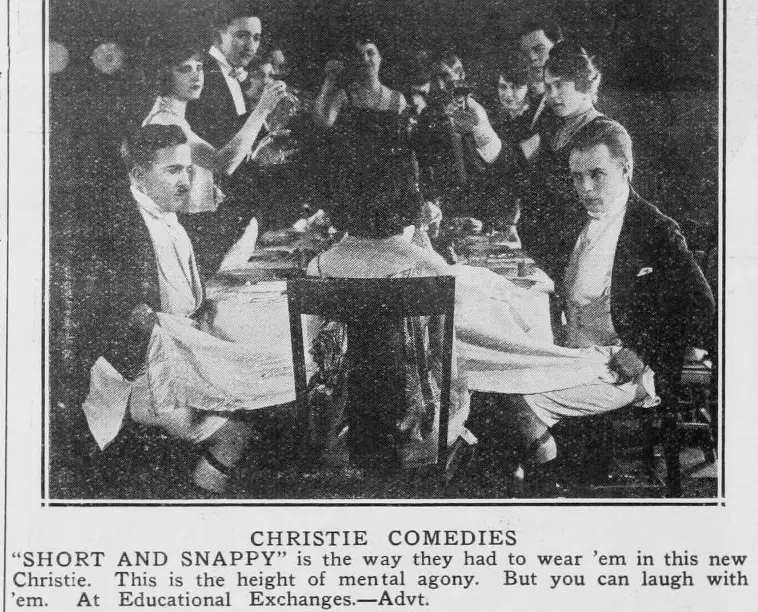
Yes, it’s silent, but crank up the volume on your imagination and you’ll hear:
The rasp of zipper teeth shearing away from fabric.
The hushed gasp of debutantes when a cummerbund slithers to the parquet.
The syncopated clap of two rival brogues sprinting across herringbone wood.
Modern comedies spoon-feed you punchlines through Dolby fog; Short and Snappy trusts the white space between title cards to echo louder than any whoopee cushion. The absence of synchronized dialogue weaponizes our own anticipatory laughter. We become accomplices in the crime of pants-icide.
Notice Vera Steadman’s flapper, cigarette holder angled like a saber. She never intervenes—she observes, a proto-documentarian whose smirk indicts both rivals. Her silence is a feminist barb: while men claw over fabric, she catalogues folly for later ammunition.
Eddie Barry’s butler, prim as a semaphore, ends the picture trouser-less yet triumphant. When our protagonists abscond wearing his formal stripes, they unwittingly swap class markers, a sartorial jailbreak that foreshadows Chaplin’s tramp sashaying out of the roller-skate rink in Modern Times. The gag lands harder now, in an age when gig-economy hustlers rent tuxes by smartphone and still drown in debt.
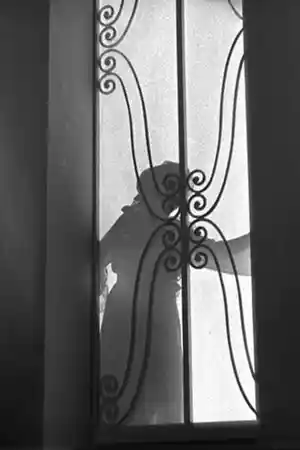
Freeze at 06:47—Bletcher’s silhouette against a stained-glass fanlight. The hue drowns him in cathedral blue, as though the mansion itself baptizes him a saint of mischief.
Freeze at 11:03—A medium two-shot where the tattered trousers, now hanging like wilted lilies, bisect the frame. Above: faces contorted in Edvard Munch尖叫. Below: knees knocked together in Chaplinesque penitence.
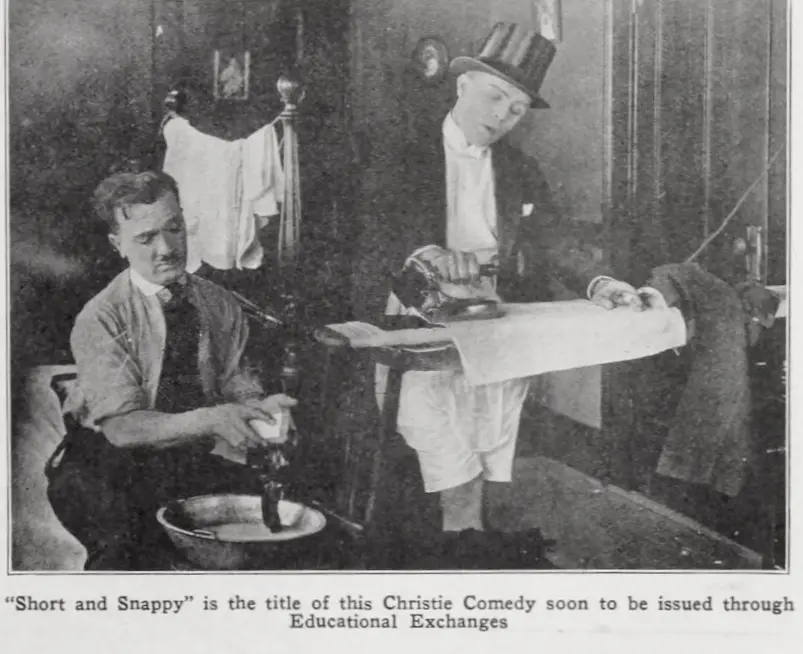
These tableaux anticipate the visual wit of Wes Anderson without the symmetry fetish; they’re crooked, human, gloriously off-kilter.
Seventeen minutes. No fat. Every cut lands like a snare hit—Alexander averages 3.4 seconds per shot, faster than Griffith, slower than Keaton’s College sprint. The tempo mimics the protagonists’ pulse: 160 bpm, drumstick on cymbal, until the final getaway, where the camera finally exhales into a long-held wide shot of dawn over empty streets. The silence after the stampede feels eerie, post-coital, almost spiritual.
Go ahead—scroll Gen-Z clips under #OOTD. You’ll find the same frantic narcissism, the same fear of being under-dressed in the algorithmic ballroom. Short and Snappy simply removed the filter, the color grading, the ring light. It’s the great-granddaddy of every wardrobe-malfunction meme, only it needed no caption; the visual punchline detonated across nickelodeons like a prankster’s stink bomb.
Meanwhile, prestige TV fetishizes period costumes—think Bridgerton frocks or The Gilded Age bustles. This 1923 one-reeler reminds us that fashion, at its core, is comedy stretched tight over the bulge of human insecurity. One yank and the whole illusion rips.
Out of 5 crumpled cummerbunds:
Why not the full monty? Because even at seventeen minutes, the film sidesteps pathos; it tickles but never bruises. Had Jevne lingered an extra 30 seconds on the hush after humiliation—like Souls in Bondage does with its prison-yard silence—we’d nurse the scar alongside the laugh. Still, complaining about excess levity in a silent comedy is like faulting champagne for bubbling.
So stream it, steal it, project it on a brick wall during your next loft party. Let the sephen flicker remind guests that, no matter how curated your profile pic, someone out there is already tugging at your metaphorical trousers. And when that first rip echoes—hopefully only in HD—you’ll know whom to blame: two 1923 idiots who taught us that dignity is always one seam away from surrender.
IMDb —
1916
Community
Log in to comment.