DbcultAccessing Vault...
7.8/10
Senior Film Conservator
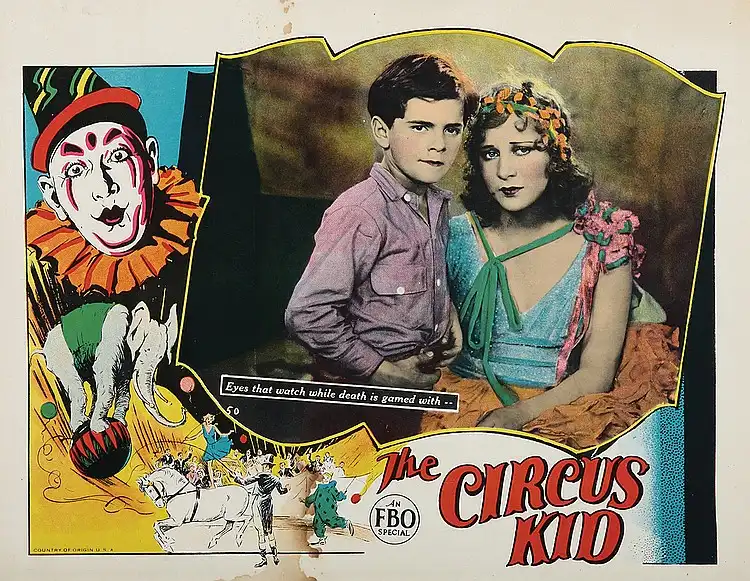
A definitive 7.8/10 rating for a film that redefined the boundaries of cult cinema. The Circus Kid remains a cornerstone of transgressive art.
If you are looking for a polished, high-prestige silent epic, The Circus Kid isn’t it. However, if you want a film that captures the dusty, slightly dangerous energy of a 1920s traveling show, this is a genuine find. It is worth watching today primarily for Frankie Darro’s physical performance and the presence of early Joe E. Brown, before he became the wide-mouthed sound-era icon most people remember. It’s for viewers who appreciate the rougher edges of silent cinema—the kind of film that feels like it was shot on location with real sweat and sawdust.
Those who demand complex plotting or subtle character arcs will likely find it a bit thin. This is a melodrama through and through, leaning heavily on the 'orphan in peril' tropes that were already well-worn by 1928. But the film compensates for its narrative simplicity with a surprising amount of physical energy and some genuinely weird moments involving a gorilla.
The film rests entirely on the shoulders of Frankie Darro, who plays Buddy. Darro was one of the few child actors of the era who didn't feel like a curated doll; he had the athletic build and the restless energy of a kid who actually grew up on the streets. In the opening scenes at the orphanage, you can see him vibrating with a need to move. When he finally escapes and joins the circus, the film shifts into its best gear.
There is a specific scene where Buddy is being taught the basics of circus performance, and Darro’s natural acrobatic ability is obvious. He doesn't need a stunt double for the tumbling or the climbing. Unlike the more static performances in something like The Bronze Bell, Darro is constantly in motion. His interactions with the equipment feel lived-in, not choreographed. He has a way of looking at the older performers with a mix of awe and 'I can do that,' which gives the film its heart.
Joe E. Brown plays Beppo the clown, and it’s a fascinating performance to watch in retrospect. In his later talkies, Brown was often dialed up to eleven, relying on his voice and his massive grin. Here, in the silent medium, he has to rely on his body. He’s surprisingly poignant as the surrogate father figure. He brings a certain pathos to the role that balances out the more frantic energy of the plot. There’s a quiet moment where he’s applying his clown makeup while talking to Buddy that feels more authentic than the grander dramatic scenes.
Helene Costello as Trixie provides the necessary maternal warmth, though her character is largely there to be rescued or to worry. More interesting is the appearance of Poodles Hanneford, a legendary circus equestrian. Seeing a real-life circus star in the middle of a fictional narrative adds a layer of documentary-like realism to the proceedings. When the horses are on screen, the film stops being a melodrama and becomes a showcase for genuine 1920s skill.
We have to talk about Charles Gemora. He was the premiere 'gorilla man' of Hollywood, and his presence here as the escaped ape is both impressive and unintentionally hilarious by modern standards. The suit is remarkably detailed for 1928, but the way the gorilla is integrated into the plot feels like it belongs in a different movie—perhaps a proto-horror flick or a comedy.
The climax involves this gorilla, a storm, and a high-wire act. It’s a chaotic sequence where the editing becomes noticeably faster, almost frantic. You can see the influence of the late silent era's sophisticated montage techniques. The way the light flickers during the storm scenes inside the tent is particularly effective; it’s not the bright, flat lighting you see in earlier B-pictures like Rough Going. Instead, there are shadows and a sense of genuine claustrophobia as the canvas flaps in the wind.
The film runs about 70 minutes, and for the most part, it moves quickly. The orphanage prologue is mercifully short, avoiding the trap of wallowing in Dickensian misery for too long. Once we hit the circus grounds, the pacing settles into a nice rhythm of training sequences followed by performance vignettes.
However, there are moments where the film drags. Some of the romantic subplots between the adult performers feel like padding, and the dialogue titles occasionally over-explain things that the actors have already made clear through their expressions. There’s an overlong sequence involving a dinner at the circus camp that doesn't add much to the plot, though it does give us a good look at the costumes and the 'behind the scenes' atmosphere of the show.
As an FBO (Film Booking Offices of America) production, this wasn't a big-budget affair. You can see it in the occasional grainy shot or the way some of the background extras seem to be looking directly at the camera, unsure of what they’re supposed to be doing. There’s a scene in the middle of a crowd where a man in the back clearly waves at someone off-camera, a small detail that reminds you of the shoestring nature of these productions.
The sets for the orphanage are stark and look like painted flats, but once the action moves to the circus, the production value skyrockets because they are clearly using real tents and equipment. The contrast is jarring but works in the film's favor—the orphanage is supposed to feel fake and restrictive, while the circus feels like the real world.
The Circus Kid is a solid example of the 'bread and butter' movies that kept theaters full in the late 20s. It doesn't have the artistic pretensions of the German Expressionist films or the massive scale of a Cecil B. DeMille production, but it has a soul. It’s a film about finding family in weird places, and it’s anchored by a genuinely great physical performance from Frankie Darro.
If you’ve enjoyed other Darro vehicles like The Red Circle, you’ll find a lot to like here. It’s a fast-paced, slightly gritty, and occasionally bizarre slice of entertainment that serves as a perfect bridge between the silent era’s obsession with melodrama and the coming era’s focus on personality-driven comedy. It’s not a must-see for everyone, but for those who love the flicker of the silent screen, it’s a rewarding way to spend an hour.
IMDb 5
1936
Community
Log in to comment.