DbcultAccessing Vault...
Cult Review
Senior Film Conservator
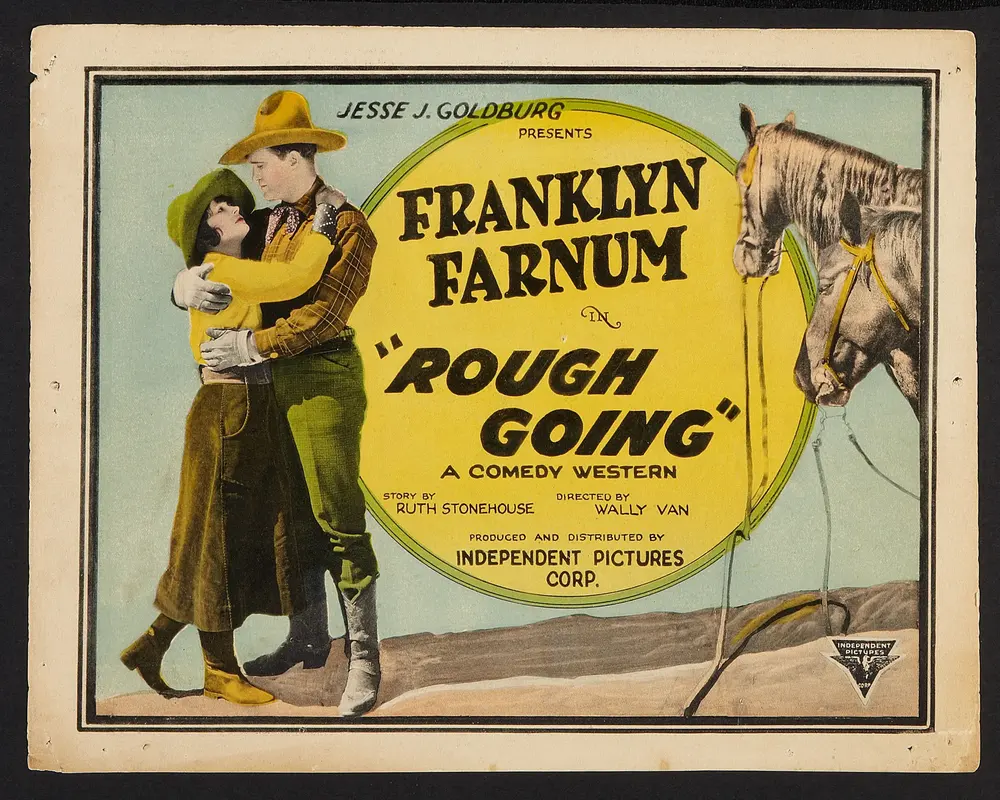
Is 'Rough Going' worth watching today? Short answer: yes, but with significant caveats. This 1925 silent Western offers a fascinating glimpse into early cinematic storytelling, brimming with a melodramatic core and a plot twist that, while perhaps predictable to modern eyes, still delivers a punch. It's a film for those who appreciate the historical context of cinema and the raw, expressive power of silent-era acting, but it will likely test the patience of viewers accustomed to contemporary pacing and narrative depth.
This film works because of its audacious central premise and the commitment of its lead performers to sell the emotional stakes. It fails because its pacing can feel glacial, and some character motivations strain credulity even for the era. You should watch it if you have a genuine interest in silent film history, enjoy classic Western tropes, or are a film student looking to understand early narrative construction.
At its heart, “Rough Going” is a tale of male insecurity and the lengths one might go to for love, or at least, for perceived romantic supremacy. The film opens on Harvey, a young man whose visit to his girlfriend is meant to be a simple, affectionate reunion. However, this idyllic scene is shattered by the arrival of a mysterious stranger. This isn't just a casual interruption; the stranger, played with a subtle menace by Vester Pegg, quickly establishes himself, subtly but effectively pushing Harvey to the periphery of his own relationship.
The tension here is palpable, a testament to director Ruth Stonehouse's ability to craft emotional conflict without a single spoken word. The silent film medium often relied on exaggerated gestures, but here, the power lies in the understated shift in focus, the girlfriend’s perhaps unwitting attention gravitating towards the newcomer. It's a classic love triangle setup, but one complicated by an undercurrent of unspoken rivalry that feels genuinely human.
The plot thickens with a mistaken identity. The stranger is accused of being a notorious outlaw, a development that feels ripped from the pages of a dime novel, yet provides the perfect catalyst for Harvey's desperate gamble. Instead of defending the stranger, or himself, Harvey boldly claims the outlaw’s identity. This moment, while narratively convenient, is where the film’s central conceit truly takes hold. It’s a bizarre, almost suicidal act that speaks volumes about Harvey’s character – whether driven by a misguided sense of chivalry, a desperate attempt to regain his standing, or perhaps a darker, more self-destructive impulse, is left open to interpretation.
Harvey’s subsequent flight and capture set the stage for the film’s ultimate reveal. With Harvey imprisoned, the stranger, now seemingly victorious, reveals his true identity. This twist is the film's strongest card, transforming what initially appears to be a simple rivalry into something far more intricate and calculated. It’s a narrative device that, when executed well, can elevate a simple story, and “Rough Going” largely succeeds in this regard.
Ruth Stonehouse, a notable figure from the early days of cinema, directs “Rough Going” with a keen eye for visual storytelling, albeit one tethered to the conventions of her time. The film’s pacing is deliberate, a characteristic of many silent films that predate the rapid-fire editing and dynamic camera movements of later eras. This measured tempo allows for extended scenes of emotional reaction and character interaction, demanding patience from the modern viewer.
For example, the initial sequence of the stranger's arrival and his gradual integration into the scene with Harvey and his girlfriend is allowed to breathe. Stonehouse doesn't rush these beats, instead relying on the actors' expressions and body language to convey the shifting dynamics. This slow burn can be frustrating, but it also allows for a deeper immersion into the characters' inner turmoil, if you're willing to lean into it. Compared to the more frantic energy of something like The Frame-Up (1917), “Rough Going” feels almost contemplative in its build-up.
The choice to have Harvey immediately claim the outlaw identity, rather than a more drawn-out internal struggle, is a directorial decision that sacrifices realism for narrative thrust. It’s a bold stroke that propels the plot forward, demonstrating Stonehouse's understanding of how to use melodrama to maximum effect. This kind of decisive, almost abrupt character action was a hallmark of silent-era storytelling, prioritizing clear dramatic beats over psychological nuance.
The film’s greatest strength lies in its unapologetic embrace of its melodramatic roots, using every tool in the silent film arsenal to create a compelling, if occasionally over-the-top, experience.
The cast of “Rough Going” relies heavily on facial expressions and physical presence to convey their characters' inner lives, a skill paramount in the silent era. Marion Harlan, as the girlfriend, navigates a tricky role, portraying a character who is perhaps unwittingly the cause of much of the male conflict. Her performance is nuanced; she is not overtly manipulative but rather seems genuinely caught between two compelling personalities. Her shifts in attention, subtle as they are, speak volumes about the stranger's charm and Harvey's fading appeal.
Vester Pegg, as the mysterious stranger, is the film's quiet revelation. He exudes an enigmatic charm that makes his swift displacement of Harvey entirely believable. Pegg’s performance is understated for a silent film, relying on subtle glances and a quiet confidence that contrasts sharply with Harvey's more overt, if ultimately ineffective, displays of affection. His eventual reveal is made all the more impactful by the calm, calculated demeanor he maintains throughout the film. One might even argue his performance is the most modern in its restraint.
Buck Black, as Harvey, is tasked with portraying a spectrum of emotions: jealousy, desperation, misguided bravery, and ultimately, despair. His performance, while occasionally veering into the more theatrical expressions common to the period, effectively conveys his character's internal struggle. The scene where he makes the fateful decision to claim the outlaw identity is particularly strong, showcasing his character's tumultuous emotional state. It's a performance that, while not as subtly captivating as Pegg's, is crucial to the film's dramatic engine.
The cinematography in “Rough Going” serves its purpose well, capturing the rustic charm of its Western setting. While not groundbreaking by today's standards, the film utilizes its visual language to establish mood and advance the narrative. Close-ups are employed effectively to highlight key emotional beats, particularly during moments of intense dialogue (via intertitles) or silent reflection.
The outdoor sequences, though simple, provide a sense of authenticity to the Western backdrop. The wide shots of the landscape ground the story in a tangible world, even if the narrative itself leans into melodrama. There's a particular shot of Harvey fleeing on horseback that, despite its age, still conveys a sense of frantic desperation. It's not the grand, sweeping vistas of later Westerns like The Prodigal Son, but it effectively sets the stage for a story of human conflict within a rugged environment.
The use of light and shadow, while perhaps not as meticulously crafted as in German Expressionist films of the same era, nonetheless contributes to the film’s tone. Shadows play on characters' faces during moments of suspicion or contemplation, adding a layer of visual intrigue to the silent performances. It’s a functional, rather than flashy, approach to visual storytelling that prioritizes clarity and emotional impact.
“Rough Going” delves into timeless themes that remain relevant even a century later. The most prominent is identity: Harvey's willingness to shed his own and assume that of an outlaw speaks to a profound crisis of self. Is it an act of self-sacrifice for his beloved, or a desperate attempt to become someone more exciting, more formidable, than his perceived mundane self? This ambiguity is one of the film’s most compelling elements, inviting viewers to ponder the motivations behind such a drastic choice.
Jealousy, too, is a powerful undercurrent. Harvey’s actions are undoubtedly fueled by his inability to compete with the charismatic stranger. The film subtly explores how jealousy can warp judgment and lead to irrational decisions. It’s a relatable human emotion, making Harvey’s plight, despite its melodramatic presentation, feel surprisingly poignant. This theme is explored with more depth here than in simpler romantic comedies of the era, such as Puppy Love.
Finally, the theme of sacrifice, whether misguided or genuine, is central. Harvey sacrifices his freedom, and potentially his life, for a woman who may not even truly love him, or at least, has been swayed by another. The stranger’s true identity and motives further complicate this, turning the act of sacrifice on its head and questioning its ultimate value. It’s a brutally simple narrative, but one rich with these underlying complexities.
Yes, for a specific audience. If you are a cinephile, a student of film history, or simply curious about the silent era, “Rough Going” offers significant value. Its narrative twist and strong central performances make it more engaging than many forgotten films of its time. However, if you are looking for a fast-paced, action-packed Western or a film with modern sensibilities, you will likely find it a challenge. Its slow tempo and reliance on visual storytelling without dialogue require a different kind of engagement from the viewer.
It's a valuable historical document and a testament to the storytelling capabilities of early filmmakers. It works. But it’s flawed. It demands patience. If you have that patience, you'll find a rewarding experience.
“Rough Going” is far from a perfect film, but it is a surprisingly engaging relic of the silent era. It offers a fascinating, if somewhat quaint, dive into themes of identity, jealousy, and the desperate acts committed in the name of love. While its pacing and melodramatic flourishes might deter some, those willing to embrace its historical context will find a rewarding experience. Vester Pegg’s performance is a particular highlight, anchoring the film with a quiet intensity that transcends its age. It’s a film that reminds us of the foundations upon which modern cinema was built, showcasing how early filmmakers could still craft compelling stories with limited tools. It may require a different kind of attention, but for the right audience, it’s a journey worth taking. It's not a hidden masterpiece, but it's certainly not 'rough going' for those who appreciate the art of silent film.
IMDb 6.7
1931
Community
Log in to comment.