DbcultAccessing Vault...
7.6/10
Senior Film Conservator
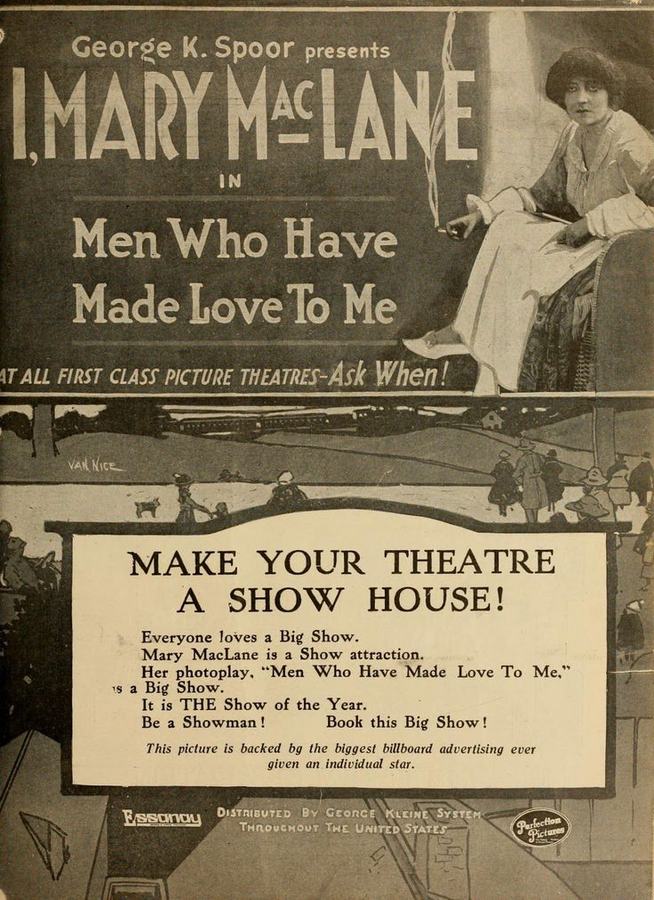
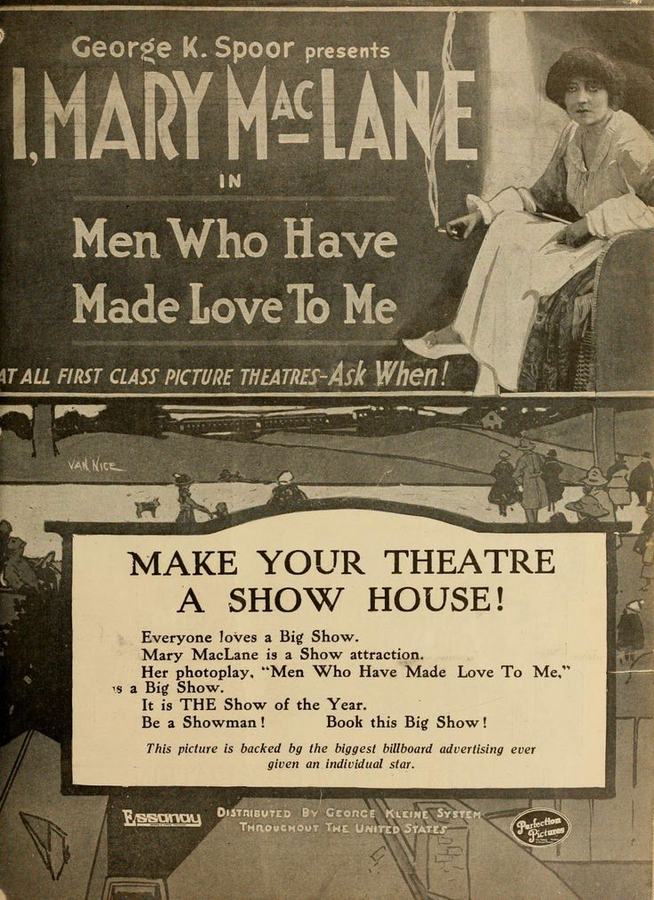
A definitive 7.6/10 rating for a film that redefined the boundaries of cult cinema. Men Who Have Made Love to Me remains a cornerstone of transgressive art.
Imagine a woman in 1918 who not only admits she has had lovers but numbers them, catalogues their inadequacies, and then sells the tale to a camera. That alone feels like a stick of dynamite lobbed into the powder room of Victorian rectitude. Now imagine that the woman is also the screenwriter, the on-screen narrator, and—by sheer force of persona—the film’s auteur, even though the director’s chair technically belongs to someone else. Men Who Have Made Love to Me is less a story than a controlled explosion, a cinematic act of arson against the straitlaced celluloid of its era.
The picture opens on a curtain of cigarette smoke; the lens pushes through it as though trespassing. There sits Mary MacLane, already legendary for her frankly autobiographical books in which she declared herself a “genius” and demanded the right to feel desire without humiliation. She fixes her gaze on the audience and, with the languid authority of someone who has already won the argument, announces: “I shall speak of six men. They loved me—or thought they did. Observe the difference.” That difference—between being loved and being consumed—becomes the film’s true protagonist.
Each affair is staged in a single, self-contained set piece that feels more like a ritual exorcism than a memory. The bank clerk, all ink-stained fingers and stammered promises, stands beneath a painted vault door that never opens; money and affection remain equally inaccessible to him. MacLane circles him like a planet that refuses to be moored. When he declares, “I would give you everything,” she answers, “Then give me the space you occupy,” and the scene smash-cuts to black—an elegant, pitiless dismissal.
Next arrives the prize-fighter, introduced through a series of disembodied shadows boxing an unseen opponent. The camera tilts up to reveal MacLane leaning against the ropes, more referee than cheerleader. Their courtship is choreographed like a fight card: flirtation, clinch, feint, knockout. Yet the knockout is hers; she steps out of the ring mid-embrace, leaving him punching air. The sequence lasts barely four minutes but etches itself into the retina: a woman who refuses to be the prize.
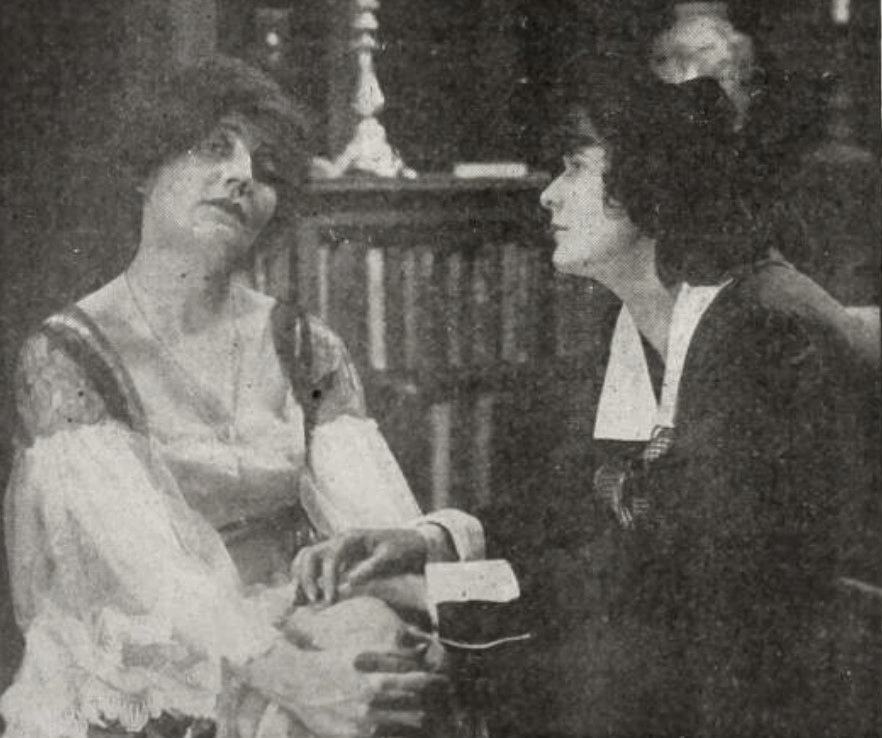
By the time we reach “the husband of another,” the film’s formal daring becomes brazen. Intertitles disappear; instead, MacLane’s voice—synced via the then-experimental sound-on-disc system—floats over the image. She speaks of the adulterous wife she might have been, then corrects herself: “I preferred the part of the woman who leaves.” The husband collapses into a chair whose legs fold like his resolve, a visual gag worthy of Keaton, except the tone is ice-cold satire rather than slapstick.
Director Edward T. Lowe Jr. employs domestic spaces as battlefields. Note the staircase in segment four: MacLane descends each step only after her lover ascends one, an optical metaphor for the power gradient reversing in real time. The maid—played with sphinx-like subtlety by Mrs. Margaret A. Wiggin—waits at the landing, holding a letter we never see her deliver. Her silent presence reminds us that service does not equal submission; she is the film’s quiet moral auditor, tallying debts of affection.
Color tinting is used with surgical precision. The bank clerk’s segment is drenched in bilious green, the shade of ink and envy. The fighter’s scene pulses with amber, as though the footage itself has absorbed bruises. MacLane’s monologue segments remain stark black-and-white, asserting that her authority needs no cosmetic assistance. When she finally shares the frame with the maid, a wash of sea-blue creeps in—the only moment where camaraderie tinges the atmosphere.
MacLane smokes not for glamour but for punctuation. Each exhale is a caesura, a refusal to rush. Watch how she lights up after banishing lover number five: the match flares, the camera closes in on the flame, and for a heartbeat the screen is pure white—an eclipse of subjectivity. When vision returns, the man is gone, the chair empty, the cigarette half consumed. The cut is so abrupt that viewers at the 1918 premiere reportedly gasped, convinced the projectionist had mangled the reel. In truth, it is simply the film’s sharpest assertion: desire can be deleted more cleanly than any splice.
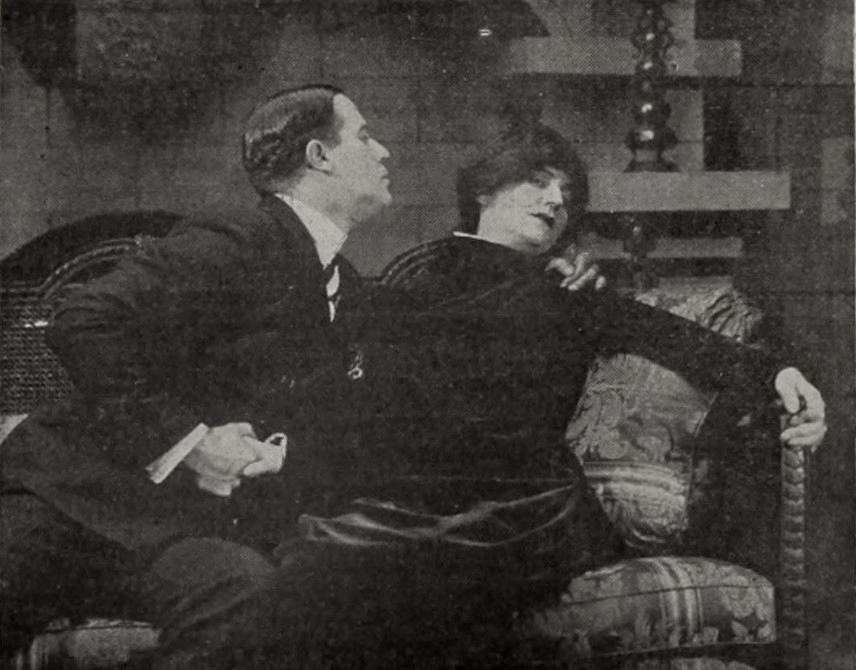
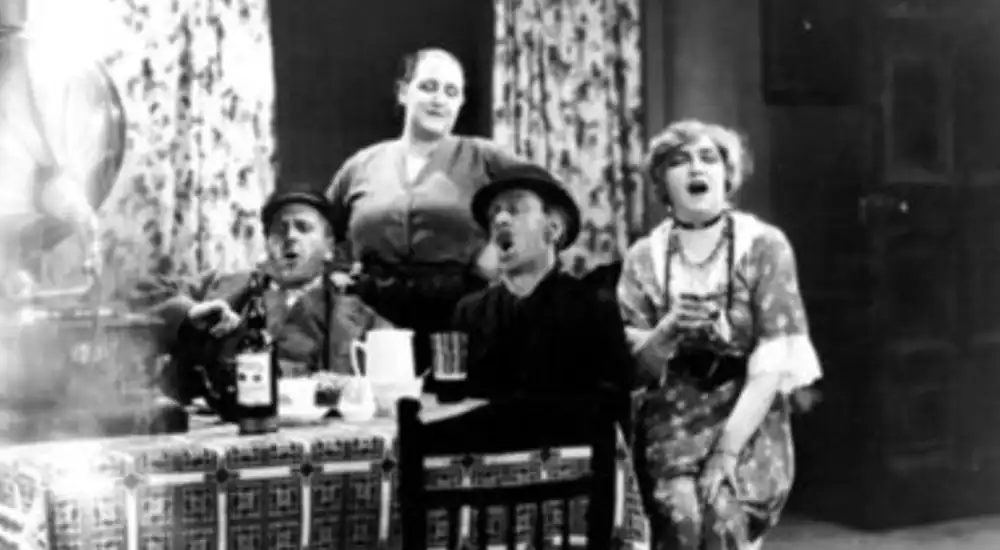
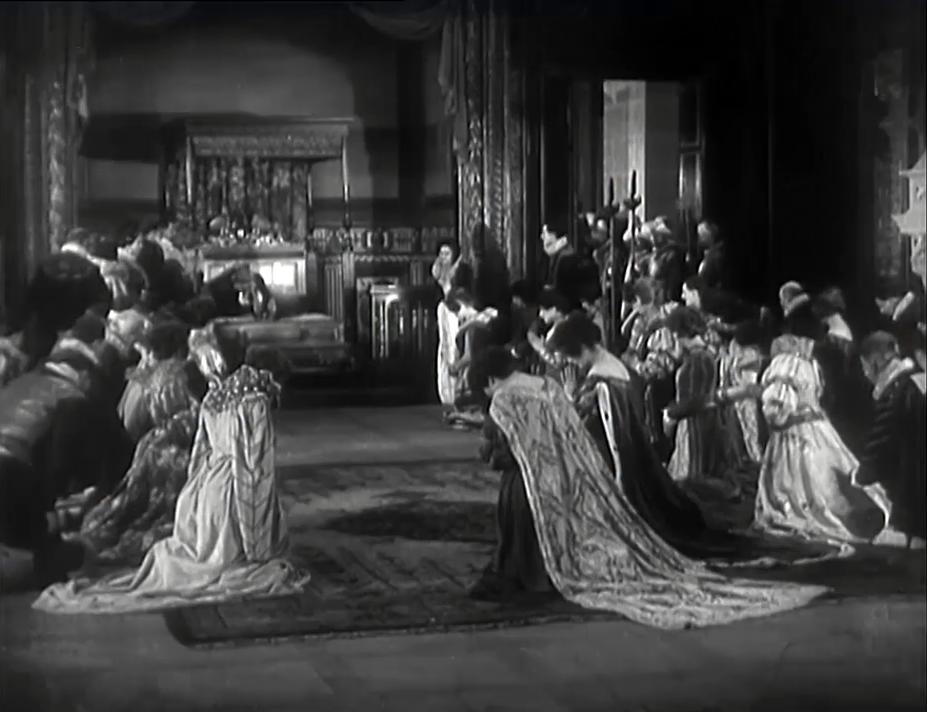
Compare this to the contemporaneous The Gown of Destiny, where the female protagonist is literally sewn into her fate by threads of silk. MacLane cuts every thread with a single snap of the cutter—her tongue.
Though only fragments of the original Vitaphonic discs survive, restoration archivists have synced the extant audio to the 35 mm print. What emerges is a voice surprisingly low, almost contralto, pitched like someone who has already read every love letter the world could write and found them all wanting. She elongates consonants—“I kept the key, but never the guilt”—as though tasting metal. The effect is hypnotic; the modern viewer expects the brittle chirp common to early talkie actresses, but MacLane prefigures Lauren Bacall’s smoky authority by two decades.
Scholars often place the film within the “first-wave” feminist moment, yet its insouciance feels closer to O Crime de Paula Matos, where female criminality becomes a perverse liberation. MacLane, however, commits no crime unless self-possession is indictable. She does not demand equality; she assumes sovereignty. When the bank clerk whines, “A man must have authority,” she retorts, “Then find a woman willing to grant it,” and exits the narrative with the same indifference she might show a misaddressed envelope.
The film’s boldest stroke is its refusal of closure. After the sixth liaison evaporates, MacLane turns to camera and says, “Tomorrow there may be a seventh, or none. The arithmetic is mine to revise.” Fade-out. No wedding, no suicide, no moral reformation—just an open parenthesis in a conversation the audience must continue without her.
Ralph Graves as the boxer brings a physique that looks sculpted from dough—imposing yet malleable. His eyes betray the panic of a man who realizes the match is fixed and the fix is her. Clarence Derwent’s banker is all tremulous giggle, a sound that curdles when he understands that the transaction on offer is not interest-bearing. Fred Tiden plays the unnamed husband with the weary elegance of someone who has misplaced his own name tag at a soirée. Opposite them, Mary MacLane never slips into caricature; her laughter is always half a beat ahead of the joke, as though she has already reviewed the footage in her mind.
The maid’s minimal dialogue—delivered only in intertitles—reads like haiku of dissent: “She dusts what he touched. The cloth forgets faster than skin.” In that line lies the entire film’s ethics: memory is selective, and selection is power.
For 1918, the camera is surprisingly static, yet composition performs the work of montage. In the married-man segment, MacLane and her paramour occupy opposite quadrants of the frame, separated by a looming grandfather clock whose pendulum slices time into guilty seconds. Without a single cut, tension rises like mercury. When MacLane finally strides across the quadrant line, the clock’s face is no longer visible—she has literally stepped outside the temporal contract of adultery.
Lowe’s refusal of cross-cutting keeps us imprisoned in the emotional present; there is no relief shot of a waiting spouse or nosy neighbor. The affair is not condemned by external morality but implodes under the weight of its own artifice. Contrast this with Beneath the Czar, where parallel editing moralizes every sin; MacLane’s film lets the sin sit on the tongue until the flavor evaporates.
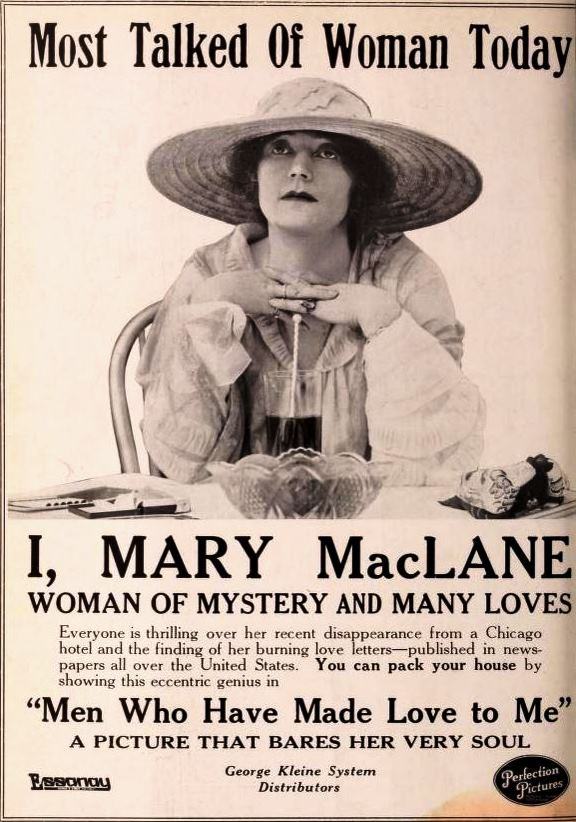
For decades the film was presumed lost, a casualty of nitrate decay and archivists’ disinterest in “woman’s pictures.” A 2019 restoration turned up in a Butte, Montana attic—five reels tucked inside a steamer trunk alongside love letters and a half-smoked pack of Pall Malls. The discovery feels mythic, as though MacLane herself staged the resurrection. Today the movie plays like prophecy: its DNA evident in everything from Chantal Akerman’s static domestic wars to Phoebe Waller-Bridge’s fourth-wall flirtations. Yet no successor has dared its final incandescent shrug.
Watch it back-to-back with Bespridannitsa and you will see two divergent paths for the New Woman: one punished by exile, the other emboldened by it. MacLane chooses exile as coronation.
Myopic viewers might fault the film’s brevity—barely 65 minutes—or its thrift-shop sets. Yet those constraints sharpen its sting. There is no surplus sentiment to dilute the toxin. Every frame is scar tissue: proof of wound, evidence of healing, map of battle. It is not a feminist pamphlet; it is a feminist gauntlet, thrown down in 1918 and still waiting to be picked up by an industry that continues to confuse liberation with lingerie.
If you emerge from Men Who Have Made Love to Me unchanged, consult your pulse, not the film. MacLane has already moved on, cigarette glowing like a lighthouse for ships she refuses to moor.
IMDb 6.2
1935
Community
Log in to comment.