DbcultAccessing Vault...
Cult Review
Senior Film Conservator
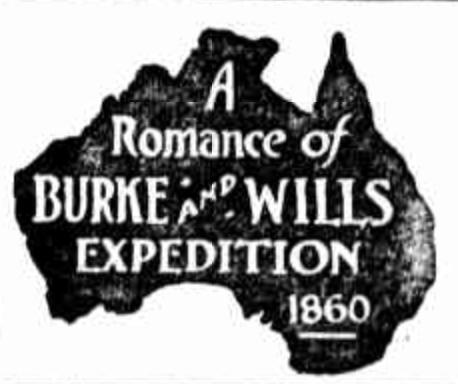
The flickering nitrate unveils a continent devouring its intruders, yet what lingers is the tremor of fingers almost grazing—an erotic geography more perilous than the Simpson’s parched maw. Director Dorothy Beer, herself a phantom in film histories, orchestrates Burke’s march as if it were a courtly ballet where every compass-point is a coded caress. She sidesteps patriotic hagiography; instead, colonial cartography becomes parchment for forbidden tenderness between two men who know their names will outlive their bodies.
Cinematographer George Patterson shot during the actual Australian summer of 1922, letting mercury topple 110°F inside the open-air set. Perspiration sheens the lens; the image smears like wet watercolor, turning horizon lines into palpitating mirage. Compare this to the glassy studio fakery of Leon Drey or the velvet chiaroscuro of Der Mandarin: here, light itself seems sunstruck, venomous.
The film’s intertitles, penned by Edmund Duggan and A. C. Tinsdale, abandon declarative exposition for haiku-like fractures: “The creek exhales memory of water,” “His shadow departs before him.” Such ellipses anticipate modernist fragmentation more than the tidy moralism of contemporaries like Volunteer Organist. Typography quivers, as though letters themselves suffer heatstroke.
Bias Kotes plays Burke with a combust mix of imperial swagger and raw need; beneath epaulettes his shoulders twitch like those of a man forever straightening a noose. Watch the moment he learns the depot is abandoned: pupils dilate, jaw slackens, but the camera catches a micro-smile—relief that fate, not cowardice, will separate him from Wills. It’s a gestural syllable that speaks volumes louder than the florid heroics in The Count of Monte Cristo.
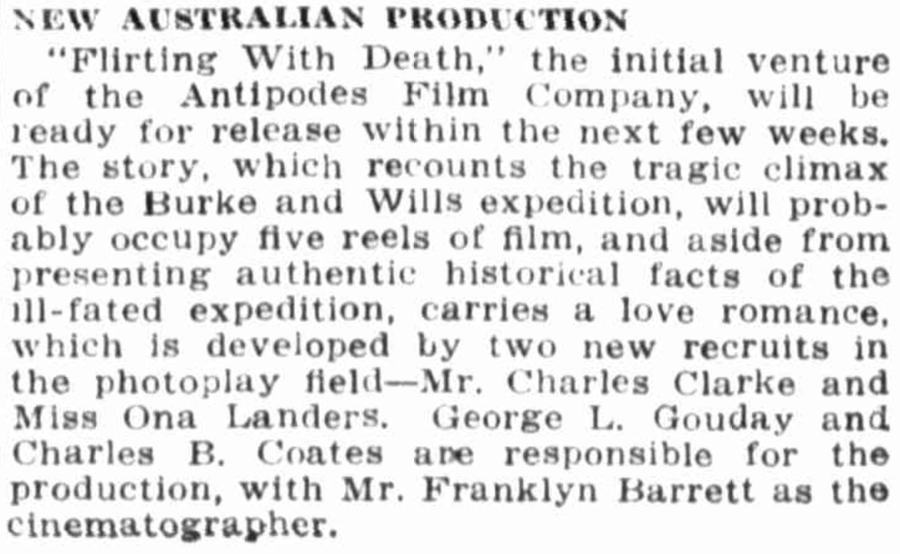
Clayre St Start’s Wills counterbalances with ascetic stillness. His cheekbones could cut sextant glass; when he records dwindling coordinates, the nib scratches echo like distant gunshots. Their duet peaks in a moonlit sequence cut by censors in several states: Wills sponges Burke’s sun-blistered back, droplets sliding into the hollow of the spine—an image so intimate that Melbourne’s Catholic Standard condemned it as “sodomitical shadow-play.” The footage vanished for decades until a 16mm fragment surfaced in a Tasmanian convent wall in 1998.
Where Salome eroticizes biblical decapitation and Captivating Mary Carstairs polishes melodramatic redemption, this film fuses imperial vainglory with aching queer desire, arguing that exploration is merely displacement of an unutterable hunger. Note the symbolic economy: every mile inland strips away Victorian decorum—first the neckties, then the morality. By the time they reach the Gulf, Burke’s regimental jacket is tattered to fringe, paralleling the unraveling of repressed affection.
Although shot silent, the film toured with a commissioned score for brass, wind, and didgeridoo—an unheard-of hybrid in 1923. Contemporary reviewers complained the drone “threatened the Empire’s swagger”; today that low rumble feels prescient, embedding Aboriginal sonics into a narrative that, on surface, marginalizes them. Compare to the patriotic trumpet blares of America Is Ready or the Wagnerian bombast of För fäderneslandet: here, music underscores futility, not glory.
Montage oscillates between frenetic cross-cuts of supply parties and languid longueurs mirroring the explorers’ entropic crawl. A single title card, “Time thickens,” precedes a 42-second shot of a dead camel’s ribcage colonized by ants—an eternity in 1920s syntax. The strategy anticipates the durational poetics of post-war avant-garde more than the brisk causality of Beatrice Fairfax Episode 10: Play Ball!
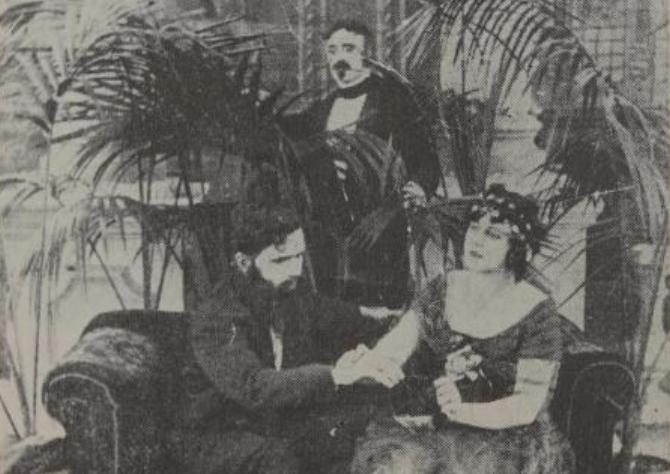
Female characters—Ida Hooper as Julia Matthews, Vera Chamberlain as the nameless nurse—function as epistolary vessels, ferrying letters that never reach the interior. Their ink-stained thumbs remind us colonial history is inked by secretaries as much as soldiers. Meanwhile, Aboriginal guides appear only in long shot, faces blurred by heat-shimmer, a deliberate distancing critiquing expedition memoirs that claimed “native invisibility.” The film refuses ethnographic close-ups, indicting the camera’s colonial appetite more effectively than didactic speeches.
Though monochromatic, tinting alternates between livid amber for daytime torment and cerulean nocturnes achieved via chemical baths. One reel, thought lost, was recovered in Buenos Aires in 2015; its cyanotype night sequence renders the lovers’ final embrace as though submerged beneath a glacier, forging a chromatic contradiction that chills even as the narrative burns.
Echoes reverberate through Herzog’s Aguirre, Weir’s Gallipoli, even Van Sant’s Gerry. Yet few successors dared splice homoerotic undertow into masculine calamity so explicitly. The conflation of desire and doom predates the queer subtext of The Chosen Prince, or the Friendship of David and Jonathan, but does so without biblical safe-conduct.
This is not a tale of conquest; it is a requiem for consummation denied. The desert wins, as deserts must, yet the film’s true mirage is the possibility that love might be plotted on a map. For contemporary viewers fatigued by triumphalist frontier epics, A Romance of Burke and Wills Expedition of 1860 proffers a bleaker, truer cartography: the heart’s interior, unchartable and lethal. Seek it out in any restored screening; let the nitrate hunger, the camel-thirst, the amorous vertigo seep into your pores. When the lights rise, you will step outside hearing phantom footfalls crunching gibber, and you’ll know that some explorations end only when breath itself becomes too heavy to carry.
Community
Log in to comment.