DbcultAccessing Vault...
Cult Review
Senior Film Conservator
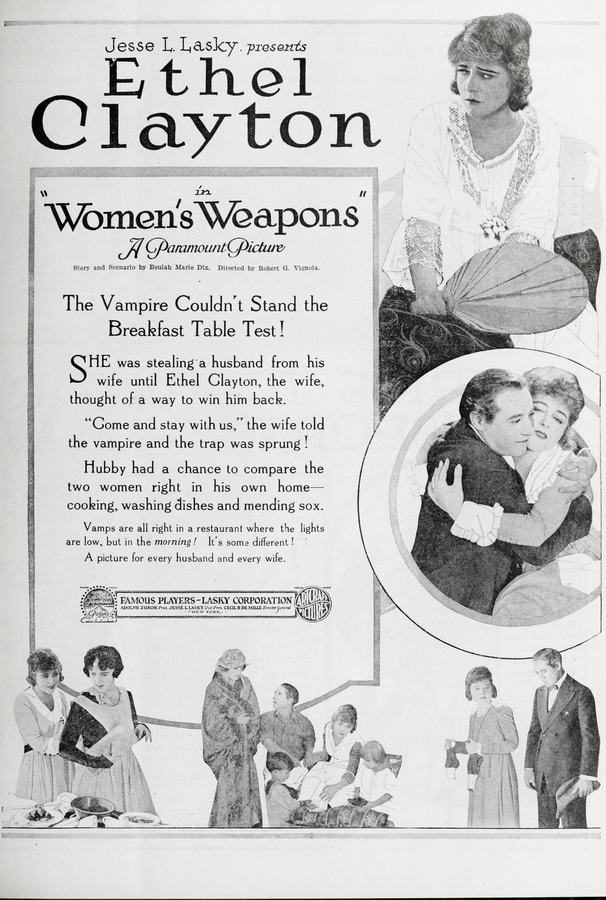
The cinematic landscape of early 20th-century drama often served as a mirror, reflecting societal anxieties, moral dilemmas, and the intricate dance of human relationships. Few films encapsulate this better than Women's Weapons, a compelling narrative penned by the astute Beulah Marie Dix. This isn't merely a tale of infidelity; it's a profound exploration of domesticity under duress, the insidious creep of temptation, and the astonishing resilience and strategic genius a woman can wield when her world is threatened. From its initial premise, the film establishes a palpable tension, demonstrating how quickly the foundations of a seemingly stable life can crumble, paving the way for unforeseen complications and the ultimate test of character.
The story commences with an idyllic, if somewhat fragile, domestic tableau. Nicholas, a novelist whose creative endeavors presumably sustain his family, finds his life upended by the sudden, terrifying arrival of scarlet fever within his home. His children, innocent victims, become the epicenter of a domestic crisis that ripples outwards, isolating his family and, by extension, himself. The quarantine imposed by public health authorities is a pivotal plot device, serving not just as a medical necessity but as a symbolic barrier, severing Nicholas from his emotional anchors. His wife, Anne, embodies the stoic strength often expected of women in such trying times. She remains within the quarantined house, a sentinel against disease, her commitment unwavering, her sacrifice profound. This initial setup is crucial; it paints Anne as a figure of quiet virtue and steadfast devotion, a stark contrast to the moral ambiguity that will soon engulf her husband.
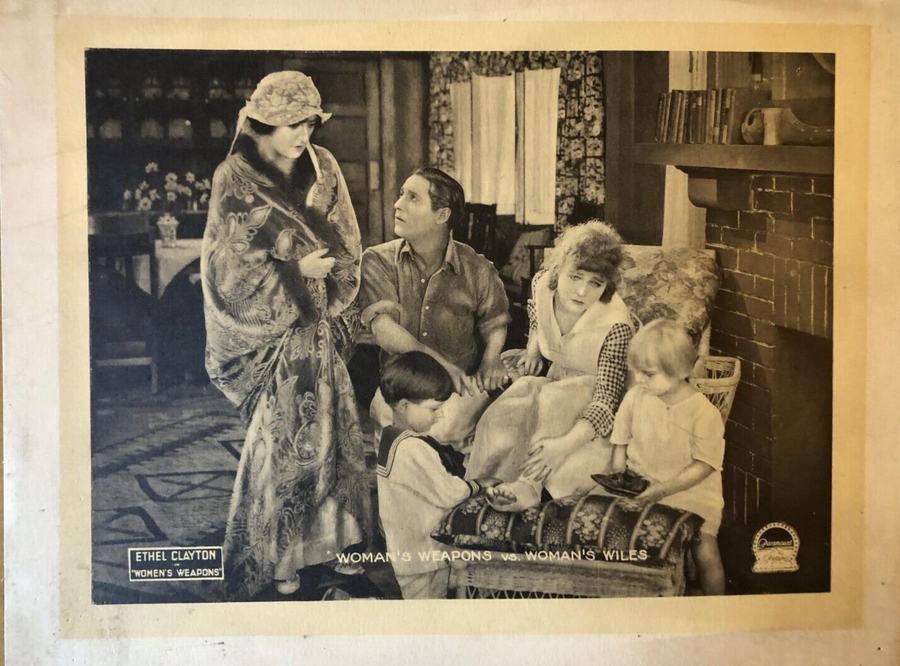
Exiled from his own home, Nicholas is cast adrift in the unfamiliar solitude of a town lodging. The absence of his family, the gnawing worry for his children, and the sheer emptiness of his days create a void that, as the film deftly illustrates, becomes ripe for exploitation. This period of isolation is the crucible in which his fidelity is tested. It's a poignant commentary on human vulnerability, suggesting that even the most well-intentioned individuals can succumb to temptation when stripped of their usual routines and emotional support systems. His loneliness isn't just a fleeting emotion; it's a persistent, corrosive force that erodes his judgment and opens the door to an ill-advised liaison. The film doesn't overtly condemn Nicholas from the outset, but rather portrays him as a man adrift, susceptible to the wrong kind of comfort.
It is in this state of emotional susceptibility that Esmee enters the narrative, not merely as an antagonist but as a catalyst for Nicholas's downfall. As his illustrator, she already occupies a professional space in his life, making the transition to a more intimate relationship dangerously plausible. Joan Marsh, portraying Esmee, imbues the character with a beguiling charm and a distinct sense of ambition. Esmee represents a stark contrast to Anne; where Anne is grounded in domesticity and duty, Esmee embodies a more modern, perhaps more self-serving, independence. Their affair blossoms with a deceptive ease, a clandestine arrangement that initially offers Nicholas an escape from his anxieties. However, the film quickly establishes that Esmee's allure comes with a formidable price tag. Her expensive tastes, her desire for a life of luxury and extravagance, begin to chip away at Nicholas's financial stability. What started as a seemingly harmless diversion rapidly morphs into a destructive force, threatening to unravel his career and his entire livelihood. This aspect of the plot resonates with timeless cautionary tales, reminiscent of the financial ruin brought about by indiscretion, a theme explored in various literary works and films of the era, though perhaps with less direct a parallel to specific titles like Dombey and Son, which, while also dealing with family and financial strains, approaches it from a different angle of patriarchal hubris rather than extramarital folly.
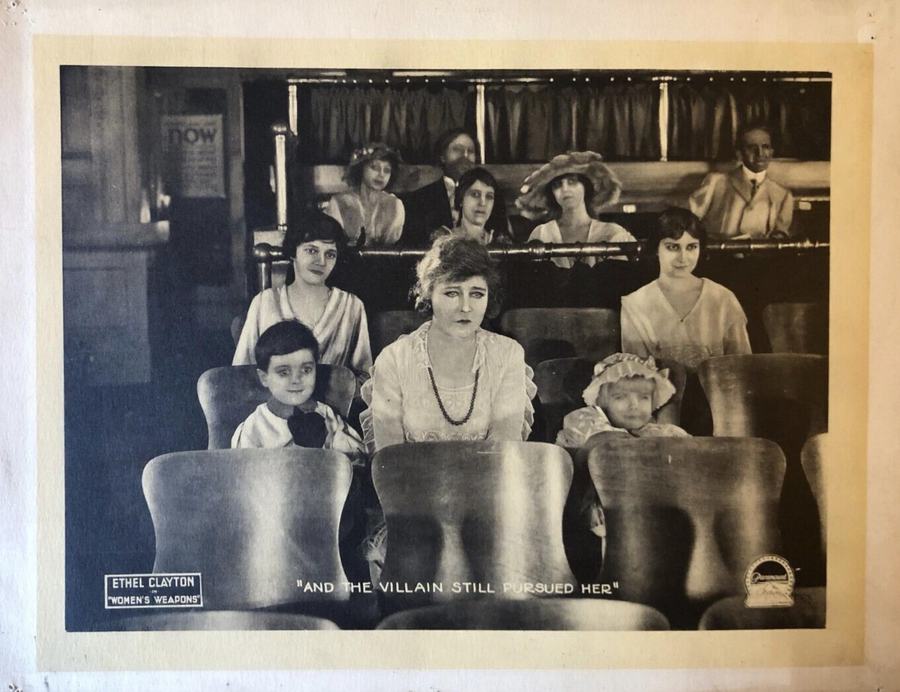
The narrative truly shifts into high gear with Anne's discovery of the affair. Ethel Clayton, in the role of Anne, delivers a performance that is both understated and profoundly powerful. Her character is not one to descend into histrionics or public displays of anguish. Instead, her reaction is marked by a chilling rationality, a quiet resolve that speaks volumes. This is where the film's title, Women's Weapons, finds its profoundest meaning. Anne doesn't resort to conventional emotional warfare; she devises a plan that is as intricate as it is devastatingly effective. Her weapon is not tears or anger, but intellect, strategy, and a deep understanding of her husband's weaknesses and the societal pressures of the time. This portrayal of female agency, particularly in an era often characterized by more passive female roles, is remarkably progressive. Anne transforms from a sympathetic victim into a formidable architect of her own justice, a woman who reclaims her power through calculated action rather than mere reaction.
Anne's plan unfolds with methodical precision, a testament to Beulah Marie Dix's keen understanding of human psychology. She doesn't confront Nicholas directly; instead, she subtly manipulates circumstances to expose Esmee's true nature and the depth of Nicholas's folly. The genius of her strategy lies in its ability to make Nicholas confront the consequences of his actions, not through Anne's direct accusation, but through the unraveling of his illicit world. She allows Esmee's mercenary nature to fully manifest, pushing Nicholas further into financial despair, thereby making the contrast between Esmee's superficiality and Anne's genuine devotion stark and undeniable. This intelligent approach elevates the film beyond a simple melodrama, imbuing it with a psychological depth that holds the viewer's attention. The film explores the idea that true strength often lies in restraint and strategic thinking, a far cry from the more overt and sometimes impulsive actions seen in other contemporary dramas like The Courage of the Common Place, which often focused on more direct, overt displays of heroism.
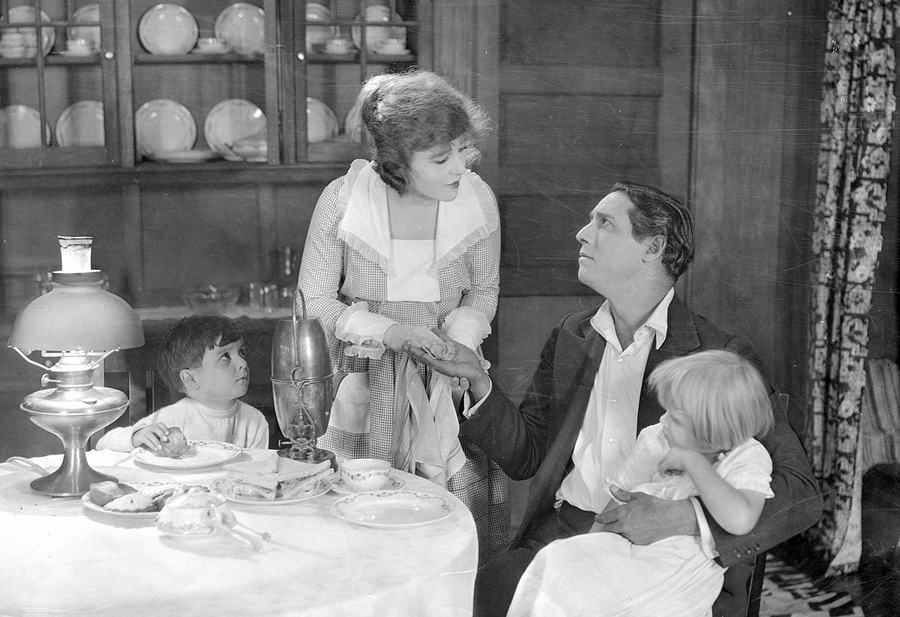
Elliott Dexter's portrayal of Nicholas is nuanced. He is not presented as a villain, but as a flawed man, susceptible to the allure of distraction and the intoxicating promise of fleeting affection. His journey is one of self-discovery, albeit a painful one. The film effectively charts his descent from a respected family man into a desperate individual, caught between the demands of his mistress and the crushing weight of his financial ruin. His eventual realization of Anne's true worth and Esmee's superficiality is hard-won, a consequence of his own poor choices rather than external pressure. This allows for a sense of earned redemption, rather than an unconvincing sudden change of heart.
Ethel Clayton, as Anne, is the undisputed emotional anchor of the film. Her performance is a masterclass in controlled emotion. She conveys Anne's pain, her resolve, and her quiet strength without resorting to overt histrionics. It's in her eyes, her subtle gestures, and her deliberate actions that the audience truly understands the depth of her character. Anne is not a victim; she is a survivor, a strategist, and ultimately, a force to be reckoned with. Her character is a powerful rebuttal to the notion of women as passive recipients of fate, instead showcasing a formidable intellect and an unwavering moral compass. This echoes, in a sense, the underlying strength of female characters in narratives like Her Soul's Inspiration, where women often find inner resilience in the face of adversity, though the methods and contexts differ significantly.
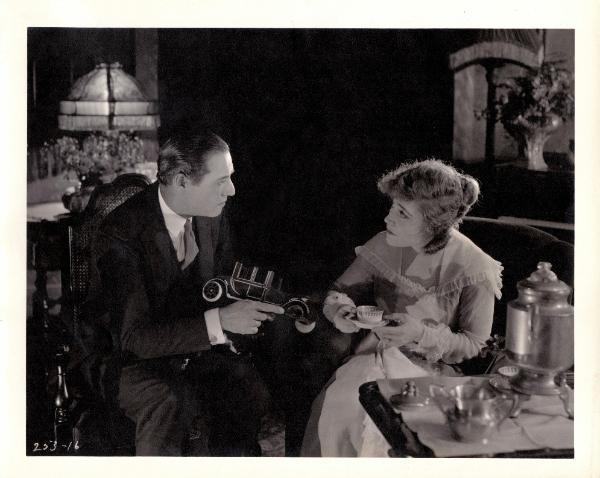
Joan Marsh's Esmee is equally compelling. She is not simply a 'vamp' or a 'scarlet woman'; she is a woman driven by a desire for material comfort and social advancement, reflecting a certain aspect of societal ambition prevalent in the era. Her character serves as a stark foil to Anne, highlighting the differences between genuine affection and transactional relationships. Marsh's performance ensures that Esmee is not a flat caricature but a believable representation of a woman making choices within her own set of values, however misguided they may seem from a moral standpoint. The contrast between these two female archetypes forms the core of the film's dramatic tension and thematic exploration, making the 'battle' for Nicholas's soul and fortune all the more engaging.
The strength of Women's Weapons lies unequivocally in the masterful script by Beulah Marie Dix. Dix, a prolific writer of her time, demonstrates an exceptional understanding of human nature and marital dynamics. Her dialogue is sharp, her plot construction intricate, and her character development rich and believable. She eschews simplistic moralizing, instead presenting a complex web of motivations and consequences. The narrative unfolds with a natural rhythm, building tension gradually and delivering its emotional payoffs with precision. Dix's ability to craft a story that is both entertaining and thought-provoking is evident throughout, proving her a significant voice in early cinematic storytelling. Her work here feels deliberate and intelligent, a far cry from some of the more straightforward moral fables of the era. The narrative complexity and the psychological underpinnings of the plot distinguish it, setting it apart from more simplistic character studies or adventure tales like Chimmie Fadden Out West or even the more allegorical Peer Gynt.
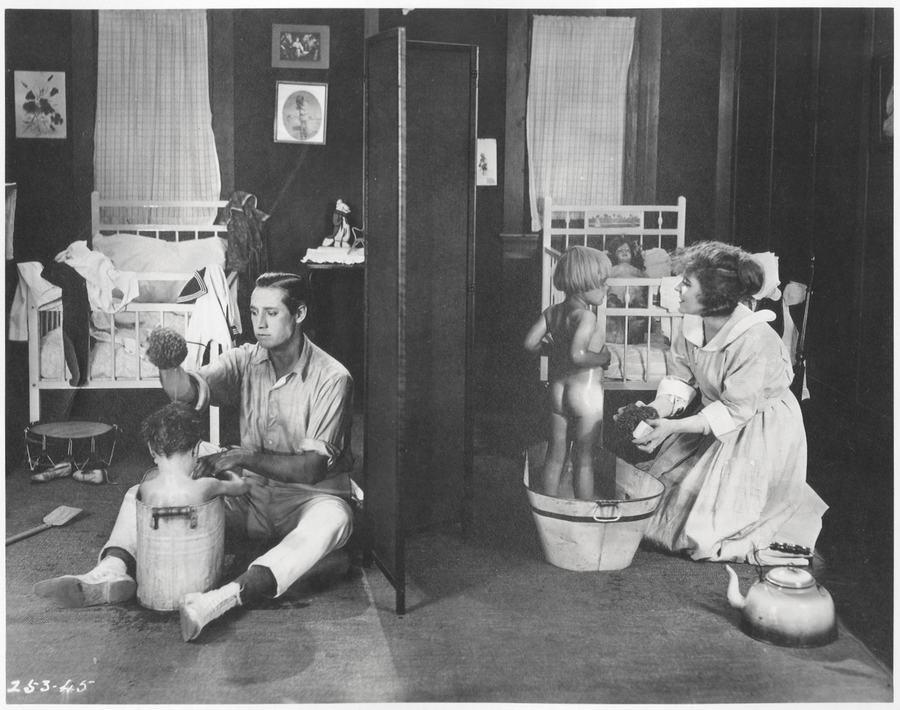
The film's direction, while perhaps less overtly stylized than later works, serves Dix's script with admirable clarity and focus. The pacing is deliberate, allowing the emotional weight of each scene to fully resonate. The use of close-ups to capture the subtle shifts in character expressions, particularly those of Ethel Clayton, effectively draws the audience into the psychological drama. The visual storytelling complements the narrative, ensuring that the audience remains invested in the fate of these characters. The domestic settings, from the quarantined house to Nicholas's temporary lodging and Esmee's lavish apartment, are all rendered with enough detail to ground the story in a tangible reality, allowing the moral and emotional conflicts to feel all the more immediate and pressing.
The supporting cast, including Josephine Crowell, Vera Doria, James Neill, and Pat Moore, contribute to the film's rich tapestry, each playing their part in either exacerbating Nicholas's plight or highlighting the broader societal context of the story. Their performances, though perhaps less central, add texture and believability to the world Dix created. The collective effort of the cast underpins the film's success, ensuring that the emotional stakes feel consistently high and the character interactions genuinely impactful.
At its core, Women's Weapons is a timeless exploration of marital fidelity, the seductive power of temptation, and the often-painful consequences of infidelity. It delves into the societal pressures placed upon individuals, particularly men, to maintain a certain image, and the destructive potential of succumbing to personal weaknesses. The film also powerfully examines the concept of female agency. Anne's calculated plan is not an act of vindictiveness for its own sake, but a strategic move to preserve her family, her dignity, and her marriage. It's a testament to the idea that intelligence and resourcefulness can be far more potent than overt aggression. This theme of a woman's quiet strength and ingenuity, her capacity to navigate and manipulate complex social situations, sets it apart from more straightforward dramas of moral rectitude or the 'fallen woman' trope prevalent in some narratives of the period, such as Purity, which often focused on the consequences of societal judgment.
The film's exploration of financial ruin as a consequence of moral laxity is also a significant theme. Nicholas's spiraling debt due to Esmee's extravagant demands serves as a stark reminder of the material costs of illicit affairs, tying personal morality directly to tangible economic impacts. This adds another layer of realism to the drama, making the stakes feel incredibly high, not just emotionally but practically. It's a pragmatic lesson wrapped in a compelling narrative, demonstrating how personal choices can have far-reaching and devastating effects on one's entire life structure. This financial dimension, interwoven with the emotional turmoil, gives the film a grounded quality that makes its moral lessons all the more resonant, a narrative device that finds its way into many works dealing with the consequences of reckless behavior, though perhaps less directly than in a film like The Devil's Toy, where temptation and its cost are more overtly supernatural or allegorical.
Furthermore, the film offers a fascinating glimpse into the social mores of its era. The initial quarantine, the expectations placed on Anne as a wife and mother, and the discreet nature of the affair all reflect the prevailing societal norms. Yet, within these constraints, Beulah Marie Dix crafts a narrative that challenges the passive role often assigned to women, presenting Anne as a figure of formidable intelligence and agency. This subversion of expectations, while still operating within the framework of traditional values, makes the film particularly intriguing for contemporary viewers. It shows that even within seemingly rigid social structures, individuals can find ways to exert their will and shape their destinies.
In conclusion, Women's Weapons stands as a powerful and sophisticated drama, a testament to the enduring appeal of well-crafted storytelling and nuanced character development. It is a film that transcends its period, offering insights into human nature that remain relevant today. The performances, particularly by Ethel Clayton, are captivating, and Beulah Marie Dix's script is a masterclass in psychological realism and narrative ingenuity. It's a compelling watch for anyone interested in early cinema, marital dramas, or the timeless power of a woman's wit when faced with betrayal. The film doesn't just entertain; it provokes thought, inviting audiences to consider the complexities of fidelity, forgiveness, and the true meaning of strength within relationships. Its lasting impact lies in its refusal to offer simplistic answers, instead presenting a rich, layered depiction of human fallibility and the profound capacity for strategic resilience. It's a reminder that sometimes, the most potent weapons are not those of force, but those of the mind and heart.
IMDb 6.2
1925
Community
Log in to comment.