DbcultAccessing Vault...
7.5/10
Senior Film Conservator
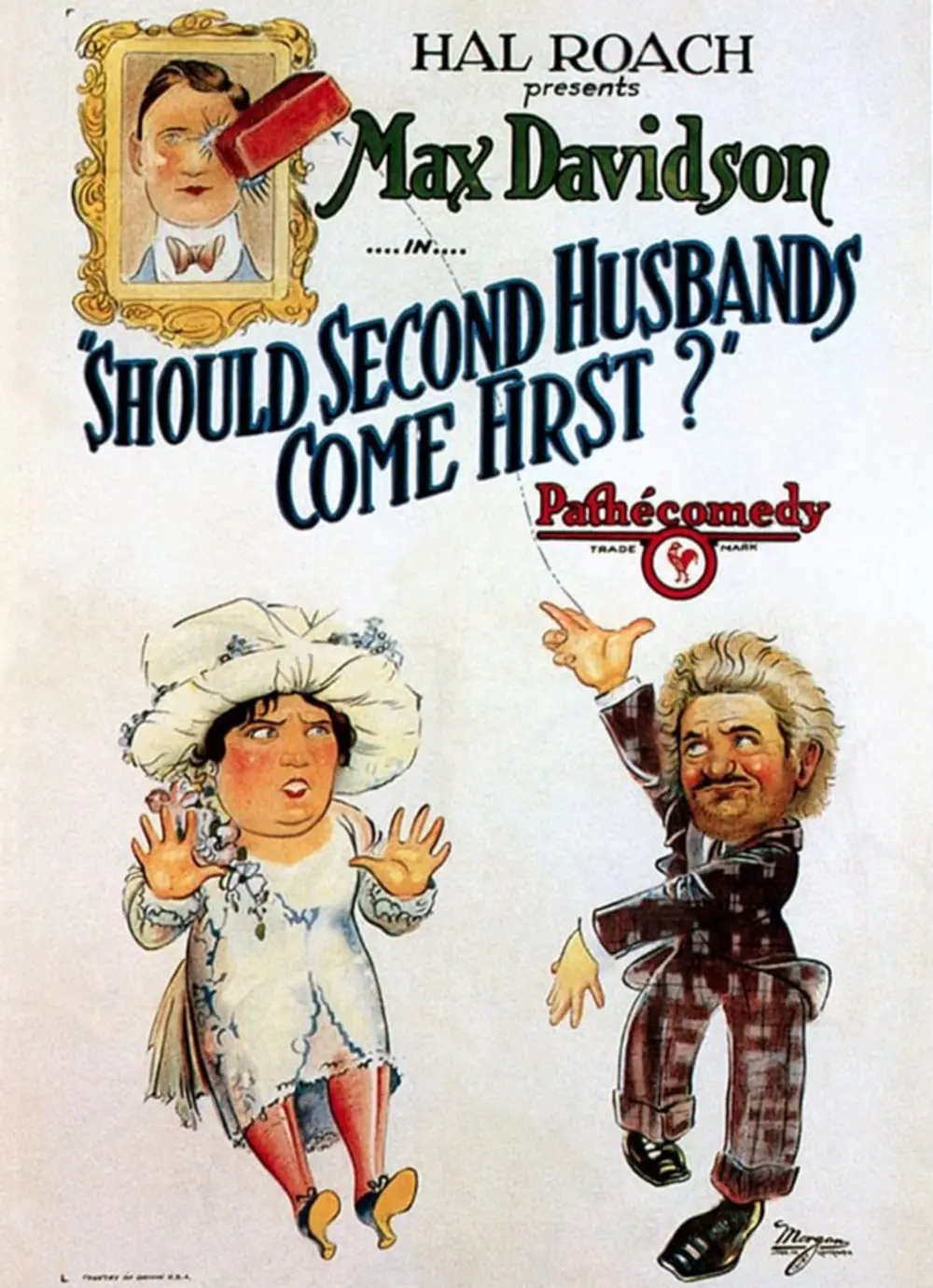
A definitive 7.5/10 rating for a film that redefined the boundaries of cult cinema. Should Second Husbands Come First? remains a cornerstone of transgressive art.
Is 'Should Second Husbands Come First?' worth watching today? Short answer: yes, but with significant caveats that place it firmly in the realm of niche historical interest rather than universal entertainment. This 1923 silent comedy is a fascinating artifact for cinephiles, historians, and those curious about the roots of physical comedy, yet it will likely test the patience of modern casual viewers unaccustomed to the era's pacing and humor.
It's a curious cinematic curio, best suited for those who approach film with an archaeological mindset, eager to unearth the foundational elements of slapstick and domestic farce. However, if your cinematic palate demands rapid-fire jokes, complex narratives, or contemporary production values, this particular vintage may prove more challenging than rewarding. It works. But it’s flawed.
This film works because of its raw, unadulterated commitment to physical comedy and the energetic performances of its young leads, offering a clear window into the burgeoning language of silent-era humor. It serves as a valuable historical document, showcasing the directorial influence of Leo McCarey and Hal Roach in shaping early comedic timing and gag construction.
This film fails because its humor, while groundbreaking for its time, often feels dated and repetitive to a contemporary audience, relying on broad caricatures and a pacing that can feel agonizingly slow. The narrative depth is minimal, existing purely as a scaffold for the central comedic premise, which quickly exhausts its novelty.
You should watch it if you are a dedicated student of silent film history, have a keen interest in the evolution of slapstick comedy, or are a particular admirer of Leo McCarey's early work. It’s also suitable for those who enjoy the charm of rudimentary filmmaking and appreciate the historical context over immediate entertainment.
At its core, "Should Second Husbands Come First?" is a delightfully anarchic exploration of the anxieties inherent in blending families, albeit through the most outlandish means imaginable. We are introduced to a widow, her heart open to a new chapter, who finds herself courted by a suitor. This seemingly innocuous development, however, ignites a full-blown comedic crisis in her two sons.
Their mother's potential remarriage isn't just a change; it's an existential threat to their established, if perhaps chaotic, domestic order. Rather than articulating their fears or objections with adult candor, these boys, with a precocious understanding of psychological warfare, embark on a calculated campaign of performative madness. They don't just dislike the prospective stepfather; they aim to scare him away by presenting their home as a veritable asylum.
Their acts are not random outbursts but carefully orchestrated spectacles of lunacy: one might suddenly believe he's a barnyard animal, the other might engage in nonsensical babbling, or both might conspire in a synchronized display of bizarre rituals. The humor derives from the sheer audacity of their deception and the increasingly flustered reactions of the suitor, who finds himself caught in a domestic maelstrom of manufactured chaos. It's a testament to the power of youthful conviction, however misguided, and a surprisingly sharp, if slapstick-laden, commentary on the lengths children will go to protect their perceived familial sanctity.
Leo McCarey, a titan of comedy direction who would later sculpt masterpieces with Laurel and Hardy, has his fingerprints all over this early short. His genius for gag construction and character-driven humor is evident, even in this nascent form. The film thrives on the exaggerated physicality and facial expressions that were the lingua franca of silent cinema, and McCarey orchestrates these elements with a keen eye for comedic effect.
The performances, particularly from David Butler and Max Davidson as the two mischievous sons, are the engine of the film's humor. Butler, known more as a director in later years, displays a surprising aptitude for physical comedy, embodying his character's manufactured madness with an infectious energy. Davidson, a character actor with a knack for playing bewildered or put-upon figures, perfectly complements Butler's exuberance, often serving as the straight man to the escalating absurdity.
Their commitment to their roles, even when the gags are simplistic, is admirable. Consider the scene where one son might, without warning, begin to bark like a dog at the dinner table, or the other might engage in an elaborate pantomime of fishing in the living room. These moments, while broad, require precise timing and an unwavering dedication to the bit, and the young actors deliver.
The prospective stepfather, played by Spec O'Donnell, is the perfect foil. His escalating discomfort and wide-eyed bewilderment are priceless, serving as a crucial anchor for the audience's reaction. Without his increasingly frantic responses, the sons' antics would lack their comedic punch. It's a masterclass in reacting to the absurd, a skill often overlooked in discussions of silent comedy but vital to its success.
McCarey's direction here is less about grand cinematic statements and more about efficient storytelling and gag delivery. He understands that silent comedy is a language of visual cues, and he uses every tool at his disposal—from exaggerated props to rapid-fire cross-cutting (for the era)—to maximize the comedic impact. This approach to physical comedy can be seen evolving in later shorts like The Barnstormers, and even influencing the more nuanced character interplay in films such as The Complete Life, demonstrating a clear lineage in comedic development.
The cinematography in "Should Second Husbands Come First?" is, as expected for a 1923 short, functional rather than flashy. The camera is largely static, capturing the action in medium shots that allow the physical comedy to unfold within the frame. There are no sweeping crane shots or intricate tracking movements; the focus is squarely on the performances and the gags. This isn't a criticism, but rather an observation of the technical limitations and aesthetic conventions of the period.
The use of intertitles is crucial, not just for dialogue but for setting up the comedic scenarios and conveying the sons' mischievous intentions. They act as a silent narrator, guiding the audience through the escalating madness. While modern viewers might find the frequent interruptions jarring, they were an indispensable part of the silent film experience, demanding a different kind of engagement from the audience.
Pacing is perhaps the most significant hurdle for contemporary audiences. Silent comedies, even those directed by masters, often unfold at a more deliberate rhythm. Gags are allowed to breathe, to build, and to linger. While this allows for a deeper appreciation of the physical precision involved, it can feel slow to viewers accustomed to the rapid-fire editing and constant stimulation of modern cinema. The film takes its time establishing the premise, developing the sons' schemes, and showing the stepfather's gradual descent into bewildered despair.
This deliberate pace, however, is not without its merits. It forces the viewer to slow down, to observe the nuances of the actors' expressions, and to appreciate the ingenuity of the physical comedy. In an era before synchronized sound, every gesture, every tilt of the head, and every exaggerated pratfall had to carry the weight of the narrative and the humor.
The humor in "Should Second Husbands Come First?" is undeniably a product of its time. It relies heavily on slapstick, mistaken identity (or, rather, mistaken sanity), and the discomfort of social situations. While some of the gags still land with a chuckle, others feel quaint, even predictable. The idea of children feigning madness to deter an unwanted suitor is a classic comedic trope, but its execution here is more about the broad strokes than the subtle wit.
One could argue that the film, despite its comedic intent, inadvertently touches upon deeper, more timeless anxieties. The fear of a new parental figure, the disruption of established family dynamics, and the lengths to which individuals (even children) will go to protect their comfort zone are themes that resonate across generations. The film frames these anxieties through a comedic lens, but the underlying tension is palpable.
While many revere the silent era, I find its comedic rhythms often more academic than genuinely laugh-inducing for a contemporary audience. This film, in particular, feels more like a historical lesson in comedic construction than a truly uproarious experience.
This isn't to say the film is without charm. Its historical significance alone makes it worth a viewing for serious film enthusiasts. It's a foundational text, a building block in the evolution of cinematic comedy. Understanding films like this helps us appreciate the sophistication of later works by McCarey and others, showing how early experiments paved the way for more complex and enduring comedic narratives. The simple, direct approach to comedy here, similar to the straightforward storytelling in The Call of the Game, highlights a common thread in early cinema: delivering a clear message, whether dramatic or comedic.
Analyzing "Should Second Husbands Come First?" requires a balanced perspective, acknowledging its place in cinematic history while also evaluating its entertainment value for a modern audience. Here’s a breakdown:
"Should Second Husbands Come First?" is not a film for everyone, nor does it pretend to be. It’s a specific taste, a cinematic antique that offers more academic value than immediate, gut-busting entertainment for today’s average viewer. Its strength lies in its historical context, providing a tangible link to the genesis of Hollywood comedy and the burgeoning genius of filmmakers like Leo McCarey. For those willing to engage with its unique rhythm and appreciate its place in film history, it offers a charming, if somewhat quaint, experience.
However, for those seeking a laugh-out-loud comedy that transcends the decades, this silent short may fall short. It’s a foundational piece, yes, but foundations are often more interesting to study than to live in. Its central premise, while simple, reveals a surprisingly sharp commentary on familial anxieties about new partners, even if it’s buried under a mountain of slapstick. It’s a film that asks us to adjust our expectations, to step back in time, and to appreciate the raw, unpolished energy of early cinema. And for that, it earns its place in the archives, even if it doesn't quite earn a spot in everyone's regular rotation.
IMDb —
1920
Community
Log in to comment.