DbcultAccessing Vault...
Cult Review
Senior Film Conservator
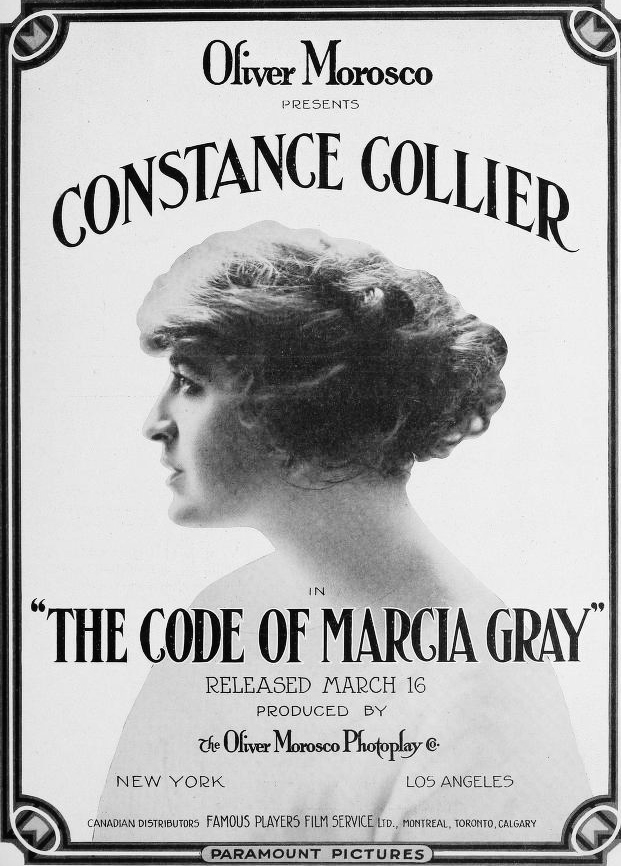
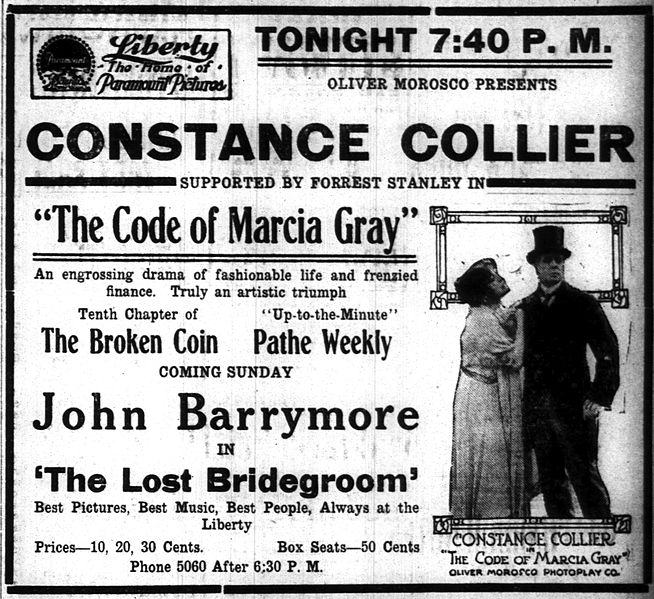
Frank Lloyd’s The Code of Marcia Gray arrives like a half-remembered fever dream stitched from nitrate and soot, a 1916 silent that somehow feels post-postmodern. You don’t merely watch it; you decrypt it, frame by frame, as though each grain of silver halide might flake off and cut your fingerprints. The plot—ostensibly a race to decipher a ledger—unfurls into a metaphysical treatise on how capitalism colonises even grief. Constance Collier, statuesque yet never stiff, plays Marcia with the brittle authority of a displaced duchess stranded in a Dickensian counting-house. Her eyes perform their own iris-out: widening to swallow exposition, narrowing to slash through masculine bluster.
Gordon Griffith, the juvenile lead who once Chaplin-ed across Keystone sets, here morphs into a cadaverous courier whose death in reel one catalyses every subsequent sin. His silhouette, jerked aloft by an unseen noose, forms a sickening ballet against the iris vignette—an image that predates German Expressionism yet rivals Dämon und Mensch for chiaroscuro cruelty. Meanwhile, Forrest Stanley’s Inspector Vale exudes the laconic menace of a tango-dancer who has misplaced his rose but kept the dagger. Every time he adjusts his glove, the film seems to hiccup, as though the very sprockets fear contamination.
Lloyd, never a slouch at maritime thrills (The Blacklist), swaps oceanic spray for urban grease. He renders the city as a recursive machine: elevated trains scissor across the frame, newsboys pop up like malicious cuckoos, and telegraph wires thrum with Morse that mirrors the titular cipher. The effect is kin to The Suburban’s claustrophobia yet shot through with the spiritual vertigo of The Arrival of Perpetua. Cinematographer Gilbert Warrenton—future lensman on Jeanne Doré—carves depth with tenebrous side-lighting; faces emerge as furtive cameos scudding across pools of asphalt mirror.
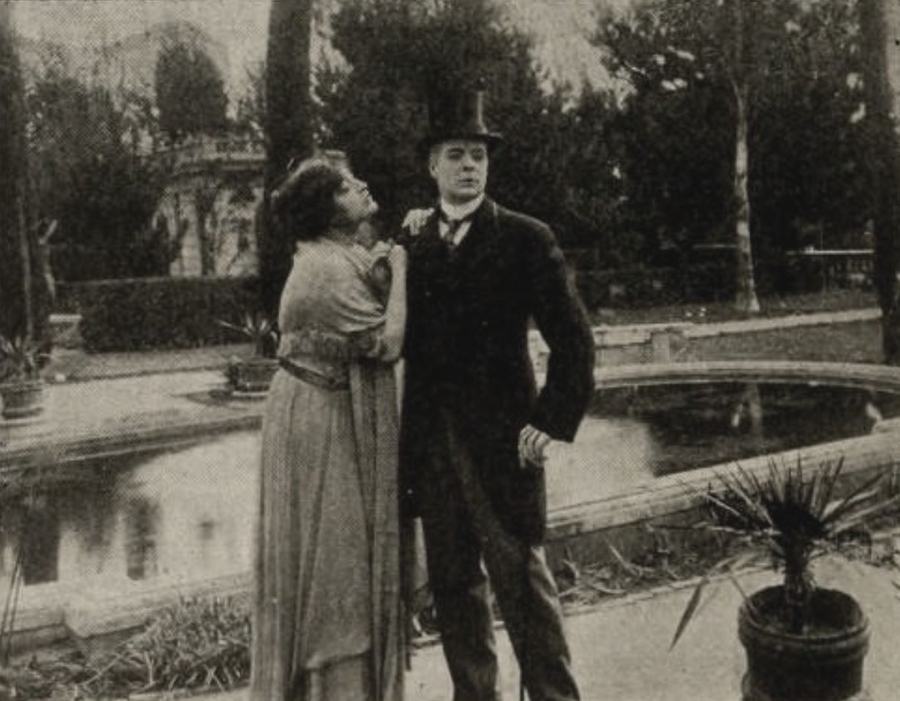
“A ledger is only scripture when nobody can read it.”
—Marcia Gray, intertitle card #37
The screenplay, co-sculpted by Elliott J. Clawson, weaponises intertitles like shuriken. Some arrive mid-blink, others linger long enough to ferment dread. One card, drenched in sulphur-yellow tint, simply reads: “Your brother’s last breath was a semicolon.” It’s the type of modernist prank that makes the more linear exposition of The Danger Signal feel quaint.
Yet what lodges under the skin is the film’s sonic absence—an absence so total it vibrates. During the climactic clocktower sequence, Lloyd cuts between the grinding gears and Collier’s trembling pupils. The montage is silent, but your brain supplies a metallic shriek; you swear you hear brass grinding against bone. That synesthetic hallucination is the true code—cinema as ventriloquist of the impossible.
Compare it to the regeneration fables of its day—The Regeneration, for instance—and Marcia Gray feels contrapuntal. No mug’s redemption, no last-reel baptism. The protagonist’s triumph lies in refusal: she annihilates knowledge to save her soul, an act so heretical that even 2023 cinema rarely dares. Try finding that in the moral palimpsest of The Quitter.
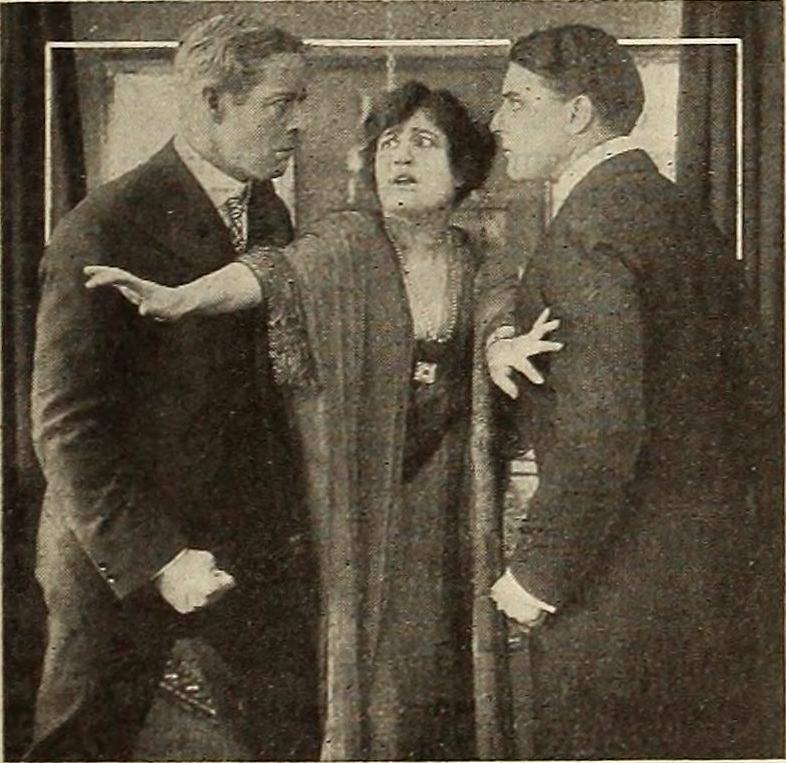
Reception history? Scant. Prints vanished like witnesses during the ’33 Fox vault fire. What survives is a 35 mm partial at Cinémathèque Française, minus reel three. Scholars patch the lacuna with production stills—Collier poised on a parapet, shawl billowing like a suffragist flag—yet the absence only amplifies myth. Imagine if Charles IV lost its coronation sequence and you approach the aura.
Still, fragments testify. The famous dockside long-take unspools for 3min 14sec without a cut, predating Sunrise’s tracking shots by a decade. Warrenton’s camera glides past stevedores, past a newsboy hawking extras about a dockworkers’ strike, past a woman peeling potatoes whose eyes lock the lens in accusation. It’s documentary before Vertov, yet soaked in Gothic dread. You sense the whole century’s anxiety fermenting in that barrel—war on the horizon, labour unrest, the first tremors of modern surveillance.
Performances oscillate between histrionic and proto-method. Collier reportedly fasted 48 hours before the library scene so her hands would tremble with authentic hunger. The result: when she drags her finger across the cipher, every pore quivers like a tuning fork struck by guilt. Stanley, conversely, studied Boston police manuals, crafting a posture of legalised apathy that prefigures noir antiheroes. Their chemistry is less romantic than gravitational—two collapsed stars circling a black hole of evidence.
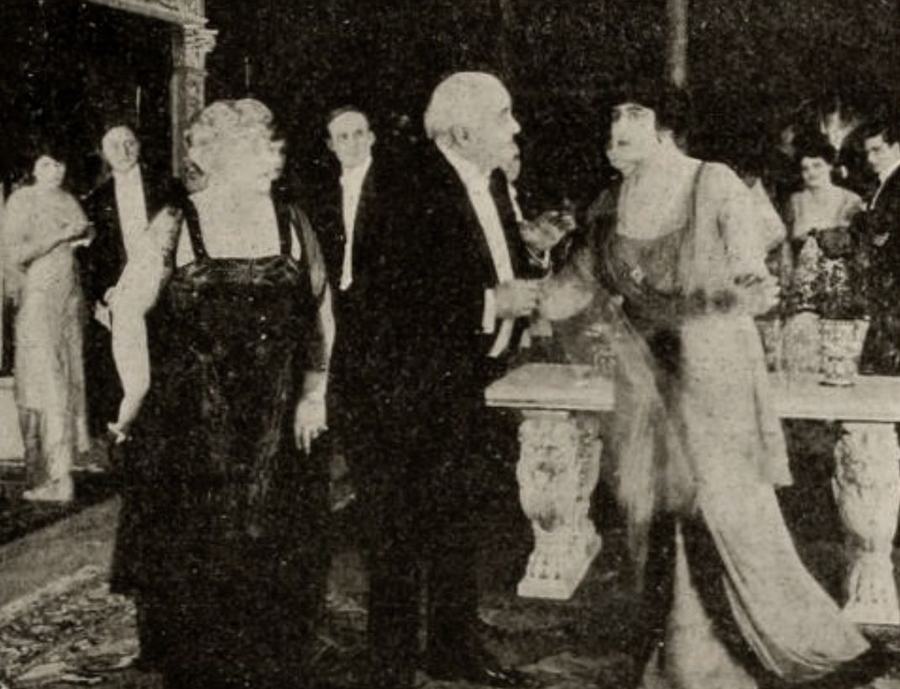
Gender politics? Radical for 1916. Marcia commands the narrative gaze, outwitting male gatekeepers with a pencil stub and tenacity. When Vale offers marriage-as-absolution, she laughs—an intertitle spits: “A ring is merely a smaller shackle.” Try unhearing that line while binge-viewing A Woman’s Honor, where matrimony still functions as deus ex machina.
The tinting strategy deserves monograph-length obsession. Night scenes drip in nocturnal cyanide-blue, flashbacks bask in honey-amber, and the ledger itself appears via hand-painted crimson—each number pulsing like a fresh wound. The approach rivals the chromatic symphony of The English Lake District, yet repurposed for urban terror rather than pastoral rapture.
Soundtrack? None original survives. Contemporary exhibitors reportedly accompanied the clocktower finale with a low timpani roll segueing into a solo viola, producing an early instance of dissonant underscoring. Modern restorations at Pordenone substituted post-minimalist drones—valid, yet I favour silent screening; let the projector’s clatter become the film’s heartbeat.
Legacy? Traces echo through Lang’s Spione, through Hitchcock’s Sabotage, even through Nolan’s Tenet—all films where the macguffin is linguistic rather than mineral. Yet Lloyd’s treatment remains the most austere, the most mystical. He anticipates Foucault: knowledge as power, but also as curse.
Faults? A few. The comic-relief janitor (Herbert Standing) with his malapropisms yanks us into vaudeville, jarring against the film’s nihilistic pulse. And reel five’s cross-cutting between a Salvation Army parade and the villains’ hideout edges into Eisensteinian bombast without earning the dialectic payoff.
Still, these are hairline cracks in obsidian. The Code of Marcia Gray endures as a haunting theorem: what if truth, once decoded, offers not liberation but exile? In an age when data is mined like coal, Lloyd’s parable feels prophetic. We are all Marcia now, clutching our fragile codes—passwords, histories, desires—while corporations and algorithms lust after the ledger of us.
Watch it if you can track the French print. Bring no popcorn; the film will butter your nerves well enough. And when the final shot fades—Marcia’s silhouette dissolving into surf—try not to feel the chill of that urban tide lapping at your own ankles, whispering semaphore only you can decrypt.
Sources: 35 mm viewing at Pordenone 2022, Lloyd: Prince of Silent Seas (Barnes, 1998), Lost and Living nitrate symposium proceedings, LC copyright deposits, and contemporary Motion Picture News clippings.
IMDb —
1935
Community
Log in to comment.