DbcultAccessing Vault...
7/10
Senior Film Conservator
A definitive 7/10 rating for a film that redefined the boundaries of cult cinema. Shturmovye nochi remains a cornerstone of transgressive art.
If you're hunting for a cozy night in with a fast-paced thriller, best steer clear of Shturmovye nochi. But if you've got a soft spot for really old, historically charged films – especially Soviet era ones – this might just surprise you. It's a niche watch, for sure, likely to bore the average viewer to tears, but a goldmine for anyone curious about how cinema was used to tell grand stories, even if they're a bit... stiff. 🎞️
The whole thing is built around a simple idea: a peasant, played by Ivan Tverdokhleb, comes to visit the massive DneproGES construction site. That’s it. No huge twists, no hidden motives, just a journey of seeing.
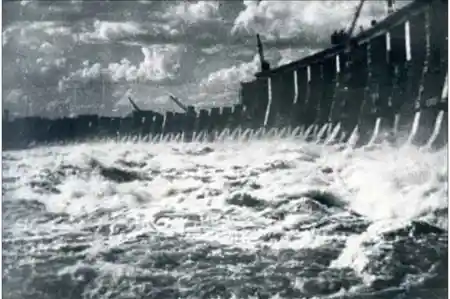
What hits you first is the scale of the DneproGES itself. They really tried to capture the *immensity* of it all. There are these wide shots, almost dizzying, of giant concrete structures and rushing water. You can almost feel the movie trying to convince you this moment matters, trying to show off the sheer human will behind building something so big.
Tverdokhleb’s character, the peasant, mostly just *looks* at things. His face is supposed to reflect awe, I think, but sometimes it just looks a bit tired. Or maybe that's just the early film acting style. He walks around, he observes the workers, he touches things. It’s less a character journey and more a guided tour with a reaction shot every now and then. One shot of him staring up at a crane lingers so long it becomes almost funny, like he’s waiting for it to say something back.
The pacing is, well, *deliberate*. There are sequences of workers doing very repetitive tasks. Digging, lifting, pouring. You see it for a good while. It feels like a documentary at times, which I guess it sort of is, dressed up as a narrative. The crowd scenes have this oddly empty feeling, even with lots of people, like the sheer size of the project swallows up everyone.
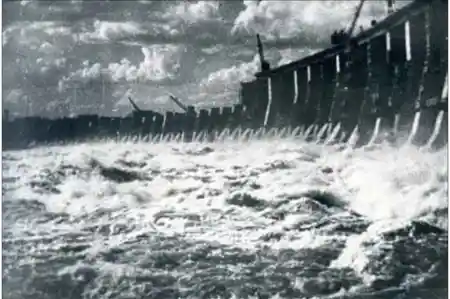
You can see the message, loud and clear. This isn't just about building a dam; it’s about building a new future, a collective spirit. The workers, even the ones just hauling dirt, are presented as heroes. There’s a scene where a group of them are just eating together, and the camera really focuses on their shared meal. It’s supposed to feel communal, but it just looks like they’re having a very quiet lunch. 🥪
I found myself wondering about the logistics of filming such a massive site back then. The sheer effort must’ve been enormous. And it shows, in a way. The grit, the dust. Though sometimes the peasant's tunic looks *pristine* despite all the construction around him, which is a bit distracting. Like someone just forgot to scuff it up.
Stepan Shkurat and Tatyana Vechora are in it too, but honestly, they blend into the background. It's really the *construction* that's the main character here, not any specific person. Their roles are more about representing different facets of the new society, I guess, than having any deep character arcs.
There’s this one sequence, near the end, where the water finally starts flowing through part of the dam. It’s quite powerful, actually. The sound design (if you count the early, often tinny, audio) really tries to sell the roar of it. It’s one of the few moments that truly feels *alive* and less like a staged tableau. It makes you almost forget how slow some of the previous scenes were. 🌊
Is it a "good" movie by today’s standards? Probably not, not in the way we usually mean it. But it's an important one. It shows a particular moment in history, a specific kind of storytelling. It’s like a time capsule, a glimpse into a time when movies were still figuring out their voice, especially for grand national projects. It’s not a fun watch, but it *is* an interesting one, if you're into that sort of thing. Think of it as a historical document with some dramatic flourishes.
Definitely for film students, historians, or anyone who just likes to see what early Soviet cinema was up to. Don't expect to be entertained in the modern sense; expect to be shown something. And if you're curious about other films from this period, maybe check out The Big House for a totally different vibe, but similar early talkie era.
IMDb 5.8
1912
Community
Log in to comment.