DbcultAccessing Vault...
Cult Review
Senior Film Conservator
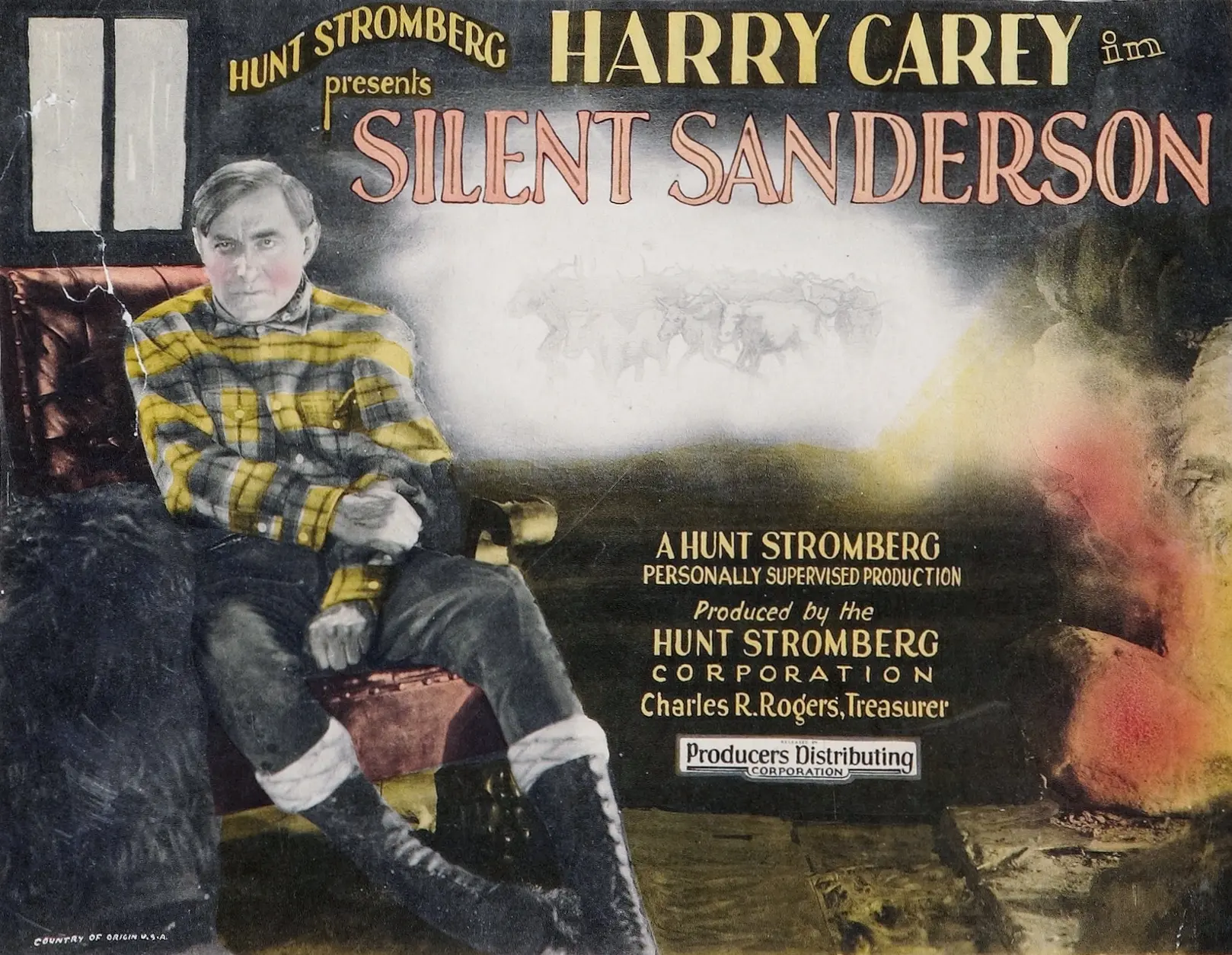
Short answer: Yes, but only if you have the patience for the deliberate pacing of 1920s morality plays. This film is for enthusiasts of early American Westerns and those interested in the evolution of the 'tough guy' archetype, but it is definitely not for viewers who demand fast-cut action or modern narrative sensibilities.
Silent Sanderson is a fascinating artifact of a time when the Western genre was beginning to bleed into the 'Northern' adventure subgenre. It is a film that thrives on the contrast between the open, dusty ranges of the Southwest and the claustrophobic, white-out conditions of the Yukon. While many films of this era relied on slapstick or high-concept adventure, this production leans heavily into the psychological toll of resentment. It is a story about how geography cannot outrun a guilty conscience.
The film lives and dies by the performance of Harry Carey. As Joel Parsons, later known as 'Silent Sanderson,' Carey provides a masterclass in understated intensity. In an era where many actors were still using the broad, theatrical gestures of the stage, Carey’s stillness is jarringly modern. This film works because Carey understands that a man who has lost everything doesn't need to scream; he just needs to stare. A concrete example of this can be found in the scene where he first recognizes Judith in the Yukon dance hall. Instead of a dramatic gasp, his face hardens into a mask of granite, a subtle shift that tells the audience more about his internal rot than any title card ever could.
Comparing his performance to the more expressive styles seen in The Phantom Carriage, one can see the divergence in how international cinema handled internal torment. While the former used supernatural imagery, Silent Sanderson relies on the physical toll of the environment. Carey looks like a man who has been physically eroded by the wind and snow, making his eventual transformation into a vengeful captor feel earned rather than forced.
The cinematography in the first act is characterized by wide, sweeping shots of the ranching country, emphasizing the isolation of the characters despite the heat. However, once the narrative shifts to Alaska, the visual language becomes much more aggressive. The use of natural light in the snow-covered exteriors creates a blinding, high-contrast look that mirrors the 'snow blindness' that eventually strikes the villain, Jim Downing. This isn't just a plot point; it's a visual metaphor for the characters' inability to see the truth of their past actions.
One particularly striking moment occurs during the journey to Joel’s cabin. The camera captures the sheer scale of the wilderness, making the human figures look like ants against a white sheet. This sense of scale is something that early silent films often struggled with, but here it is used to heighten the stakes of the final confrontation. It reminds me of the survivalist grit found in The Adventures of Robinson Crusoe, where the environment is as much a character as the lead actor.
The climax of Silent Sanderson is surprisingly visceral for a film from 1925. When Jim Downing, played with oily perfection by John Miljan, confesses to the murder of Art Parsons, the film shifts from a melodrama into something approaching a horror movie. The decision to have Joel throw the battered Downing to a pack of wolves is a cold-blooded narrative choice that challenges the viewer's sympathy for the protagonist. This film fails because it tries to pivot back to a 'happy ending' too quickly after such a gruesome act of violence.
The wolf scene is a concrete example of the 'Pre-Code' sensibilities that allowed for much darker resolutions than we would see just a decade later. The sight of the wolves closing in on a blind, screaming man is an image that lingers long after the credits roll. It is a moment of pure, unadulterated vengeance that lacks the moral polishing of later Hollywood Westerns. It is also an unexpected observation to see a hero act with such calculated cruelty, which makes the film feel more honest than its contemporaries.
If you are a student of film history or a fan of the rugged Western aesthetic, Silent Sanderson is an essential watch. It provides a bridge between the simplistic morality of early silent shorts and the complex, psychological Westerns of the 1940s and 50s. However, if you are looking for a romanticized view of the frontier, you will be disappointed. This is a bleak, often mean-spirited film that only offers a sliver of hope in its final moments.
You should watch it if you want to see how early cinema utilized harsh environments to reflect the internal state of its characters. It is a precursor to the 'man against nature' tropes that would later define the works of directors like Anthony Mann.
A debatable opinion I hold is that Judith Benson is actually the most interesting character in the film, despite being framed as a catalyst for the men's actions. While the plot treats her as a prize to be won or a victim to be avenged, her survival in the Yukon dance halls suggests a resilience that the film doesn't fully explore. In the scene where Joel 'buys' her freedom, the look on Trilby Clark’s face isn't one of gratitude, but of a woman realizing she has simply traded one master for another. This adds a layer of feminist subtext that was likely unintentional but remains powerful today.
Another unconventional observation is the film's obsession with blindness—both literal and metaphorical. Jim Downing’s snow blindness is a heavy-handed but effective way to force a confession. It levels the playing field, turning a ruthless killer into a pathetic figure. This theme of 'unseeing' runs through the whole film, as every character is blinded by their own desires or biases until the very end.
Silent Sanderson is a rugged, uncompromising piece of cinema that deserves more recognition than it currently receives. While it suffers from some of the narrative coincidences common in 1920s writing, its commitment to a dark, revenge-driven plot is admirable. It doesn't rely on the whimsical charm found in films like The Chicken in the Case; instead, it digs its spurs into the mud and snow of human nature. This film works because it refuses to make its hero entirely likable, and it succeeds in creating an atmosphere of genuine dread in the middle of a frozen wasteland. It is a stark reminder that the 'Good Old Days' of cinema were often just as gritty and cynical as the modern era.
"A cold, calculating look at the price of revenge that proves Harry Carey was the true king of the silent frontier."
IMDb 5.6
1937
Community
Log in to comment.