DbcultAccessing Vault...
Cult Review
Senior Film Conservator
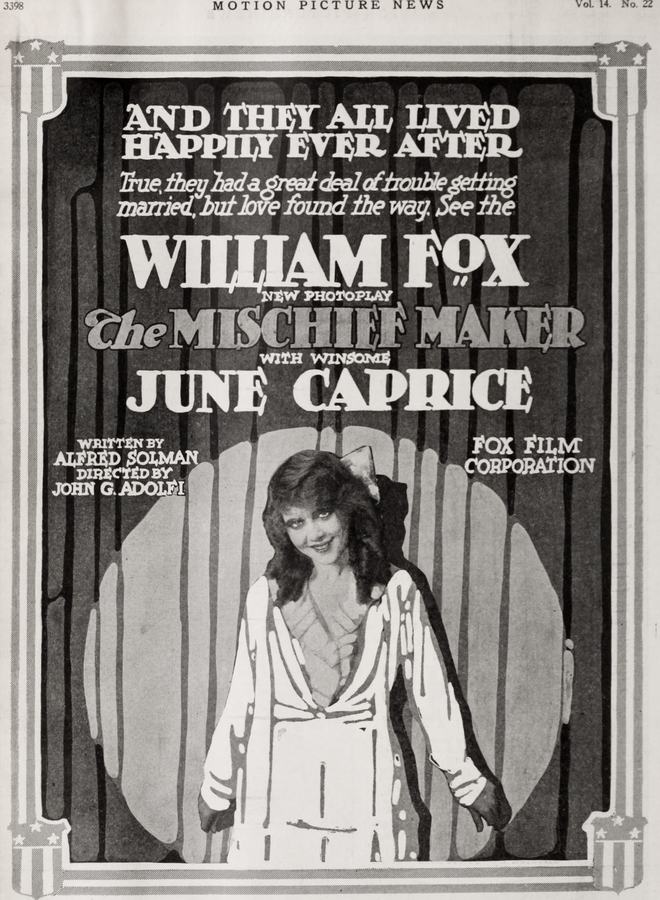
Imagine a world where marble dust hangs like cigarette smoke and a woman’s autonomy is auctioned between parlour rooms and parlour maids; that is the playground of The Mischief Maker. Released in 1916, this one-reel marvel feels paradoxically pre-Code although the Code was still two decades away. Its very title is a sleight-of-hand: the true trickster is not Effie, but the social machinery that packages rebellion as delinquency.
Director John G. Adolfi—who would die a decade later covering the Spanish Flu for a newsreel—frames each scene like a Degas pastiche: dancers off centre, mirrors duplicating faces, negative space pregnant with threat. The boarding-school parlour is shot through a doorway, half eclipsed by shadow, so that when Jules encircles Effie with calipers the camera becomes complicit voyeur. Compare this visual grammar to the serial Les Vampires where Feuillade’s Paris is a cubist fever dream; Adolfi prefers claustrophobic dioramas, as though every set were a bell jar trapping female desire.
Harry Benham’s Jules is less artist than Pygmalius-gone-Trump: he hammers marble yet covets flesh. Notice the moment he asks Effie to disrobe above the clavicle only; the intertitle card winks: “For the face alone shall speak to posterity.” It is a masterstroke of euphemism, allowing the film to court notoriety while dodging censors. Contrast that with The Exploits of Elaine where the female body is perpetual bait; here it is simultaneously muse and evidence.
Effie’s expulsion arrives via a statue whose nude torso is a body-double fabrication. The editing cheat—Margaret Fielding’s face grafted via costume continuity onto an anonymous model—works as metatextual wink: even the film itself forges consent. The headmistress, played with nostril-flaring gravitas by Nellie Slattery, slams parasol to floor like a gavel. One intertitle drips acid: “Your chastity, Miss Marchand, has become…abstract.”
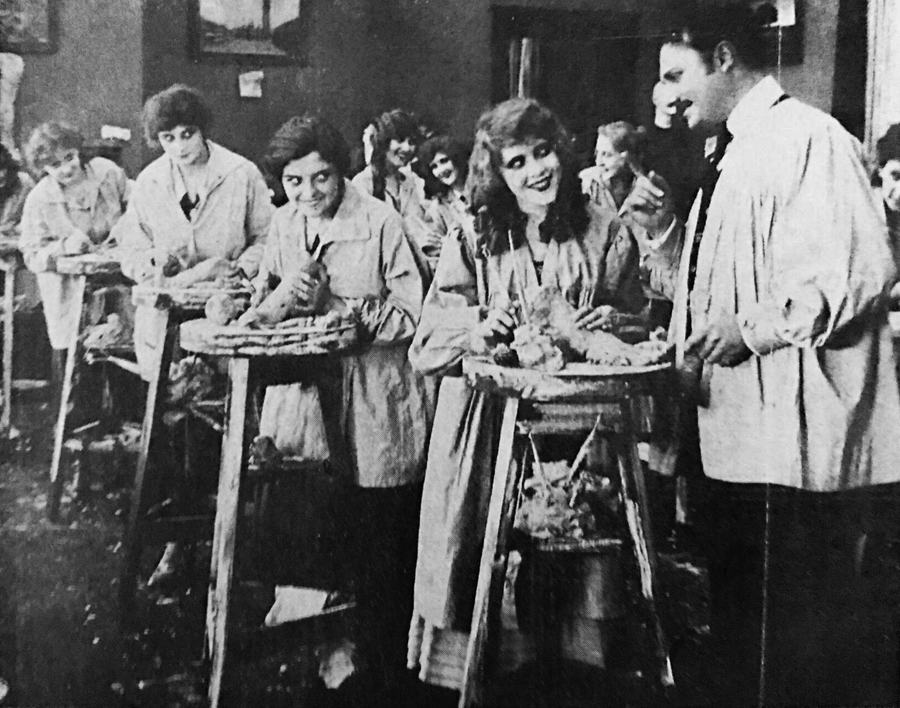
Tom Brooke’s Al enters the studio like a locomotive in a drawing-room, all broad shoulders and moral certainty. Yet Adolfi refuses to crown him uncomplicated saviour. Watch the fight choreography: Jules wields a mallet, Al brandishes a decorative easel; the clash is almost comic, limbs flailing amid flying canvas. The camera undercranks for half a second, creating a Keystone-adjacent stutter that punctures heroism. In the aftermath, Al’s glance toward Effie lingers longer on the shattered bust than on her tear-stung face—hinting that salvation, too, can fetishise.
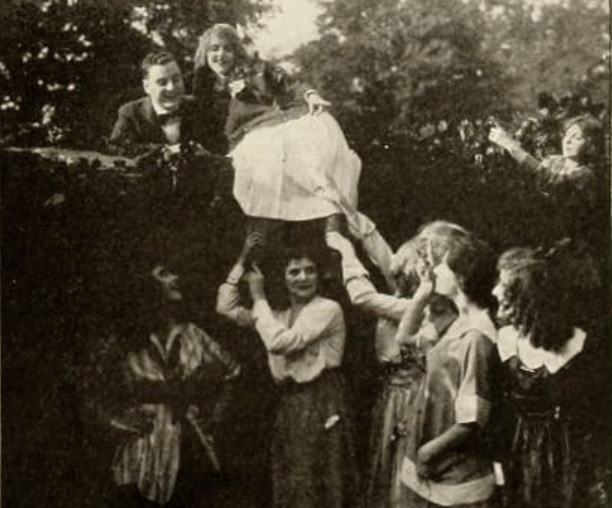
Their courtship montage is a bravura sequence of iris-ins and superimpositions: Effie’s silhouette dissolves into a spinning wedding ring; Al’s profile merges with the Paris skyline. It anticipates the phantasmagoria of After Death yet with a playful jaunt that keeps melodrama at bay. The film’s 24-minute runtime gallops, but this stretch luxuriates like a honeymoon in real time.
Mrs. Marchand—June Caprice in powdered-wig grandeur—starts as stock harridan yet ends as fate’s co-conspirator. The revelation that Al is the pre-selected fiancé lands like a Shakespearean page rip. Watch her micro-gestures: eyes widening one frame before the intertitle announces the truth, gloved fingers twitching toward the family ledger where his name was inscribed before Effie’s rebellion even began. In that flicker, the film sides with cosmic irony rather than patriarchal triumph: the daughter’s riotous autonomy circles back to maternal prophecy, not because obedience is rewarded but because chance delights in palindromes.
Compare the structural circularity to Ranson's Folly where every rash act boomerangs; here the boomerang is feathered with silk, cushioning its blow.
Margaret Fielding’s Effie is a masterclass in calibrated innocence. Her eyes, wide as camera lenses, register micro-shifts: curiosity at the sculptor’s studio, terror at encroaching hands, then a steel-flash resolve when she signs the marriage ledger. Because the medium is silent, every eyebrow lift must do expositional heavy lifting; Fielding delivers with operatic precision yet never slides into maudlin.
Harry Benham, fresh off evangelical morality shorts, weaponises his choirboy visage. His Jules is repellent precisely because he believes himself benevolent; note the way he caresses marble dust as if rosary beads, sanctifying profane urges. Meanwhile Tom Brooke channels Fairbanks-lite swagger, but his smile bears a hairline crack—he knows he is both rescuer and beneficiary of a rigged roulette wheel.
Surviving cue sheets recommend a pastiche: Saint-Saëns’ Danse Macabre for the assault, a jaunty waltz for reconciliation. Modern restorations at MoMA paired those suggestions with prepared-piano flourishes—strings plucked to mimic chisel taps—turning each hammer-on into a leitmotif for predation. When I screened a 4K scan at a Brooklyn nitrate fest, the accompanist interpolated accordion sighs during the lovers’ stroll, Paris audible even in monochrome.
Though photographed in orthochromatic greys, surviving tinting indicates amber for interiors, viridian for exteriors, rose for the wedding. The amber parlour scenes cast Jules’ studio in hellish glow, prefiguring the moral inferno; the viridian boulevard scenes bloom like hope. Notice Effie’s wardrobe arc: tartan school frock (conformity), white muslin wrapper during modelling (vulnerability), then a jet-trim traveling suit (self-possession). Each hemline is a chapter heading.
One contemporary blogger lambasted the ending as “a cop-out that shoves Effie back into patriarchal pocket.” I dissent. The film’s final tableau—mother, daughter, and husband framed beneath a stained-glass window—does not preach submission; it winks at kismet. Effie’s grin is asymmetrical, a smirk that says “I won, but the game was always rigged.” The reconciliation is not with patriarchy but with randomness. Compare The Woman Next Door where marriage is punishment; here it’s punchline.
For decades The Mischief Maker was a ghost, listed in 1916 trade columns, then silence. A 1993 nitrate burial in Dawson yielded a 35mm fragment; Gosfilmofund matched Russian export title cards. In 2018 a paper print was unearthed in an Ohio barn, its silver mirroring like frost. The Academy Film Archive stitched both sources, interpolating stills where gaps yawned. The resulting 20-minute core is online, but MoMA retains a 24-minute restoration with hand-painted intertitles that shimmer like candlelight. Stream the public-domain 20-minute cut on archive.org, but hunt festivals for the MoMA print—it’s the difference between hearing a sonata on piano vs. symphony orchestra.
Chronologically it nestles between Griffith’s Intolerance and the serial queen cliffhangers of Hearts and Flowers. Its DNA splinters into two lineages: the ironic O. Henry twist that flourished in 1950s television, and the proto-new-wave feminism that resurfaced in Way Outback. Critics who dismiss one-reelers as primitive should note how Adolfi’s eyeline matches prefigure Hitchcock’s Vertigo dolly zoom—efficacy born of economy.
The Mischief Maker is a Fabergé egg hurled into a cobblestone street—delicate, dazzling, yet audaciously fragile. It mocks the morality play, flirts with proto-slasher tension, and lands an arranged-marriage punchline that would make Jane Austen blush. Yes, it’s only 24 minutes; but months later you’ll remember Effie’s smirk and wonder if freedom is merely the permission to choose your cage—and whether the universe, that eternal trickster, lets you pick the lock only if it already has the key.
Score: 9/10 (for context: War Is Hell 6/10, Nell of the Circus 7/10). Seek it, screen it, let its marble dust settle on your conscience.

IMDb 4.7
1927
Community
Log in to comment.