DbcultAccessing Vault...
Cult Review
Senior Film Conservator
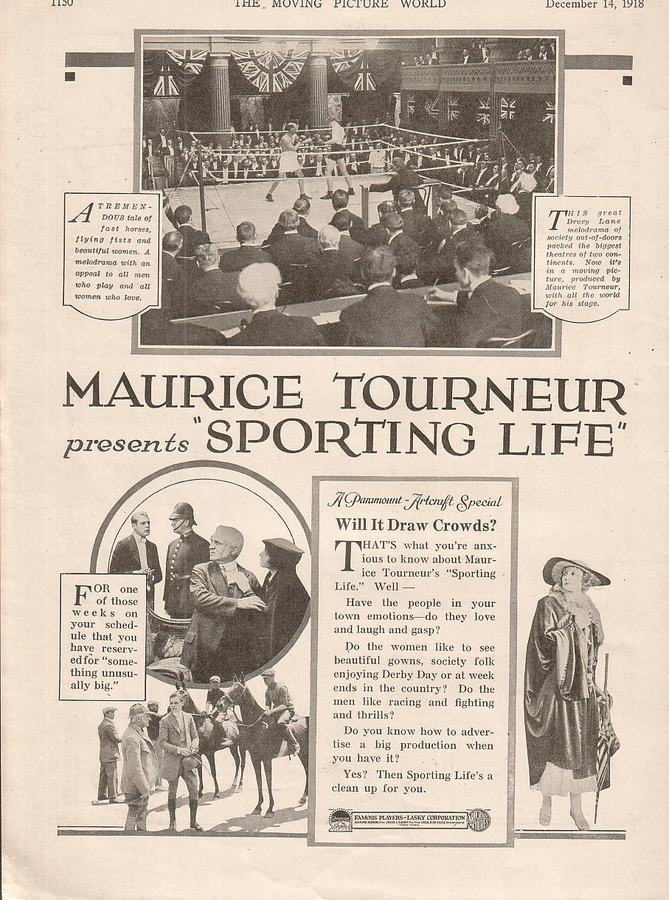
In the annals of early cinema, where narratives often hinged on grand gestures and melodramatic flourishes, 'Sporting Life' emerges as a compelling artifact, a silent film from 1918 that, despite its age, resonates with a timeless intensity. It's a tale steeped in the anxieties of a bygone era yet populated by universal themes: the precariousness of fortune, the desperation of the elite, and the raw, unvarnished hope vested in the unpredictable outcomes of sport. This isn't merely a period piece; it’s a visceral exploration of a man pushed to the brink, gambling everything on the brawn of a boxer and the speed of a steed. The film, directed with a keen eye for dramatic tension, transcends its technical limitations to deliver an emotional punch that still lands squarely today.
At its heart, 'Sporting Life' is a narrative of precipitous decline and a desperate fight for survival, albeit one waged by a man accustomed to comfort rather than strife. Lord Woodstock, portrayed with a nuanced blend of aristocratic hauteur and burgeoning panic, finds his inherited privilege dissolving like mist. His estate, once a bastion of financial security, is now a gaping maw of debt. The specter of social humiliation and utter destitution looms large, threatening to obliterate not just his wealth, but his very identity within the rigid class structure of early 20th-century England. It's a common enough trope, the fallen noble, but here it's imbued with a particular poignancy, as his last recourse isn't a grand, heroic deed, but rather the gritty, unpredictable world of professional sports.
The ingenious twist of the plot, conceived by writers Winthrop Kelley, Seymour Hicks, and Cecil Raleigh, lies in this juxtaposition. A lord, whose hands are accustomed to the reins of power and the delicate touch of fine silks, must now place his entire future in the calloused fists of a prizefighter and the powerful legs of a racehorse. This narrative choice brilliantly underscores the arbitrary nature of fortune, suggesting that even the most well-born are ultimately subject to the same caprices of fate as the common man. The tension is palpable as Woodstock navigates the seedy underbelly of boxing and the high-stakes drama of the racetrack, worlds far removed from his stately drawing rooms.
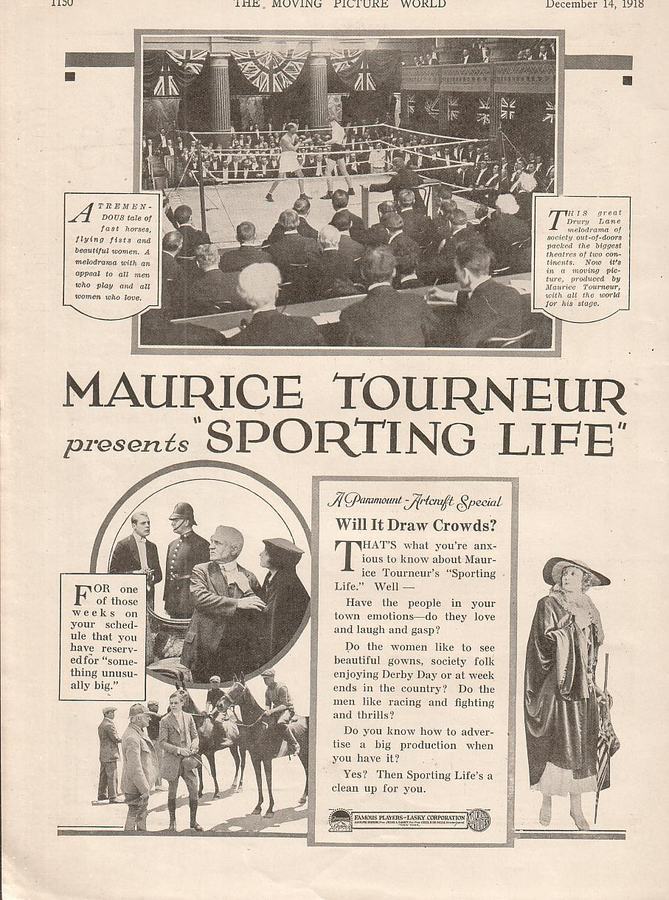
In silent cinema, the burden of storytelling falls heavily on the actors' ability to convey emotion and intent through gesture, facial expression, and physical presence. The cast of 'Sporting Life' rises to this challenge with remarkable efficacy, crafting characters that feel both archetypal and deeply human.
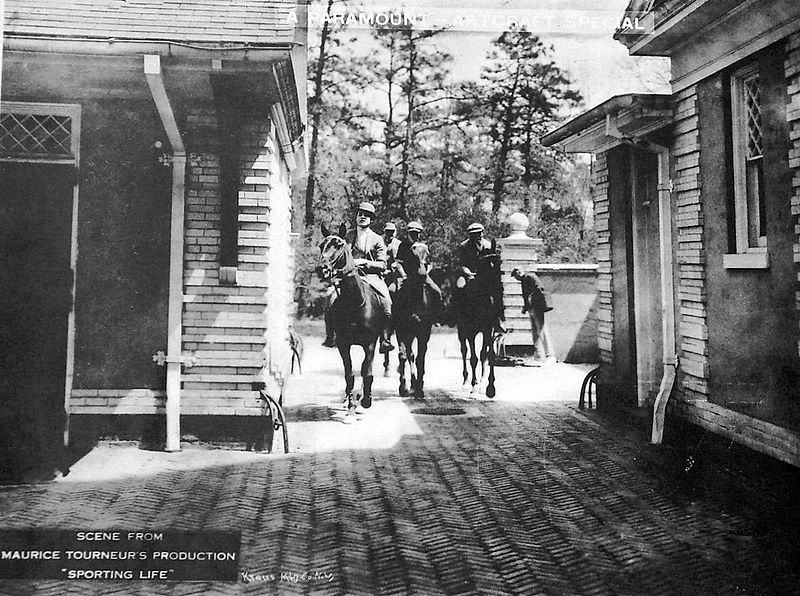
The direction of 'Sporting Life', though attributed to multiple hands during its production history, exhibits a coherence that is admirable. The camera work, for its time, would have been considered sophisticated, capturing the kinetic energy of the boxing match and the exhilarating pace of the horse race with a dynamism that keeps the audience enthralled. The use of intertitles is judicious, providing necessary exposition without overwhelming the visual narrative, allowing the performances and the action to carry the bulk of the storytelling weight.
Beyond the immediate thrills of the sporting events, the film delves into deeper thematic waters. It's a critique, perhaps unintentional, of the fragility of inherited wealth and the illusion of invulnerability that often accompanies it. Lord Woodstock's predicament forces him to confront his own mortality, his own vulnerability, in a way that his privileged upbringing never would have allowed. The film subtly champions meritocracy over aristocracy, as the success of the working-class prizefighter and the inherently democratic nature of a racehorse's speed become the arbiters of a lord's future. It's a potent commentary on social mobility, or the lack thereof, and the desperate measures individuals will take when cornered by circumstance.
While 'Sporting Life' might not be as widely known today as some of its contemporaries, its narrative structure and thematic depth draw parallels to other significant works of early cinema. One might find echoes of its high-stakes drama in films like Fast Company, which also explores the frenetic pace and unpredictable outcomes of various enterprises, albeit perhaps with a more comedic bent. The underlying tension of a life on the line, the desperate gamble, can be felt in the dramatic weight of The Impostor, where characters often live on the edge of exposure and ruin. The personal entanglements and societal pressures faced by the characters in Molly Entangled also resonate, as Lord Woodstock's financial woes undoubtedly impact his social standing and personal relationships, creating a complex web of consequences.
The film's exploration of class distinctions and the hidden lives of those in disparate social strata could also be seen as a precursor to more overt social commentaries. The writers, Winthrop Kelley, Seymour Hicks, and Cecil Raleigh, crafted a scenario that, while entertaining, also subtly questioned the established order. Their combined efforts resulted in a script that balanced thrilling action sequences with poignant character development, a feat not easily achieved in any era of filmmaking, let alone the nascent years of the medium.
To revisit 'Sporting Life' today is to gain a deeper appreciation for the foundational artistry of silent film. It demonstrates how effective storytelling can be achieved without the crutch of dialogue, relying instead on visual prowess, emotive performances, and a well-structured plot. The film's ability to generate genuine suspense, particularly during the climactic sporting events, is a testament to its enduring power. The roar of the crowd, the thud of a punch, the pounding of hooves – all are conveyed through expert editing, dramatic camera angles, and the sheer expressive force of the actors, inviting the audience to fill in the auditory blanks with their imaginations.
In an age where cinematic spectacle often overshadows narrative substance, 'Sporting Life' serves as a potent reminder of the essential ingredients of compelling drama: relatable characters, high stakes, and a story that speaks to the human condition. Lord Woodstock's journey from a life of entitled ease to the desperate scramble for survival through the raw, meritocratic crucible of sport is a narrative that continues to captivate, proving that some stories, like the thrill of victory and the agony of defeat, are truly timeless. It’s a film that deserves to be rediscovered, not just as a historical curiosity, but as a vibrant piece of cinematic art that still has much to say about fate, fortune, and the indomitable spirit of those who dare to gamble it all.
IMDb —
1926
Community
Log in to comment.