DbcultAccessing Vault...
Cult Review
Senior Film Conservator
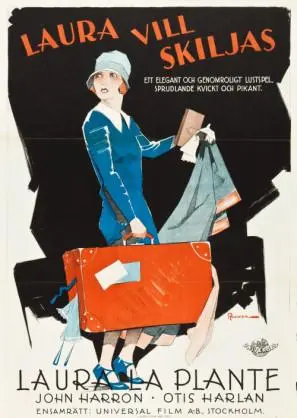
Is 'Silk Stockings' (1927) still worth dedicating your precious viewing time to? Short answer: yes, absolutely, but with a few crucial caveats. This silent-era domestic comedy, while certainly showing its age in places, offers a surprisingly engaging and often humorous look at marital squabbles and the perils of miscommunication.
This film is best suited for cinephiles with an appreciation for silent cinema, those curious about early cinematic portrayals of relationships, and viewers who enjoy lighthearted comedies with a touch of dramatic tension. It is not for audiences seeking fast-paced action, complex narratives, or modern comedic sensibilities that rely heavily on dialogue. If you struggle with the conventions of silent film, this might be a challenging entry point.
"'Silk Stockings' manages to feel both quaintly anachronistic and strangely timeless in its depiction of marital strife. A testament to the power of visual storytelling, even when the narrative occasionally stumbles."
Directed by Albert DeMond and written by Albert DeMond, Cyril Harcourt, and Beatrice Van, 'Silk Stockings' immerses us in the perpetually bickering yet deeply affectionate world of Sam and Molly Thornhill, portrayed by Otis Harlan and Laura La Plante, respectively. Their love story is less a gentle waltz and more a spirited tango, full of sharp turns and passionate disagreements. The film opens by establishing this dynamic, showing us a couple whose every interaction, no matter how trivial, seems to escalate into a minor skirmish.
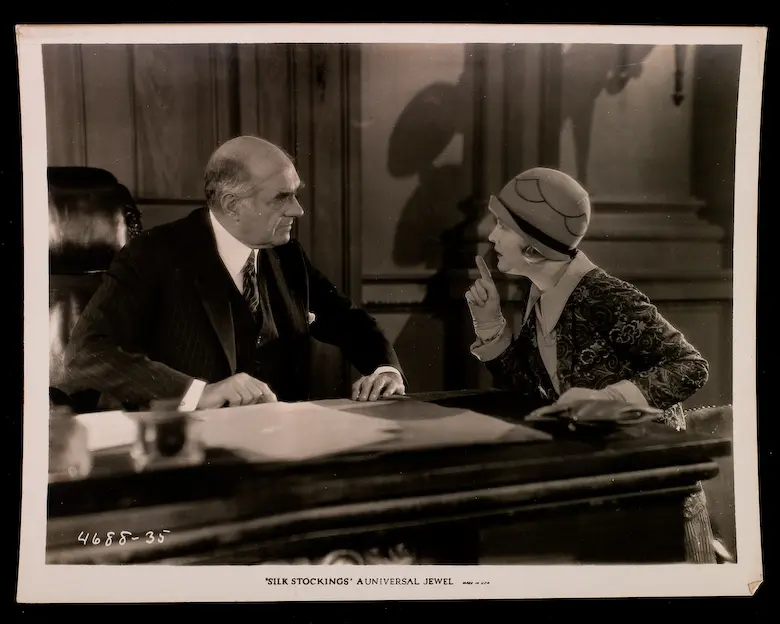
The plot, deceptively simple, hinges on a classic comedic trope: mistaken identity and the ensuing misunderstanding. On the eve of their wedding anniversary, a seemingly innocent pair of silk stockings – an item of intimate apparel – finds its way into Sam's pocket, placed there by a woman who is decidedly not his wife. The film then meticulously chronicles the comedic and near-dramatic fallout as Molly discovers the incriminating evidence, igniting a firestorm of suspicion and hurt.
What follows is a series of escalating comedic scenarios, as Sam, oblivious to the stockings' presence, tries to navigate his wife's increasingly cold shoulder. The humor derives from the audience's privileged knowledge – we know Sam is innocent, but Molly’s perspective is entirely different. This dramatic irony is the engine that drives the film's narrative, extracting laughs from the characters' well-meaning but often clumsy attempts at communication and reconciliation.
This film works because of its surprisingly nuanced portrayal of marital friction and the compelling performances from its lead actors. Laura La Plante, in particular, conveys a spectrum of emotion without uttering a single word, making Molly's hurt and indignation palpable. The film’s ability to generate genuine laughs from a simple misunderstanding is a testament to its well-structured comedic timing and effective use of visual gags.
This film fails because its pacing can feel sluggish by modern standards, and some of the supporting character subplots verge on being superfluous. The resolution, while satisfying, feels somewhat abrupt, almost as if the filmmakers ran out of time to fully flesh out the emotional reconciliation. Additionally, the silent film conventions, particularly the reliance on intertitles, might prove a barrier for some contemporary viewers.
You should watch it if you have an interest in the early days of Hollywood, appreciate the art of silent acting, or enjoy lighthearted romantic comedies that explore the eternal dance of marital relationships. It offers a charming glimpse into a bygone era of filmmaking and social norms.
The success of any silent film rests squarely on the shoulders of its performers, and 'Silk Stockings' is no exception. Laura La Plante, as Molly Thornhill, delivers a performance that anchors the entire film. Her ability to convey deep emotional shifts – from loving exasperation to wounded pride, and finally to simmering rage – through facial expressions and body language alone is truly remarkable. There’s a scene where she first discovers the stockings, her eyes widening in disbelief, then narrowing with suspicion, before her lips tighten into a thin, accusing line. It’s a masterclass in non-verbal storytelling.
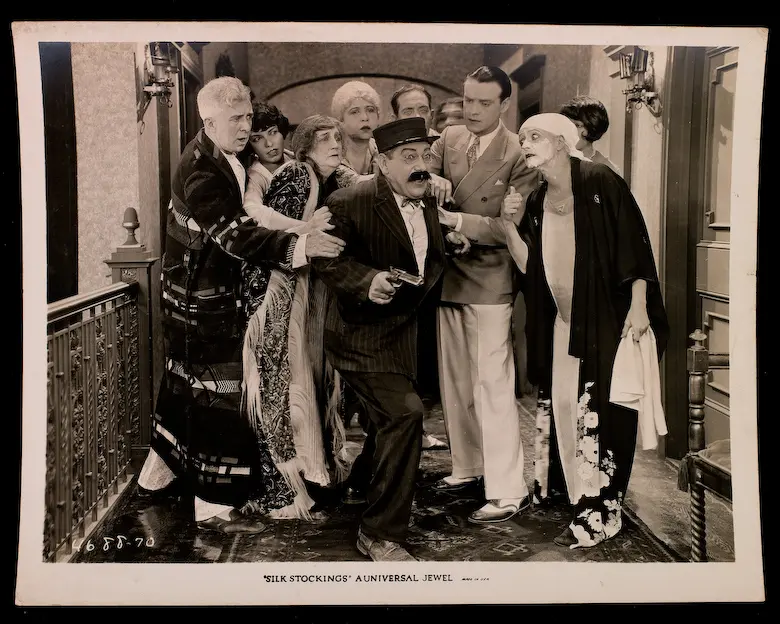
Otis Harlan, as the oblivious Sam, provides the perfect comedic foil. His bluster and good-natured cluelessness are genuinely endearing. He’s not a villain, merely a man caught in a web of circumstance and his own absent-mindedness. His physical comedy, though perhaps less broad than some contemporaries, is effective, particularly in his bewildered reactions to Molly's sudden coldness. The chemistry between La Plante and Harlan, despite their characters' constant squabbling, is palpable; you believe they truly love each other, which adds significant emotional weight to the comedic misunderstandings.
The supporting cast, including Ruth Cherrington and William Austin, fill out the world adequately, though their characters are often less developed. Cherrington, as a mischievous friend or rival, adds to the comedic chaos, but her motivations sometimes feel a little underbaked. Austin, however, brings a certain droll charm to his role, often serving as a sounding board for Sam's woes.
Albert DeMond’s direction is competent, if not groundbreaking. He understands the mechanics of silent comedy, utilizing clear sightlines and exaggerated reactions to ensure the audience grasps the narrative beats. The film’s pacing, while slow by modern standards, allows for the comedic situations to unfold naturally, giving the audience time to absorb the visual humor and the characters' emotional states. There are moments of genuine ingenuity in the scene transitions, using dissolves to indicate the passage of time or a shift in mood.
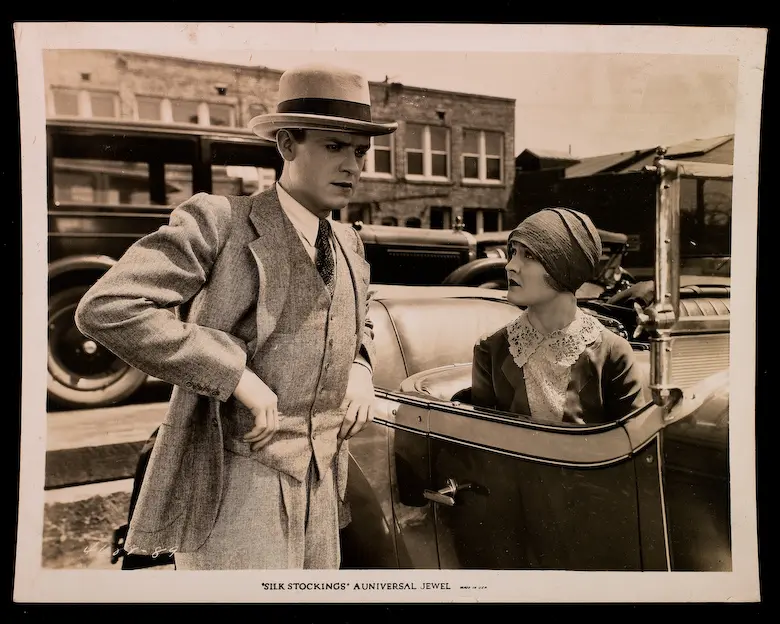
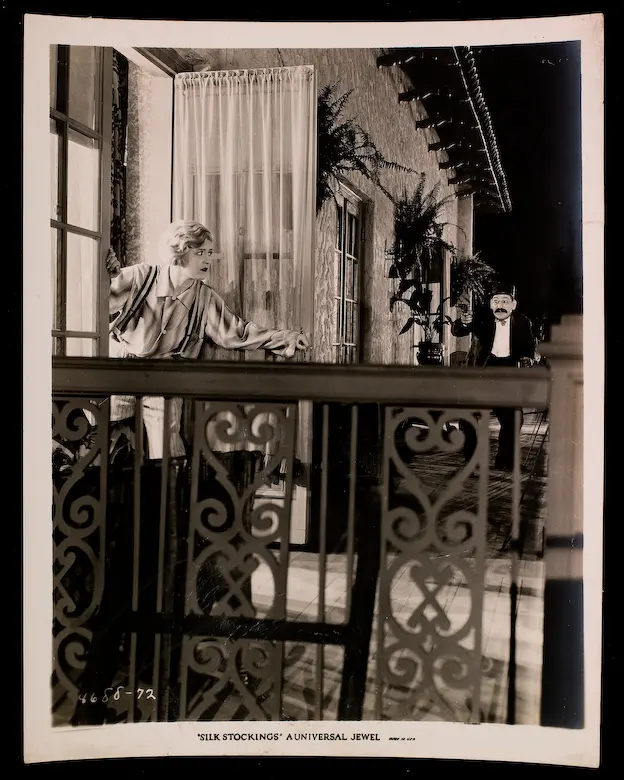
The cinematography, typical of the era, prioritizes clarity and functional storytelling. While it lacks the stylistic flourishes of a F.W. Murnau or a Fritz Lang, it effectively captures the domestic settings and the emotional interplay between characters. Close-ups are used judiciously to highlight key reactions, particularly La Plante’s expressions. The lighting is generally flat, but there are instances where subtle shadows are employed to enhance a moment of dramatic tension or suspicion, such as when Molly covertly inspects Sam’s coat.
One unconventional observation I made while watching 'Silk Stockings' is how much of its humor, even a century later, still relies on universal domestic truths. The frustration of miscommunication, the absurdity of minor arguments escalating, and the sheer exasperation of dealing with a partner's perceived slights – these elements transcend the silent film medium and remain remarkably relatable. It's almost unsettling how little human relationships have changed, despite all our technological advancements.
'Silk Stockings' operates primarily as a comedy, yet it carries surprising thematic weight, particularly concerning communication within marriage and the fragility of trust. The central misunderstanding, born from a lack of immediate explanation and a rush to judgment, serves as a potent metaphor for how easily relationships can be strained by unaddressed issues. It’s a gentle reminder that sometimes, the simplest questions can avert the greatest crises.
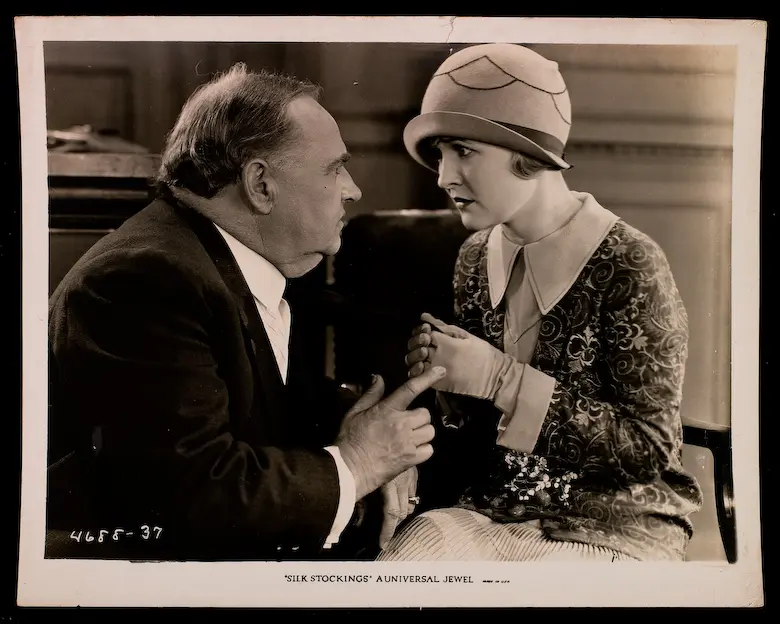
The tone is consistently lighthearted, even when Molly’s hurt is palpable. The film never delves into true melodrama, preferring to keep its emotional stakes within the realm of domestic comedy. This balance is crucial; it allows the audience to sympathize with the characters without becoming overly invested in their plight, ensuring the humor always shines through. It's a film that believes in the inherent goodness of its characters, even when they are at their most unreasonable.
Comparing it to other films of its time, 'Silk Stockings' perhaps doesn't possess the dramatic weight of The Girl Who Came Back or the adventurous spirit of The Night Horsemen, but it carves out its own niche in the realm of domestic storytelling. It’s a quieter film, more focused on the intimate dance between two people than grand external conflicts.
Yes, 'Silk Stockings' (1927) absolutely retains its watchability, especially for those interested in the foundational period of cinema. It’s not merely a historical curiosity; it’s a genuinely engaging piece of entertainment that showcases the power of visual storytelling and the enduring appeal of well-crafted character performances. The film provides a fascinating window into the social mores and comedic conventions of the Roaring Twenties, offering a unique blend of humor and heartfelt domestic drama.
For contemporary audiences, the key to enjoying 'Silk Stockings' is to approach it with an open mind and an appreciation for its historical context. Adjusting to the pacing and the reliance on intertitles might take a few minutes, but once you settle into its rhythm, the film offers a delightful and insightful experience. It works. But it’s flawed. Its strengths, particularly the performances of La Plante and Harlan, far outweigh its minor shortcomings, making it a valuable addition to any silent film enthusiast's watchlist.
'Silk Stockings' (1927) is a delightful, if somewhat sedate, journey back to the golden age of silent cinema. It’s a film that understands the intricate dance of love and frustration within a marriage, delivering its insights through expressive performances and classic comedic setups. While it won't redefine your understanding of cinematic art, it offers a warm, often humorous, and surprisingly enduring look at human relationships.
For those willing to embrace its silent-era charm, this film provides a valuable and entertaining experience. It stands as a testament to the enduring power of simple, human stories, told with conviction and a good dose of comedic flair. Definitely give it a watch if you're a silent film aficionado or simply curious about how love and laughter were portrayed on screen nearly a century ago.
IMDb —
1924
Community
Log in to comment.