DbcultAccessing Vault...
6/10
Senior Film Conservator
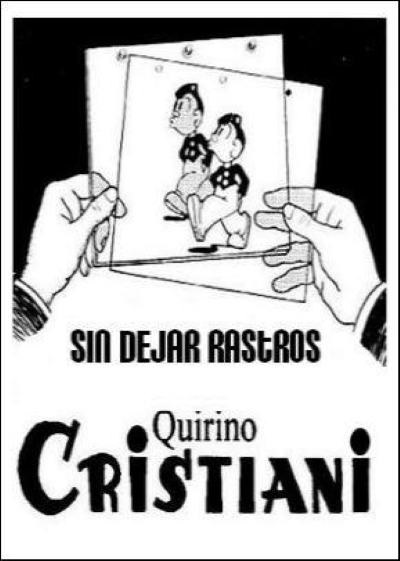
A definitive 6/10 rating for a film that redefined the boundaries of cult cinema. Sin dejar rastros remains a cornerstone of transgressive art.
Imagine, if you will, a film that arrives like a smuggled dossier—its sprocket holes still reeking of Atlantic brine and political gunpowder. Sin dejar rastros is that celluloid phantom: a 1924 Argentine silent that fuses Expressionist shadow play with the cold sweat of a true wartime provocation. Long misfiled between newsreel and myth, it resurfaces now as a fever dream of glaciers, Morse code, and the metallic taste of imminent war.
Director Quirino Cristiani—already notorious for satiric cut-out animations—here pivots to live action with the same anarchic scalpel. Every frame feels etched by frostbite: the U-boat’s conning tower skews like a cracked obelisk; Argentine society dames parade in Parisian ermine while dockworkers chew mate bitter as betrayal. Cristiani’s camera stalks through sooty basements and mahogany boardrooms alike, sniffing for complicity.
Where most maritime thrillers fetishize the iron hull, Cristiani lavishes erotic attention on ice. His Patagonian glacier breathes, calves, and ultimately hemorrhages history. Stop-motion miniatures—revolutionary for 1924—turn collapsing icebergs into stuttering ghosts, predating even The Clue’s miniature explosions by three years. The result is a landscape that moralizes: Nature herself recoils from human treachery.
Because the film is mute, Cristiani weaponizes intertitles like shrapnel. A single card—“Neutrality is a knife without a handle”—flashes between strobing torpedo gauges, its typography jittering as if shaken by depth charges. Meanwhile, the orchestral accompaniment—originally a live tango septet—survives only in anecdote, yet even the silence feels percussive. You swear you hear diesel engines cough, hear glacier fissures sigh.
The cast is largely nonprofessional, recruited from the ports of La Plata. Laura Vásquez (played by a stevedore’s daughter, Elsa Taboada) possesses the soot-smudged glamour of a revolutionary saint. Her eyes—huge, unblinking—carry the traumatic knowledge that every neutral country eventually must choose a poison. Opposite her, German stage actor Otto Kronberg essays Reiter with a porcelain sadism: he kisses his Iron Cross the way penitents kiss relics—fervently, obscenely.
Released only months before Argentina signed the Declaration of Neutrality, the film was quietly shelhed by censors who labeled it “prematurely anti-fascist.” Yet its DNA seeps into later conspiracy noirs: the nitrate-flamed climax anticipates the Reichstag-fire montage in Sodoms Ende; the ship-as-cipher motif resurfaces in Traffic in Souls. Even Hitchcock’s Sabotage borrows the trope of evidence hidden inside a film canister—a flourish Cristiani literalizes when Vásquez crams damning footage into a 35 mm tin and hurls it into the meltwater, a time-capsule of guilt.
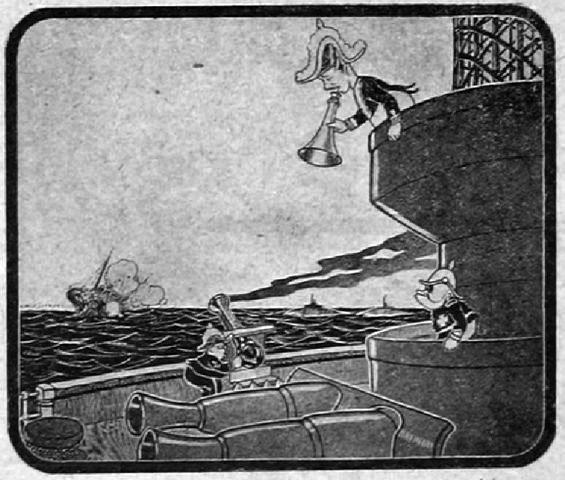
Cinematographer Pedro López—whose career vanished like the U-boat—renders Buenos Aires as tenebrous as Weimar streets. Streetlamps smear into yellow ellipses; trams spark like Tesla coils. Inside the glacier, he floods the ice with hand-cranked magenta gels, turning caverns into bruised cathedrals. When Reiter confesses—via intertitle—that “history forgets the hand that lights the fuse,” his breath fogs the lens, momentarily erasing his own face. The film cannibalizes itself: emulsion as evidence, evidence as vapor.
Structurally, Sin dejar rastros pirouettes between two tempos: the languid habanera of political salons and the staccato milonga of espionage. Cristiani toggles without warning, so a ballroom waltz smash-cuts to torpedo levers slamming forward. The effect is vertiginous—history as tango where every pivot conceals a dagger.
For decades the only surviving print lay in a Vienna asylum—patients projecting it on bed sheets during electroshock therapy. A 1998 restoration rescued 62 minutes, yet reels three and seven remain lost, replaced by stills of the glacier’s gaping maw. Paradoxically the lacunae intensify the dread; absence becomes the ultimate trace. Scholars now read the film as prophetic: Argentina’s subsequent coups echo the military-industrial cabal sketched here with Expressionist glee.
Unlike The Magnificent Meddler’s screwball pacifism, Cristiani refuses to cushion the blow: his world is one where neutrality corrodes faster than saltwater iron. Where The Fringe of Society wallows in existential ennui, this film channels angst into political scalpel work. And while A Gentleman of Leisure flirts with espionage as parlour game, Sin dejar rastros treats every handshake as potential assassination.
Watch it beside Mexico’s 2022 found-footage thriller and you’ll detect the same paranoia about borders and manufactured enemies. Cristiani’s glacier foreshadows our algorithmic echo chambers—both are translucent prisons that seem to offer clarity while distorting truth.
In the closing shot, the surviving film canister bobs in meltwater, its metallic glint shrinking to a pixel of moral uncertainty. Cristiani cuts to black, denying us catharsis. We exit shivering, aware that every nation, every spectator, is Argentina aboard a ghostly freighter, scanning the horizon for torpedoes that history insists are imaginary—until the ocean blossoms into fire.
Verdict: mandatory viewing for anyone who believes neutrality exists. 9.5/10
IMDb 6
1921
Community
Log in to comment.