DbcultAccessing Vault...
4.6/10
Senior Film Conservator
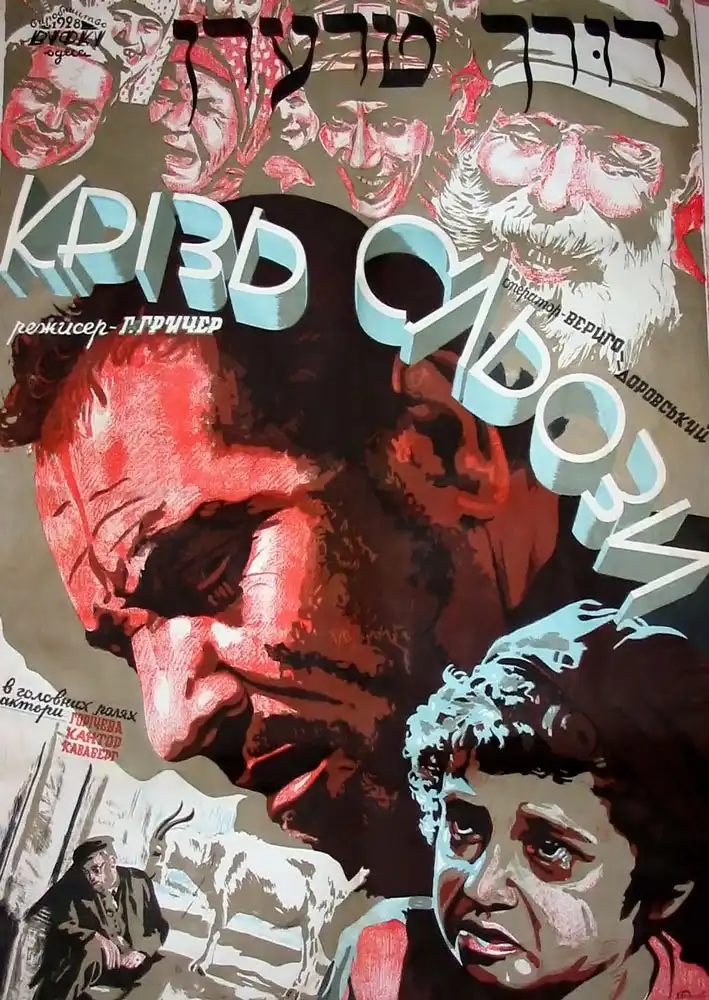
A definitive 4.6/10 rating for a film that redefined the boundaries of cult cinema. Skvoz slyozy remains a cornerstone of transgressive art.
Look, if you're not already into old, silent, slightly bewildering cinema, then Skvoz slyozy might just be a tough sit. This isn't a 'gateway' silent film. But for those of us who find a strange, almost ethnographic beauty in these peculiar historical artifacts, there's something here. A real glimpse into a storytelling style that feels miles away from anything today. It's not a masterpiece, not by a long shot, but it’s got these moments, these really specific, almost folk-tale-like beats that stick with you. If you’re looking for a smooth, emotionally resonant narrative, you’ll probably hate it. If you’re here for the oddities, the historical curiosity, and a genuinely baffling subplot about a goat, then maybe give it a go.
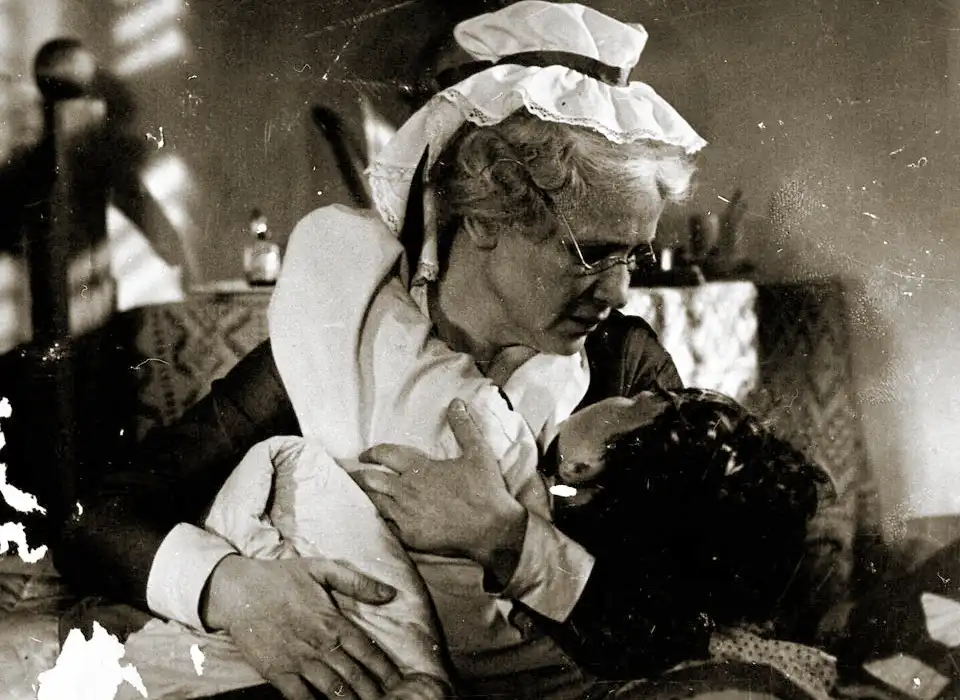
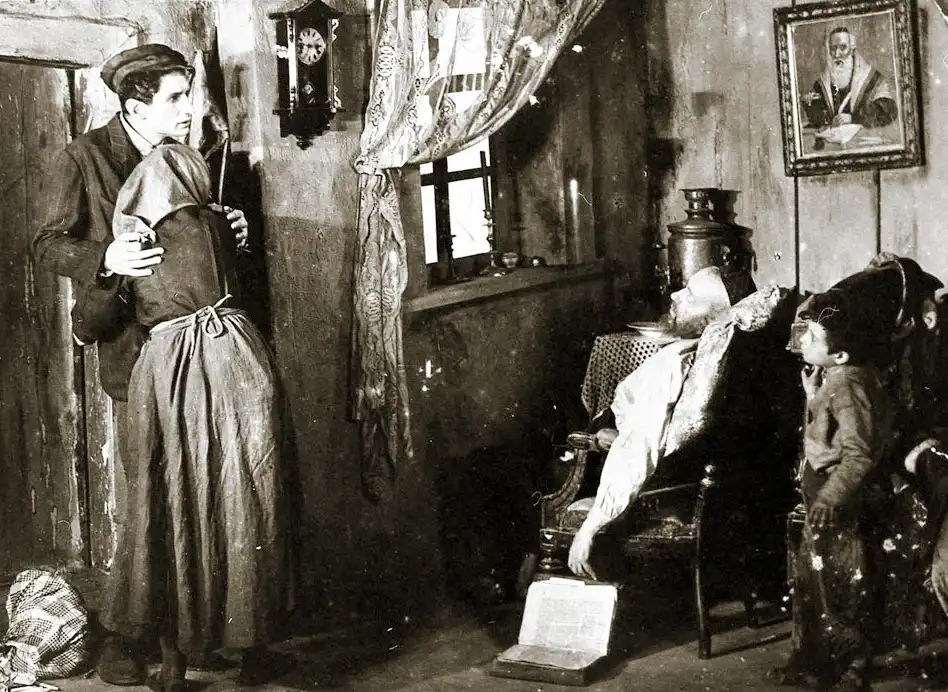
The film splits itself right down the middle, trying to tell two very different stories. On one hand, you have Mothl (D. Cantor), a kid who loses his father. This part is, predictably, full of the kind of exaggerated grief you expect from early silent films. Cantor, he really goes for it. All these huge gestures, wailing, throwing himself around. You can almost feel the director telling him 'bigger, bigger!' It's a lot. Sometimes it works, though. There's this one shot of him just sitting, small in a doorway, after the initial storm, and for a second, it all feels real. Then someone else comes in and the arm-waving starts up again. It makes you wonder how much of that was performance and how much was just the accepted language of the screen back then.
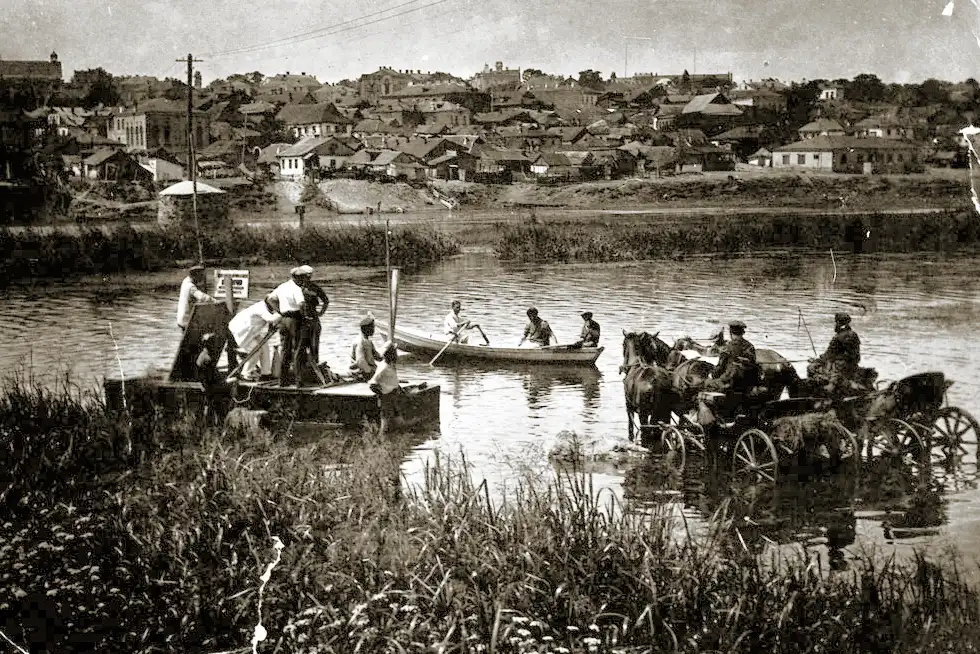
Mothl's journey is supposed to be about survival in a 'changing world,' but honestly, that 'changing world' part is pretty abstract. We see him struggling, sure, but it’s mostly just general hardship, not really specific social shifts. The dirt and the worn clothes do a lot of the heavy lifting there. The pacing here can feel a little drawn out. There are scenes of Mothl just kind of… existing. Which is probably the point, the grind of poverty, but it doesn't always make for compelling viewing.
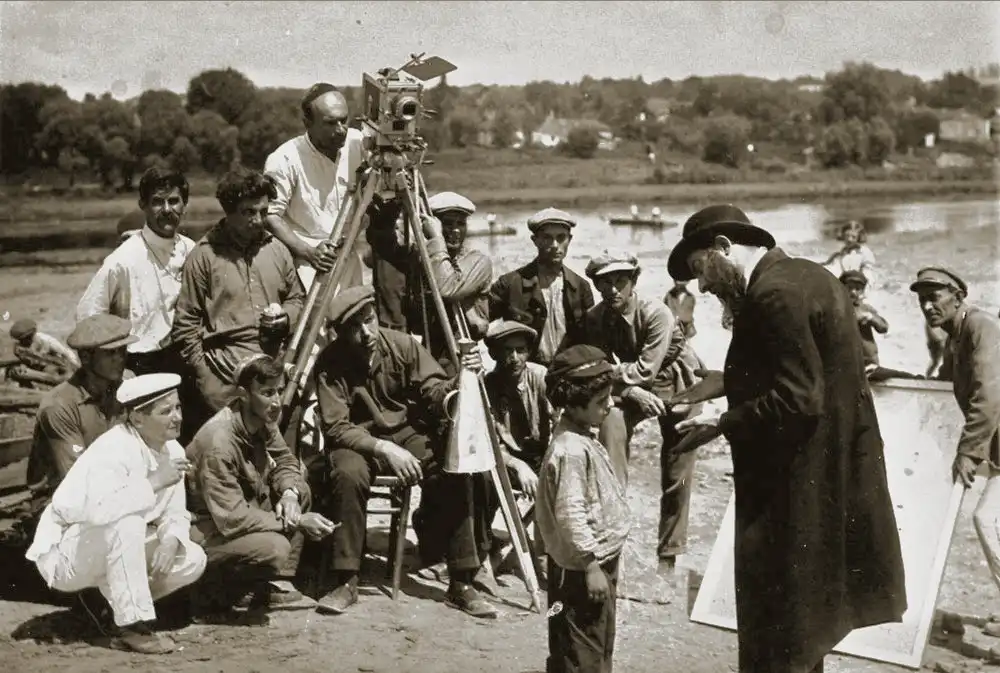
And then there’s this whole other thing, the tailor Shimen-Elye (F.A. Soslovsky) buying a goat. A she-goat. But then it keeps changing gender every time he stops at the inn between Kozodoyevka and Zlodyevke. This is where the movie just leans into pure absurdity. Soslovsky's performance here is almost a different genre entirely. He’s got this bewildered, increasingly exasperated look on his face. The innkeeper's reactions are priceless too, a mixture of disbelief and genuine confusion. The goat itself, though, it’s just a goat. They didn't even try to make it look different or anything, which is kind of funnier in a way. The magic is all in the human reaction shots, the way their faces contort with each new revelation.
There's a scene where Shimen-Elye is showing off his 'he-goat' to someone at the inn, and then, after a cut to him having a drink, it’s suddenly a 'she-goat' again. The sheer nonchalance of the edit, like it’s just an accepted fact of this universe, is fantastic. It’s a moment that really highlights the film’s folk-tale roots, where logic takes a backseat to whimsical, almost spiritual, happenings. It’s definitely the more engaging of the two plots, simply because it’s so utterly bizarre and unexpected.
The way these two narratives are stitched together feels a bit haphazard. They never really feel like they belong in the same film, despite some vague thematic resonance about hardship or faith. It's less a cohesive story and more two short films glued together, occasionally checking in with each other. This disjointedness is part of its charm, I suppose, but also its biggest structural weakness.
Some of the background details are pretty interesting. The inn scenes, particularly. You get a real sense of the crowded, bustling atmosphere. The extras aren't just standing there; they're actually doing things, talking, eating. It feels lived-in, unlike some other silent films where the crowd might feel like cardboard cutouts. And the costumes, they look authentic, worn, not just something pulled off a rack. It grounds the fantastical goat story in a believable setting.
The intertitles are pretty standard for the era, but there are a few that just land differently. One, after a particularly harsh moment for Mothl, just says something to the effect of 'And so it goes.' It’s bleak, understated, and kind of hits harder than some of the more dramatic declarations. The dialogue, when it's conveyed through titles, often feels a little stilted, but that's a common issue.
Overall, Skvoz slyozy is a mixed bag. It's got moments of genuine, if over-the-top, emotion in Mothl's story, but it's the sheer, unadulterated oddness of the gender-bending goat that really makes it memorable. It’s not a film you'll watch for its technical brilliance or its perfectly crafted plot. You watch it for the weirdness, for the historical snapshot, and for the sheer audacity of that goat. It's a curiosity, a conversation starter, and a testament to the wild, experimental spirit of early cinema. Just don't expect it to make perfect sense.
IMDb 7.9
1923
Community
Log in to comment.