DbcultAccessing Vault...
Cult Review
Senior Film Conservator

From the moment the opening credits of S.M. il Danaro unfurl, one is immediately plunged into a world where opulence masks an undercurrent of profound moral decay. This isn't merely a film; it's a meticulously crafted societal autopsy, examining the insidious ways in which unchecked ambition and the relentless pursuit of wealth can corrode the very fabric of human decency. It stands as a stark reminder that some narratives, despite their vintage, possess an uncanny ability to speak to the anxieties of any era, echoing with a resonance that transcends the specificities of its turn-of-the-century setting.
The film centers its piercing gaze on Signor Moretti, portrayed with a chillingly charismatic detachment by Roberto Villani. Villani’s Moretti is not a mustache-twirling villain in the traditional sense, but rather a force of nature, an economic architect whose grand designs are built upon the shattered hopes and dreams of others. His performance is a masterclass in understated menace, a subtle shift in his eyes or a barely perceptible tightening of his jaw conveying volumes about the calculating mind beneath the polished veneer. He embodies the titular 'il Danaro' – not just the money itself, but the very spirit of its seductive, destructive power. His schemes are intricate, almost artistic in their complexity, yet utterly ruthless in their execution. One cannot help but draw parallels to the grand, often morally dubious, enterprises depicted in films like Made in America, though S.M. il Danaro delves far deeper into the psychological and ethical ramifications of such pursuits.
Opposite Villani's formidable presence stands Rita D'Harcourt as Elena, a young artist whose idealism and burgeoning talent provide a stark contrast to Moretti’s cynicism. D'Harcourt imbues Elena with a delicate strength, her initial naiveté gradually giving way to a profound disillusionment as she witnesses the true cost of her father's entanglement with Moretti. Her journey from hopeful innocence to a weary understanding of the world’s harsh realities is the emotional anchor of the film. It's a performance that evokes genuine empathy, making her struggles feel deeply personal even amidst the grander themes of systemic corruption. Elena’s plight, in its raw vulnerability and eventual resilience, could be seen to echo the emotional gravitas found in characters navigating profound personal crises, much like those in The Rack, where individuals are tested to their very limits.
The supporting cast in S.M. il Danaro is nothing short of exceptional, each actor contributing a vital thread to the film's rich tapestry of human experience. Gerardo Peña delivers a nuanced portrayal of the conflicted lawyer, a man caught in the ethical quagmire of his profession. His internal struggle, subtly conveyed through his expressions and hesitant gestures, provides a crucial moral counterpoint to Moretti’s unyielding resolve. Peña's character represents the silent complicity that often underpins grand schemes of corruption, a figure wrestling with a conscience slowly awakening to the destructive consequences of his actions. This internal battle is as compelling as any overt conflict, reminiscent of the intricate moral landscapes explored in J'accuse!, where individual morality confronts larger societal injustices.
Giuseppe De Witten, as Moretti's loyal but ultimately misguided associate, offers a poignant study in blind allegiance. His character, initially seemingly robust and confident, gradually reveals the cracks in his façade as the true nature of Moretti's dealings becomes undeniable. De Witten captures the tragic irony of a man who believes he is serving a greater good, only to realize he has merely been a cog in a machine of exploitation. The quiet desperation he conveys is heart-wrenching, a testament to the film's ability to imbue even secondary characters with profound emotional depth. The dynamic here, between a powerful manipulator and his devoted follower, carries echoes of the loyalties and betrayals found in Westerns like The Virginian, albeit transposed to a very different kind of frontier.
Fabienne Fabrèges, in her role as a glamorous socialite entangled in Moretti's sphere, adds another layer of societal critique. Her character embodies the superficial allure of wealth, the dazzling façade that often distracts from the rot beneath. Fabrèges navigates this role with an elegant detachment, making her character a symbol of the broader society that enables and even celebrates Moretti’s brand of power. The film cleverly uses her as a mirror, reflecting the aspirations and moral compromises of the era's elite. Even smaller roles, such as those played by G. Migliori, Dino Bonaiuti, and C.R. Vittori, contribute to the immersive atmosphere, each face telling a story of either ambition, despair, or quiet endurance within this complex narrative landscape.
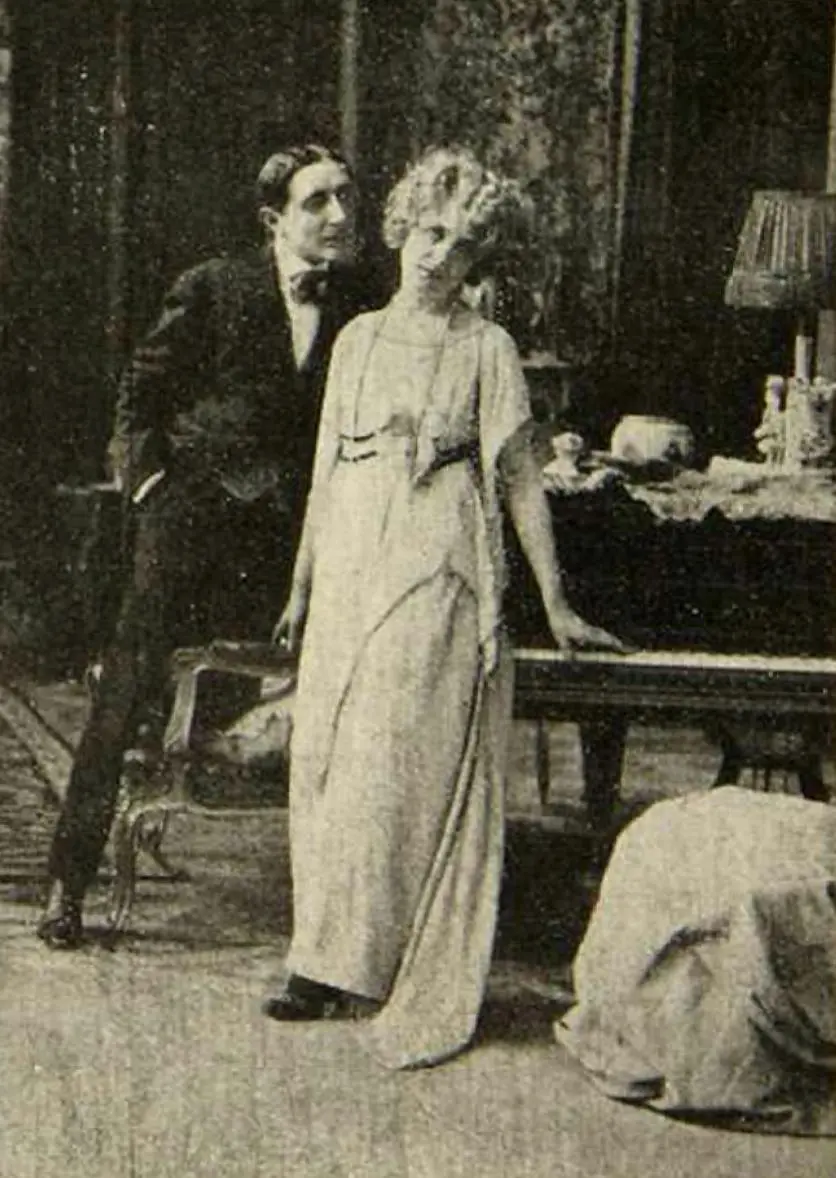
The directorial vision behind S.M. il Danaro is undeniably bold, employing a visual language that is both opulent and oppressive. The sets, from the grand, echoing halls of Moretti’s estate to the cramped, shadowed workshops of Elena’s father, are characters in themselves. They speak volumes about the disparities of wealth and power, creating a palpable sense of the societal stratification that underpins the narrative. The cinematography is particularly striking, often using deep shadows and dramatic lighting to heighten the emotional tension and underscore the moral ambiguities at play. There's a deliberate choice in framing that emphasizes isolation and entrapment, even in the most lavish settings, visually reinforcing the idea of a 'gilded cage.' This sophisticated use of visual storytelling elevates the film beyond a simple cautionary tale.
The pacing of S.M. il Danaro is deliberate, allowing the audience to fully absorb the escalating tension and the slow, inevitable unraveling of characters. It’s a film that demands patience, rewarding it with profound insights into human nature. The narrative unfolds with a tragic inevitability, each plot point meticulously placed to build towards a devastating climax. Unlike the more boisterous comedic stylings of films like The Garage or The Merry Jailbirds, this film embraces a somber, reflective tone, allowing its themes to simmer and resonate long after the final frame. The film's examination of class distinctions and the desperation born of poverty also brings to mind the social realism found in Father John; or, The Ragpicker of Paris, though with a distinct focus on the corrupting influence of the upper echelons of society.
The film's exploration of 'il danaro' is not merely about the accumulation of wealth, but about its power to distort perception, pervert justice, and ultimately, destroy the very essence of human connection. It delves into the psychology of greed, revealing how it can transform individuals and entire societal structures into something monstrous. The film suggests that money, when pursued as an end in itself, rather than a means to a greater good, becomes a corrosive agent, dissolving trust, loyalty, and love. This thematic depth is what truly elevates S.M. il Danaro beyond a period piece, making its message timeless and universally applicable. It's a cinematic experience that prompts introspection, forcing viewers to confront uncomfortable truths about societal values and individual morality.
Even today, S.M. il Danaro continues to provoke thought and discussion. Its unflinching look at the consequences of unchecked capitalism and moral bankruptcy feels remarkably pertinent in an age still grappling with economic disparities and ethical quandaries in high finance. The film's ability to craft complex characters who are neither entirely good nor entirely evil, but rather products of their circumstances and choices, is a testament to its sophisticated storytelling. It avoids simplistic moralizing, instead presenting a nuanced portrait of a world where motivations are often muddled and consequences far-reaching.
In an era of rapid industrialization and shifting social norms, S.M. il Danaro served as a powerful mirror, reflecting the anxieties and moral compromises of its time. It’s a film that, much like the enduring appeal of narratives focusing on personal struggle against overwhelming odds such as Kathleen Mavourneen or Sangre y arena, captures the human spirit’s capacity for both profound resilience and devastating vulnerability. The film's influence can be seen in later works that explore similar themes of societal corruption and individual downfall, solidifying its place as a seminal work in Italian cinema.
The meticulous attention to period detail, from the elaborate costumes to the grand architectural settings, transports the viewer directly into the heart of the era. Yet, beneath this historical veneer, the film’s core message remains universally resonant. It’s a tragedy not just of individuals, but of a society that allows the pursuit of material gain to overshadow ethical considerations. While not as overtly thrilling as a detective story like Zatansteins Bande, its psychological suspense is far more profound. The film masterfully builds a sense of dread, not through jump scares, but through the slow, agonizing realization of irreversible loss and corruption. The emotional weight of the narrative, combined with its artistic ambition, makes S.M. il Danaro a truly unforgettable cinematic achievement. It’s a film that lingers in the mind, prompting reflection on the choices we make and the true value of what we pursue.
Ultimately, S.M. il Danaro is more than just a historical drama; it is a timeless philosophical inquiry disguised as a compelling narrative. It dares to ask what happens when society places an insurmountable value on the ephemeral, when the human soul is bartered for fleeting power and endless coffers. Its legacy endures not just for its artistic merit or its stellar performances, but for its profound and unsettling message about the corrupting influence of 'the money' – a message that, regrettably, remains as relevant today as it was at its debut. A truly essential viewing for anyone interested in the darker facets of human ambition and the enduring power of cinematic storytelling. It stands tall among films that dissect societal structures and personal integrity, joining the ranks of films like North of Fifty-Three in its exploration of challenging environments and moral fortitude.

IMDb —
1930
Community
Log in to comment.