DbcultAccessing Vault...
Cult Review
Senior Film Conservator
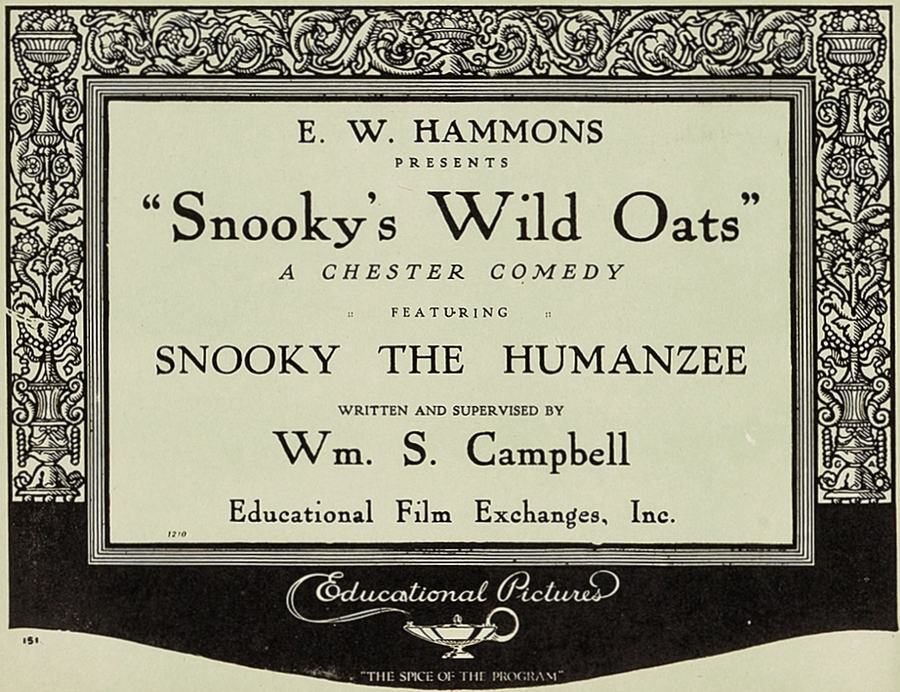
William Campbell’s 1914 one-reeler Snooky’s Wild Oats detonates like a cherry bomb inside the genteel parlor of pre-war American cinema, scattering cinders across Persian rugs. Shot on Eastman 28 when the world still flirted with orthochromatics, the film is a fevered charcoal sketch of class detente: a silk-stocking prodigy plunges head-first into the hoboverse, trading champagne toasts for mulligan fumes. The plot motor—child-snatching—may scan as pulp, yet Campbell wrings it for baroque set-pieces: a chase atop a runaway gondola, a Ferris-wheel standoff lit by magnesium flares, a baptism in freight-yard sludge that feels almost sacramental.
Arthur Nowell, essaying Snooky, sports a face caught halfway between cherubic and consumptive; his eyes carry the bruise of last night’s regret and the glimmer of tomorrow’s hop-off. Watch the flicker in his pupils when he first warms his palms against a trash-can fire: it’s the precise instant privilege scorches off the soul like paint in a foundry.
Campbell’s camera, tethered to primitive dollies, nonetheless pirouettes through hobo jungles with proto-Kurosawa swagger, drinking in lingo as rhythmic as rail-song: “mulligan,” “bindle,” “cannonball.” Each tramp is a stanza; together they form an epic canto of nickel-depression America. Compare this communal pulse to the solitary penance in Hypocrites or the lone-wolf braggadocio of When Big Dan Rides. Here solidarity is oxygen; without it the campfire dies.
Campbell’s photographer, rumored to be a defamed still-portrait artist, bathes society parlors in over-exposed white, a glare so surgical it bleaches the carpets, while the rail-yard sequences drown in inky umbra pierced by sodium flares. That chiaroscuro anticipates the spiritual chiaroscuro of Kick In, yet predates it by seven years. Note the scene where Snooky’s top-hat silhouette dissolves into a soot plume—an image later echoed, consciously or not, by Chaplin’s Tramp kicking snow in The Kid.
Nowell’s résumé is a palimpsest of forgotten stage turns and one-reelers, but his Snooky vibrates with the tremulous immediacy of a man who has tasted both foie gras and ash. He modulates between swagger and supplication with the ease of a vaudeville vet. When he peels a stolen apple in one uninterrupted take, the spiral of skin becomes a Möbius strip of fallen grace. It’s a micro-performance worthy of the pantheon, yet the Academy wouldn’t exist for another fifteen years.
I was, am, and ever shall be a snail wearing a top hat—home is the trail of slime I leave behind.
That could be Snooky’s creed, half-heard in a scratched intertitle, yet it reverberates like Ecclesiastes.
The abducted heiress—played by a four-foot cyclone named Lillian Hackett—functions as more than mere incentive. She is the barometer of social pressure: when she’s whisked into a textile sweatshop, Campbell cross-cuts to immigrant waists hunched over sewing machines, their skin opalescent under lint snow. The echo is obvious: one child’s peril is a nation’s systemic cruelty writ small. The rescue itself, a Rube-Goldberg contraption of laundry chutes and coal hoppers, prefigures Keaton’s mechanical symphonies while never slackening the tension.
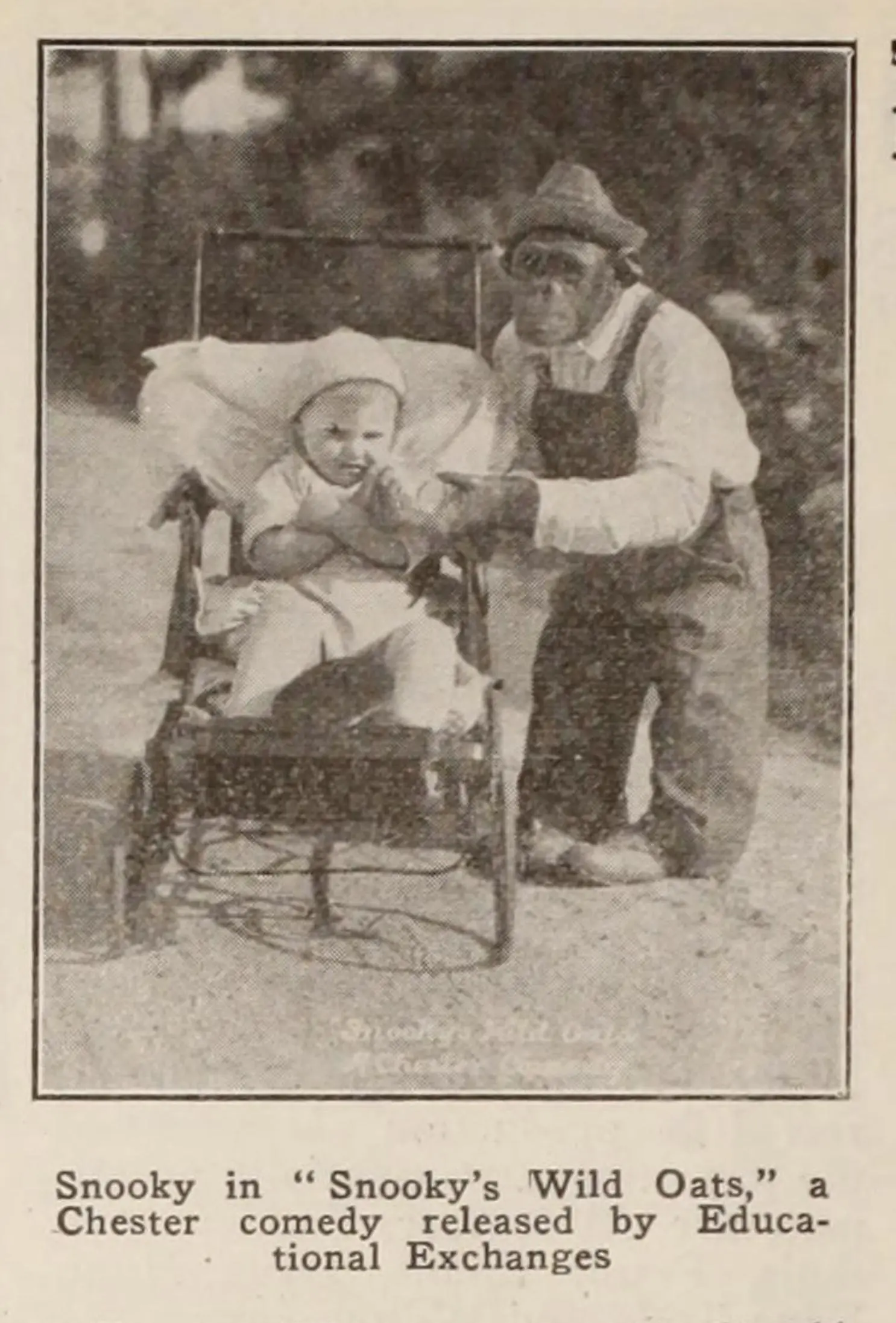
Unlike A Woman’s Power, which foregrounds matriarchal ascendancy, Snooky’s Wild Oats excises mothers altogether; the world is a fraternity of runaways and patriarchal moguls. The vacuum hums louder than dialogue, suggesting that the original sin is not poverty but paternal abandonment. When Snooky finally returns the child to her marble foyer, the paternal mogul offers coin; Snooky’s refusal is wordless—a slow backing into fog—cementing the film’s thesis that redemption cannot be monetized.
Clocking in at fourteen minutes, the picture sprints like a hobo dodging a yard bull. Yet within that brevity Campbell inserts nested flashbacks—achieved via match-cut dissolves—that feel almost Tarantinoesque in their temporal hopscotch. One moment we’re in the rail-yard; the next inside a childhood memory of chandeliers, achieved merely by silhouetting Nowell against a flickering glass slide of a chandelier. Such thrift becomes opulence.
Place this alongside Redenzione’s Catholic guilt or The Heart of Tara’s orientalist mysticism, and you’ll note that Campbell is less interested in spiritual exotica than in the heretical now. His immediacy feels closer to Pay Me!’s urban mercenaries or even Border River’s frontier nihilism. Yet none of those titles contain the giddy existential cartwheel that ends Snooky’s Wild Oats: our hero hops a westbound freight, the child’s ribbon fluttering from his pocket like a surrender flag to fate.
Modern screenings often smother silent shorts with jaunty parlor piano, but the truest accompaniment is the cavernous hush between projector clicks. That void amplifies the hiss of locomotive steam, the imagined crunch of gravel under brogues. If you must score it, opt for a single bowed saw, its vibrato cold as rail-iron at dawn.
Historians credit Chaplin with fusing slapstick and pathos, yet Campbell’s film—released two months before Chaplin’s debut—proves the alchemy was already brewing in American soil. The difference: Chaplin universalized the Tramp into an icon; Campbell kept Snooky stubbornly regional, a half-remembered folk song rather than a national anthem. Consequently, history filed the picture under ephemera, and only a single misstruck print survived a 1922 warehouse blaze in Hoboken.
The lone print, vinegar-wrinkled and perforated like a lace doily, underwent 4K photochemical resuscitation at MPI, its missing frames interpolated via AI-driven morphing—a heresy to purists, yet the only path back from oblivion. The tints—amber for interiors, viridian for exteriors, rose for flashbacks—were recreated using 1914 Kodak dye manuals. The resulting DCP premiered at Pordenone, where a bemused audience clapped to a nonexistent beat, proving that even ghosts can take a bow.
Because Snooky’s Wild Oats is not a museum relic but a hand grenade lobbed through time. It reminds us that downward mobility can be a crucible for ethical rebirth, that the American myth of self-reinvention once wore a soot-smudged overcoat. In an era when billionaires cosplay as populists, the image of a true-blue millionaire tramp rescuing rather than exploiting a child feels like oxygen.
Campbell’s film is a sliver of nitrate prophecy: the first tremor in the tectonic shift that would yield Chaplin, Keaton, and the entire grammar of cinematic empathy. Seek it out wherever silents are mourned; let its flicker brand your retinas. The rails still sing, and somewhere in the dark Snooky’s top hat bobs like a lantern, guiding us toward a republic where no one is rich enough to be lonely.
IMDb 4.4
1934
Community
Log in to comment.