DbcultAccessing Vault...
6.1/10
Senior Film Conservator
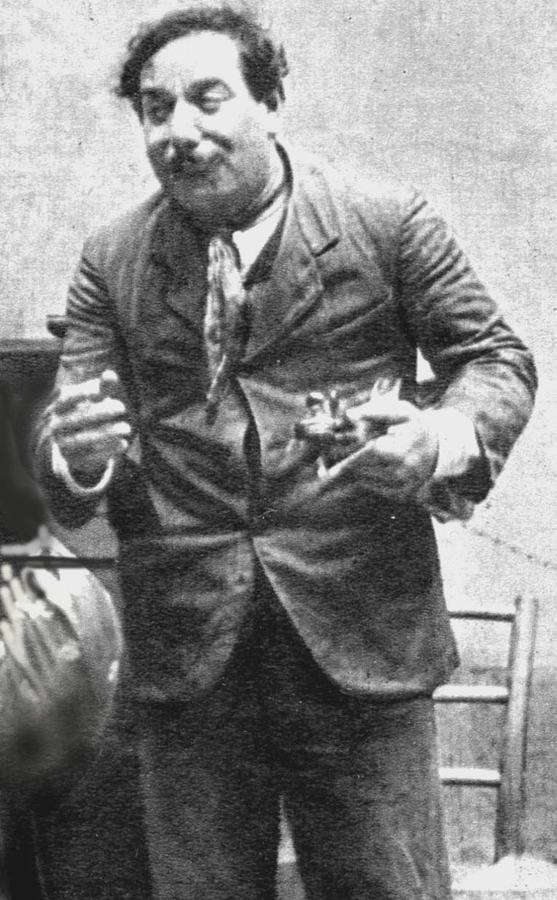
A definitive 6.1/10 rating for a film that redefined the boundaries of cult cinema. Sperduti nel buio remains a cornerstone of transgressive art.
Roberto Bracco's 1914 cinematic adaptation of his own play, Sperduti nel buio (Lost in the Dark), stands as a monumental, albeit often overlooked, achievement in early Italian silent cinema. More than a mere melodrama, it functions as a searing social commentary, a visceral exploration of class chasm, and a heart-wrenching testament to love's fragile endurance amidst overwhelming adversity. This film doesn't merely tell a story; it immerses the viewer in a palpable atmosphere of societal indifference, where the tenderest human bonds are crushed under the heel of privilege and neglect.
At its core, Sperduti nel buio unfurls the harrowing tale of Paolina, portrayed with heartbreaking vulnerability by Virginia Balestrieri. She is the illegitimate daughter of the powerful Duke of Vallenza, a secret kept under wraps, forcing her into a life of abject poverty and street begging. Her existence is a stark contrast to the opulent world of her biological father, a chasm that the film meticulously highlights through its visual compositions and narrative beats. This foundational injustice immediately sets a melancholic tone, establishing Paolina not just as a character, but as a symbol of the disenfranchised, a forgotten soul adrift in a society that values lineage and wealth above all else. Her daily struggle for survival is depicted with a raw realism that was perhaps startling for its time, eschewing romanticized poverty for a grittier, more despairing portrayal.
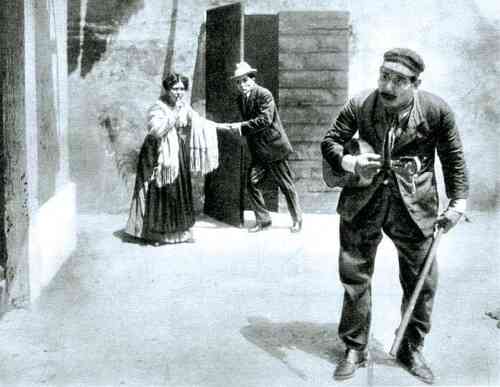
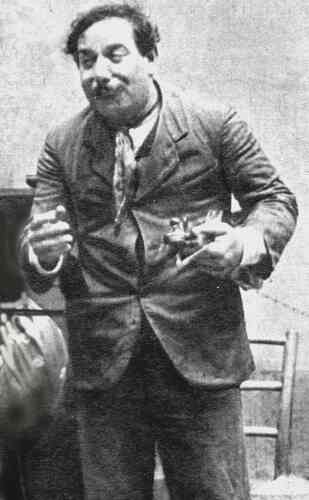
Her world, already steeped in shadow, finds a flicker of light in Nunzio, a blind violinist whose melodies echo the sorrow and resilience of his own exploited life. Giovanni Grasso Sr. imbues Nunzio with a quiet dignity, a spiritual strength that transcends his physical affliction. He is a man of artistry, yet his talent is commodified and abused by a cruel stepfather, forcing him to play for meager coins. The meeting of Paolina and Nunzio is not merely a plot point; it is a convergence of two souls cast out by society, finding solace and understanding in their shared marginalization. Their burgeoning love story, rendered with a delicate sincerity, becomes the emotional anchor of the film, a fragile bloom in a desolate landscape. It’s a love born not of grand gestures or societal approval, but of mutual empathy and a desperate need for connection in a world that denies them both basic human kindness.
The narrative gains another layer of tragic irony with the belated appearance of the Duke of Vallenza's conscience. Wracked by an eleventh-hour remorse, the Duke embarks on a quest to find his long-lost daughter. This subplot, while offering a glimmer of potential redemption, ultimately serves to underscore the deep-seated societal barriers that prevent true reconciliation. The Duke's efforts are clumsy, his search inefficient, a testament to how utterly disconnected the upper echelons were from the realities of the lower classes. His failure to locate Paolina is a pivotal moment, sealing the lovers' fate and condemning them to continued hardship. It’s a powerful statement on the limitations of individual good intentions when confronted by systemic neglect and the vast, unbridgeable gulf between social strata.
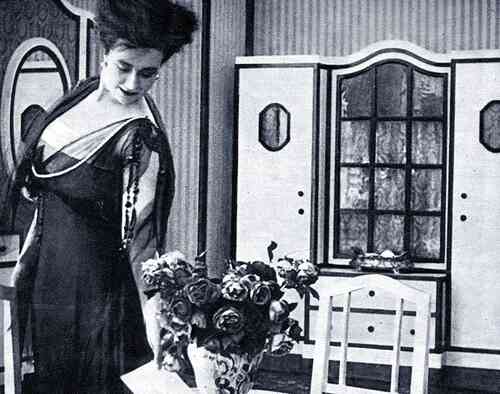
The Duke’s subsequent decision to bequeath his fortune to Livia, his latest concubine (played by Maria Carmi, whose performance adds a layer of sophisticated indifference), rather than to his unknown, impoverished child, is the final, crushing blow. This act solidifies the film's cynical view of justice and inheritance, highlighting how wealth and power often consolidate in the hands of the undeserving, while legitimate claims, especially those from the marginalized, are ignored or simply never discovered. Livia embodies the superficiality and self-interest of the aristocratic world, a direct counterpoint to Paolina's genuine suffering. Vittorina Moneta, likely in a supporting role, would have contributed to the ensemble that painted this bleak picture of societal structures.
Sperduti nel buio transcends its simple plot through its potent thematic resonance. The film is a profound meditation on the brutal realities of class disparity, a theme that echoes throughout cinematic history, from the Dickensian narratives of early cinema to contemporary social dramas. The stark contrast between the Duke's opulent world and Paolina's squalid existence is not merely implied; it is visually manifested through set design, costume, and the very way characters move and interact within their respective environments. The film's title itself, 'Lost in the Dark,' is a powerful metaphor for the social obscurity and emotional desolation experienced by its protagonists, living literally and figuratively in the shadows of a glittering, uncaring society.
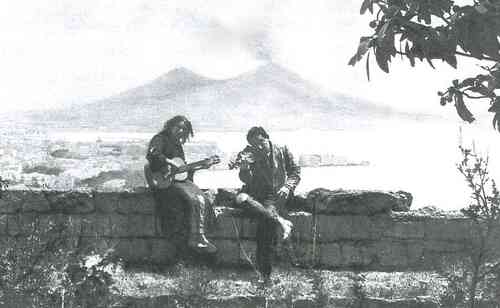
The silent film era, often characterized by exaggerated gestures and emotive facial expressions, finds a particularly poignant application here. The actors, especially Balestrieri and Grasso Sr., convey immense emotional depth without the aid of dialogue, relying on nuanced body language and expressive eyes to communicate their despair, hope, and love. The cinematography, though nascent by modern standards, effectively uses light and shadow to underscore the film's themes – the 'darkness' of poverty and ignorance contrasting with the brief, fleeting 'light' of their affection. One might draw parallels to the visual storytelling in films like The Doom of Darkness, where visual metaphors are crucial, or even the stark realism found in some parts of The Golem, though their genres diverge significantly. The film's power lies in its ability to evoke profound sympathy and outrage without uttering a single spoken word, letting the visuals and the raw performances speak volumes.
Some film historians have even posited Sperduti nel buio as a significant precursor to the Italian Neorealist movement of the post-WWII era, an audacious claim, perhaps, but one with considerable merit. Its unflinching portrayal of social injustice, its focus on the lives of the poor and marginalized, and its eschewal of overly theatrical romanticism for a more grounded, albeit melodramatic, realism, all resonate with the later tenets of Neorealism. While it certainly retains elements of the operatic drama prevalent in early Italian cinema, its core message and its sympathetic lens on the downtrodden set it apart. It deviates sharply from the escapist fantasies or adventure serials common at the time, such as Der Hund von Baskerville or even the fantastical elements of His Majesty, the Scarecrow of Oz, instead choosing to shine a light on uncomfortable truths.
The raw emotional impact is undeniable. The film doesn't offer easy answers or saccharine resolutions. Instead, it concludes with a profound sense of melancholic realism, leaving Nunzio and Paolina to their fate, their love a small, personal victory against the backdrop of their continued misery. This refusal to provide a tidy, happy ending is a powerful artistic choice, reinforcing the film's critique of a society that fails its most vulnerable. It forces the audience to confront the harsh realities, much like the challenging narratives of works like The Betrothed, which also explores love thwarted by societal forces, or the often bleak outcomes in stories like The Vicar of Wakefield.
The performances are crucial to the film's enduring power. Virginia Balestrieri as Paolina delivers a tour de force of silent acting. Her wide, expressive eyes convey a world of unspoken pain, yearning, and a fierce, if subdued, resilience. One can almost feel her hunger, her weariness, and the burgeoning hope that Nunzio brings into her life. Her portrayal is far from a caricature of suffering; it is a nuanced depiction of a young woman caught in an impossible situation, trying to retain her dignity and capacity for love against overwhelming odds. Her chemistry with Giovanni Grasso Sr.'s Nunzio is palpable, a silent dialogue of shared glances and gentle touches that speaks volumes. Grasso Sr., despite portraying a blind character, manages to convey immense inner turmoil and strength, using his posture and subtle facial shifts to express his character's plight and his deep affection for Paolina. His violin playing, though unseen in its actual sound, becomes a symbol of his soul, a poignant expression of beauty born from pain, much like the 'broken strings' theme of Bristede Strenge.
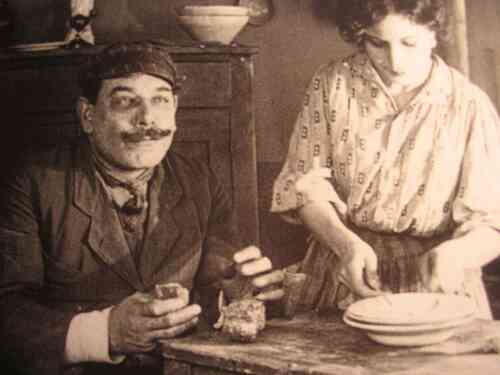
Maria Carmi's portrayal of Livia, the Duke's concubine, provides a chilling counterpoint. Her elegance is laced with a cold detachment, her beauty a veneer over a calculating heart. She represents the beneficiaries of a corrupt system, those who thrive on the misfortune of others, albeit indirectly. Her presence underscores the film's central conflict: the collision of genuine human emotion and desperate need with the callous structures of power and privilege. The ensemble cast, under Bracco's direction, works in concert to build a believable, if tragic, world, ensuring that each character, no matter how minor, contributes to the overarching tapestry of social injustice and personal struggle. It’s a far cry from the more lighthearted fare like Come Robinet sposò Robinette, showcasing the breadth of silent cinema's emotional range.
Sperduti nel buio, though perhaps less widely known than some of its international contemporaries, holds a significant place in film history. It is a powerful example of early cinema's capacity for social critique and emotional depth, proving that the medium, even in its nascent stages, could tackle complex themes with profound impact. Its influence, whether direct or indirect, can be seen in later films that explore similar themes of class struggle and tragic romance, such as The Prodigal Son, which often deals with societal outcasts, or even the timeless narrative of Cinderella, stripped of its fairy-tale ending and grounded in grim reality. The film serves as a stark reminder that some narratives of human suffering and injustice are tragically timeless, echoing through generations and continuing to resonate with audiences today.
The film's ending, far from offering catharsis, leaves an indelible impression of the harshness of fate and the rigidity of social structures. It's a poignant conclusion, not one of despair, but of a quiet, enduring sorrow, emphasizing that love, while powerful, cannot always conquer the systemic forces arrayed against it. In this sense, Sperduti nel buio is not just a film about two lovers; it is a film about the very fabric of society, about who is seen and who is unseen, who is valued and who is discarded. It compels us to reflect on the persistent inequalities that continue to plague our world, making it as relevant today as it was over a century ago. Its exploration of exploitation, similar to themes in The Steel King's Last Wish (albeit in a different industrial context), or the desperate measures taken for survival as seen in Bushranger's Ransom, or A Ride for Life, solidifies its place as a significant work of social realism in early cinema.
Ultimately, Sperduti nel buio is a cinematic experience that stays with you, a testament to the power of film to evoke empathy and provoke thought. It is a vital piece of Italian film heritage, a somber yet beautiful masterpiece that deserves to be rediscovered and appreciated for its artistic merit and its enduring social commentary. It reminds us that even in the 'darkness' of forgotten histories, some lights, however dim, continue to shine, illuminating the human spirit's capacity for love and resilience against the most formidable odds. The film is a journey into the depths of human suffering and the quiet dignity found within it, a journey that, despite its century-old vintage, feels strikingly contemporary in its themes of social justice and the search for belonging.
IMDb —
1919
Community
Log in to comment.