DbcultAccessing Vault...
6.6/10
Senior Film Conservator
A definitive 6.6/10 rating for a film that redefined the boundaries of cult cinema. The House of Flickers remains a cornerstone of transgressive art.
Is 'The House of Flickers' worth watching today? Short answer: yes, absolutely, but with significant caveats. This particular silent-era romp is a delightful, if at times bewildering, window into the anarchic spirit of early cinema, appealing primarily to silent film enthusiasts and those curious about the roots of physical comedy.
It's a film for those who appreciate the sheer, unbridled energy of a bygone era, where narrative sophistication often took a backseat to inventive, relentless physical gags. However, it is decidedly not for viewers seeking nuanced character development, intricate plotlines, or a polished, modern comedic sensibility.
Silent cinema often presents a unique challenge to contemporary audiences. The pacing, the acting conventions, the very absence of spoken dialogue — all demand a certain shift in perspective. Yet, within this framework, films like 'The House of Flickers' reveal a raw, untamed creativity that laid the groundwork for decades of comedic filmmaking. It's a testament to the ingenuity of its creators, even when that ingenuity occasionally veers into the absurd.
This film, like many of its contemporaries, operates on a simple premise: introduce a goal, then throw every conceivable obstacle in the path of achieving it. The goal here is a moviehouse sale; the obstacles are a cascade of increasingly ludicrous events culminating in a chase scene that feels both groundbreaking and utterly exhausting.
This film works because of its relentless commitment to escalating chaos and the surprising comedic timing of its non-human cast members, particularly Josephine the Chimp. This film fails because its narrative structure is often flimsy, serving merely as a scaffold for gags that sometimes feel repetitive, and its pacing can be jarringly uneven. You should watch it if you are a devotee of early slapstick, appreciate the historical context of silent film, or are simply looking for a dose of pure, unpretentious physical comedy.
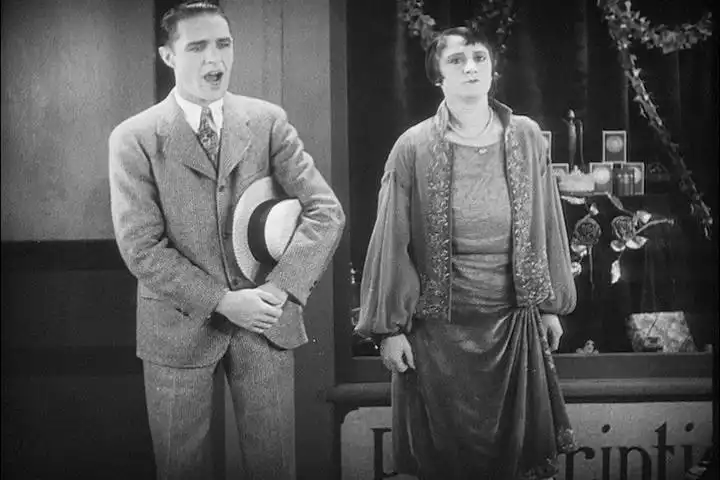
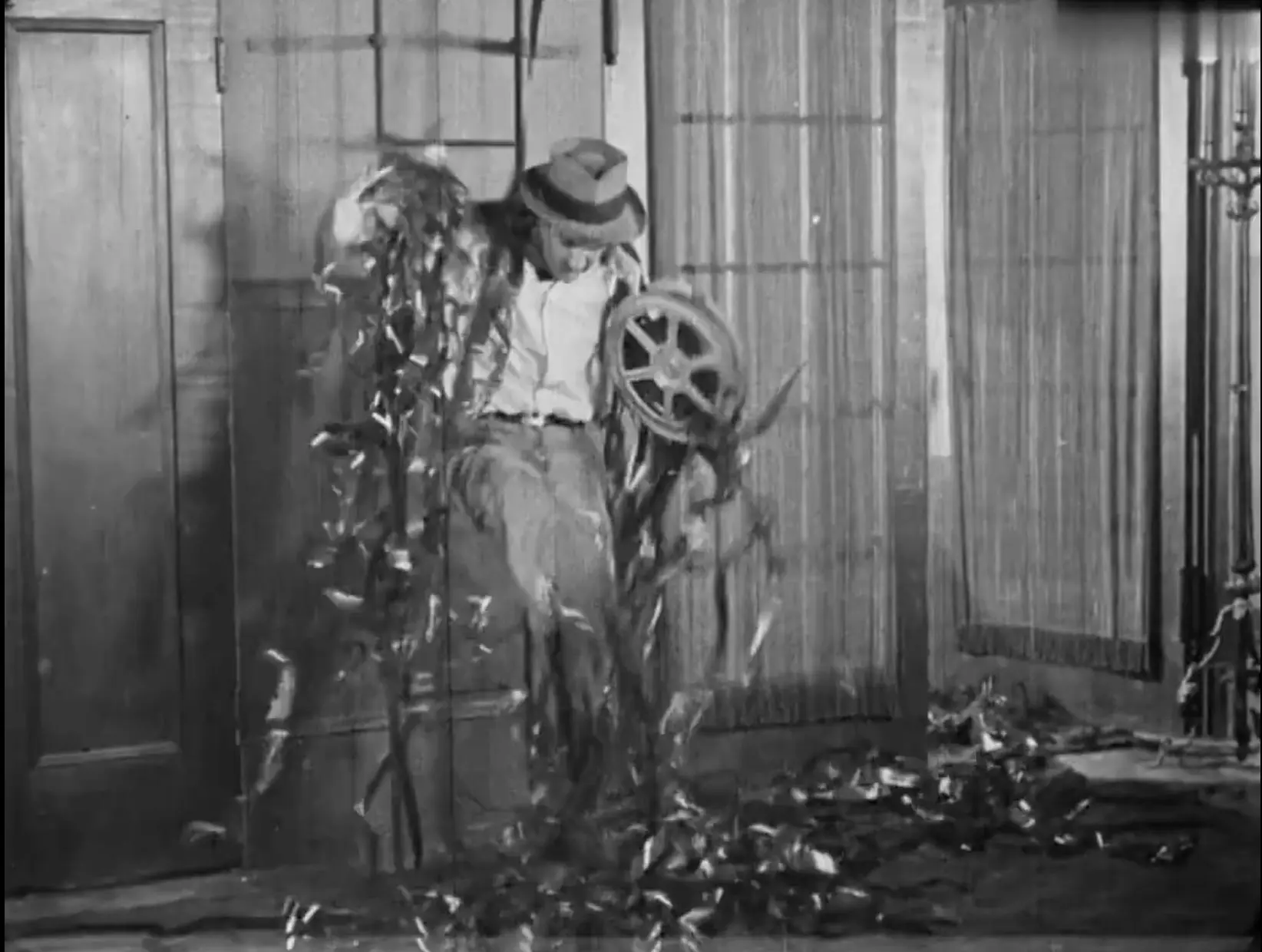
The setup is classic silent-era simplicity: a theater owner (Robert McKenzie) is desperate to sell his failing moviehouse. He invites two potential buyers to a special screening, hoping to impress them with the magic of cinema. What unfolds, however, is less magic and more pandemonium. From the moment the projector sputters to life, everything that can go wrong, does. The film stock itself seems to develop a mind of its own, tearing, looping, and displaying images in a haphazard sequence that would surely send any modern projectionist into a cold sweat.
The initial sequence within the moviehouse is a masterclass in controlled — and then rapidly uncontrolled — chaos. McKenzie’s character, initially a picture of nervous professionalism, slowly descends into a state of frantic desperation as his carefully orchestrated sales pitch unravels. It’s a relatable, if exaggerated, portrayal of a small business owner's nightmare.
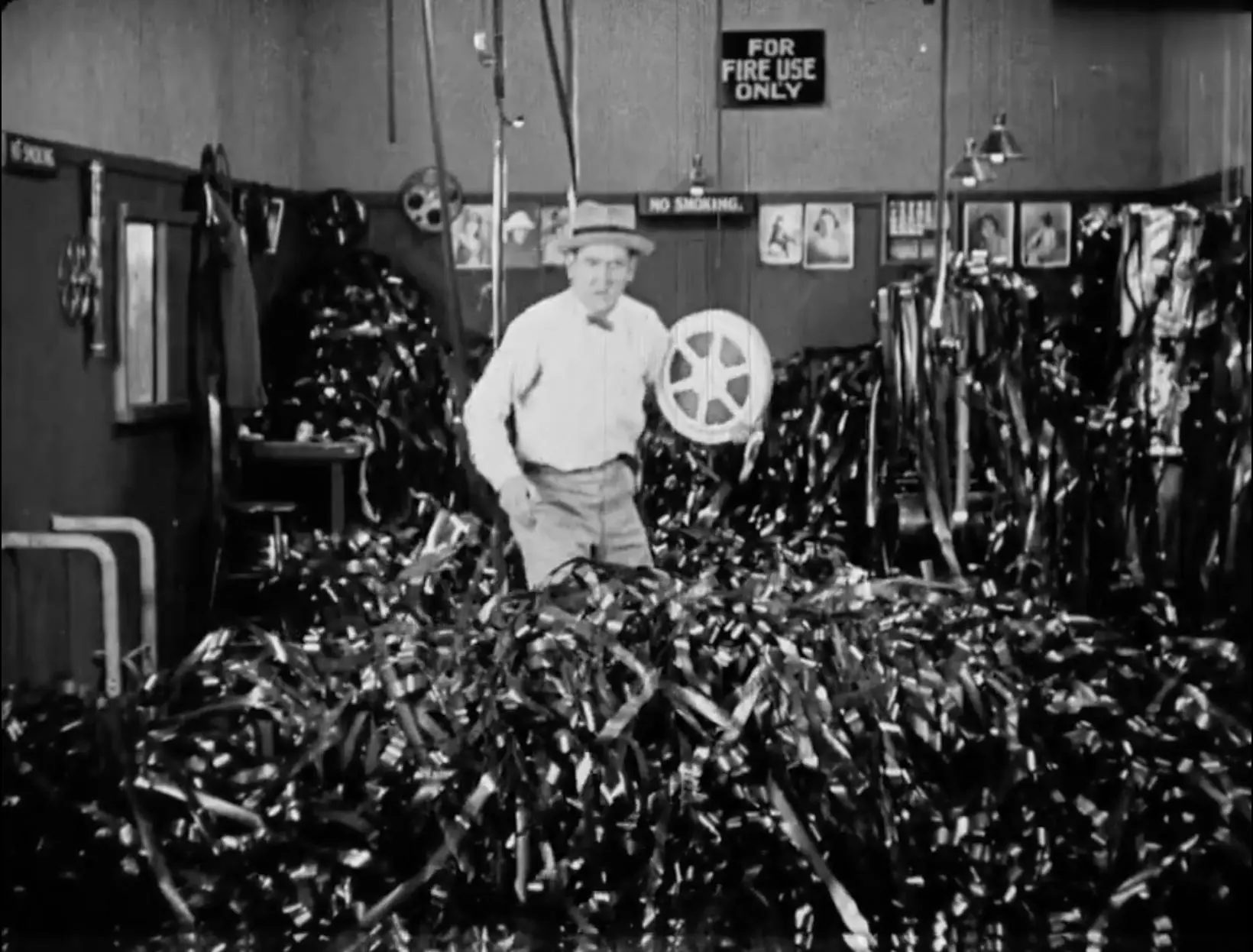
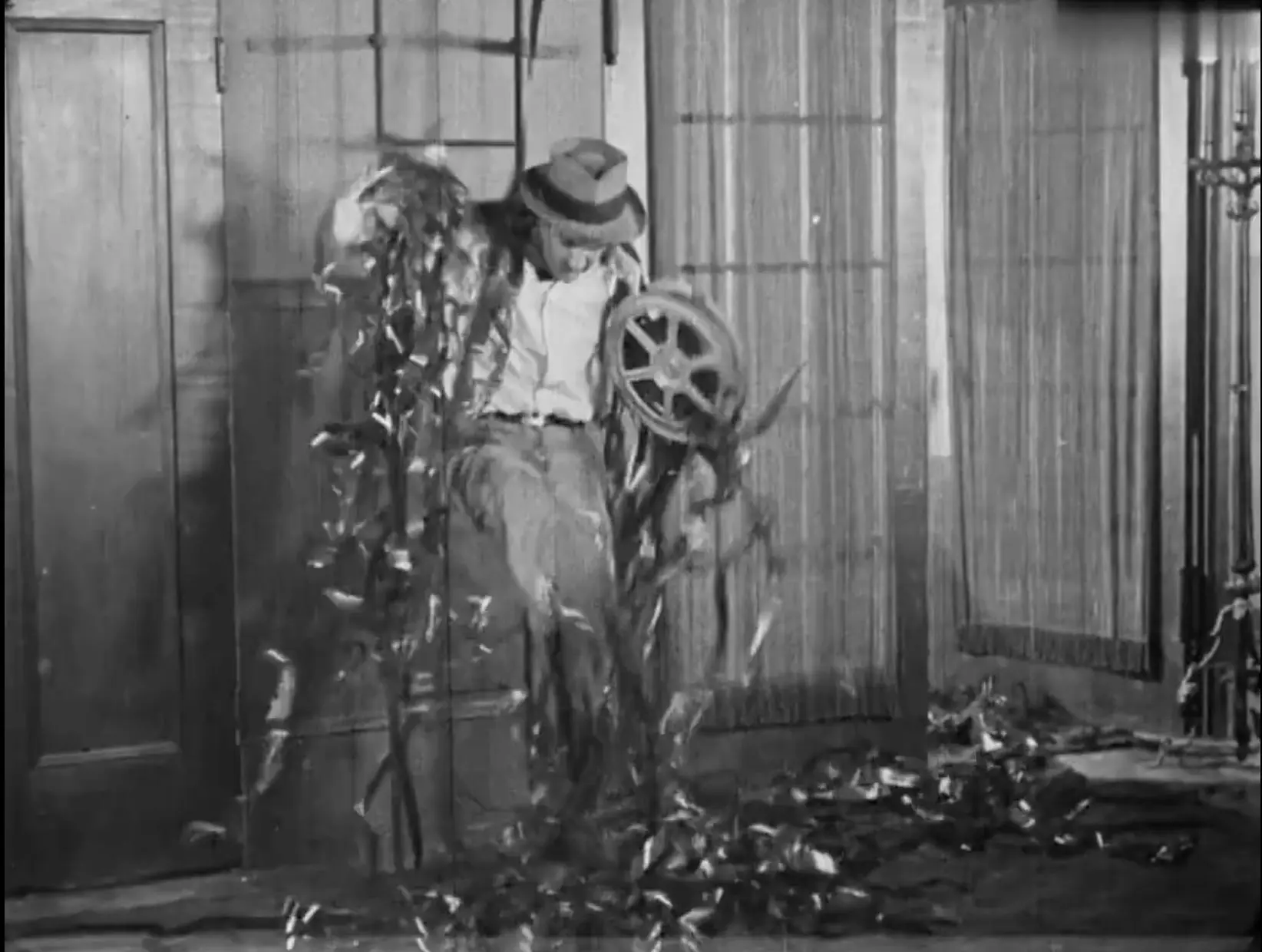
The pacing here is a double-edged sword. For a modern viewer, the initial setup might feel a touch slow, as the film establishes its characters and premise. However, once Josephine the Chimp makes her grand, destructive entrance into the projection booth, the film shifts into an almost dizzying gear. The escalation is rapid, almost violent, as the chimp’s playful interference turns the screening into an abstract art installation of flickering, disjointed images. This particular sequence is a standout, an audacious move that exemplifies the era's willingness to experiment with the medium itself.
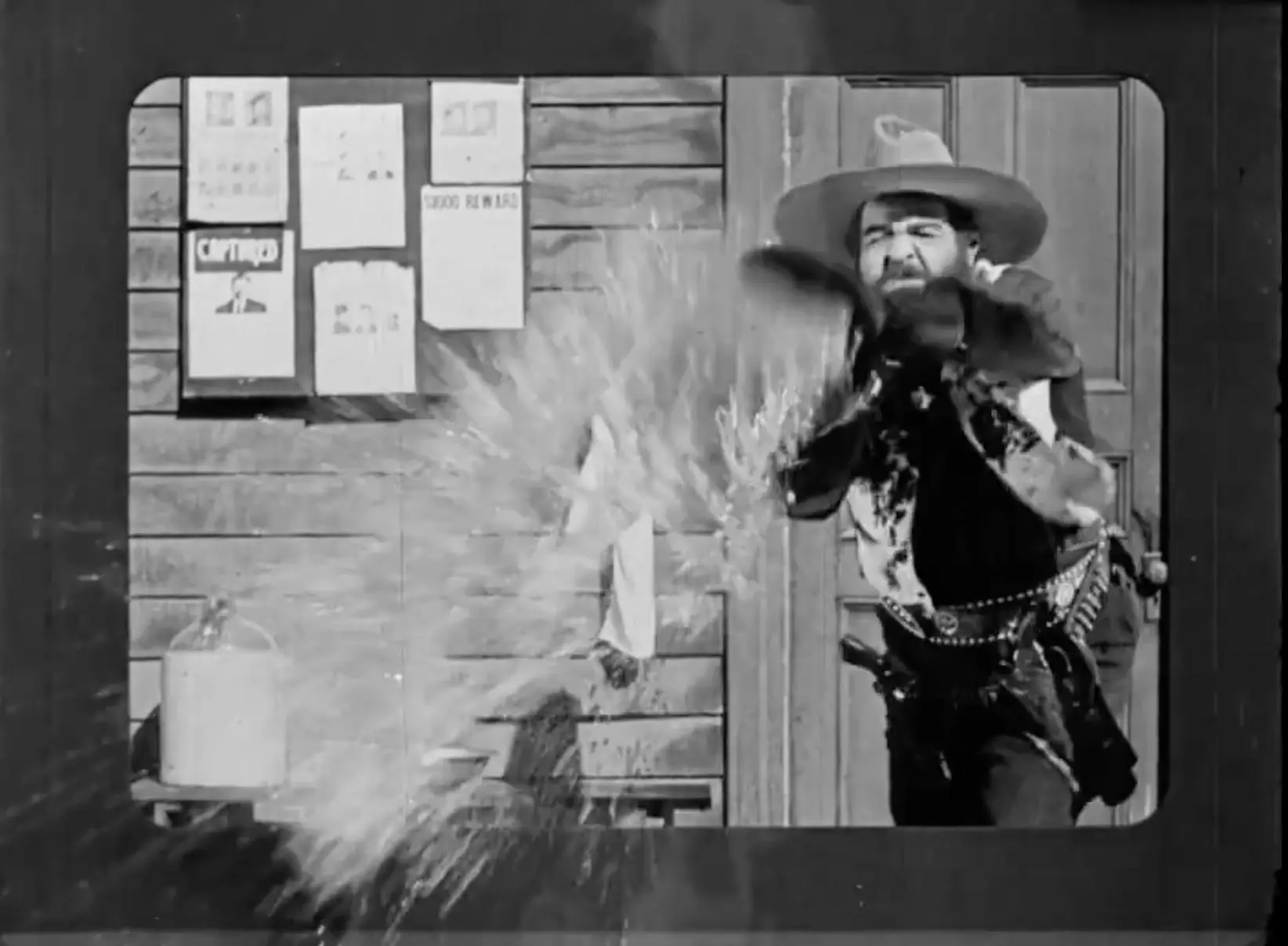
The subsequent theft of the film reels by the disgruntled (or perhaps opportunistic) buyers triggers a madcap chase through the dusty, sprawling landscape of early Los Angeles. Here, the film fully embraces its slapstick roots, delivering a series of physical gags, near misses, and improbable stunts. It’s a relentless pursuit, echoing the frantic energy of other silent-era chases, such as those found in early Keystone Kops shorts or even some sequences from The Fugitive Futurist.
The cast of 'The House of Flickers' is a fascinating ensemble, blending seasoned silent film actors with remarkable animal performers. Robert McKenzie, as the beleaguered proprietor, carries much of the film’s emotional weight, even if that weight is primarily comedic exasperation. His facial expressions and physical reactions to the escalating disaster are a masterclass in silent film acting – broad enough to convey emotion without dialogue, yet nuanced enough to avoid caricature. You genuinely feel his desperation to make a sale, and his despair as it all goes so spectacularly wrong.
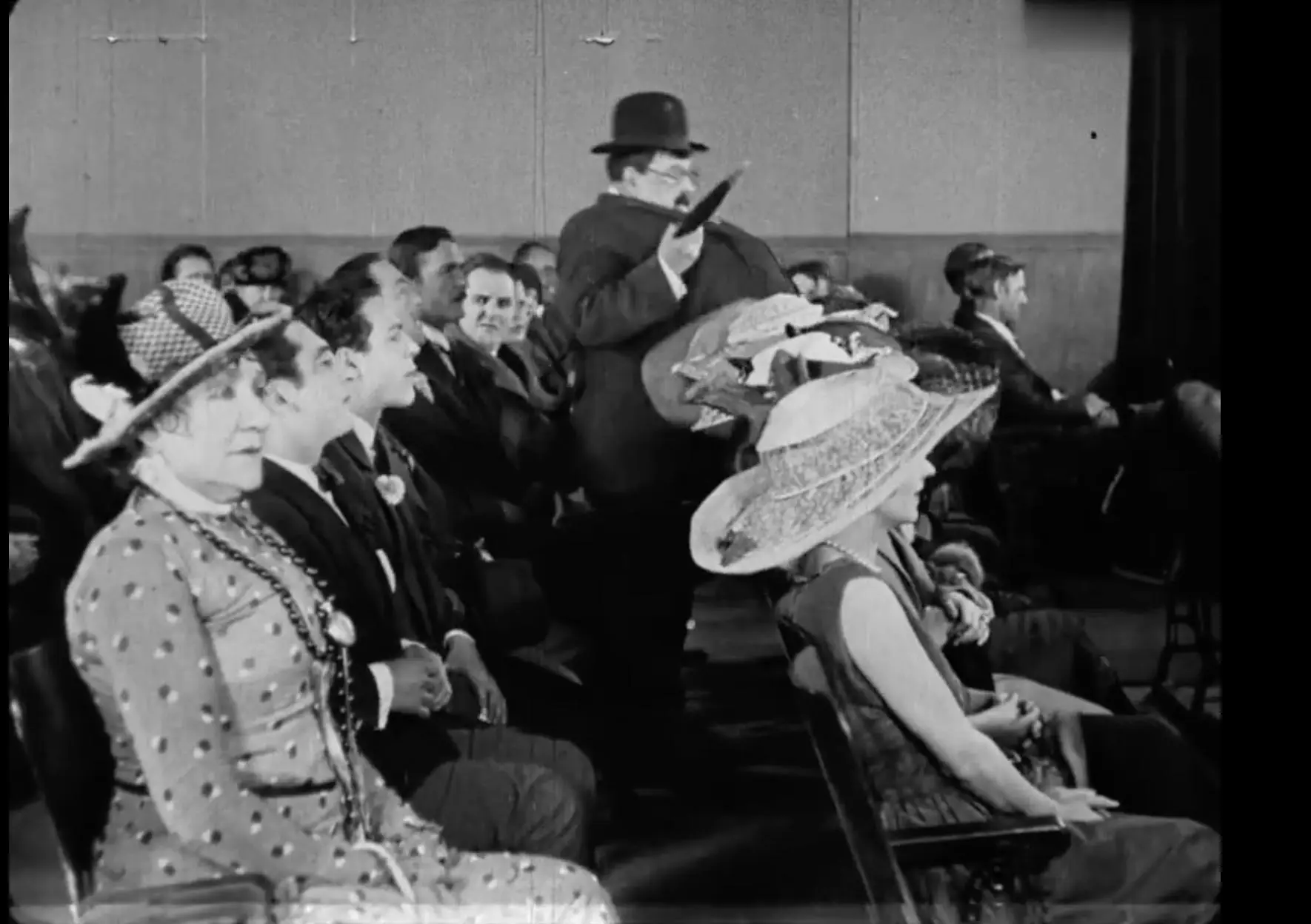
Mildred June, while given less screen time than McKenzie, provides a grounding presence, often reacting to the unfolding absurdity with a bewildered charm. Her ability to convey incredulity without a single spoken word is impressive, a testament to the skill required of performers in this era. She often serves as the audience's surrogate, her wide eyes reflecting our own disbelief at the unfolding chaos.
However, the true, unexpected stars of 'The House of Flickers' are arguably its animal actors. Josephine the Chimp is an absolute scene-stealer. Her antics in the projection booth are genuinely hilarious and surprisingly well-orchestrated. It's a sequence that, while ethically questionable by modern standards of animal welfare in film production, delivers undeniable comedic impact. The chimp’s seemingly spontaneous destruction of the film is a brilliant, albeit accidental, meta-commentary on the fragility of the medium itself.
Not to be outdone, The Wonder Dog Pal also makes a memorable appearance, contributing to the chase sequence with admirable agility and an almost human-like intelligence in its reactions. The inclusion of animals in such prominent, active roles highlights a particular charm of early cinema – a willingness to embrace any element that could generate a laugh or a spectacle.
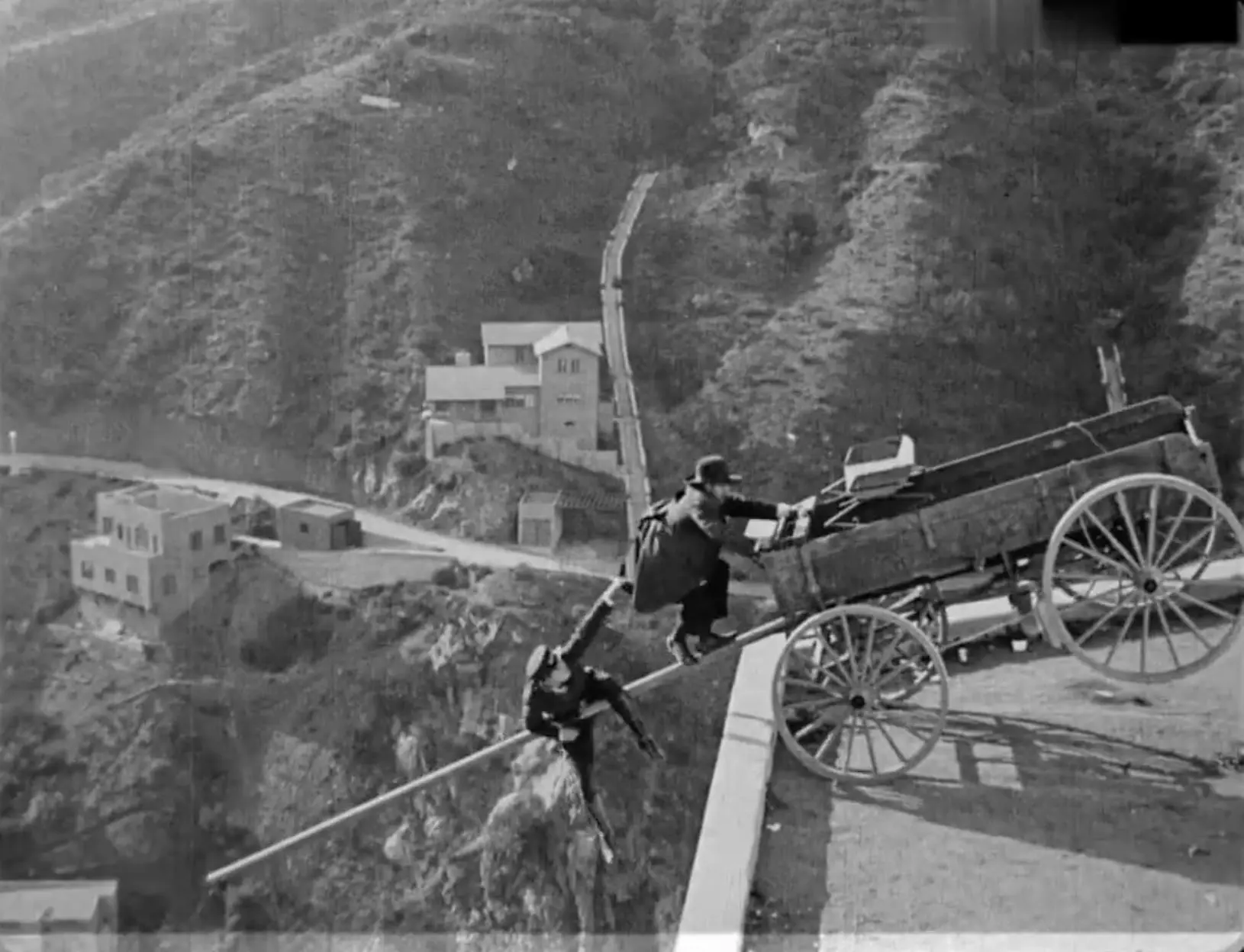
The direction of 'The House of Flickers' is, by necessity, focused on staging physical comedy effectively. The film relies heavily on wide shots to capture the full scope of the elaborate gags and chases. There's a raw, unpolished energy to the filmmaking, which, rather than detracting, adds to its charm. It feels immediate, almost like a live theatrical performance captured on celluloid.
The cinematography, while typical of the era – static cameras, natural lighting where possible – does an effective job of conveying the sense of motion during the chase scenes. The use of location shooting in the Los Angeles hills adds a sense of authenticity and scale to the pursuit, transforming what could have been a contained farce into an expansive adventure. One particular shot, following the characters as they tumble down a dusty embankment, feels surprisingly dynamic for its time, demonstrating a nascent understanding of how to use the camera to enhance physical action.
While 'The House of Flickers' won't be lauded for its groundbreaking camera work or innovative editing, it successfully serves its primary purpose: to capture and convey the frantic energy of its performers and the escalating absurdity of its plot. The cuts are often functional, driving the narrative forward without lingering, a pace that works well for its comedic ambitions.
Yes, 'The House of Flickers' is worth watching today, especially for those with an appreciation for silent cinema and the origins of slapstick comedy. It serves as an excellent historical document, showcasing the comedic sensibilities and filmmaking techniques of the early 20th century. It’s far from a perfect film, but its imperfections are part of its appeal, offering a glimpse into a less polished, more experimental era of moviemaking.
Its chaotic energy and the sheer audacity of its gags, particularly those involving Josephine the Chimp, make it a memorable experience. It's a film that reminds us that laughter, in its purest, most physical form, transcends time and dialogue.
‘The House of Flickers’ is an acquired taste, certainly, but one that offers considerable rewards for those willing to engage with its particular brand of early 20th-century anarchy. It’s a film that doesn't just feature a moviehouse; it seems to embody the very spirit of film itself in its nascent, chaotic glory. It works. But it’s flawed. The sheer, unadulterated energy of the performances, especially from the non-human cast members, coupled with the escalating absurdity of the plot, makes it a fascinating watch.
While it won't be everyone's cup of tea, and it certainly won't win any awards for narrative sophistication, its historical value and moments of genuine, laugh-out-loud physical comedy make it a worthwhile experience. For anyone curious about the roots of cinematic slapstick, or simply in the mood for a dose of delightful, brainless fun, ‘The House of Flickers’ still manages to cast a charming, if slightly frayed, spell.
IMDb 6.2
1931
Community
Log in to comment.