DbcultAccessing Vault...
6.5/10
Senior Film Conservator
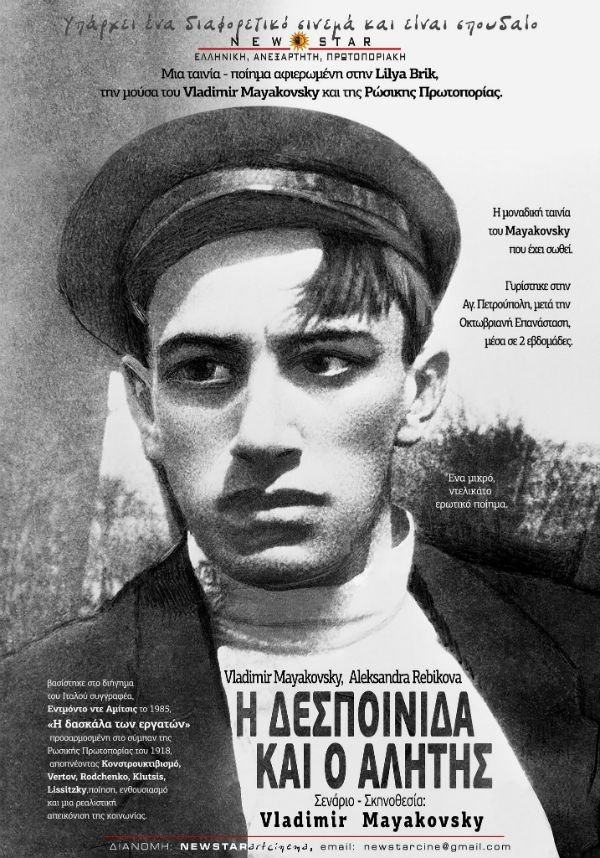
A definitive 6.5/10 rating for a film that redefined the boundaries of cult cinema. The Young Lady and the Hooligan remains a cornerstone of transgressive art.
Stepping into the flickering shadows of early Soviet cinema, one encounters a fascinating, often unsettling landscape of artistic experimentation and social commentary. Among these cinematic relics, Vladimir Mayakovsky's 1918 masterpiece, The Young Lady and the Hooligan, stands as a particularly potent and prescient work. More than just a film, it's a visceral poem brought to life, a testament to the revolutionary spirit not only of its era but also of its polymath creator. This isn't merely a quaint historical curiosity; it's a raw, pulsating exploration of class, love, and redemption, rendered with a striking emotional intensity that transcends the limitations of its silent medium.
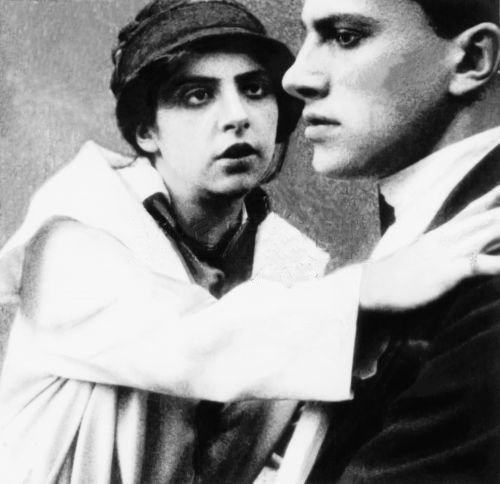
The very premise, adapted from Edmondo De Amicis's Italian short story 'The Teacher and the Workers' (or 'The Teacher of the Workers'), is deceptively simple. A fresh-faced, idealistic young woman (portrayed with understated grace by Aleksandra Rebikova) arrives in a bustling, working-class district, tasked with the formidable challenge of educating a class of adult men. These are not docile pupils; they are a motley crew of laborers, rough-hewn and often unruly, their faces etched with the realities of a demanding life. Her mission is to impart literacy, to open their minds to the transformative power of words. Yet, what unfolds is far more complex than a straightforward tale of enlightenment; it's a volatile narrative of human connection, societal friction, and the unexpected blossoming of affection in the most unlikely of circumstances.
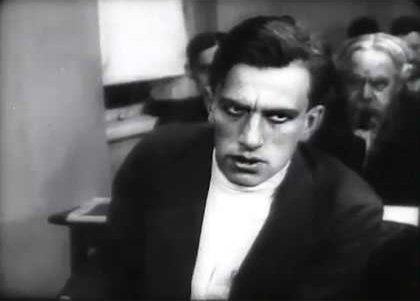
The classroom itself becomes a microcosm of the revolutionary society simmering outside its walls. On one side, the young lady embodies the ideals of progress, education, and order. Her presence is a beacon of refinement, a symbol of the new world attempting to emerge from the old. On the other, her students represent the raw, unpolished energy of the proletariat, a force both eager for knowledge and resistant to conventional discipline. The initial scenes deftly establish this dynamic, showcasing the teacher's patience against the students' boisterousness, their struggles with the alphabet mirroring their struggle with societal norms.
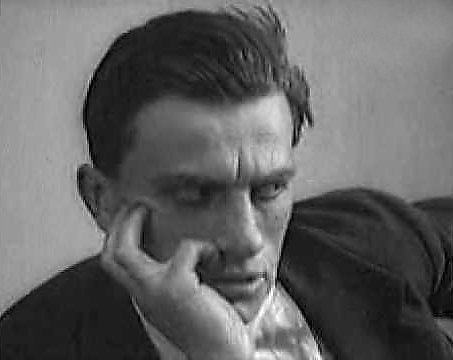
It is within this volatile environment that the titular 'hooligan' (played with charismatic defiance by Vladimir Mayakovsky himself) emerges as the focal point of the narrative's tension. He is not merely a disruptive student; he is a force of nature, a living embodiment of the untamed spirit that Mayakovsky so often celebrated in his poetry. His gaze is intense, his demeanor challenging, and his actions are driven by an instinctual, rather than intellectual, understanding of the world. When he scrawls a raw, unadulterated declaration of love on his test paper, it's not just a breach of classroom decorum; it's an act of poetic rebellion, a direct challenge to the established order and a declaration of a deeply felt, if awkwardly expressed, passion.
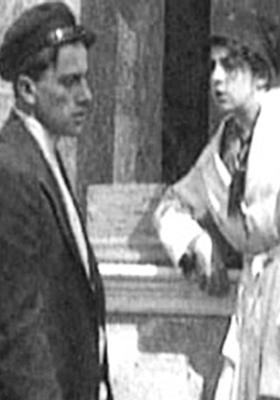
The teacher's initial reaction is one of shock and discomfort, a natural response to such an audacious transgression. Her other students, perhaps driven by a combination of protective loyalty, moral indignation, or even nascent jealousy, rally to her defense, seeing the hooligan's actions as an affront to her dignity and their collective pursuit of knowledge. This collective outrage escalates rapidly, demonstrating the precariousness of social order when confronted with unbridled emotion. The film doesn't shy away from depicting the swift, brutal consequences of this clash. The 'hooligan' is set upon, his life tragically cut short by the very hands he might have eventually called comrades.
It is in the aftermath of this violence, as the hooligan lies dying, that the film achieves its most profound emotional resonance. The teacher, initially repulsed, finds herself drawn to his bedside. Her journey from discomfort to a tender, solicitous kiss is the emotional core of the film. It's a moment of profound empathy, of recognizing the genuine, albeit destructive, nature of his love. This final act of compassion transcends societal boundaries and moral judgments, suggesting a deeper, more human connection forged in the crucible of suffering. It's a powerful statement on the complexities of human emotion, where love and violence, attraction and repulsion, coexist in a volatile, often tragic, dance.
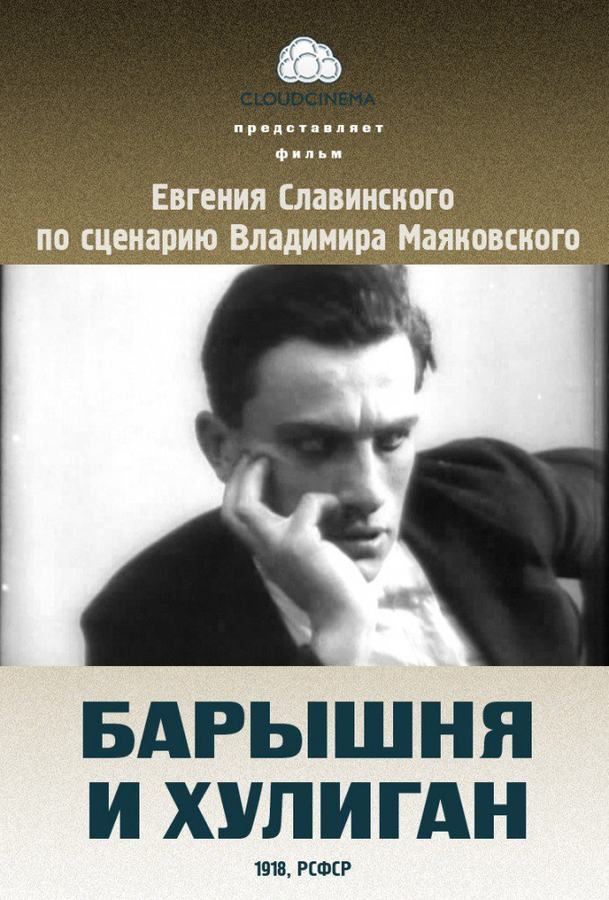
Vladimir Mayakovsky, a towering figure of the Russian avant-garde, brought his distinctive Futurist sensibility to this cinematic endeavor. His involvement as both co-writer and leading actor imbues the film with an authentic, almost autobiographical, energy. Known for his revolutionary poetry, his rejection of traditional forms, and his embrace of the modern industrial age, Mayakovsky infused The Young Lady and the Hooligan with a similar spirit of defiance and innovation. His performance as the hooligan is less about nuanced acting and more about embodying an archetype – the passionate, unbridled individual clashing with societal constraints. This echoes his own public persona and his artistic philosophy.
The film's visual language, while perhaps constrained by the technological limitations of its time, strives for a certain dynamism. The close-ups on Mayakovsky's intense gaze, the rapid cuts during moments of conflict, and the stark contrast between the teacher's delicate features and the rugged visages of her students all contribute to a visual rhythm that feels distinctly Mayakovskian. It's a cinema that prioritizes impact and emotional directness over subtle psychological realism, a hallmark of the Futurist movement's desire to shock and awaken the audience.
Beyond the immediate narrative, The Young Lady and the Hooligan functions as a powerful piece of social commentary, particularly relevant in the tumultuous context of post-revolutionary Russia. The film explores the inherent tensions between different social strata – the educated intellectual versus the unlettered worker – and the challenges of forging a new, cohesive society from disparate elements. The teacher represents the idealistic vision of a new Soviet man, educated and refined, while the hooligan embodies the raw, untamed energy that, while potentially destructive, also holds the seeds of revolutionary change. His death can be seen as a tragic commentary on the difficulty of integrating such powerful, individualistic forces into a nascent collective.
The theme of education itself is central, presented not merely as a means of acquiring knowledge but as a tool for social transformation and, paradoxically, as a catalyst for emotional upheaval. The act of learning to read and write becomes intertwined with the act of understanding and expressing deeply human emotions, often clumsily. This intertwining of the intellectual and the emotional elevates the film beyond a simple melodrama, imbuing it with a profound philosophical depth. It questions whether true understanding can only come through structured learning, or if there are other, more primal forms of communication and connection.
The film's portrayal of violence is also noteworthy. It's swift, brutal, and carries significant consequences, illustrating the raw, often unforgiving nature of the society depicted. This isn't sanitized violence; it's a stark reminder of the volatile emotions and desperate circumstances that could lead to such outcomes. The teacher's final act of solace, therefore, carries even greater weight, offering a glimmer of human tenderness in a world that often seems harsh and unforgiving.
While The Young Lady and the Hooligan possesses a unique cultural and historical specificity, its core themes resonate across cinematic history. The dynamic of a refined individual entering a rough environment to bring enlightenment, only to confront unexpected emotional challenges, finds echoes in various narratives. One might draw a parallel, however distant, with films exploring societal outsiders and the struggle for acceptance, such as the initial prejudice faced by Shylock in The Merchant of Venice, though the contexts are vastly different. More directly, the notion of a redemption arc for an 'outlaw' figure, or at least a character on the fringes of society who finds an unexpected connection, can be seen in films like The Bargain, where a hunted man's humanity is revealed through a selfless act.
The moral dilemma faced by the female protagonist, caught between societal expectations and burgeoning personal feelings, is a timeless narrative device. While not a direct comparison in plot, the theme of a woman navigating complex emotional terrain and making profound personal sacrifices or choices in the face of adversity is explored in films like The White Sister, even if the specific circumstances diverge wildly. These comparisons serve to highlight the universality of the human condition that Mayakovsky and his collaborators managed to capture, even within the specific confines of early Soviet cinema.
In its short runtime, The Young Lady and the Hooligan packs an astonishing emotional punch. It's a film that demands engagement, not just as a historical document, but as a vibrant piece of art. The performances, particularly Mayakovsky's magnetic presence, convey a depth of feeling that belies the absence of spoken dialogue. Rebikova's portrayal of the teacher is equally compelling, her quiet dignity and eventual vulnerability forming a powerful counterpoint to the hooligan's explosive energy. Fyodor Dunayev, though perhaps less prominent, contributes to the ensemble, grounding the classroom scenes with authentic portrayals of the working-class students.
The film's legacy lies not only in its artistic merit but also in its representation of a pivotal moment in cinematic and political history. It's a glimpse into the early days of a revolutionary society grappling with its own identity, exploring the role of art and education in shaping a new world. Mayakovsky, ever the provocateur and visionary, used this film as another canvas for his radical ideas, blending social realism with a profound, almost spiritual, examination of human passion.
Watching The Young Lady and the Hooligan today is an experience that resonates far beyond the confines of a silent film archive. It's a stark reminder of the enduring power of storytelling, the complexities of human relationships, and the revolutionary potential of art. It compels us to consider the fine line between order and chaos, between societal expectation and individual desire, and the surprising places where true empathy and understanding can ultimately be found. It is, without hyperbole, a cinematic gem that continues to challenge and move audiences, a testament to its timeless themes and the audacious vision of its creators.
IMDb 6.4
1933
Community
Log in to comment.