DbcultAccessing Vault...
7.2/10
Senior Film Conservator
A definitive 7.2/10 rating for a film that redefined the boundaries of cult cinema. So This is Eden remains a cornerstone of transgressive art.
Is So This is Eden worth watching today? Short answer: yes, but with significant caveats that demand a specific kind of viewer. This film is for those who appreciate the nuanced emotional landscapes of early cinema and aren't deterred by its period-specific conventions. It is most definitely NOT for viewers seeking fast-paced narratives, modern cinematic polish, or instant gratification.
Steeped in the dramatic sensibilities of the 1920s, So This is Eden, penned by Adele Comandini, delves into a woman's quiet desperation within a seemingly respectable marriage. It’s a narrative that, despite its age, grapples with themes of personal agency and societal expectation that remain surprisingly resonant.
This film works because... it fearlessly delves into the quiet desperation of a woman's soul, offering a surprisingly modern psychological depth through the expressive visual language of the silent era.
This film fails because... its narrative can, at times, feel constrained by the conventions of its period, leading to certain plot developments that might strike contemporary audiences as overly melodramatic or simplistic.
You should watch it if... you are a cinephile keen on understanding the evolution of storytelling, particularly how early cinema tackled complex themes of marital dissatisfaction and personal liberation with remarkable sincerity.
At its core, So This is Eden is a powerful, if understated, character study. We are introduced to a woman, whose name is less important than her predicament, living a life that, from an outsider's perspective, appears comfortable. Yet, beneath the veneer of domestic tranquility, a profound dissatisfaction festers. Her husband, perhaps too absorbed in his own world or simply complacent, seems oblivious to the growing chasm between them. This isn't a story of overt cruelty, but rather of a slow, suffocating emotional neglect.
The 'chance at a better life' isn't merely a romantic dalliance; it represents an escape from the mundane, a yearning for intellectual stimulation, or perhaps simply the validation of being seen and desired. It’s the tantalizing prospect of a different path, one where her own aspirations might finally take precedence over her prescribed role. Comandini's script, even in its minimalist form, hints at the profound societal pressures placed upon women of the era, where personal fulfillment often took a backseat to marital duty.
The film explores the tension between loyalty and self-preservation, a dilemma that is both timeless and acutely felt within the context of the 1920s. Is happiness a luxury, or a fundamental right? The narrative doesn't offer easy answers, instead opting for a nuanced portrayal of a woman on the precipice of a life-altering decision. It shares thematic DNA with other dramas of the era exploring marital discord, such as Daytime Wives, though So This is Eden leans heavily into the psychological undercurrents of its protagonist.
In silent cinema, the burden of conveying emotion falls squarely on the shoulders of the actors, demanding a physicality and expressiveness that transcends mere pantomime. Edna Murphy, as the dissatisfied wife, rises to this challenge with remarkable grace and intensity. Her performance is the beating heart of So This is Eden.
Murphy skillfully uses her eyes to convey worlds of unspoken longing and frustration. A lingering gaze out a sun-drenched window, a subtle flicker of resentment when her husband, played with a convincing blend of affability and emotional distance by Raymond Bloomer, dismisses her concerns. These aren't grand gestures, but rather finely tuned nuances that speak volumes. Consider the scene where she attempts to engage her husband in conversation, only for his attention to drift to a newspaper. Murphy’s shoulders slump almost imperceptibly, her hand retracts, and the brief, fleeting hope in her eyes gives way to a familiar resignation. It’s a masterclass in controlled, internal performance.
John Marston and Elliott Nugent, as the potential 'better life' and supporting figures respectively, provide compelling foils. Marston, in particular, projects an aura of understanding and vitality that starkly contrasts with Bloomer's more grounded, perhaps complacent, portrayal. Florence Billings adds another layer, perhaps as a sympathetic ear or a cautionary tale, her expressions echoing the societal expectations that weigh heavily on Murphy's character. The ensemble, under the guidance of the era's directorial styles, manages to build a believable, if tragically flawed, domestic sphere.
While the director's name isn't provided in the available context, the film's visual language speaks to a thoughtful and deliberate creative vision. The direction in So This is Eden is instrumental in translating the internal monologue of its protagonist into a compelling visual narrative. Close-ups are employed sparingly but effectively, often reserved for Edna Murphy's face, allowing the audience to intimately witness the subtle shifts in her emotional state – a furrowed brow, a trembling lip, a moment of defiant resolve.
The framing often emphasizes the protagonist's isolation. Wide shots within the confines of her home frequently position her alone, dwarfed by her surroundings, or separated from her husband by furniture or architectural elements. This visual metaphor for her emotional entrapment is potent. Consider a scene where she sits at a grand dining table, the empty chairs around her amplifying her solitude, even with her husband present at the other end. This echoes the thematic isolation found in early dramas like Assunta Spina, which similarly used visual space to convey a woman's plight.
Pacing is another critical component. The film embraces a deliberate, almost meditative rhythm in its early scenes, allowing the audience to sink into the protagonist's quiet despair. This slow burn builds tension, making the eventual moments of decision and conflict feel earned and impactful. The use of intertitles is judicious, providing necessary exposition or amplifying emotional beats without overwhelming the visual storytelling.
The visual artistry of So This is Eden is a testament to the power of black and white cinematography in conveying mood and meaning. Lighting, in particular, is used with remarkable sophistication. Interior scenes are often bathed in a soft, diffused light, yet shadows cling to the corners of rooms, subtly reflecting the protagonist's internal gloom. In contrast, glimpses of the outside world – through a window, or during an outdoor excursion – are often depicted with brighter, more expansive lighting, symbolizing the freedom and possibility she craves.
Consider a particular shot: the protagonist stands by a window, her face half-illuminated by the sunlight streaming in, the other half obscured by shadow. Heavy drapes frame her, creating a visual cage. Her gaze is fixed on something unseen outside, a longing palpable in her posture. This single image encapsulates her entrapment and her yearning for liberation, a classic silent film technique used to great effect. The set design of her home, too, speaks volumes – ornate but stifling, a beautiful prison rather than a comforting sanctuary.
Camera angles, while perhaps less overtly experimental than later eras, are used to reinforce character dynamics. Low angles might momentarily elevate a character perceived to hold power, while high angles could emphasize vulnerability or isolation. The composition of each frame feels intentional, guiding the viewer's emotional journey alongside the protagonist's.
Yes, So This is Eden is absolutely worth watching today, but with a firm understanding of what you're getting into. It works. But it’s flawed.
This film serves as a crucial historical document, offering a window into early cinematic storytelling and the evolving portrayal of women on screen. Its emotional resonance, while sometimes veiled by period conventions, is undeniable.
It is an essential watch for film historians, silent film enthusiasts, and anyone interested in the development of psychological drama. It provides invaluable insight into how early filmmakers tackled complex human emotions with a visual language that was still finding its footing.
However, it is decidedly not for casual viewers accustomed to modern pacing, explicit dialogue, or action-driven plots. Those who struggle with the conventions of silent cinema – the reliance on intertitles, the exaggerated acting styles (which, here, are commendably restrained by Murphy), and the lack of a synchronized soundtrack – may find it a challenging experience.
The pacing of So This is Eden is deliberate, almost a slow-motion unraveling of a soul. This isn't a flaw, but a stylistic choice that allows for the meticulous development of the protagonist's internal conflict. The early scenes are characterized by a melancholic rhythm, drawing the audience into her quiet despair. Moments of accelerated pacing are reserved for dramatic crescendos, such as a heated argument or a sudden, decisive action, making these instances feel all the more impactful.
The tone is predominantly thoughtful and melancholic, with an undercurrent of societal critique. There are glimmers of hope, particularly when the 'chance at a better life' is presented, but these are often tempered by the weight of her existing commitments and the societal expectations of the era. The silent narrative, paradoxically, amplifies this internal struggle. Without dialogue, the onus is entirely on visual cues, body language, and the occasional intertitle to convey the story's emotional arc. This forces a deeper engagement from the viewer, encouraging them to 'read' the unspoken emotions on screen.
I'd argue that the very silence itself becomes a character in So This is Eden. It represents the protagonist's unheard voice, her stifled desires, and the quiet prison of her domesticity. This unconventional observation makes the film's emotional impact surprisingly profound, allowing a universal resonance that transcends its historical context. It’s a bold claim, but the film’s quietude forces a unique empathy.
While some might find the pacing slow by today's standards, it is precisely this unhurried approach that allows the film to explore its complex themes with depth and sincerity. The film doesn't rush to judgment; it invites contemplation.
So This is Eden is more than just a historical curiosity; it's a poignant, if imperfect, exploration of universal human desires. It stands as a compelling example of early cinema's capacity for emotional depth and psychological insight, even within the confines of its nascent art form. While it won't convert every skeptic of silent cinema, it stands as a testament to the enduring power of visual storytelling and the timeless struggle for personal fulfillment.
For those willing to engage with its unique rhythm and visual language, this film offers a richly rewarding experience. It invites contemplation on the choices we make, the lives we yearn for, and the often-elusive nature of true happiness. It’s a film that lingers long after the final frame, prompting questions that continue to echo in our own modern lives. A deserving watch for the discerning cinephile.
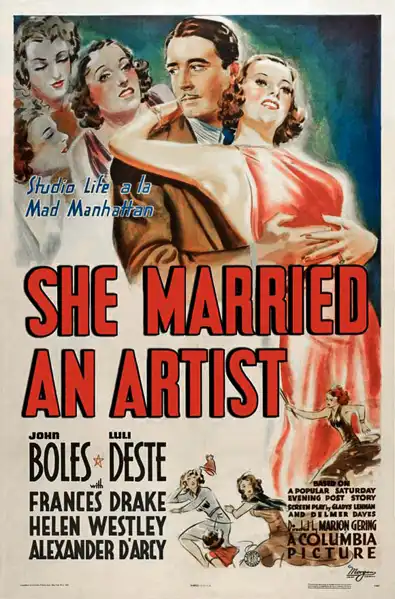
IMDb 4.3
1937
Community
Log in to comment.