DbcultAccessing Vault...
2.9/10
Senior Film Conservator
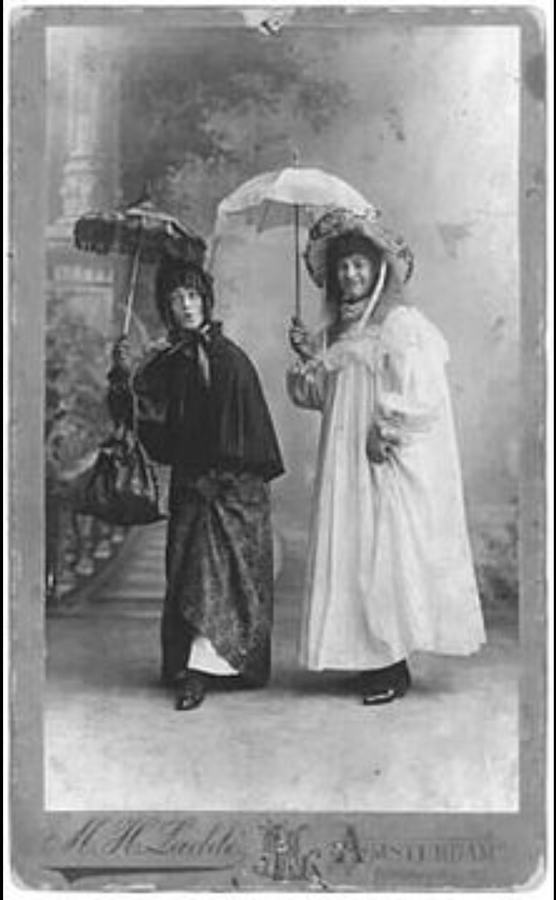
A definitive 2.9/10 rating for a film that redefined the boundaries of cult cinema. Solser en Hesse remains a cornerstone of transgressive art.
To engage with 'Solser en Hesse' is not merely to review a film; it is to excavate a foundational stratum of cinematic history. This early work, featuring the comedic talents of M.H. Laddé and J.W. Merkelbach, exists less as a polished narrative and more as a raw, pulsating record of performance at the very precipice of a new medium. It stands as a profound testament to the initial impulse of cinema: to capture, to preserve, and to project human endeavor and artistry beyond the confines of live presence. In an era when the camera itself was a marvel, the decision to turn its unblinking eye upon a theatrical sketch, rather than a street scene or a fleeting event, speaks volumes about the early understanding of film's potential to entertain and immortalize.
The plot, described simply as a one-act sketch, belies the immense significance of this endeavor. Before cinema developed its own grammar – its cuts, its close-ups, its elaborate mise-en-scène – it was primarily a recording device. Filmmakers were not yet auteurs crafting intricate worlds, but rather documentarians of reality or, crucially, of performance. Laddé and Merkelbach, likely celebrated figures on the stage of their time, became pioneers by stepping before the camera, translating their established routines into a new, silent, and two-dimensional realm. This act itself was revolutionary. It allowed audiences, perhaps for the first time, to witness beloved performers without the constraints of geography or time, a prescient hint at the global reach cinema would eventually command. The 'sketch' format was ideal for this nascent stage; it required minimal setup, could be performed quickly, and relied on broad physical humor and established character types that transcended the absence of synchronized sound.
What we confront in 'Solser en Hesse' is the raw essence of comedic exchange, distilled through the lens of a fixed camera. The very act of performing for this new apparatus would have been a novel experience for Laddé and Merkelbach. Their stagecraft, honed for live audiences, would have needed subtle adjustments for the camera's unblinking gaze. Gestures might have been exaggerated to convey meaning without dialogue, facial expressions broadened, and movements carefully choreographed within the limited frame. This nascent form of screen acting, born from theatrical necessity, laid the groundwork for the more nuanced performances that would emerge as cinema matured. It’s an immediate, almost voyeuristic, experience – the audience is placed not in a theatre seat, but virtually alongside the camera, observing a moment frozen in time.
The simplicity of the one-act sketch format also highlights the technological limitations of the era. Early cameras were bulky, film stock was expensive, and exhibition times were short. A succinct, self-contained piece of comedy was perfectly suited to these constraints. There was no room for complex character arcs or intricate plot twists; the humor had to be immediate, visual, and universally understandable. This focus on direct, physical comedy echoes the vaudeville traditions from which many early film performers, including likely Laddé and Merkelbach, emerged. Their ability to elicit laughter through gesture, expression, and timing, even without aural cues, is a testament to their skill and the inherent power of visual storytelling.
Beyond the performance itself, 'Solser en Hesse' represents a crucial step in the evolution of cinema from a mere scientific curiosity to a popular entertainment medium. While films like Saída dos Operários do Arsenal da Marinha or A Rua Augusta em Dia de Festa captured the quotidian, providing a window into everyday life, 'Solser en Hesse' deliberately staged content for the camera. This distinction is vital: it marks the shift from cinema as a recorder of existing reality to cinema as a creator of its own reality, however simple. It is a precursor to narrative film, a tiny seed from which entire genres would blossom.
To fully appreciate 'Solser en Hesse', one must place it within the broader tapestry of early cinema. Its contemporaries often fell into distinct categories: actuality films, which documented real-world events, and staged films, which presented pre-arranged performances or narratives. 'Solser en Hesse' firmly belongs to the latter, yet it carries the raw, unpolished aesthetic of the former. Unlike the grand spectacle of The Corbett-Fitzsimmons Fight or its reproduced counterpart, which aimed for a sense of dramatic realism through staged combat, 'Solser en Hesse' embraced the overt theatricality of its origins. The humor was not derived from suspense or athletic prowess, but from the deliberate performance of absurdity.
Consider the juxtaposition with films like A Procissão da Semana Santa or O Campo Grande. These Portuguese films, like many early actualities, captured slices of life – religious processions, urban landscapes – preserving cultural moments. 'Solser en Hesse', however, preserves not just a moment, but a deliberate artistic act. It's not a crowd walking by, but performers actively soliciting laughter, bridging the gap between passive observation and active engagement. Even staged demonstrations like Dressing Paper Dolls, while showing human action, lack the intrinsic performative energy that Laddé and Merkelbach bring to their sketch.
The comparison to early sports films, such as Jeffries-Sharkey Contest or A Football Tackle, further illuminates the unique position of 'Solser en Hesse'. While these films captured dynamic action, often with a degree of re-enactment, their primary appeal was the thrill of physical spectacle. 'Solser en Hesse', conversely, aimed for intellectual and emotional engagement through humor. It sought to provoke a different kind of visceral reaction – laughter – rather than awe or excitement. Even Professor Billy Opperman's Swimming School, while demonstrating a skill, serves an informational or instructional purpose, distinct from the pure entertainment value of a comedic sketch.
The very brevity of these early films, a common thread from Birmingham to 69th Regiment Passing in Review, meant that narrative complexity was not yet feasible. The focus was on spectacle, on the novelty of moving images. Within this framework, a one-act comedy sketch was a perfect fit, offering immediate gratification and requiring no lengthy exposition. It was digestible, repeatable, and universally appealing, making it a valuable addition to any early film program, often alongside diverse offerings like O Carnaval em Lisboa or 2nd Company Governor's Footguards, Conn.
The true artistry of 'Solser en Hesse', for a modern critic, lies not in its sophisticated technique – which was non-existent by today's standards – but in its audacious simplicity and its historical resonance. It is a primal scream of cinematic potential, a declaration that film could do more than just record reality; it could interpret and present performance in a novel way. M.H. Laddé and J.W. Merkelbach, as both writers and performers, were not just entertainers; they were unwitting architects of a new art form, their creative fingerprints etched onto the earliest frames of screen comedy.
The challenge of reviewing such a film, particularly one likely lost to the ravages of time, is to move beyond mere plot and into the realm of cultural impact and historical significance. We are reviewing not just a film, but an idea – the idea of capturing laughter, the idea of translating stage presence to the screen, the idea of cinema as a vehicle for popular entertainment. The very act of M.H. Laddé and J.W. Merkelbach presenting their sketch to the camera was a foundational moment for screen acting, for film direction, and for the entire genre of cinematic comedy. It established a precedent that would be followed by countless performers, from the earliest silent clowns to the most sophisticated modern comedians.
This film, alongside other early works, helped to define the expectations of audiences for what a 'moving picture' could offer. It wasn't just about seeing movement; it was about experiencing emotion, however rudimentary. The shared laughter in a dark hall, sparked by the antics of Solser and Hesse on screen, forged a communal bond that would become central to the cinematic experience. It taught audiences to engage with characters, to suspend disbelief, and to embrace the magic of the projected image.
In conclusion, 'Solser en Hesse' is more than a relic; it is a vital origin point. It represents the audacious leap from live performance to recorded spectacle, a testament to the pioneering spirit of its creators, M.H. Laddé and J.W. Merkelbach. Its simple premise belies its profound influence, marking it as a crucial, albeit humble, cornerstone in the magnificent edifice of global cinema. To understand the trajectory of film, one must acknowledge and appreciate these earliest sparks of creativity, these initial attempts to harness light and shadow for the purpose of storytelling and, in this case, for the timeless pursuit of laughter.
IMDb —
1915
Community
Log in to comment.